

The House of Percy may become linked by blood to the House of Windsor via the marriage of Pippa Middleton, to George Percy.
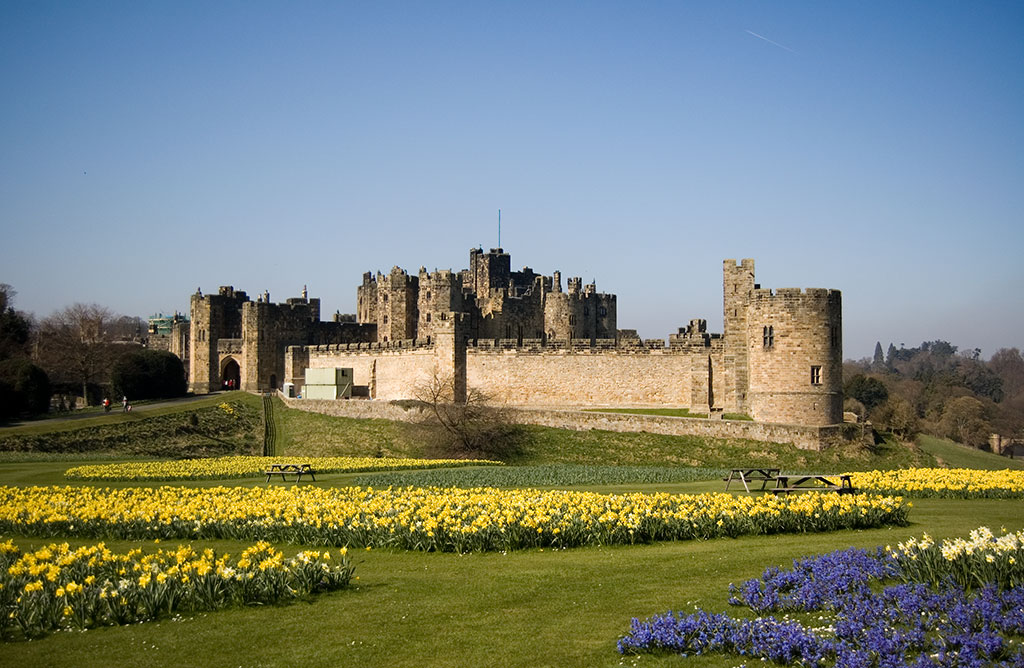
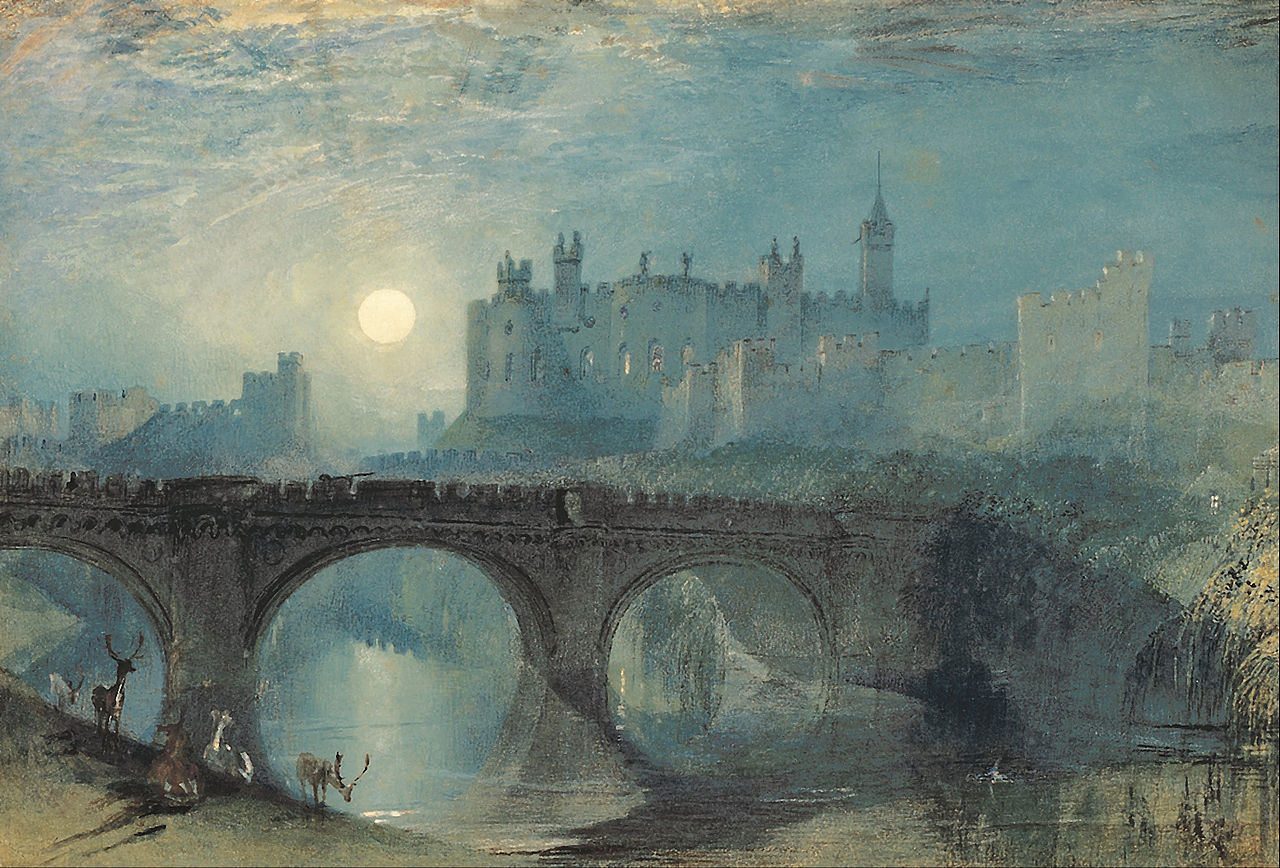
George is due to inherit Alnwick Castle in Northumberland, which featured as Hogwarts in the Harry Potter films. He descends from the rulers of Brabant and Louvain, and may carry forth the bloodline of Godfrey de Bouillon. Note the name Rugemond.
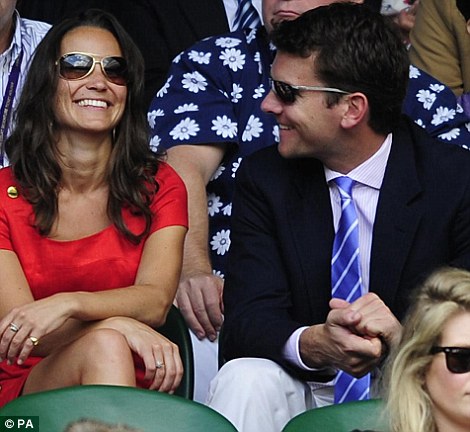
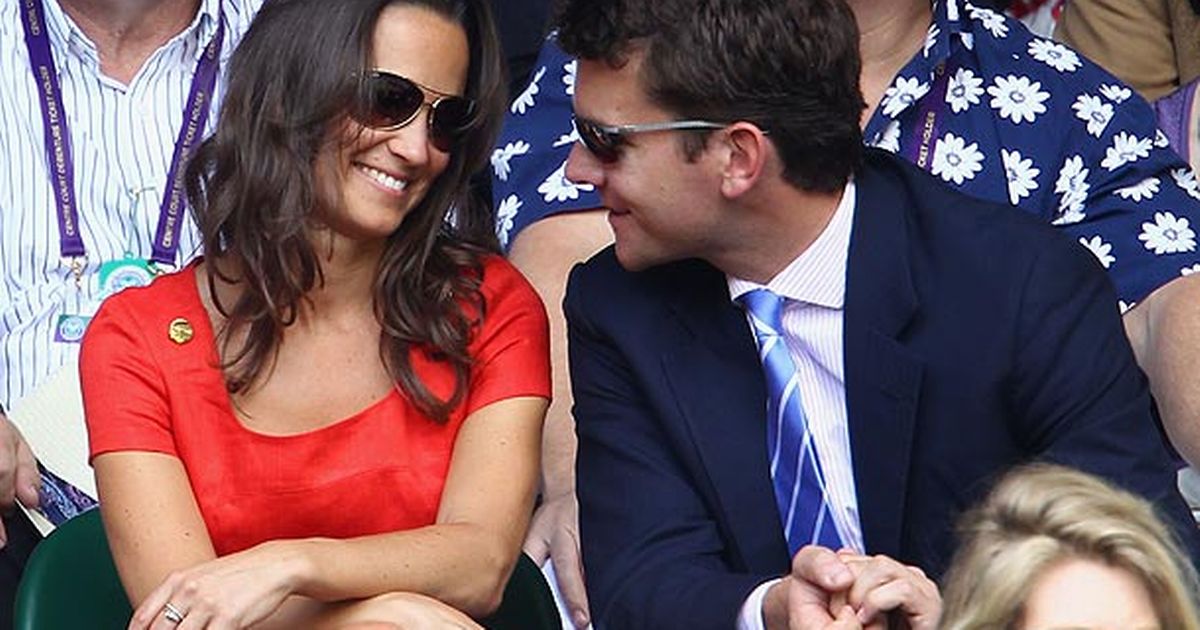
Above it a photo of Pippa and George giving the traditional signal they are going to merge and be outstanding agents of a Royal Bloodline. She laughs after he tells her to get ready. Then, they do it! However, they did not take off their sunglasses!
Jon Presco
http://www.tudorplace.com.ar/PERCY.htm#Walter De PERCY de Rugemond
https://en.wikipedia.org/wiki/House_of_Percy
Godfrey I (German: Gottfried, Dutch: Godfried), born c. 1060, died 25 January 1139, called the Bearded, the Courageous, or the Great, was the landgrave of Brabant, and count of Brussels and Leuven (Louvain) from 1095 to his death and duke of Lower Lorraine (as Godfrey VI – n.b. Godfrey of Bouillon, d. 1100, was Godfrey V, but numbering is uncertain) from 1106 to 1129. He was also margrave of Antwerp from 1106 to his death.
For 700 years, the rich, ruthless and noble Percys of Northumberland have been turning up in all the most interesting places – in jails, on the end of pikestaffs, across fields of battle and in the pages of Proust. But now things are serious. Pippa Middleton, our shapely First Sister, is reported to have fallen into the arms of a Percy. If so, history suggests she would be wise to watch out.
Not that Old Etonian George Percy, the 26-year-old heir to the Duchy of Northumberland, appears to be anything but a decent sort. Environmentally conscious George first dated Pippa while they were at university together, and when her relationship with cricketer-turned-banker Alex Loudon faltered earlier this year, he seems to have stepped gamely back into the breach.
The problem for Pippa is the Percys’ remarkable talent for choosing the wrong women. Take Henry, the 6th Earl, who in the early 1520s fell desperately in love with Anne Boleyn. A secret betrothal was agreed, but the news leaked, and the Earl suddenly found himself facing some tough competition. Pulling royal rank, Henry VIII claimed Anne for himself, and poor Percy was fobbed off with Lady Mary Talbot, with whom he lived miserably until his death – a broken man – at the age of 35.
Thomas, the 7th Earl, also chose the wrong woman, and paid an even heavier price. Although a favourite of Elizabeth I, he pledged himself to Mary, Queen of Scots, joining the “Rising of the North” that was intended to put the Catholic claimant on the throne. When it failed – partly through Thomas’s organisational incompetence – he fled to Scotland, but was sold to the English for £2,000, taken to York and beheaded in public. Consolation of a sort came three centuries later when the Pope beatified him, giving the Percys their first, and to date only, saint.
There’s plenty more to worry about. In fact, since they first reached Britain in the aftermath of the Norman invasion, the Percys have been in more scrapes than the rest of the aristocracy put together. One earl was lynched by an angry mob of his own tenants; another assassinated by government hitmen; and several have been imprisoned, banished or drummed out of polite society.
Still, nothing has held them back for long. By the 18th century, the Percys had been promoted to dukes; by the 19th they were rife in court, the diplomatic service and at the heart of Tory politics. Today, the family owns 100,000 North Country acres, and at their centre sits Alnwick Castle, a grey, forbidding medieval fortress that starred as Hogwarts in the Harry Potter movies. There are further holdings in Yorkshire and Surrey, and the family’s London base is Syon Park, a magnificent former abbey on the River Thames near Kew. Estimates of the Percys’ total wealth start at around £300 million.
All of which does wonders for George’s eligibility – and raises the question of whether the resoundingly middle-class Middletons could be poised to pull off a remarkable double-duchess coup.
But not just yet, suggests the buzz from London society. George is viewed as a rather more cautious type than the regular run of toff-about-town. His current enthusiasm is an alternative energy company which he co-runs with raffish ex-mining tycoon Algy Cluff; the pair are planning to sink geothermal test wells in County Durham which they hope will release cheap, low-carbon energy.
Although he lives in Kensington, and has several friends in the capital’s fast set, George tends to stay away from the Mahiki-Boujis nightclub circuit. In fact, all the young Percys – George has three siblings – maintain a relatively soft social profile. His older sister, Lady Katie, 28, married financier Patrick Valentine earlier this year. Younger brother Max is at Edinburgh University, and little sister Melissa works as a tennis coach at Queen’s Club. Not a whiff of scandal has touched any of them
But, then, the family has a lot to live down. In his book about the Percys, Kings of the North, Alexander Rose suggests that they have prospered by doing things differently. While other noble families built their power and fortunes on advantageous marriages and royal service, the Percys went after the booty. Most of it came from the lawless lands between England and Scotland in the 14th and 15th centuries. While monarchs to the south were preoccupied by their power struggles with France, the Percys craftily carved up the border country, amassing huge tracts of land over which they ruled with virtual autonomy.
Certainly, they tested the limits. Harry Hotspur, the son of the 1st Earl, accurately depicted by Shakespeare as a hyper-energetic dimwit, led a rebellion against Henry IV, only to be defeated at the Battle of Shrewsbury. His body was chopped into pieces for distribution around the kingdom, and his head displayed on a staff in York. Then there was the embarrassment of the Gunpowder Plot in 1605. Admittedly, Thomas Percy, one of the leading conspirators, was not a direct member of the family, but he was close enough, and the fallout came close to destroying the entire dynasty.
When the plot was rumbled, Percy fled to Warwickshire, where he was shot by pursuing government agents and died instantly. No such clean fate awaited the unfortunate 9th Earl, a blameless man well versed in science and literature and known as ”The Egghead’’, who was thrown into the Tower for 17 years and forced to pay a colossal fine of £30,000.
Who’d want to be a Percy? No end of people, actually. There is a prominent American branch of the family – the Percys of Mississippi – supposedly founded by Charles Percy, the disinherited, bigamist son of an early earl. According to one historian, the plantation-owning Percys “virtually built the Deep South”. And then there’s Kevin Percy, a 76-year-old former Olympic hockey player from New Zealand, who claims to be the rightful heir to the Percy millions. Kevin believes he is a direct descendant of Hotspur, and has written to the Queen asking for the knight’s remains to be exhumed and checked against his DNA.
Miss Middleton’s slinky lines have been rightly acclaimed. But they’ll never be able to match the twists and turns of her friend’s family history.
Contents
[hide]
Biography[edit]
Godfrey was the son of Henry II (c. 1020–1078) and Adela of Orthen (or Betuwe), a daughter of Count Everard of Orthen. He succeeded his brother Henry III who died wounded in a tournament in 1095, and only had young daughters. His widow Gertrude married Theodoric II, Duke of (upper) Lorraine.
He first came into conflict with Otbert, Bishop of Liège, over the county of Brunengeruz that both claimed. In 1099, Emperor Henry IV allotted the county to the bishop, who entrusted it to Albert III, Count of Namur. Godfrey arbitrated a dispute between Henry III of Luxembourg and Arnold I, Count of Loon, over the appointment of the abbot of Sint-Truiden.
Godfrey was in favour with the emperor and defended his interests in Lorraine. In 1102, he stopped Robert II of Flanders “the Crusader”, who was invading the Cambraisis. After the death of the emperor in 1106, his son and successor, Henry V, who had been in rebellion, decided to avenge himself on his father’s partisans. Duke Henry of Lower Lorraine was imprisoned and his duchy confiscated and given to Godfrey. After Henry escaped from prison, he tried to retake his duchy and captured Aachen, but ultimately failed.
In 1114, during a rift between the emperor and Pope Paschal II, Godfrey led a revolt in Germany. In 1118, the emperor and the duke were reconciled. In 1119, Baldwin VII of Flanders died heirless and Flanders was contested between several claimants, one of whom, William of Ypres, had married a niece of Godfrey’s second wife. Godfrey supported William, but could not enforce his claim against that of Charles the Good. Also dead in that year was Otbert. Two separate men were elected to replace him and Godfrey again sided with the loser.
By marrying his daughter Adeliza to Henry I of England, who was also the father-in-law of the emperor, he greatly increased his prestige. However, Henry V died in 1125 and Godfrey supported Conrad of Hohenstaufen, the duke of Franconia, against Lothair of Supplinburg. Lothair was elected. Lothair withdrew the duchy of Lower Lorraine and granted it to Waleran of Limburg (c. 1085 – 1139), the son of Henry, whom Henry V had deprived in 1106. Nonetheless, Godfrey maintained the margraviate of Antwerp and retained the ducal title (which would in 1183 become Duke of Brabant).
After the assassination of Charles the Good in 1127, the Flemish succession was again in dispute. William Clito prevailed, but was soon fraught with revolts. Godfrey intervened on behalf of Theodoric of Alsace, who prevailed against Clito. Godfrey continued to war against Liège and Namur.
Godfrey spent his last years in the abbey of Affligem. He died of old age on 25 January 1139 and was buried in the left aisle of the abbey church. He is sometimes said to have passed in 1140, but this is an error.
Family and children[edit]
He married Ida of Chiny (1078–1117), daughter of Otto II of Chiney (c. 1065 – after 1131) and Adelaide of Namur. They had several children:
- Adeliza of Louvain (b. 1103 – d. abbey of Affligem, 23 April 1151) married Henry I, King of England and later William d’Aubigny, 1st Earl of Arundel (1109 – before 1151).
- Godfrey II of Louvain (b. 1107 – d. 13 June 1142), Duke of Lower Lotharingia (Lower Lorraine), Landgrave of Brabant, Count of Brussels and Louvain. He married Lutgardis of Sulzbach (d.a. 1163), daughter of Berenger I of Sulzbach.
- Clarissa (d. 1140).
- Henry (d. in the abbey of Affligem, 1141), monk.
- Ida (d. 1162) married to Arnold II, count of Cleves (d. 1147).
- Joscelin of Louvain, married Agnes De Percy and had issue.
Joscelin of Louvain, also spelled Jocelin de Louvain and Jocelyn of Leuven,[2][3][4] (1121–1180) was a nobleman from the Duchy of Brabant who settled in England having married an English heiress. Through his youngest son, the House of Percy — as the Earls and later the Dukes of Northumberland—became the most powerful family in Northern England. He was brother-in-law to King Henry I, whose second wife was Joscelin’s sister Adeliza of Louvain.
Contents
[hide]
Origins[edit]
He was a son of Godfrey I, Count of Louvain either by his second wife, Clementia of Burgundy, or by a mistress.
He married Agnes de Percy (d.1203), one of the two daughters and co-heiresses of William II de Percy (d.1174/5), 3rd feudal baron of Topcliffe, Yorkshire.[5] Upon his marriage, he adopted the Percy surname.[6]
Petworth[edit]
Joscelin was granted the manor of Petworth, in Sussex, by his sister Adeliza, the widow of King Henry I of England.[2][7] His descendants were seated at Petworth House for many centuries.
Though they originally intended Petworth to be their southern home, the Earls of Northumberland were confined to Sussex by Elizabeth I in the late 16th century, when she grew suspicious of Percy allegiance to her rival, Mary, Queen of Scots. Petworth then became their permanent home.[2]
Marriage and progeny[edit]
He married Agnes de Percy (d.1203), one of the two daughters and co-heiresses of William II de Percy (d.1174/5), 3rd feudal baron of Topcliffe, Yorkshire[5] and settled in England. He and his descendants, later created Earls of Northumberland, adopted the surname Percy. By his wife he had at least seven children:
- Henry de Percy (d.1198), eldest son, who predeceased his mother and married Isabel de Brus, daughter of Adam de Brus (d.1196). He was survived by a son William III de Percy (1197-1245), who inherited from his uncle Richard de Percy (d.1244) his grandmother’s moiety of the barony of Topcliffe.[5]
- Richard de Percy (d.1244), younger son, who inherited from his mother her moiety of the barony of Topcliffe.[5] He himself died without issue when his heir was his brother’s son William III de Percy (1197-1245), who thus regained the whole of the Percy barony of Topcliffe, having inherited the other moiety from his great-aunt Maud de Percy (d.1204), sister of Agnes.[5] He was a Magna Carta surety.
- Joscelin
- Radulph, went to France
- Eleanor
- Maud (born c. 1164)
- Lucy
Godfrey "the Bearded" of LOUVAIN (D. Louvaine& Brabant)
Acceded: 1106
Died: 25 Jan 1139
Notes: Stammtafeln shows that Ida was Adeliza's mother and other works agree. Brenan in his History of the House of Percy suggests that Clemantine was her mother and Ida was Jocleyn's mother. Stammtafeln does not list Jocelyn at all!
The Complete Peerage, V.x,p445,note.l, says that Jocelyn's mother is unproven.
Father: Henry II of Brabant
Mother: Adela of THURINGA
Married 1: Ida of NAMUR
Children:
2. Adeliza of LOUVAIN (Queen of England) (b. ABT 1105)
3. Godfrey II of Brabant (D. Brabant)
4. Ida of Lower Lorraine
Married 2: Clemence of Burgundy AFT 1121
Died: 1180
Notes: Not shown in Stammtafeln. See The Complete Peerage Vol.x,p.445.
Father: Godfrey "the Bearded" of LOUVAIN (D. Louvaine & Brabant)
Mother: Ida of NAMUR
Married: Agnes De PERCY AFT 1154
Children:
2. Richard De PERCY (5º B. Percy)
4. Joscelin De PERCY
5. Eleanor De PERCY
6. Alice De PERCY
Richard De PERCY (5º B. Percy)
Died: Aug 1244
Buried: Fountains Abbey
Notes: One of the 25 Barons to enforce the Magna Carta.
Father: Joscelyn De LOUVAIN
Mother: Agnes De PERCY
Married 1: Alice ?
Married 2: Agnes De NEVILLE
Children:
1. Henry De PERCY
2. Alexander De PERCY
Father: Joscelyn De LOUVAIN
Mother: Agnes De PERCY
Married: ¿?
Children:
Notes: The Complete Peerage V.x,p.448 note e.
Father: Ralph De PERCY
Mother: ¿?
Married: Gunnor ?
Father: Joscelyn De LOUVAIN
Mother: Agnes De PERCY
Married: John De DAIVILLE
Children:
1. Henry De DAIVILLE
Died: 1198
Buried: St.Lô, Rouen
Father: Joscelyn De LOUVAIN
Mother: Agnes De PERCY
Married: Isabel De BRUS
Children:
Died: BEF 12 Jan 1245
Notes: The Complete Peerage,V.x,p449,note a.
Father: Henry De PERCY
Mother: Isabel De BRUS
Born: AFT 1202
Died: 28 Jul 1245
Buried: Sallay Abbey
Father: Henry De PERCY
Mother: Isabel De BRUS
Married: Joan BRIWERE
Children:
1. Joan PERCY de Ferlington
5. Dau. De PERCY
Married 2: Ellen De BALLIOL
Children:
7. Ingeram De PERCY (d. 24 Oct 1262)
8. William De PERCY (Canon of York) (b. ABT 1236)
9. Walter De PERCY
10. Alan De PERCY
11. Joscelin De PERCY
Father: William De PERCY
Mother: Joan BRIWERE
Married: Eustace De BALLIOL
Father: William De PERCY
Mother: Joan BRIWERE
Married: Ralph BERMINGHAM
Father: William De PERCY
Mother: Joan BRIWERE
Married: Ralph TAILBOYS
Children:
Born: ABT 1235
Died: 29 Aug 1272
Buried: Sallay
Notes: Some say born 1228. The Complete Peerage V.x,p455 says 1235.
Father: William De PERCY
Mother: Ellen De BALLIOL
Married: Eleanor De WARREN 8 Sep 1268
Children:
 Rosamond Press
Leave a comment