
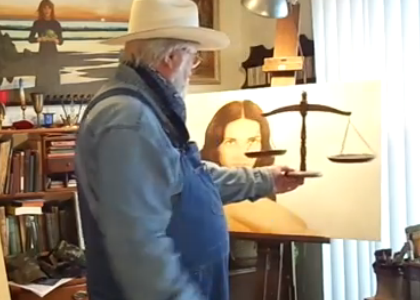
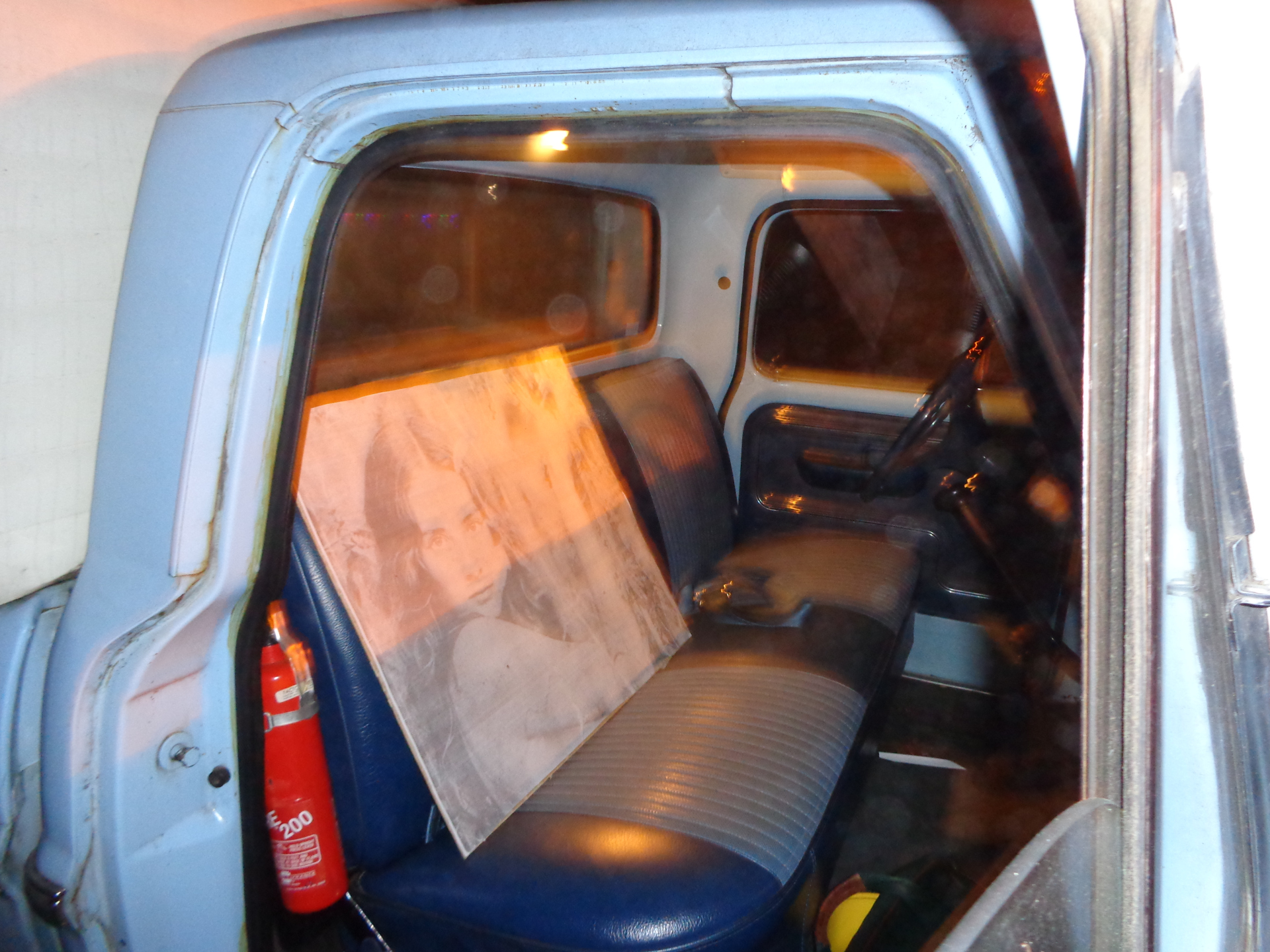
It just keeps getting better and better. For over a week I have been preparing to post on a Oregon ballerina, who gave me a key to unlocking the core of my Raptor Muse, who left the Isle of Wight, and flew home to America. I now title Rena ‘The Lone Black Eagle’ who came home to do her Black Swan Dance – as an angry black Eagle surrounded by nincompoops! The quality of human beings has gone – way down!
“I came home – for this!”
Only her perfection remains unscathed. Down from Lonely Mountain she swoops.
“If you want something done right, you got to do it yourself!”
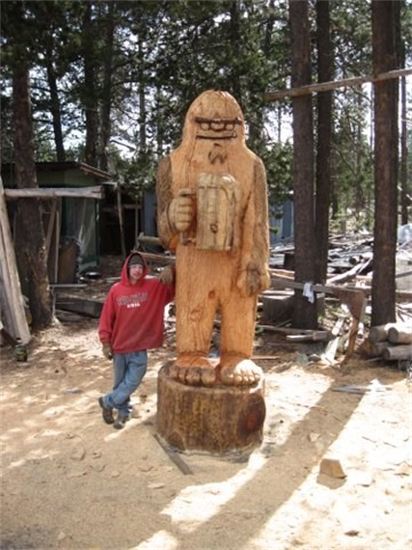
We have our first arrest. Wouldn’t you know he’s an Armed Terrorist-Creationist who carves eagles out of logs using a chainsaw. He’s a……..CHAINSAW ARTIST! Has any women accused Ken of stalking them? What’s with this trying to wake people up? Does Menenbach subscribe to my Sleeping Beauty Psychosis?
To make matters worse, the Wild Cayote Hunt is about to commence. This is South Park!
Jon Presco
“I’m willing to pay the price for my convictions,” Medenbach told Snow. “Someday, when the laws become too stringent, people will start waking up.”
Justice will be served!
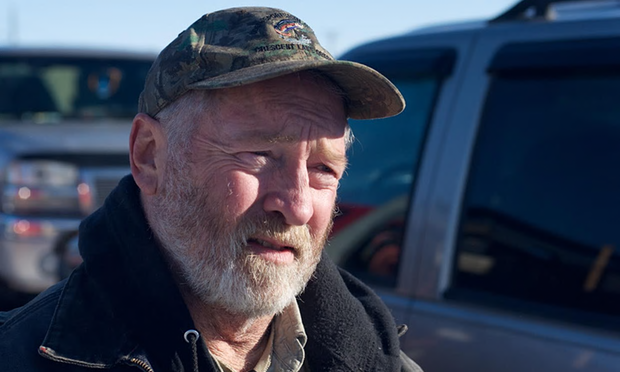

Kenneth Medenbach, who was arrested for unauthorized use of a government vehicle, is a chainsaw sculptor and longtime nemesis of the government with a history of previous entanglements with the courts over the occupation of federal lands.
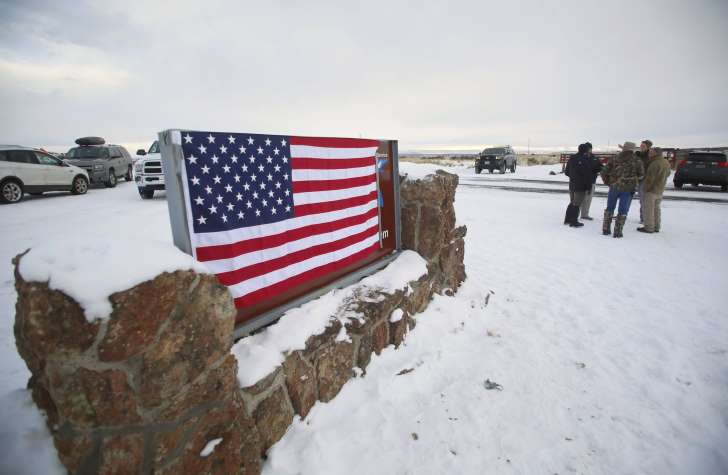
He is the first militiaman connected to the armed occupation to be arrested since the bird sanctuary in rural Oregon was unexpectedly taken over on 2 January.
Medenbach, 62, was detained outside a Safeway supermarket in Burns, Oregon, some 30 miles from the Malheur national wildlife refuge, according to a statement from the Harney County sheriff’s office.
He appears to have driven from the occupied compound to a local supermarket in a vehicle allegedly stolen from the US Fish and Wildlife Service, which runs the refuge. The sheriff’s office statement said that law enforcement officers recovered “two vehicles stolen from the Malheur National Wildlife Refuge”.
Medenbach’s company, Chainsaw Creations, lists cabins, furniture, and signs for sale, as well as sculpted animals, with a specialty in bears and eagles. A biography on the website for a gallery that sells his woodwork says that Medenbach was born in Massachusetts, the second-youngest of five children, and that he spent 40 years in the construction trade.
This is not Medenbach’s first tangle with the law. He is currently out on bail, according to court documents, awaiting trial for a seven-month residential occupation of government land between May and November 2015.
Medenbach was tried and convicted of the same crime in 1996. According to a forest service officer who testified at that trial, Medenbach was living in “an eight-by-ten-foot tent with a metal flue and wood-burning stove, a nearby campfire, and various cooking and sleeping equipment”.
According to a court memorandum, the magistrate said that Medenbach posed a risk to public safety and said that he had referenced Ruby Ridge and Waco, two sieges that ended in violence. At a detention hearing, the government said that Medenbach had tried to protect his campsite with “50 to 100 pounds of the explosive ammonium sulfate, a pellet gun, and what appeared to be a hand grenade with trip wires.”
Convicted and given a six-month suspended sentence, Medenbach appealed the case to the federal ninth circuit court, where he argued that federal ownership of unappropriated public lands was unconstitutional. He also filed a civil suit to demand that federal judges no longer swear an oath of affirmation under the constitution, a position he defended in this blog post from January 2015.
According to one local report, the two vehicles, one a pickup truck and one a passenger van, bore door signs reading “Harney County Resource Center” – the new name occupiers have given to the sanctuary. The man police suspected of driving the second government vehicle into town already had gone into the grocery store before police arrived, the report said.
The arrest, which marks the first confrontation between law enforcement and the armed occupiers, came hours before Ammon Bundy, the leader of the militia, and the other armed men had planned to hold a meeting with the local community at which the occupiers said they planned to discuss ending the protest.
It is unclear how central a figure Medenbach was to the occupation at the refuge, or how long he had been staying there. However, his commitment to the extreme ideology of rightwing constitutionalists is not in doubt.
He was extensively profiled in the 1999 book Terrorists Among Us: The Militia Threat, by retired Indiana police captain Robert L Snow. At the time, Snow wrote, Medenbach was building his own home on five acres of land in Crescent, Oregon, out of “discarded refrigerators, water heaters, and other such material.” Medenbach, according to Snow, subscribed to the legal theory that state bar associations are unconstitutional, and so courts have no authority over him.
“I’m willing to pay the price for my convictions,” Medenbach told Snow. “Someday, when the laws become too stringent, people will start waking up.”
Armed militia have been seen driving the government vehicles around the refuge ever since they took over the site in protest over federal land management policies earlier this month. Legal experts have told the Guardian that the occupiers could face hefty fines and more than 10 years of imprisonment.
A USFWS spokesperson Megan Nagel said: “The U.S. Fish and Wildlife Service is grateful for the quick actions from law enforcement. We will continue to work with law enforcement to recover vehicles bought and paid for by the American people to care for their national wildlife refuge.”
It was unclear Friday whether the scheduled 7pm meeting between the militia and local residents would go ahead. The militia leaders had said they planned to speak directly with residents and explain their plans to leave the federal land. Officials in rural Harney County, who have become increasingly outspoken against the militia, have denied them access to public buildings, saying they refuse to host a group that supports the illegal takeover of government property.
On Thursday, Bundy was expressing doubts about whether the meeting would happen at all if the militia couldn’t find a venue.
Harney County judge Steve Grasty said he was grateful that officials have made an arrest. “At some point, criminal actions become so blatant that they just can’t be ignored,” he said. “At some point, criminal actions become so blatant that they just can’t be ignored.”
He said law enforcement is trying to end this without violence, but must make every effort to hold people accountable for their crimes. “Perhaps that’ll give Bundy and his friends incentive not to be driving around these vehicles,” he added.
Corey Lequieu, a 45-year-old occupier who is still at the refuge, said he was reluctant to believe the reports of his fellow militiaman’s arrest. “It may not even be true. I’m hoping it’s not true,” he said. “I’m very leery about their press releases and press conferences. That sheriff has lied before.”
The Burns Paiute Tribe is seeking criminal charges against the armed occupiers of Oregon’s Malheur National Wildlife Refuge, accusing the men of damaging important cultural resources on the tribe’s native land.
The tribe is urging the U.S. Fish and Wildlife Service to protect those resources, in part by prosecuting “violators of the Archaeological Resources Protection Act” on the remote bird refuge.
“Armed protestors don’t belong here,” Charlotte Roderique, chair of the Burns Paiute Tribal Council, said in a statement Friday. “They continue to desecrate one of our most important sacred sites. They should be held accountable.”
The 184,000-acre refuge, in remote southeastern Oregon, is the historical home to the tribe, which once roamed across southeastern Oregon and southwestern Idaho. More than 4,000 tribal artifacts are housed and cared for on the property, including spears and stone tools, some dating nearly 10,000 years. Videos posted online by the occupiers show them sitting at desks in the refuge offices and using government computers that contain maps and sensitive details about the location of Paiute artifacts.
Jarvis Kennedy, another member of the Tribal Council, fears that the occupiers could be selling off sacred artifacts. “They could be on eBay right now — we don’t know,” Kennedy said. With militia members coming and going freely from the refuge, Kennedy said, “who knows what’s leaving there?”
The refuge contains more than 300 prehistoric sites, such as burial grounds and ancient villages. Tribal members are most concerned for burial sites, especially after photos were released showing roads being forged inside the refuge by occupiers using heavy equipment. Ancestral remains, which were unearthed during floods in the 1980s, are interred around Malheur Lake, inside the refuge.
“They’ve got their horse running around there,” Kennedy said. “Who knows what they’re stomping on?”
The occupation is now entering its third week. It was sparked Jan. 2 when an armed group led by Ammon Bundy, an Idaho rancher and son of Cliven Bundy, seized the refuge to protest the federal prosecution of two local ranchers. The group is demanding the ranchers’ release and laying claim to the ‘refuge, which they argue should be transferred from the federal government to private hands.
The Paiute, however, insist that the land belongs to them. The root-gathering tribe’s first encounters with westward-traveling pioneers on the Oregon Trail turned sour when settlers’ cattle decimated the already-sparse land, which writer Jarold Ramsey described as “bleak, open, inhumanly spacious” in his book “Coyote Was Going There: Indian Literature of the Oregon Country.” The tribes began attacking settlers, prompting the 1860s Snake Indian War — an effort by the government to protect white settlers. Ramsey writes of extermination orders in which soldiers “went through the upper reaches of the Great Basin country hunting Paiutes and other Shoshoneans down like deer, killing for the sake of what in the Viet Nam era became known as ‘body count.’ ”
Despite suppression of the tribes on the Malheur Reservation, in January 1879 some 500 Paiutes were shackled two by two and marched through “knee deep snow” 350 miles north toward the Yakama Reservation — an event the tribe today refers to as its own “Trail of Tears.”
By the time some Paiutes were allowed to return to Burns in the late 1880s, their treaties had been terminated and land had been snatched up by local ranchers. By the mid-1920s, the Egan Land Co. gave the tribe 10 acres outside Burns — the former home of the city dump, prompting rampant illness among tribal members.
Joe Mentor, an attorney for the tribe, said that if the occupiers want the refuge returned to the people, it should go to the Paiutes. “It isn’t there for ranchers or for provocateurs to try to take,” he said. “If it belongs to anybody, it doesn’t belong to the ranchers in the vicinity — it belongs to the tribe it was taken from.”
At a news conference earlier this month, Bundy told reporters that he would like to see the Paiutes “freed from the federal government as well.” On Friday, Bundy told the Associated Press that his group is not interested in the native artifacts and would turn them over to the tribe if asked.
“If the Native Americans want those, then we’d be delighted to give them to them,” he said.
Roderique said the Paiutes don’t need to be freed from the federal government, with which they have built a good relationship. Still, though the tribe disagrees with the Bundy occupation, Kennedy said it has had some advantages.
“The good thing about it [is] now the whole world knows about the Burns Paiute Tribe,” Kennedy said. “Nobody knew us or that we existed a week and a half ago.”
As the debate about Kesey Square’s future heats up, voices in favor of keeping the space public downtown are coming to the forefront, from a business on the square to community meetings sprouting up.
The outcry was prompted by a proposal City Manager Jon Ruiz passed on to the Eugene City Council this fall from private developers who want to purchase Kesey Square and build apartments in its place, with retail on the ground floor.
The group behind the proposed apartments — architects John Rowell and Greg Brokaw, downtown business owner Kazem Oveissi, developer consultant Mark Miksis and advising developers Hugh Prichard and Harris Hoffman — intend to apply for MUPTE, the Multi-Unit Property Tax Exemption, if the proposal is accepted.
But a Kesey Square neighbor, Voodoo Doughnut — an early player in downtown’s revitalization since it opened shop in 2011 — has come out against privatizing the space.
In a Nov. 23 email, Voodoo Doughnut co-founder and owner Kenneth Pogson wrote to EW, The Register-Guard, Ruiz, Mayor Kitty Piercy and the City Council: “We at Voodoo Doughnut oppose the selling off of Kesey Square. With the new resurgence of Eugene’s downtown, it is more important than ever to save that or any public space.”
The email continues: “We have our problems with the square too, but it is more of a societal problem that won’t merely be fixed by taking it away and planting a building there. Please consider the overall public need, which includes open spaces and freedom of speech over the obvious quick buck to be made and the perceived answer to the vagrancy problem.”
Voodoo Doughnut is a tenant of business owner and UO senior instructor of finance Ali Emami, who owns the property whose walls flank two sides of Kesey Square. Emami has also been submitting plans and proposals to the city to open up the walls since 1995, but no action by the city was ever taken.
Pogson spoke to EW over the phone from Portland. “Part of our attraction for that unit is it’s right next to Kesey Square,” Pogson says of choosing the Eugene Voodoo Doughnut location. “That’s where we wanted to be.”
He adds that the downtown spot “was also part of our commitment to the town and not just the university.”
Pogson says he has always been a fan of Ken Kesey and the square’s statue. “I love the idea of keeping one little space instead of just throwing up another building,” Pogson says.
He also says that he is willing to work with Emami to open up the walls of Kesey Square if Emami’s proposal is accepted.
“I’ve had a really good relationship with my landlord,” Pogson says of Emami. “Why isn’t he being included in any of the conversations [about Kesey Square]?”
Meanwhile, about 45 people attended the Save Kesey Square group meeting Sunday evening, Nov. 29, hosted at Cozmic.
“I wanted to see a coming together around it,” says Gwendolyn Iris, one of the meeting’s organizers. Iris says she wanted to get a group organized before the city’s “Downtown Solutions Forum” Dec. 2 at the Lane Community College downtown campus.
Ron Pike, one of the founders of the Whiteaker Community Dinner, agreed. “My fear is if Kesey Square is turned from public property to private property it will never come back,” he says. “As a person who lives in the city limits, I feel a certain responsibility to other citizens to keep public spaces available and accessible.”
Many at this meeting expressed concern that the city was using Kesey Square as a “scapegoat” for the unhoused emergency in Eugene. Others said they worried that it would be a “major hurdle” to be heard by Ruiz, Piercy and City Council over the group interested in building apartments on the square.
Karen Alvarado spoke about the need for open space and open sky downtown. “The heart of the city is Willamette and Broadway,” Alvarado said. “Let’s make sure [the city] knows this.”
She referenced successful city parks and squares from Boulder, Colorado, to London. “Jeez, if they can do it, why can’t we?”
Kathy Ging suggested putting a community skills-bank booth in the plaza, while others proposed installing murals, public bathrooms, a solar charging station and a human-sized chessboard.
“The only thing that will save [Kesey Square] is if the city rezones it as public space,” Zachary Quale told the group. As it stands, the space is zoned commercial, a remnant from when a building stood there 40-plus years ago.
The Save Kesey Square group identified some goals to protect and improve the space: Ask the city to rezone the lot from commercial to open space; petition to stop the sale of Kesey Square; a monthly events calendar for the square; collaborating with the UO design students who have already drawn up plans for improving the space; identifying whether the square can become a national monument; and seating.
“Return seating to Kesey Square!” Alvarado said to hoots from the crowd. “You’re not just stopping ‘travelers’ from sitting at Kesey Square,” she explained, but also middle-aged and elder citizens who need a place to rest while out and about downtown.
Alvarado pointed to the back courtyard of the new beergarden. at 777 W. 6th Ave. with its food carts, tables, umbrellas and heaters as an example of how Kesey Square could function comfortably year-round with minimal investment.
Iris encouraged the group to start using the square. She will be hosting a free “Yule Fire, Feast and Ritual” event from 5:30 to 8 pm Tuesday, Dec. 22, at Kesey Square, to “share in food and friendship with our community both housed and homeless alike.”
As of Nov. 30, the city of Eugene issued an RFEI for the property (Request for Expressions of Interest, see EW story Nov. 25) with proposals due Jan. 15. See eugene-or.gov/BroadwayRFEI. The council will consider options for Kesey Square in February, including sale or lease of the property, public investment or no action.
 Rosamond Press
Leave a comment