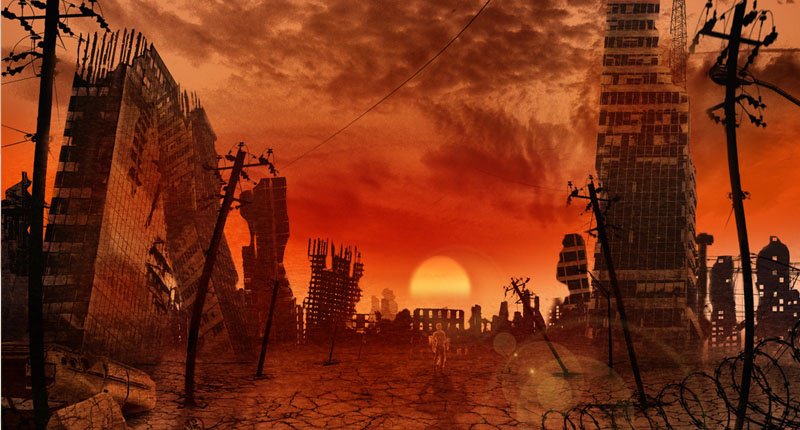
In October of 1960 I did a painting very similar to the one above. I told my family and friends I was going to send it to Kennedy, or Nixon, the next President, as a warning of what may come due to the Cold War that began again with Russia launching 26 Cruise missels in Syria.
My best friend, Bill Arnold, and myself started hanging out in a small coffee shop near Lake Merritt. Bill had studied the history of Oakland and found the Bohemian friends, Jack London, and George Srerling. Bill said we were the embodiment of these writers. I was George. We were not playing around.
Bill was the love of Christine’s life. If she was suicidal it was because she failed to form a bond with my best friend before he died, an apparent suicide, on October 9, 1963.
A Christian group predicted the world would come to an end to day. I believe we crossed the threshold. The fuse was lit.
I believe Bill, Christine, and myself, were destined to take charge of the Bohemian Art Scene of Carmel, including the Pine Cone. That Creative World we envisioned has been buried. Destructive men like my brother, Mark Presco, have seized the day. The choice we artists provided the world, has been rejected. That choice is gone.
Jon Presco
President: Royal Rosamond Press
https://en.wikipedia.org/wiki/United_States_presidential_election,_1960
Sterling became a significant figure in Bohemian literary circles in northern California in the first quarter of the 20th century, and in the development of the artists’ colony in Carmel. He was mentored by a much older Ambrose Bierce, and became close friends with Jack London and Clark Ashton Smith, and later mentor to Robinson Jeffers. His association with Charles Rollo Peters may have led to his move to Carmel. The hamlet had been discovered by Charles Warren Stoddard and others, but Sterling made it world famous. His aunt Missus Havens purchased a home for him in Carmel Pines where he lived for six years.

Sterling, posing with caricatures of himself at the Bohemian Grove, 1907

George Sterling posed for an illustration by Adelaide Hanscom Leeson which appeared in a printing of the Rubaiyat of Omar Khayyam.
Kevin Starr (1973) wrote:
- “The uncrowned King of Bohemia (so his friends called him), Sterling had been at the center of every artistic circle in the San Francisco Bay Area. Celebrated as the embodiment of the local artistic scene, though forgotten today, Sterling had in his lifetime been linked with the immortals, his name carved on the walls of the Panama-Pacific International Exposition next to the great poets of the past.”
Joseph Noel (1940) says that Sterling’s poem, A Wine of Wizardry,[2] has “been classed by many authorities as the greatest poem ever written by an American author.”
According to Noel, Sterling sent the final draft of A Wine of Wizardry to the normally acerbic and critical Ambrose Bierce. Bierce said “If I could find a flaw in it, I should quickly call your attention to it… It takes the breath away.”
Sterling joined the Bohemian Club and acted in their theatrical productions each summer at the Bohemian Grove.[3] For the main Grove play in 1907, the club presented The Triumph of Bohemia, Sterling’s verse drama depicting the battle between the “Spirit of Bohemia” and Mammon for the souls of the grove’s woodmen.[4] Sterling also supplied lyric for the musical numbers at the 1918 Grove play.[3]
 Rosamond Press
Leave a comment