
There is a chance I might die today. I will be having an operation around 10:00 A.M.
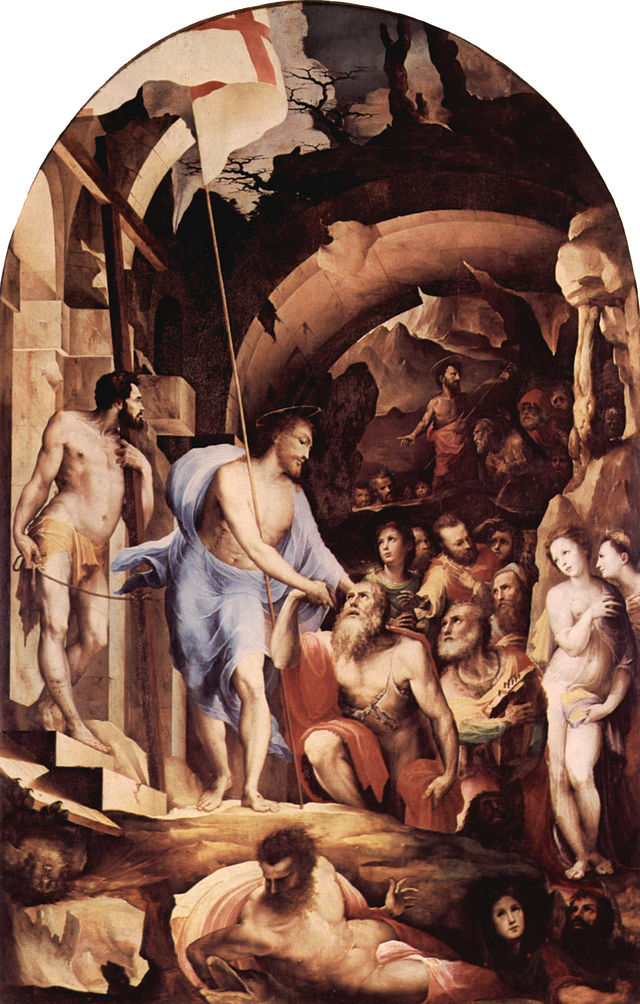
There is something fishy about Jesus’s death scene on Passover that takes place on the full moon during the vernal equinox, which is today. There can be no eclipse during a full moon. Then, Jesus did not die on Passover?
I suspect Jesus died on the day the Moabite Jews read from the Book of Ruth. I believe Jesus had just turned thirteen when he came out of the wilderness and read the passage about the Jubilee. The Moabites tried to throw Jesus off a cliff as a sacrificial lamb in order to restore the Moabite Kingdom. But, he was not ready. He had to be accepted as a Son of God, meaning he knew his Torah. Then he became King of the Moabites, and was sacrificed so the Moabite Kingdom that Ruth and Boaz founded, could return.
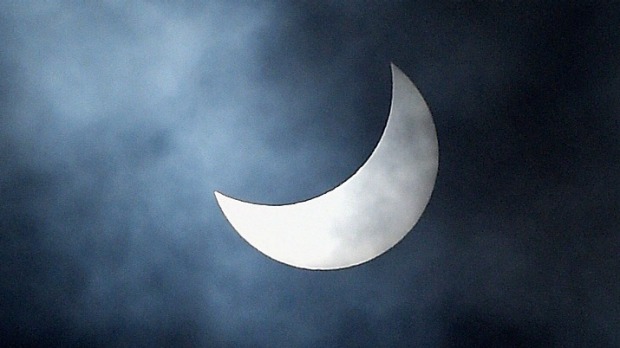
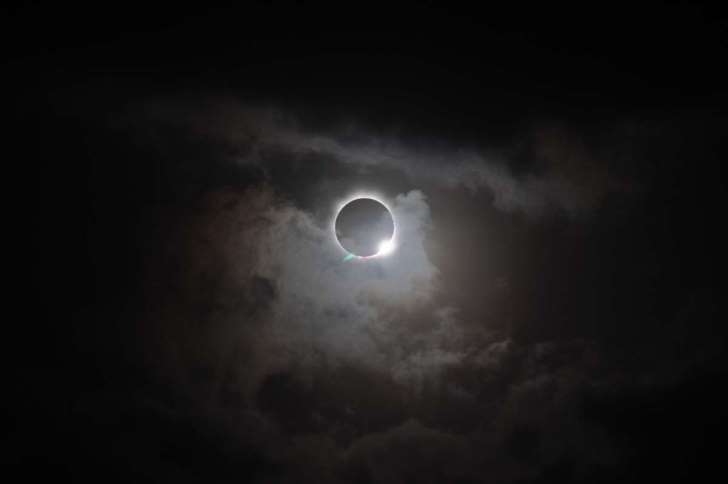
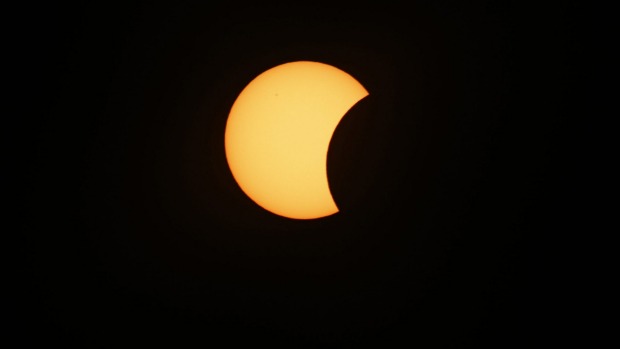
A eclipse occurred in Europe this morning.
Jon Presco
Copyright 2015
http://www.usatoday.com/story/tech/2015/03/18/solar-eclipse/24970217/
Easter is calculated as the first Sunday after the paschal full moon that occurs on or after the vernal equinox. If the full moon falls on a Sunday, then Easter is the following Sunday. The holiday can occur anywhere between March 22 and April 25.
Matthew 27:53 is the fifty-third verse of the twenty-seventh chapter of the Gospel of Matthew in the New Testament. This verse describes some of the events that occurred upon death of Jesus. The previous verse mentioned that tombs broke open and the saints inside were resurrected. In this verse the saints descend upon the Holy City.
The original Koine Greek, according to Westcott and Hort, reads:
- και εξελθοντες εκ των μνημειων μετα την εγερσιν αυτου
- εισηλθον εις την αγιαν πολιν και ενεφανισθησαν πολλοις
In the King James Version of the Bible it is translated as:
- and coming out of the graves after His resurrection,
- they went into the holy city and appeared to many.
The modern World English Bible translates the passage as:
- and coming out of the tombs after his resurrection, they
- entered into the holy city and appeared to many.
For a collection of other versions see BibRef Matthew 27:53
These verses see the resurrection of “many” saints, and their appearance in the city where they are seen by “many.” The concern that Biblical scholars have had for centuries with this story, is that these momentous events are mentioned nowhere else. Not only are they not noticed by any contemporary non-Christian sources, but none of the other gospel writers mentions this occurring. The author of Matthew gives no further details himself about this event.[1] No reaction to these events is described, nor does he mention what happened to the saints after their appearance. Nolland speculates as to what happened after to the risen saints. He considers it unlikely that they simply returned to the grave after a brief time among the living, he also does not think it likely that the saints resumed their normal lives on Earth. Thus Nolland feels that Matthew probably imagines the saints being translated directly to heaven after a short time on Earth, similar to Elijah.[2]
The text also makes no note on why there is a two day delay between the opening of the tombs upon Jesus’ death, and the saints’ appearance in the city only after Jesus’ resurrection. If these events only happen two days hence, why are they mentioned here and not with the miraculous events of the resurrection at Matthew 28:2? Some later manuscripts have “after their resurrection” rather than “his,” rearranging the timeline. Schweizer speculates that this verse contains an ancient correction to Matthew’s original manuscript. Theologically Jesus had to be the first person resurrected, so Schweizer believes the wording of this verse was switched to ensure the saints only rose after Jesus.[3]
Most modern scholars thus do not consider these events to be historical. Bultmann refers to them as “pure novelistic motifs.”[4] Hagnar states the these events make more theological than historical sense.[5] Brown comments that the strength of this part of the narrative is “atmosphere, not details.”[6] There have been attempts to reconcile this verse with other sources. One proposition is that by the “holy city” Matthew is not referring to Jerusalem, but rather to heaven. The saints thus appeared only in heaven, explaining why no other source makes note of this event. Most scholars reject this understanding, as “holy city” has referred to Jerusalem throughout Matthew’s gospel (such as at Matthew 4:5). The theory also fails to explain what is meant when Matthew states they were “seen by many.”[7]
The Crucifixion darkness is an episode in three of the Canonical Gospels in which the sky becomes dark in daytime during the crucifixion of Jesus.
Ancient and medieval Christian writers treated this as a miracle, and believed it to be one of the few episodes from the New Testament which were confirmed by non-Christian sources. Pagan commentators of the Roman era explained it as an eclipse, although Christian writers pointed out that an eclipse during Passover, when the crucifixion took place, would have been impossible; an eclipse cannot occur during a full moon.
Modern scholarship, noting the way in which similar accounts were associated in ancient times with the deaths of notable figures, tends to look upon this phenomenon as a literary invention that attempts to convey a sense of the power of Jesus in the face of death, or a sign of God’s displeasure with the Jewish people. Scholars have also noted the ways in which this episode appears to draw on earlier biblical accounts of darkness from the Book of Amos and the Book of Exodus.
Contents
[hide]
Biblical account[edit]
| Events in the |
| Life of Jesus according to the Gospels |
|---|
 |
Portals:  Christianity Christianity  Bible Bible |
| Part of a series on |
| Death and Resurrection of Jesus |
|---|
 |
| Portals: Christianity Bible |
The oldest biblical reference to the crucifixion darkness is found in the Gospel of Mark, written around the year 70.[1][2] In its account of the crucifixion, on the eve of Passover, it says that after Jesus was crucified at nine in the morning, darkness fell over all the land, or all the world (Greek: γῆν gēn can mean either) from around noon (“the sixth hour”) until 3 o’clock (“the ninth hour”).[3] It adds, immediately after the death of Jesus, that “the curtain of the temple was torn in two, from top to bottom”.[4]
The Gospel of Matthew, written around the year 85 or 90, and using Mark as a source,[5] has an almost identical wording: “From noon on, darkness came over the whole land [or, earth] until three in the afternoon.”[6] The author adds some dramatic details, including an earthquake and the raising of the dead, which were stock motifs from Jewish apocalyptic literature:[7][8] “The earth shook, and the rocks were split. The tombs also were opened, and many bodies of the saints who had fallen asleep were raised.” [9]
The Gospel of Luke, written around the year 90 and also using Mark as a source,[10] has none of the details added in the Matthew version, moves the tearing of the temple veil to before the death of Jesus,[11] and explains the darkness as a darkening of the sun:[12][13]
It was now about noon, and darkness came over the whole land [or, earth] until three in the afternoon, while the sun’s light failed [or, the sun was eclipsed]; and the curtain of the temple was torn in two.[14]
The majority of manuscripts of the Gospel of Luke have the Greek phrase “eskotisthe ho helios” (“the sun was darkened”), but the earliest manuscripts say “tou heliou eklipontos” (“the sun’s light failed” or “the sun was in eclipse”), appearing to explain the event as an eclipse.[15] This earlier version is likely to have been the original one, amended by later scribes to correct what they assumed was an error, since they knew that an eclipse was impossible during Passover.[16][17] One early Christian commentator even suggested that the text had been deliberately corrupted by opponents of the Church to make it easier to attack.[18]
The account of the crucifixion given in the Gospel of John is very different. It takes place on the day of Passover,[19] the crucifixion does not take place until after noon, and there is no mention of darkness, the tearing of the veil, or the raising of the dead.[20]
Later versions[edit]
Apocryphal writers[edit]
A number of accounts in apocryphal literature build on the synoptic accounts of the crucifixion darkness. The Gospel of Peter, probably from the second century, expands on the canonical gospel accounts of the passion narrative in creative ways. As one writer puts it, “accompanying miracles become more fabulous and the apocalyptic portents are more vivid”.[21] In this version, the darkness which covers the whole of Judaea leads people to go about with lamps believing it to be night.[22] The fourth century Gospel of Nicodemus describes how Pilate and his wife are disturbed by a report of what had happened, and the Judeans he has summoned tell him it was an ordinary solar eclipse.[23] Another text from the fourth century, the purported Report of Pontius Pilate to Tiberius, claimed the darkness had started at the sixth hour, covered the whole world, and during the subsequent evening the full moon resembled blood for the entire night.[24] In a fifth- or sixth-century text by Pseudo-Dionysius the Areopagite, the author claims to have observed a solar eclipse from Heliopolis at the time of the crucifixion.[25]
Ancient historians[edit]
There are no original references to this darkness outside of the New Testament; later commentators speculated about a contemporary reference that may have existed in a work by the chronicler Thallus. In the ninth century, the Byzantine historian George Syncellus quoted from the third-century Christian historian Sextus Julius Africanus, who remarked that “Thallos dismisses this darkness as a solar eclipse”.[26] It is not known when Thallus lived, and it is unclear whether he himself made any reference to the crucifixion.[27] Tertullian, in his Apologeticus, told the story of the crucifixion darkness and suggested that the evidence must still be held in the Roman archives.[28]
Until the Enlightenment era, the crucifixion darkness story was often used by Christian apologists because they believed it was a rare example of the biblical account being supported by non-Christian sources. When the pagan critic Celsus claimed that Jesus could hardly be a God because he had performed no great deeds, the third-century Christian commentator Origen responded, in Against Celsus, by recounting the darkness, earthquake and opening of tombs. As proof that the incident had happened, he referred to a description by Phlegon of Tralles of an eclipse accompanied by earthquakes during the reign of Tiberius (probably that of 29 CE).[29]
In his Commentary on Matthew, however, Origen offered a different approach. Answering criticisms that there was no mention of this incident in any of the many non-Christian sources, he insisted that it was local to Palestine, and therefore would have gone unnoticed outside. To suggestions it was merely an eclipse, Origen pointed out that the crucifixion took place at Passover, and so an eclipse was impossible. He suggested other explanations instead, such as heavy clouds, drawing only on the accounts given in Matthew and Mark, which make no mention of the sun.[30]
Explanations[edit]
Miracle[edit]
Because it was known in ancient and medieval times that a solar eclipse could not take place during Passover (solar eclipses require a new moon while Passover only takes place during a full moon) it was considered a miraculous sign rather than a naturally occurring event.[31] The astronomer Johannes de Sacrobosco wrote, in his The Sphere of the World, “the eclipse was not natural, but, rather, miraculous and contrary to nature”.[32] Modern writers who regard this as a miraculous event tend either to see it as operating through a natural phenomenon—such as volcanic dust or heavy cloud cover—or avoid explanation completely.[33] The Reformation Study Bible, for instance, simply states “This was a supernatural darkness.”[34]
Naturalistic explanations[edit]

Some commentators suggested the darkness was a solar eclipse.
The Gospel of Luke account appears to describe the event as an eclipse, and some non-Christian writers dismissed it in these terms. However, the biblical details do not accord with an eclipse: a solar eclipse could not have occurred on or near the Passover, when Jesus was crucified, and would have been too brief to account for three hours of darkness. The maximum possible duration of a total solar eclipse is seven minutes and 31.1 seconds.[35] A total eclipse on 24 November 29 CE was visible slightly north of Jerusalem at 11:05 AM.[36] The period of totality in Nazareth and Galilee was one minute and forty-nine seconds, and the level of darkness would have been unnoticeable for people outdoors.[37]
In 1983, Colin Humphreys and W. G. Waddington, who had used astronomical methods to calculate the crucifixion date as 3 April 33,[38] argued that the darkness could be accounted for by a partial lunar eclipse that had taken place on that day.[39] Astronomer Bradley E. Schaefer, on the other hand, pointed out that the eclipse would not have been visible during daylight hours.[40][41] Humphreys and Waddington speculated that the reference in the Luke Gospel to a solar eclipse must have been the result of a scribe wrongly amending the text, a claim historian David Henige describes as “indefensible”.[12]
Some writers have explained the crucifixion darkness in terms of sunstorms, heavy cloud cover, or the aftermath of a volcanic eruption.[42] Another possible natural explanation is a khamsin dust storm that tends to occur from March to May.[43] A popular work of the nineteenth century described it as an ‘oppressive gloom’ and suggested this was a typical phenomenon related to earthquakes.[44]
Literary creation[edit]
A common view in modern scholarship is that the account in the synoptic gospels is a literary creation of the gospel writers, intended to heighten the importance of what they saw as a theologically significant event. Burton Mack describes it as a fabrication by the author of the Gospel of Mark,[45] while G. B. Caird and Joseph Fitzmyer conclude that the author did not intend the description to be taken literally.[46][47] W. D. Davies and Dale Allison similarly conclude “It is probable that, without any factual basis, darkness was added in order to wrap the cross in a rich symbol and/or assimilate Jesus to other worthies”.[48]
The image of darkness over the land would have been understood by ancient readers as a cosmic sign, a typical element in the description of the death of kings and other major figures by writers such as Philo, Dio Cassius, Virgil, Plutarch and Josephus.[49] Géza Vermes describes the darkness account as “part of the Jewish eschatological imagery of the day of the Lord. It is to be treated as a literary rather than historical phenomenon notwithstanding naive scientists and over-eager television documentary makers, tempted to interpret the account as a datable eclipse of the sun. They would be barking up the wrong tree”.[50]
Interpretations[edit]
This sequence plays an important part in the gospel’s literary narrative. The author of Mark’s gospel has been described as operating here “at the peak of his rhetorical and theological powers”.[51] One suggestion is that the darkness is a deliberate inversion of the transfiguration;[51] alternately, Jesus’s earlier discourse about a future tribulation mentions the sun being darkened,[52] and can be seen as foreshadowing this scene.[53] Striking details such as the darkening of the sky and the tearing of the temple veil may be a way of focusing the reader away from the shame and humiliation of the crucifixion; one professor of biblical theology concluded, “it is clear that Jesus is not a humiliated criminal but a man of great significance. His death is therefore not a sign of his weakness but of his power.”[54]
When considering the theological meaning of the event, some authors have interpreted the darkness as a period of mourning by the cosmos itself at the death of Jesus.[55] Others have seen it as a sign of God’s judgement on the Jewish people, sometimes connecting it with the destruction of the city of Jerusalem in the year 70; or as symbolising shame, fear, or the mental suffering of Jesus.[56] Fitzmyer compares the event to a contemporary description recorded in Josephus‘ Antiquities of the Jews,[57] which recounts “unlawful acts against the gods, from which we believe the very sun turned away, as if it too were loath to look upon the foul deed”.[58]
Many writers have adopted an intertextual approach, looking at earlier texts from which the author of the Mark Gospel may have drawn. In particular, parallels have often been noted between the darkness and the prediction in the Book of Amos of an earthquake in the reign of King Uzziah of Judah: “On that day, says the Lord God, I will make the sun go down at noon, and darken the earth in broad daylight”.[59] Particularly in connection with this reference, read as a prophecy of the future, the darkness can be seen as portending the end times.[60]
Another likely literary source is the plague narrative in the Book of Exodus, in which Egypt is covered by darkness for three days.[61] It has been suggested that the author of the Matthew Gospel changed the Marcan text slightly to more closely match this source.[62] Commentators have also drawn comparisons with the description of darkness in the Genesis creation narrative,[63] with a prophecy regarding mid-day darkness by Jeremiah,[64] and with an end-times prophecy in the Book of Zechariah.[65][66]
 Rosamond Press
Leave a comment