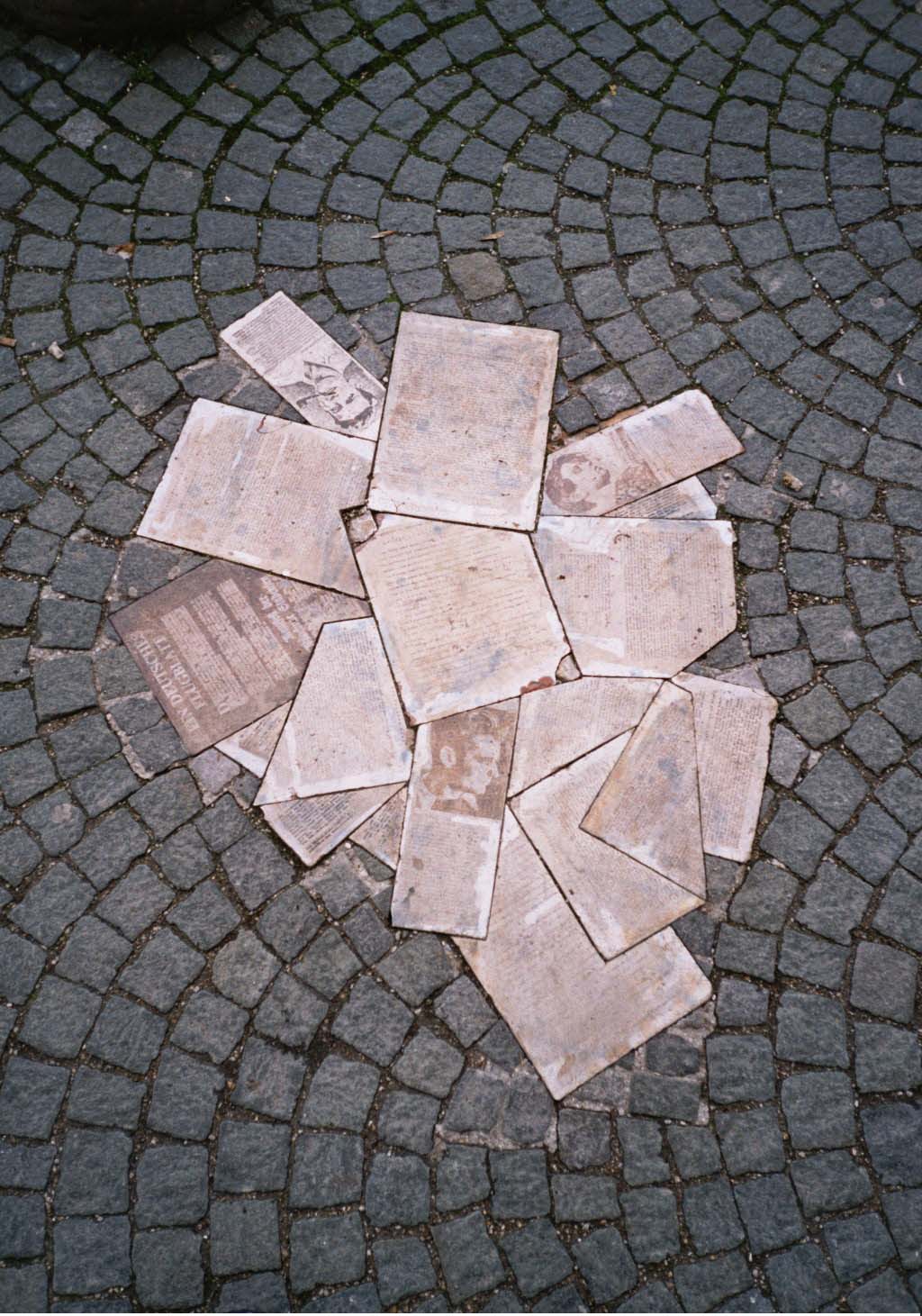

All Dictators, Kings, Popes, and Caliphates, ingage in one common thing, LOYALTY CHECKS. If being a hippie was about anything, it is about DEFYING LOYALTY CHECKS. Here are our roots in Nazi Germany. These students were BEHEADED!
Jon Presco
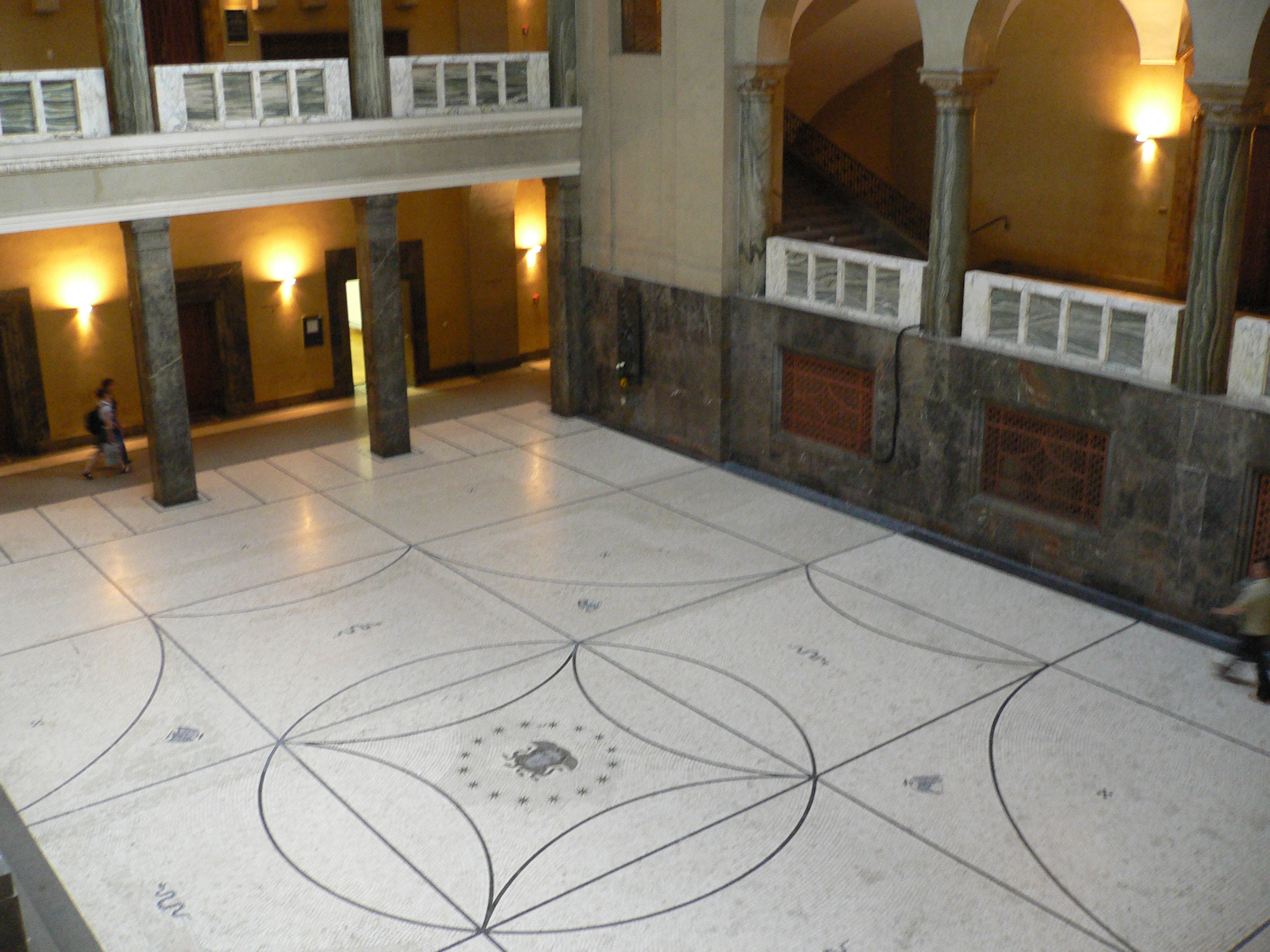
On 18 February 1943, coincidentally the same day that Nazi propaganda minister Joseph Goebbels called on the German people to embrace total war in his Sportpalast speech, the Scholls brought a suitcase full of leaflets to the university. They hurriedly dropped stacks of copies in the empty corridors for students to find when they flooded out of lecture rooms. Leaving before the class break, the Scholls noticed that some copies remained in the suitcase and decided it would be a pity not to distribute them. They returned to the atrium and climbed the staircase to the top floor, and Sophie flung the last remaining leaflets into the air. This spontaneous action was observed by the custodian Jakob Schmid. The police were called and Hans and Sophie Scholl were taken into Gestapo custody. Sophie and Hans were interrogated by Gestapo interrogator Robert Mohr, who initially thought Sophie was innocent. However, after Hans confessed, Sophie assumed full responsibility in an attempt to protect other members of the White Rose. Despite this, the other active members were soon arrested, and the group and everyone associated with them were brought in for interrogation.
The Scholls and Probst were the first to stand trial before the Volksgericht—the People’s Court that tried political offenses against the Nazi German state—on 22 February 1943. They were found guilty of treason and Roland Freisler, head judge of the court, sentenced them to death. The three were executed the same day by guillotine at Stadelheim Prison. All three were noted for the courage with which they faced their deaths, particularly Sophie, who remained firm despite intense interrogation. (Reports that she arrived at the trial with a broken leg from torture were false.) She said to Freisler during the trial, “You know as well as we do that the war is lost. Why are you so cowardly that you won’t admit it?”[16] When Hans was executed, he said “Let freedom live” as the blade fell.
The second White Rose trial took place on 19 April 1943. Only eleven had been indicted before this trial. At the last minute, the prosecutor added Traute Lafrenz (who was considered so dangerous that she was to have had a trial all to herself), Gisela Schertling and Katharina Schüddekopf. Others tried were Hans Hirzel, Susanne Hirzel, Franz Josef Müller, Heinrich Guter, Eugen Grimminger, Heinrich Bollinger, Helmut Bauer and Falk Harnack.[4] None had an attorney. One was assigned after the women appeared in court with their friends. Prior to their deaths, several members of the White Rose believed that their execution would stir university students and other anti-war citizens into activism against Hitler and the war.
Huber had counted on the good services of his friend, attorney Justizrat Roder, a high-ranking Nazi. Roder had not bothered to visit Huber before the trial and had not read Huber’s leaflet. Another attorney had carried out all the pre-trial paperwork. When Roder realized how damning the evidence was against Huber, he resigned. The junior attorney took over.[citation needed]
Grimminger initially was to receive the death sentence for funding their operations, but escaped with a sentence of ten years in a penitentiary.[citation needed]
The third White Rose trial was to have taken place on 20 April 1943 (Hitler’s birthday), because Freisler anticipated death sentences for Wilhelm Geyer, Harald Dohrn, Josef Söhngen and Manfred Eickemeyer. He did not want too many death sentences at a single trial, and had scheduled those four for the next day. However, the evidence against them was lost, and the trial was postponed until 13 July 1943.
At that trial, Gisela Schertling—who had betrayed most of the friends, even fringe members like Gerhard Feuerle—changed her mind and recanted her testimony against all of them. Since Freisler did not preside over the third trial, the judge acquitted all but Söhngen (who got only six months in prison) for lack of evidence.
Alexander Schmorell and Kurt Huber were beheaded on 13 July 1943, and Willi Graf on 12 October 1943. Huber’s widow was sent a bill for 600 marks (twice her husband’s monthly salary) for “wear of the guillotine.”[2] Friends and colleagues of the White Rose, who had helped in the preparation and distribution of leaflets and in collecting money for the widow and young children of Probst, were sentenced to prison terms ranging from six months to ten years.
After her release for the sentence handed down on 19 April, Traute Lafrenz was rearrested. She spent the last year of the war in prison. Trials kept being postponed and moved to different locations because of Allied air raids. Her trial was finally set for April 1945, after which she probably would have been executed. Three days before the trial, however, the Allies liberated the town where she was held prisoner, thereby saving her life.
The White Rose had the last word. Their last leaflet was smuggled to the Allies, who edited it and air-dropped millions of copies over Germany. The members of the White Rose, especially Sophie, became icons of the new post-war Germany.
Commemoration[edit]

A black granite memorial to the White Rose Movement in the Hofgarten in Munich with the dome of the Bavarian State Chancellery in the background

With the fall of Nazi Germany, the White Rose came to represent opposition to tyranny in the German psyche and was lauded for acting without interest in personal power or self-aggrandizement. Their story became so well known that the composer Carl Orff claimed (falsely by some accounts)[17] to his Allied interrogators that he was a founding member of the White Rose and was released. He was personally acquainted with Huber, but there is no evidence that Orff was ever involved in the movement.
On February 5, 2012, Alexander Schmorell was canonized as a New Martyr by the Orthodox Church.
The square where the central hall of Munich University is located has been named “Geschwister-Scholl-Platz” after Hans and Sophie Scholl; the square opposite to it is “Professor-Huber-Platz”. Two large fountains are in front of the university, one on either side of Ludwigstraße. The fountain in front of the university is dedicated to Hans and Sophie Scholl. The other, across the street, is dedicated to Professor Huber. Many schools, streets, and other places across Germany are named in memory of the members of the White Rose.
One of Germany’s leading literary prizes is called the “Geschwister Scholl” prize (the “Scholl Siblings” prize). Likewise, the asteroid 7571 Weisse Rose is named after the group.
The White Rose has also received artistic treatments, including the acclaimed opera Weiße Rose by Udo Zimmermann, In memoriam: die weisse Rose by Hans Werner Henze and Kommilitonen!, an opera by Peter Maxwell Davies.
In the media[edit]
The following is a non-exhaustive chronological account of some of the more notable treatments of the White Rose in media, book and artistic form.
The New York Times published articles on the first White Rose trials on 29 March 1943 and 25 April 1943, entitled “Nazis Execute 3 Munich Students For Writing Anti-Hitler Pamphlets”[18] and “Germans Clinging to Victory Hope in Fear of Reprisals,” respectively. Though they did not correctly record all of the information about the resistance, the trials, and the execution, they were the first acknowledgement of the White Rose in the United States.
Beginning in the 1970s, three film accounts of the White Rose resistance were produced. The first was a film financed by the Bavarian state government entitled Das Versprechen (The Promise) and released in the 1970s. The film is not well known outside Germany, and to some extent even within the country. It was particularly notable in that unlike most films, it showed the White Rose from its inception and how it progressed. In 1982, Percy Adlon‘s Fünf letzte Tage (The Last Five Days) presented Lena Stolze as Sophie in her last days from the point of view of her cellmate Else Gebel. In the same year, Stolze repeated the role in Michael Verhoeven‘s Die Weiße Rose (The White Rose).
A book, Sophie Scholl and the White Rose, was published in English in February 2006. An account by Annette Dumbach and Dr. Jud Newborn tells the story behind the film Sophie Scholl: The Final Days, focusing on the White Rose movement while setting the group’s resistance in the broader context of German culture and politics and other forms of resistance during the Nazi era.
As mentioned earlier, Udo Zimmermann composed a chamber opera about the White Rose (Weiße Rose) in 1986. Premiering in Hamburg, it went on to earn acclaim and a series of international performances.
Lillian Garrett-Groag‘s play, The White Rose, premiered at the Old Globe Theatre in 1991. Several plays have also been written by teachers in the USA for performance by students.
In Fatherland, an alternate history novel by Robert Harris, there is passing reference to the White Rose still remaining active in supposedly Nazi-ruled Germany in 1964.
In an extended German national TV competition held in the autumn of 2003 to choose “the ten greatest Germans of all time” (ZDF TV), Germans under the age of 40 placed Hans and Sophie Scholl in fourth place, selecting them over Bach, Goethe, Gutenberg, Willy Brandt, Bismarck, and Albert Einstein. Not long before, women readers of the mass-circulation magazine Brigitte had voted Sophie Scholl as “the greatest woman of the twentieth century”.
In 2003, a group of students at the University of Texas at Austin, Texas established The White Rose Society dedicated to Holocaust remembrance and genocide awareness. Every April, the White Rose Society hands out 10,000 white roses on campus, representing the approximate number of people killed in a single day at Auschwitz. The date corresponds with Yom Hashoah, Holocaust Memorial Day. The group organizes performances of The Rose of Treason, a play about the White Rose, and has rights to show the movie Sophie Scholl – Die letzten Tage (Sophie Scholl: The Final Days). The White Rose Society is affiliated with Hillel and the Anti-Defamation League.[citation needed]
In February 2005, a movie about Sophie Scholl’s last days, Sophie Scholl – Die letzten Tage (Sophie Scholl: The Final Days), featuring actress Julia Jentsch as Sophie, was released. Drawing on interviews with survivors and transcripts that had remained hidden in East German archives until 1990, it was nominated for an Academy Award for Best Foreign Language Film in January 2006. An American film project about the White Rose continues to be under development[citation needed] by co-author Jud Newborn of the 2006 book Sophie Scholl and the White Rose.[13]
White Rose has inspired many people around the world, including many anti-war activists in recent years. Scattered throughout 2007-2008, 5 hoax pipe bombs were placed at various military recruitment centers with the words “Die Weisse Rose” written upon them.[19]
In February 2009, a biography of Sophie Scholl, Sophie Scholl: The Real Story of the Woman Who Defied Hitler, was published in English by the History Press. The book, by the Oxford-educated British historian Frank McDonough.
The UK-based genocide prevention student network Aegis Students uses a white rose as their symbol in commemoration of the White Rose movement. There are numerous study guides to the White Rose, notably one available from the University of Minnesota‘s Holocaust Center.
In 2009, Dan Fesperman published a novel entitled The Arms Maker of Berlin in which activities by real and fictional White Rose characters play a significant role in the story.
In 2011, a documentary film by André Bossuroy addressing the memory of the victims of Nazism and of Stalinism ICH BIN, with the support from the Fondation Hippocrène and from the EACEA Agency of the European Commission (programme Europe for Citizens – An active European remembrance), RTBF, VRT. Four young Europeans meet with historians and witnesses of our past… They investigate the events of the Second World War in Germany (the student movement of the White Rose in Munich), in France (the Vel’ d’Hiv Roundup in Paris, the resistance in Vercors) and in Russia (Katyn Forest massacre). They examine the impact of these events; curious as to how the European peoples are creating their identities today.
 Rosamond Press
Leave a comment