

If Pynchon is a recluse due to mental illness, then I and most of the world is sympathetic. However, when this so-called “parody” hurts certain people, and this parody is condoned by great writers, then, this parody needs to be exposed for what it is.
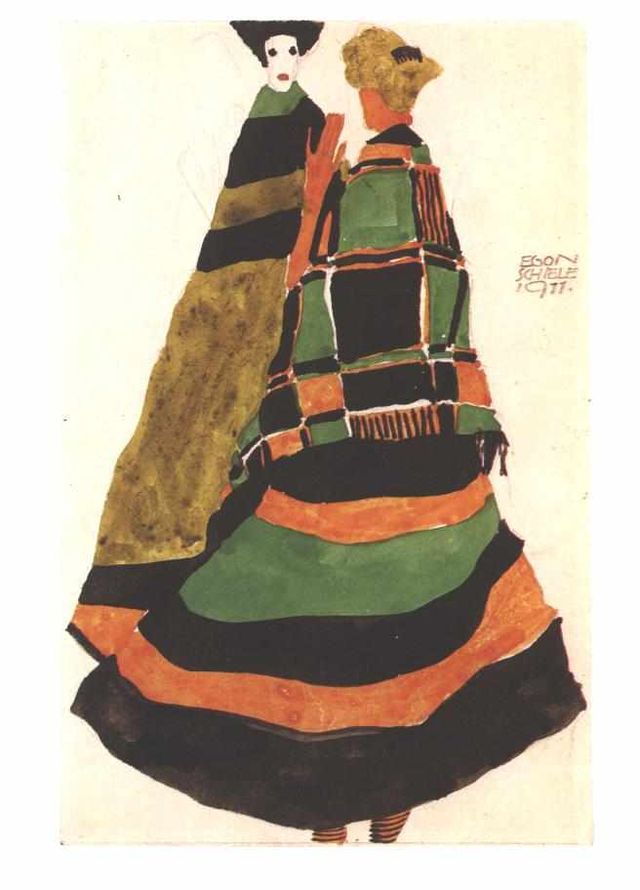
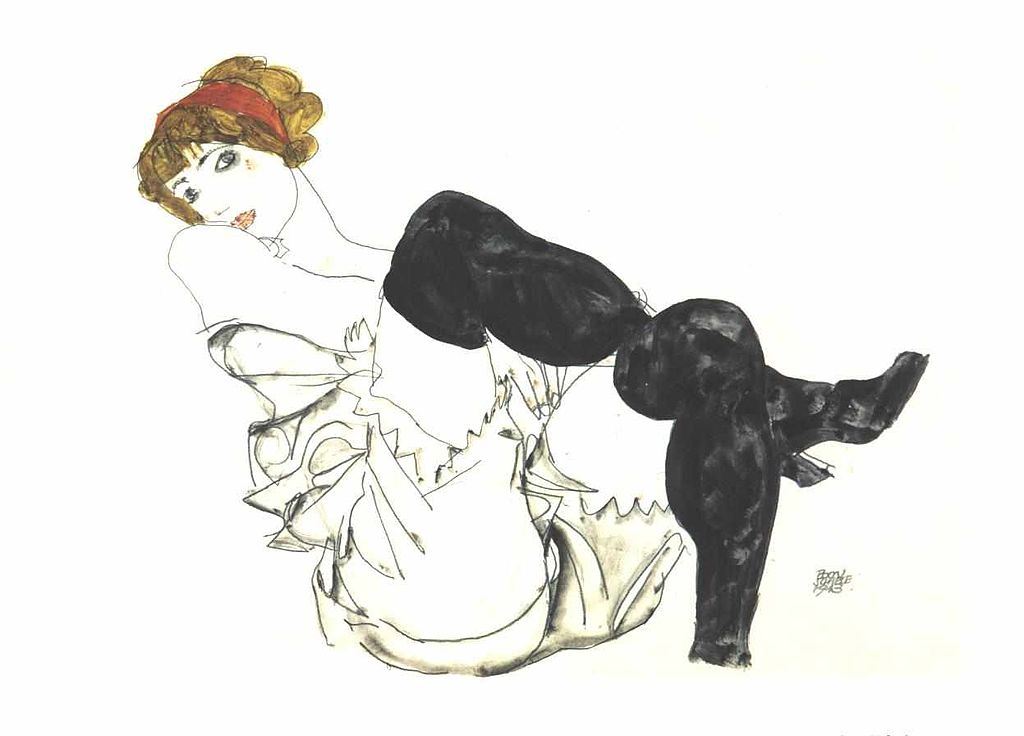
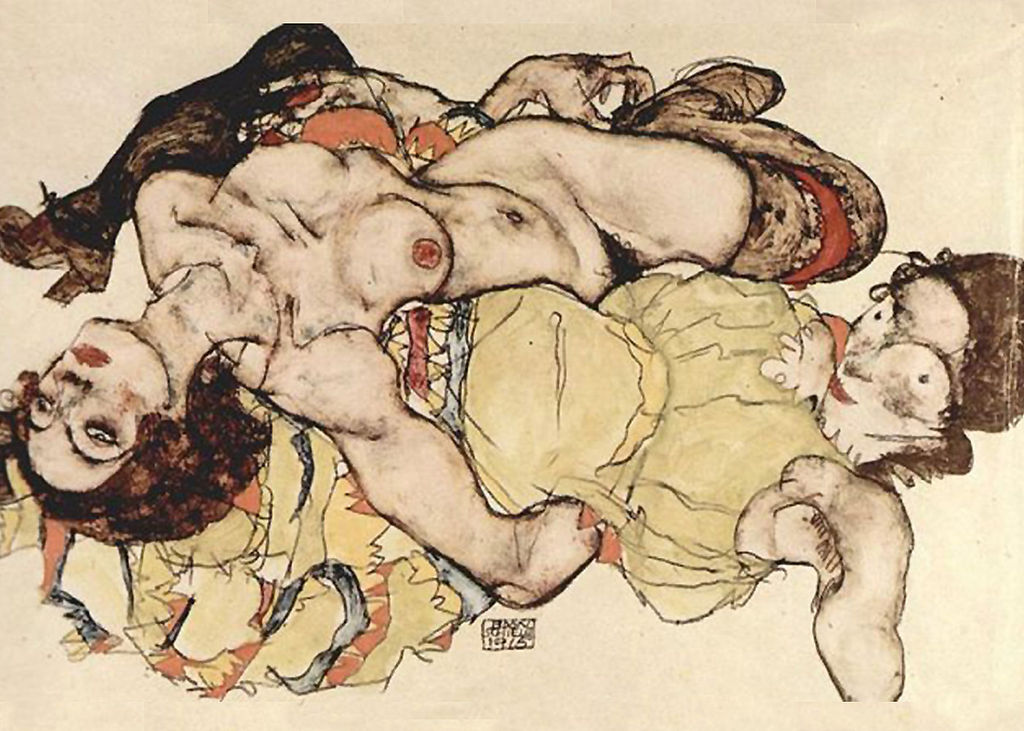
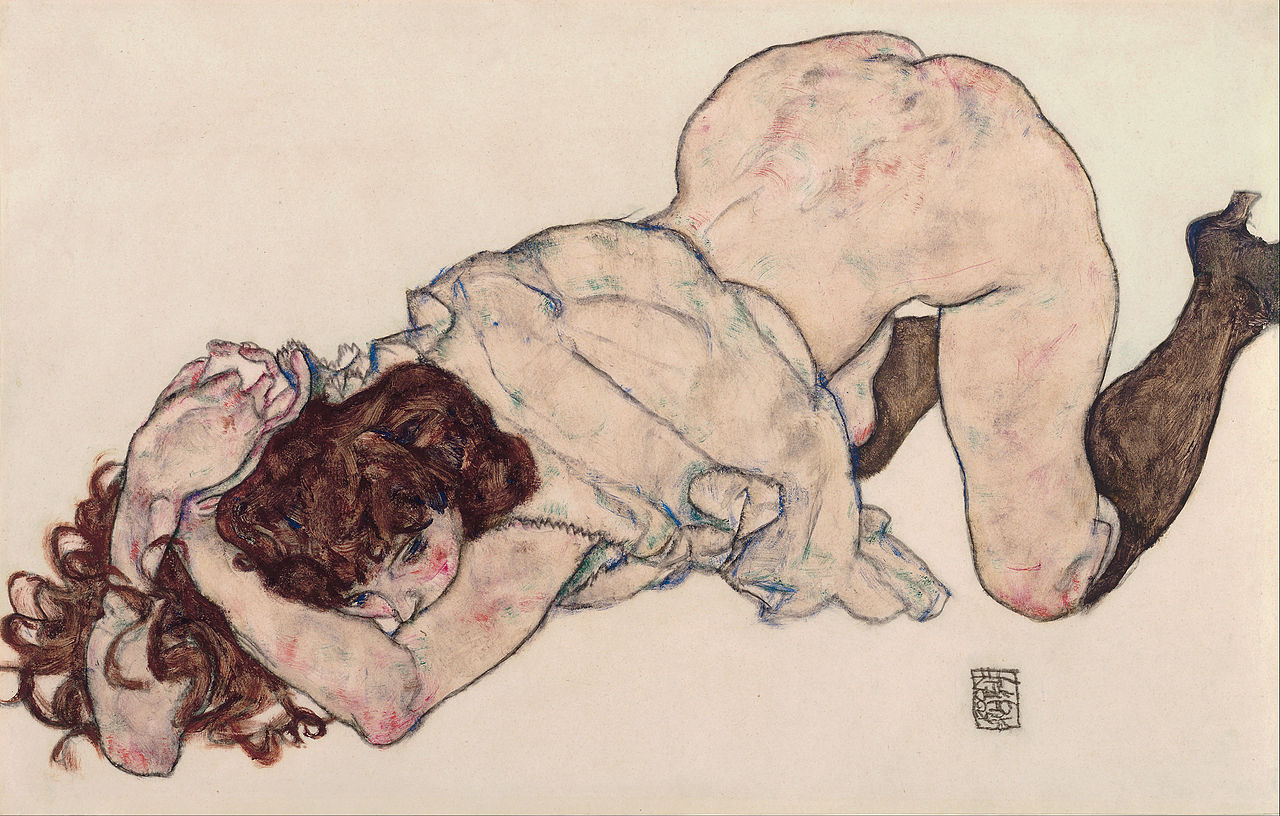
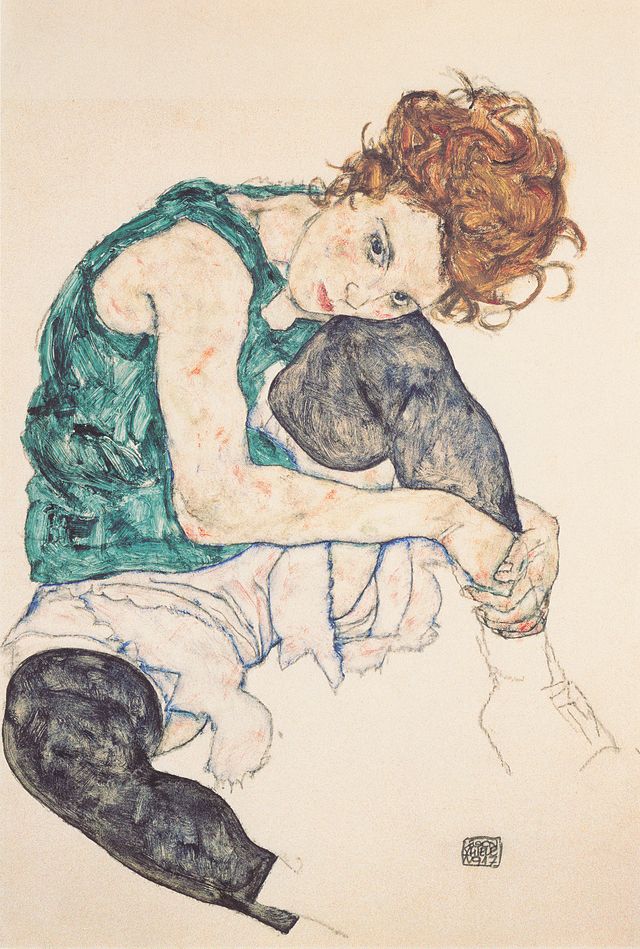
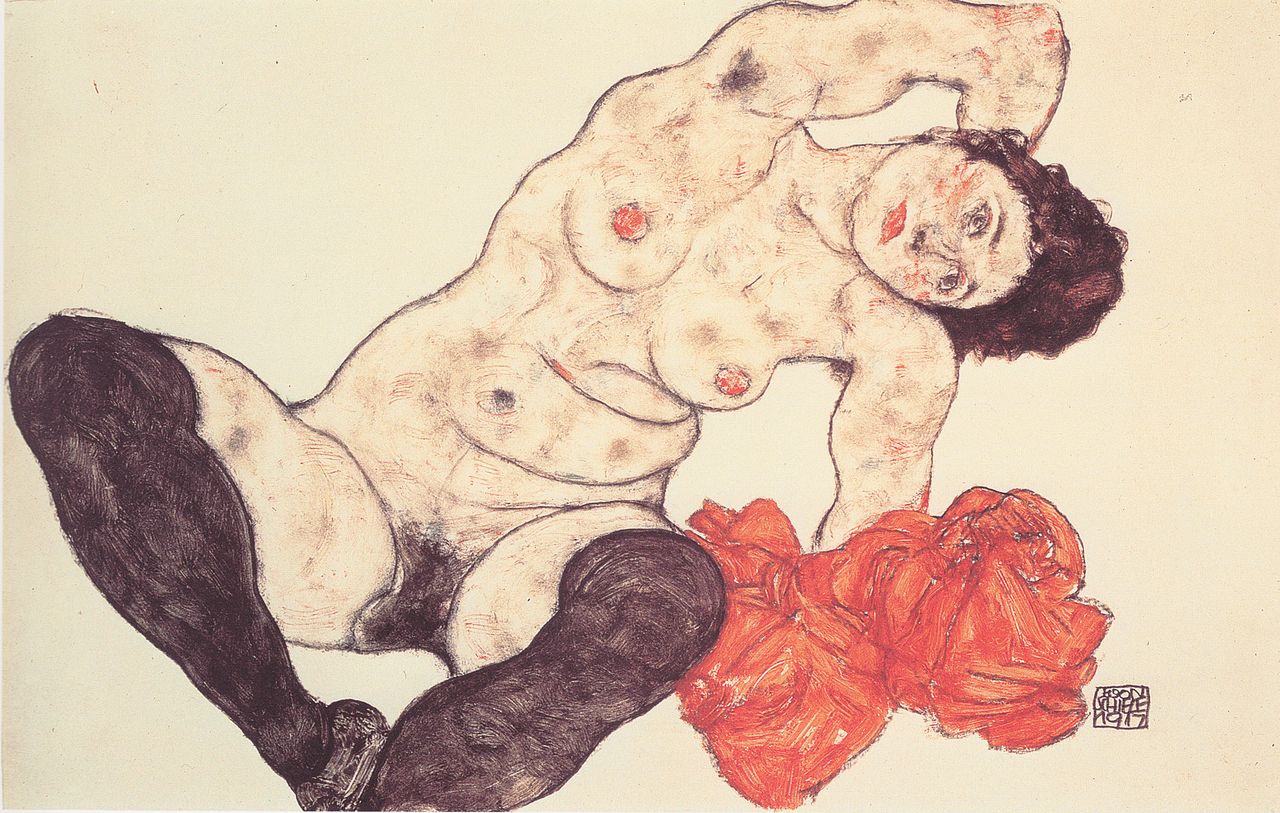
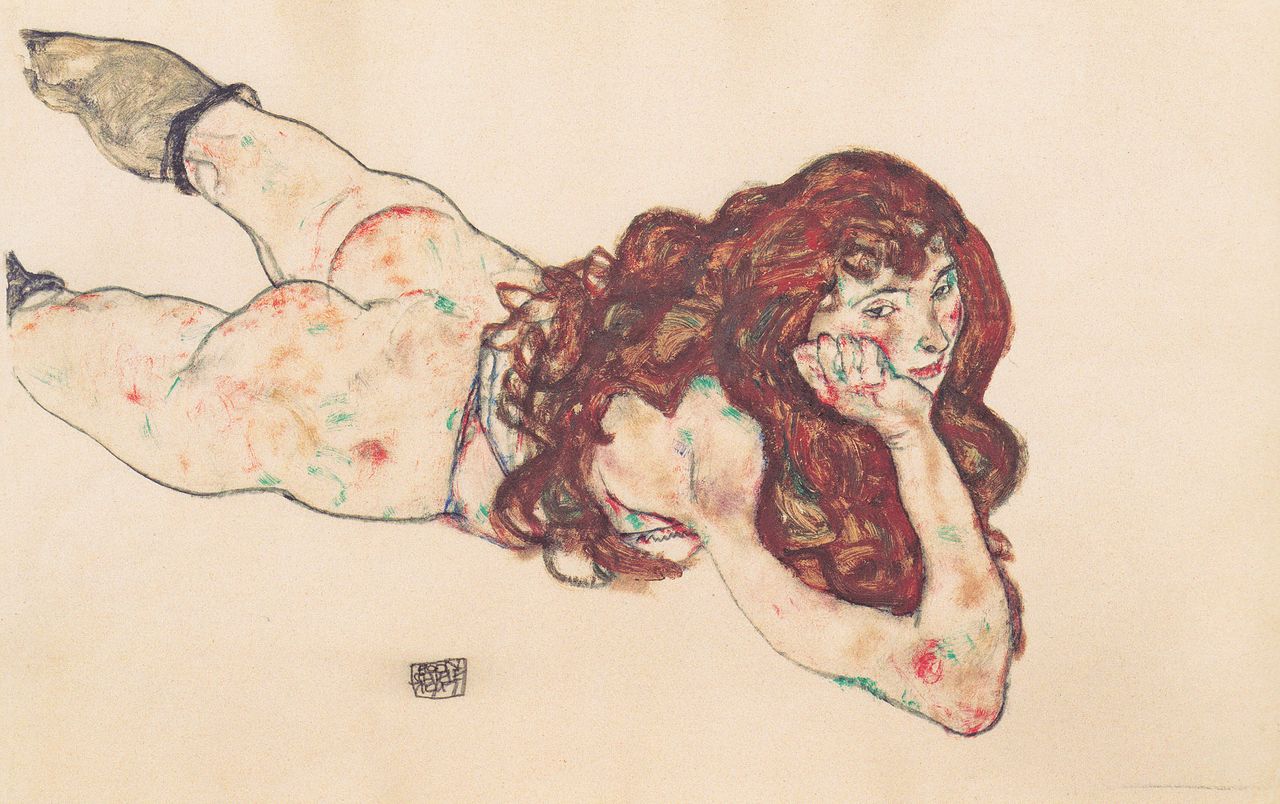
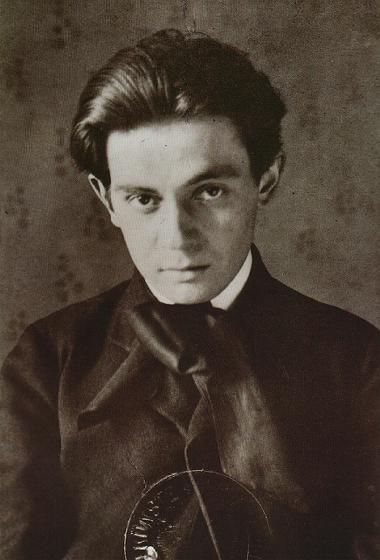
Jirayr Zorthian has been given the title ‘The Last Bohemian’. Did he die in Vineland? His children own a vineyard. His artwork is similar to Egon Schiele who may be the most persecuted artist in history. Egon’s women resemble the work of Christine Rosamond, who is kin to Thomas Pyncon, and who lived with the Zorthian sisters in a commune.. Zorthian was a good friend of Charlie Parker. Pynchon is a pretend friend of Jazz artists, and would have been a guest at the Zorthian Ranch, if he wasn’t such a Freak!
I did not go to the Whiteaker Block Party because of the threats of Alley Valkyrie and her anarchist friends, who labeled me a dangerous sex pervert who is stalking a young girl, Belle Burch, who is twenty-three, agreed to pose me, and wanted to go to New York with me to take in a show. Egon was accused and arrested for the same thing, his art used as evidence against him. The anarchists lifted words from this blog to convict me in their Kangaroo Witch Hunt. The Nazis Witch Hunt stole his art and the art of his friend, Klimpt, who influenced Egon’s style.
EGON HAD EVERY REASON TO BE PARANOID. He was never a parody of himself. He suffered for his art. .
A live pig was sacrifice and eaten at the Zorthian Ranch. Does this symbolize the devouring of Pynchon as the Faux Dionysus of the Hippie Age?
I am allowed to take liberties with Pynchon because the artwork of our ex-wife has been linked to this infamous writer. There is a cross-over.
Jon Presco
http://en.wikipedia.org/wiki/Egon_Schiele
http://en.wikipedia.org/wiki/Jirayr_Zorthian
The Politics of Degeneration[edit]
Nordau did not himself coin the expression or the idea of Entartung; it had been steadily growing in use in German speaking countries during the 19th century. The book reflects views on a degenerating society held by many people in Europe at the time, especially throughout the Austro-Hungarian Empire. By the early 20th century, the idea that society was degenerating, and that this degeneration was influenced by art, led to somewhat hysterical backlashes, as evidenced by the conviction of Austrian artist Egon Schiele for “distributing pornography to minors”.


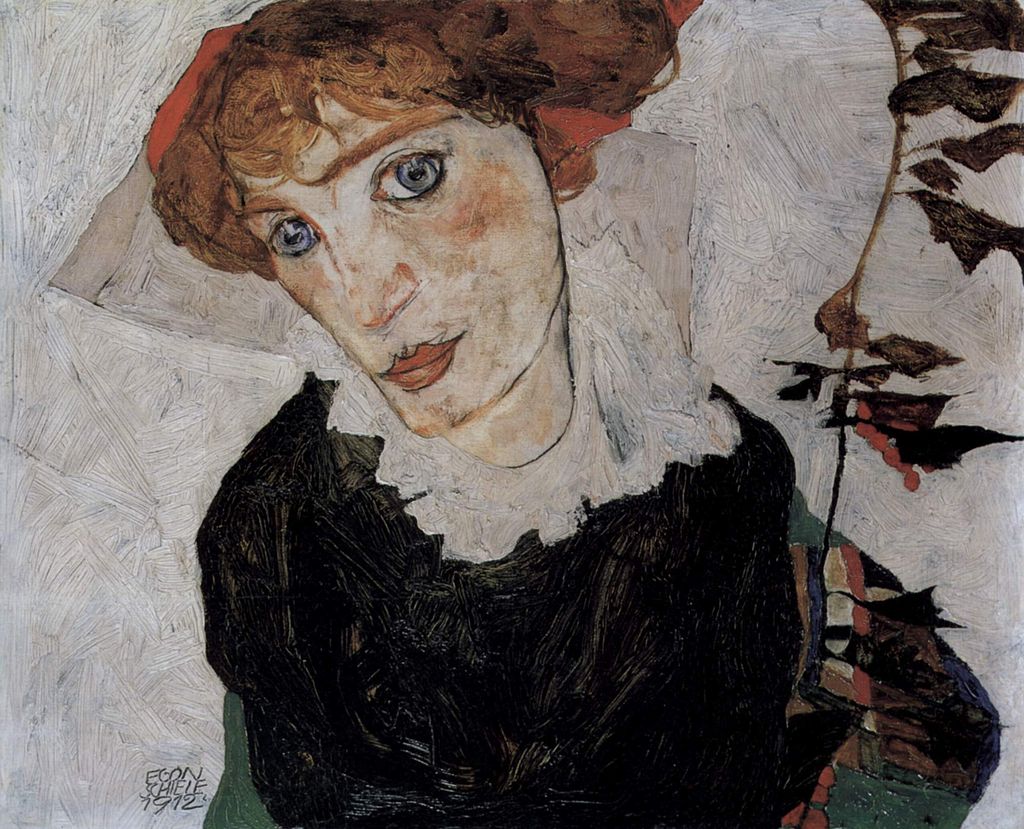
In 1911, Schiele met the seventeen-year-old Walburga (Wally) Neuzil, who lived with him in Vienna and served as a model for some of his most striking paintings. Very little is known of her, except that she had previously modelled for Gustav Klimt and might have been one of his mistresses. Schiele and Wally wanted to escape what they perceived as the claustrophobic Viennese milieu, and went to the small town of Český Krumlov (Krumau) in southern Bohemia. Krumau was the birthplace of Schiele’s mother; today it is the site of a museum dedicated to Schiele. Despite Schiele’s family connections in Krumau, he and his lover were driven out of the town by the residents, who strongly disapproved of their lifestyle, including his alleged employment of the town’s teenage girls as models.
Portrait of Arthur Rössler, 1910
Neulengbach and imprisonment[edit]
Together they moved to Neulengbach, 35 km west of Vienna, seeking inspirational surroundings and an inexpensive studio in which to work. As it was in the capital, Schiele’s studio became a gathering place for Neulengbach’s delinquent children. Schiele’s way of life aroused much animosity among the town’s inhabitants, and in April 1912 he was arrested for seducing a young girl below the age of consent.
When they came to his studio to place him under arrest, the police seized more than a hundred drawings which they considered pornographic. Schiele was imprisoned while awaiting his trial. When his case was brought before a judge, the charges of seduction and abduction were dropped, but the artist was found guilty of exhibiting erotic drawings in a place accessible to children. In court, the judge burned one of the offending drawings over a candle flame. The twenty-one days he had already spent in custody were taken into account, and he was sentenced to only three days’ imprisonment. While in prison, Schiele created a series of 12 paintings depicting the difficulties and discomfort of being locked in a jail cell.
Gustav Klimt was born in Baumgarten, near Vienna in Austria-Hungary, the second of seven children—three boys and four girls.[3] His mother, Anna Klimt (née Finster), had an unrealized ambition to be a musical performer. His father, Ernst Klimt the Elder, formerly from Bohemia, was a gold engraver.[4] All three of their sons displayed artistic talent early on. Klimt’s younger brothers were Ernst Klimt and Georg Klimt.
Klimt lived in poverty while attending the Vienna School of Arts and Crafts (Kunstgewerbeschule), where he studied architectural painting until 1883.[4] He revered Vienna’s foremost history painter of the time, Hans Makart. Klimt readily accepted the principles of a conservative training; his early work may be classified as academic.[4] In 1877 his brother, Ernst, who, like his father, would become an engraver, also enrolled in the school. The two brothers and their friend, Franz Matsch, began working together and by 1880 they had received numerous commissions as a team that they called the “Company of Artists”. They also helped their teacher in painting murals in the Kunsthistorisches Museum in Vienna.[4] Klimt began his professional career painting interior murals and ceilings in large public buildings on the Ringstraße, including a successful series of “Allegories and Emblems”.
http://en.wikipedia.org/wiki/Gustav_Klimt
http://en.wikipedia.org/wiki/Egon_Schiele
http://en.wikipedia.org/wiki/Nazi_plunder
Portrait of Wally is a 1912 oil painting by Austrian painter Egon Schiele of Valerie “Wally” Neuzil, a woman he met in 1911 when she was 17 years old and who was a model for a number of Schiele’s most striking paintings. The painting was purchased by Rudolf Leopold in 1954 and became part of the collection of the Leopold Museum when it was established by the Austrian government, purchasing 5,000 pieces that Leopold had owned. Near the end of a 1997-1998 exhibit of Schiele’s work at the Museum of Modern Art in New York City, the painting’s history was revealed in an article published in The New York Times. After the publication, the heirs of Lea Bondi Jaray, to whom the work had belonged, contacted the New York County District Attorney who issued a subpoena forbidding its return to Austria. The work was tied up in litigation for years by Bondi’s heirs, who claimed that the painting was Nazi plunder and should have been returned to them.
In July 2010, the Leopold Museum agreed to pay $19 million to Bondi’s heirs under an agreement that would address all outstanding claims on the painting.
http://www.tout.com/m/lw0q7r
http://en.wikipedia.org/wiki/Jirayr_Zorthian
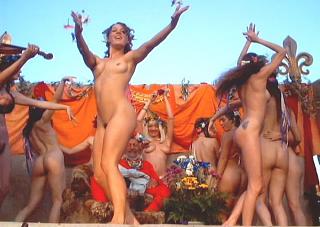
Mr. Zorthian held court at his ranch in Altadena, where he created murals and sculptures and hosted sprawling parties that featured naked nymphs and celebrities like Andy Warhol and musician Charlie Parker. Mr. Zorthian got along famously with socialites, intellectuals and scientists and counted renowned physicist Richard Feynman as a close friend.
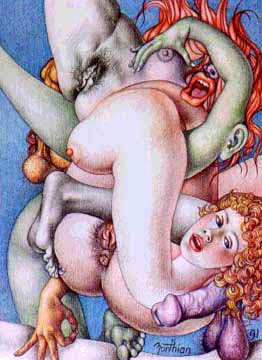
Armenian in ancestry, Mr. Zorthian was born in Turkey and came to the United States in 1923. He later received a master’s degree in fine arts from Yale University. His artwork, which has been exhibited around the world, focused primarily on the naked female form. “Every man’s fantasy,” he said of his work.
Zorthian is known among physicists for his friendship with Richard Phillips Feynman, Nobel Prize winning physicist. They met at a party where Feynman played bongos: Zorthian removed his shirt and made funny designs on his own chest with available materials. Zorthian and Feynman’s attempts to teach each other physics and art respectively are described in Feynman’s autobiography Surely You’re Joking, Mr. Feynman!.
A parody (/ˈpærədi/; also called spoof, send-up or lampoon), in use, is an imitative work created to imitate, or comment on and trivialize[citation needed] an original work, its subject, author, style, or some other target, by means of satiric or ironic imitation. As the literary theorist Linda Hutcheon puts it, “parody … is imitation, not always at the expense of the parodied text.” Another critic, Simon Dentith, defines parody as “any cultural practice which provides a relatively polemical allusive imitation of another cultural production or practice.”[1] Parody may be found in art or culture, including literature, music (although “parody” in music has an earlier, somewhat different meaning than for other art forms), animation, gaming and film.
According to Aristotle (Poetics, ii. 5), Hegemon of Thasos was the inventor of a kind of parody; by slightly altering the wording in well-known poems he transformed the sublime into the ridiculous. In ancient Greek literature, a parodia was a narrative poem imitating the style and prosody of epics “but treating light, satirical or mock-heroic subjects”.[5] Indeed, the components the Greek word are παρά para “beside, counter, against” and ᾠδή oide “song”. Thus, the original Greek word παρῳδία parodia has sometimes been taken to mean “counter-song”, an imitation that is set against the original. The Oxford English Dictionary, for example, defines parody as imitation “turned as to produce a ridiculous effect”.[6] Because par- also has the non-antagonistic meaning of beside, “there is nothing in parodia to necessitate the inclusion of a concept of ridickule”.[7] Old Comedy contained parody, even the Gods could be made fun of. The Frogs portrays the hero-turned-god Heracles as a Glutton and the God of Drama Dionysus as cowardly and unintelligent. The traditional trip to the Underworld story is parodied as Dionysus dresses as Heracles to go to the Underworld, in an attempt to bring back a Poet to save Athens.
Roman writers explained parody as an imitation of one poet by another for humorous effect.[citation needed] In French Neoclassical literature, parody was also a type of poem where one work imitates the style of another to produce a humorous effect. The Ancient Greeks created satyr plays which parodied tragic plays, often with performers dressed like satyrs.
 Rosamond Press
Leave a comment