Those ‘In the know’ recognized I just posted ‘Pynchon’s Last Supper’ and have booked the best seats on the Ark. (Arkapedia) I’m afraid the rest of you are going to have to engage your minds in a extremely tedious and banal contest that was put forth by a sports writer high on peyote in 1919. Being a Baba Lover I am amused by this account of the Death of German Jewish Culture, again, brought on by the rejection of a Pynchon novel.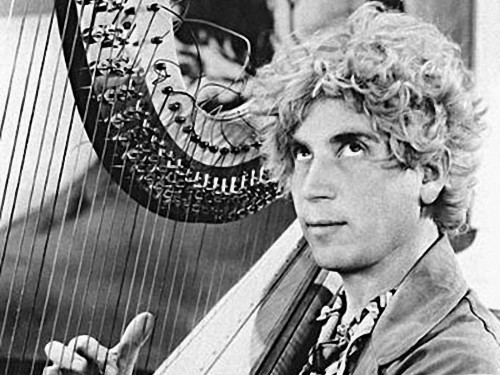

“Mr. Naumann, however, remains focused on the single evening. “I wasn’t there because the jury chose not to put Thomas Pynchon into the list of finalists,” he said. “I felt it was so awkward, not to say nuts . How could they say, To hell with one of the greatest writers produced in this century?”
I have said “to hell with success” a thousand times with the help of my spirit guide whom a Seer and the Berkeley Psychic Institute identified as a “Powerful entity that roams the universe, coming to the aid of planets in dire distress.”
Twenty five years ago I identified what causes this distress. Ten years ago I identified this entity, and installed the Shekinah on Santa Cruz Island for safe keeping. This was the most brilliant thing to do, proceeded by my solving the Israeli Middle East Crisis, once and for all, by founding the new nation of Baja-Israel, that for now only exists in cyber-space – and is the True Vortex – that Pynchon found the BACK DOOR to when he was shown the door, not invited to this Tower of Book Babel gathering that was right out of a Marx Brother’s movie.
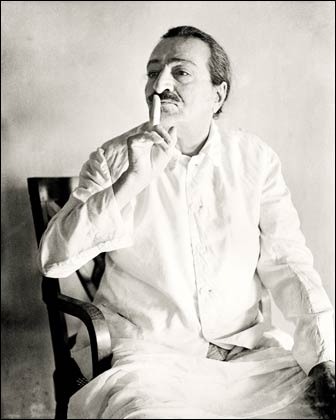
‘The Marx Brothers Meet Meher Baba’
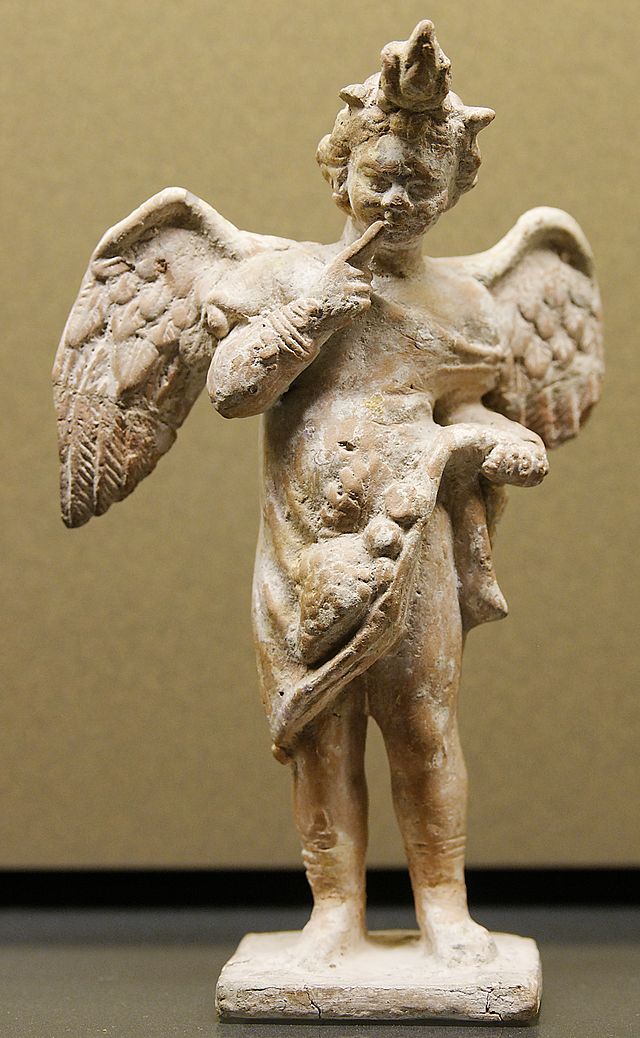
Harpocrates is associated with Sub-rosa.
Jon Presco
“Mr. DeLillo took a rather different approach to the evening. He arrived equipped with printed cards, which he gave to fellow finalists, bearing his name in the upper right-hand corner and the message “I Don’t Want to Talk About It” centered in large letters below. “He said he planned to hand them out whether he won or lost,” one recipient said. And, silently, he did.”
http://en.wikipedia.org/wiki/Sub_rosa
The Warburg family is a prominent American family and financial dynasty of German Jewish descent, noted for their varied accomplishments in biochemistry, botany, political activism, economics, investment banking, law, physics, classical music, art history, pharmacology, physiology, finance, private equity and philanthropy.[1]
They originated as the Venetian Jewish del Banco family, one of the wealthiest Venetian families in the early 1500s.[2] Following restrictions imposed on banking and the Jewish community, they fled to Bologna, and thence to Warburg, in Germany, in the 16th century, after which they took their name.
Michael Naumann (born 8 December 1941, in Köthen, Anhalt) is a German politician, publisher and journalist. He was the German secretary of culture from 1998 until 2001. He is married to Marie Warburg, granddaughter of Eric Warburg and great-granddaughter of Max Warburg.
Between 1998 and 2001, he served as the first Secretary of Culture (German title: Beauftragter der Bundesregierung für Kultur und Medien) for the federal government before returning to the publishing world. His most remembered act is declining the first design for the Memorial to the Murdered Jews of Europe in Berlin on grounds of its monumental abstraction, and choosing the second proposed design by Peter Eisenman instead, including an underground “Ort der Information”, a place of information, which provides the visitors with introductory informations on the history of the Holocaust.
http://en.wikipedia.org/wiki/Michael_Naumann
http://en.wikipedia.org/wiki/Harpocrates
Another solar cult, not directly connected with Harpocrates, was that of the Unconquered Sun, Sol Invictus.
20th century reference[edit]
From the 1920s through the 1950s, Harpo Marx performed pantomime and wore either a curly red or curly blonde wig in character. His brother Groucho jokingly said he named himself in honour of Harpocrates, as a god of both silence and childhood, or childish joy. In truth he was named Harpo because he played the harp.[7]
Many Discordians consider Harpo Marx to have been a contemporary avatar of Harpocrates. Because of this, Discordians often invoke Harpocrates as a Trickster god or God of Humor in addition to his classical attribution of God of Silence.[8]
Naumann Nixes N.B.A. Because of Pynchon Snub
By Celia Mcgee | 12/01/97 12:00am
When publishing toffs and literary celebrities opened their invitations to the 48th National Book Awards ceremony this fall and saw the words “Marriott Marquis,” an audible sniff was heard. But they got over themselves, and on the evening of Nov. 18, they gamely made their way to Times Square to mark a year of bombs and best sellers, literature and pulp. They had to admit it wasn’t all that bad. The lamb course was excellent, the coat check ample, Wendy Wasserstein made a funny master of ceremonies, and, in the considered opinion of one New York Times Book Review editor, “the babe quotient” was “unusually high.”
For a few brief hours, they could pretend the occasional clutch of bewildered tourists wandering into the middle of their cocktail hour had come to gawk at them. Kurt Vonnegut mingled with Sally Quinn while New Yorker literary editor Bill Buford showed off a subtly checked tuxedo to Book Review editor Chip McGrath; Murdoch publishing chief Anthea Disney paraded around Jane Friedman, her new hire from Random House Inc.; Grove-Atlantic Inc.’s glamour puss Morgan Entrekin didn’t make a move without a small army; and Harry Evans stood by the dining hall door like an official greeter. The crowd even laughed good-humoredly when the nonfiction winner, American Sphinx author and Mount Holyoke history professor Joseph J. Ellis, joked that when he first heard that the “N.B.A.” had called, he had misty-eyed visions of athletic stardom.
The event brought out more than 750 guests and raised a record $425,000 for the National Book Foundation and its programs promoting literacy, inner-city poetry workshops and a summer writing camp, with Studs Terkel receiving the 1997 Medal for Distinguished Contribution to American Letters. Indeed, the perennial soul-searching about the purpose and point of literary beauty pageants and publishing awards was held to a minimum. Perhaps that was why almost nobody noticed one glaring absence: Henry Holt & Company was missing. Michael Naumann, the publishing house’s president and chief executive officer, boycotted the awards to protest the exclusion of Thomas Pynchon’s Mason & Dixon from the nominations.
The Holt hole struck an especially odd note given the house’s active participation in the past, particularly while Mr. Naumann’s predecessor, Bruno Quinson, served as a member and then chairman of the book foundation board. It cast an even harsher light, in retrospect, over the media’s feverish pitting of genial newcomer Charles Frazier and his lush Civil War novel Cold Mountain against the creative ambitions of literary idol Don DeLillo in Underworld , both of whom not only rode the best seller list together for several weeks but also spent much of the time before the nominees’ reading the preceding night engaged in intense conversation.
Neil Baldwin, executive director of the National Book Foundation, first got an inkling of Holt’s stance when he called Mr. Naumann because he hadn’t heard from the publisher by the R.S.V.P. deadline. Mr. Baldwin was referred instead to a publicist who told him Holt would not attend. In disbelief, he called Mr. Naumann a second time. “Michael told me he was very, very upset and hurt that the Pynchon book wasn’t on the list of nominations,” Mr. Baldwin said, “and that it would be an insult to his friend-not that I know that they are friends-for him to come.”
In vain, Mr. Baldwin tried to explain that Holt’s spending $7,200 for a table would help support the book foundation. Mr. Baldwin recounted that he gave Mr. Naumann his “usual spiel.” “I tried to make the point that, even though this is a very competitive industry and the ferocity of it is great, especially now, we’re a community,” he said. “But he was very angry. He said it was a slap in the face. It’s a matter of principle for him.”
Mr. Baldwin got angry as well: “I said that if everybody subscribed to the idea that if they weren’t nominated they wouldn’t come, there wouldn’t be any more National Book Awards! But Michael just said, ‘Neil, I have no obligation to be anywhere I don’t want to be.’ It’s very frustrating; we’re trying to create a philanthropic mission out of a commercial nexus, and maybe it’s the nature of the culture that we end up in situations where the very people we’re trying to promote don’t get it.”
Mr. Naumann, however, remains focused on the single evening. “I wasn’t there because the jury chose not to put Thomas Pynchon into the list of finalists,” he said. “I felt it was so awkward, not to say nuts . How could they say, To hell with one of the greatest writers produced in this century? And that’s not just my opinion, but of reviewers across the country … I’m not only Tom’s friend but also his publisher, and I couldn’t be part of that. So I’m a sore loser-and proud of it!”
Mr. Naumann has followed up with a letter to Mr. Baldwin, making another point, one that was a subject of much debate both during and after the awards. “I wrote that I just couldn’t have watched the spectacle of the prize not even going to Don DeLillo, who, of the nominees, wrote the most important piece of fiction this year,” Mr. Naumann said. “I’m very happy for Morgan, but there’s only so much a publisher can take.”
Yet spectacle is at the heart of the matter. Commercially minded publishers and their audiences want some bang for their buck, and, as Mr. Naumann recalled of his favorite recluse, “When Tom got the National Book Award for Gravity’s Rainbow , he sent in some professor who made a funny speech, and people got very angry. The institutional memory is very long.” Of course, there is still for Mr. DeLillo-or Mr. Pynchon-the prospect of the Pulitzer Prize. “Wouldn’t that be embarrassing for the National Book Award judges,” Mr. Naumann laughed.
The DeLillo loss continues to rankle many in literary circles, not the least because they feel the award’s outcome is the result, as an editor in the DeLillo camp said, “of soft committees who all have friends or enemies among the nominees. It’s payback time. You wonder what they bring to bear besides grudges.… This year’s vote was really a knock against the postmodernist novel and what DeLillo was trying to do with it.”
It is a criticism that Mr. Baldwin takes to heart. “How can you feel badly about the choice of Cold Mountain ?” he said. “On the other hand, when I read Underworld , I thought there wasn’t even an analogy for it-not even ‘the Moby-Dick of the 90’s.’ It’s truly unique, regardless of whether you like it or think it’s good.” To his relief, the DeLillo-versus-Frazier issue so consumed the other diners at the ceremony that he thought no one picked up on Holt’s disappearing act. “Bruno Quinson was at my table,” Mr. Baldwin said, “and I didn’t even tell him.”
Mr. DeLillo took a rather different approach to the evening. He arrived equipped with printed cards, which he gave to fellow finalists, bearing his name in the upper right-hand corner and the message “I Don’t Want to Talk About It” centered in large letters below. “He said he planned to hand them out whether he won or lost,” one recipient said. And, silently, he did.
 Rosamond Press
Leave a comment