




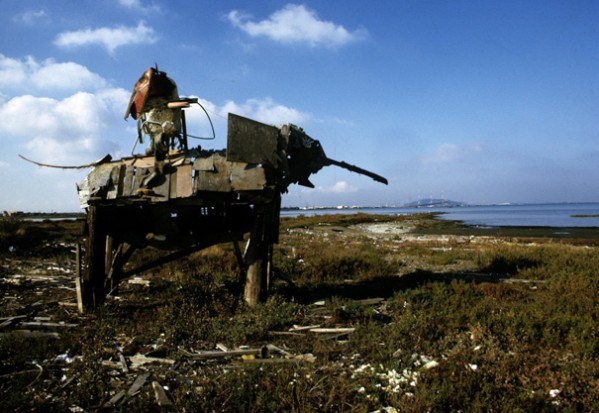
After I dropped put of school I did a painting of the duck hunting shacks off to the right to the entrance of the Bay Bridge. Bill and I had gone there after Mr. Arnold took us to the Army depot for a function we ditched. We cooked muscles in a old rusty can in a wrecked duck boat. We then lay down boards and made our way to one of these shacks. Suddenly, a man came out and told us to go back the way we came.
I did this painting in the half-shelter behind the house on Glendon. There was a fireplace and a Dutch door. Next to it was a queen avocado tree. It is about 3 1/2 feet by 6 1/2 feet. A replica of this hut was in a show at the Oakland Museum.
I stole two by fours from a new construction down the street and began to build a studio behind the garage. I eventually built it under the old shelter where Bryan would come sit and play his guitar.
When I went back to Oakland to live, I spent a lot of time down at the estuary in Jack London Square. There was a big wooden train barn with tracks leading into it. I told my friends I want to build a giant moving sculpture inside this barn, and then bring it out during a even for artists. A year later the Emeryville Mudflat Sculptures appeared.
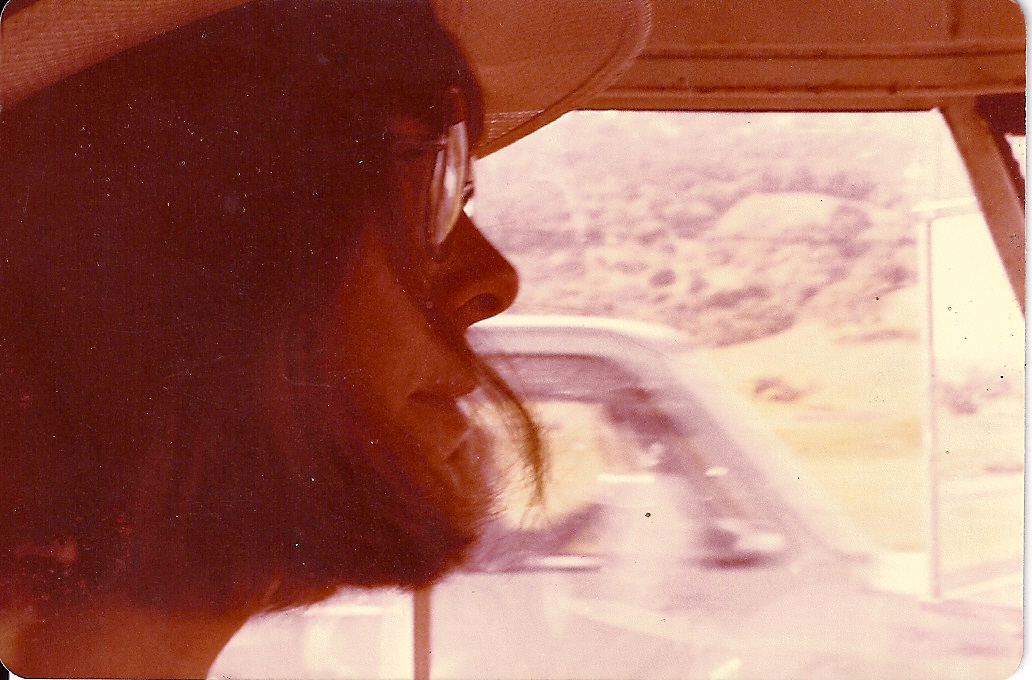
After I got married to Mary Ann Tharaldsen, I built a studio in a old garage you can see in the photo taken out the window the day of our reception. You can see the Chinese arch in the middle of the garden. The theme of Sanctuary runs through the veins of my life, and became a meditation. I have been channeling my grandfather I never met. A month ago I found another of his lost tales where a cowboy meets the girl of his dreams while riding his horse. Royal has been chasing this beautiful young woman all his life, and then some.
Jon Presco
http://museumca.org/story/lost-emeryville-mud-flat-sculptures
The Lost Emeryville Mud Flat Sculptures
Posted by Alexis Madrigal
“When I was a kid in the 1970s, we used to go out on the Emeryville mudflats, where they had all the tire and driftwood sculptures. Enough of them were always falling down, or in various states of desrepair, that we could gather up a bunch of driftwood and make something. Then we’d have to wash off before getting in the car, because we would be completely covered in mud, just black all over. These days it’s all clean; it looks beautiful; it even has an intact marsh. But I miss the old sculptures on the Bay.”
Michelle Orr, Wetland Engineer, Philip Williams & Associates.
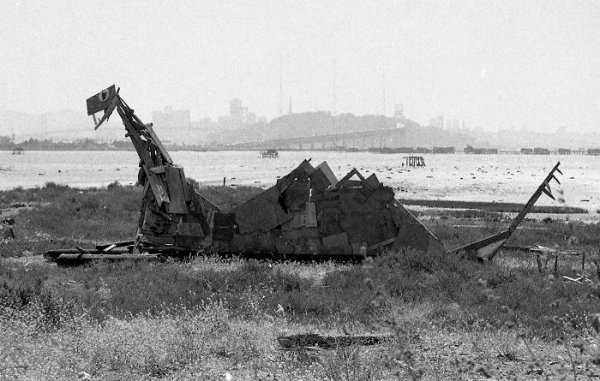
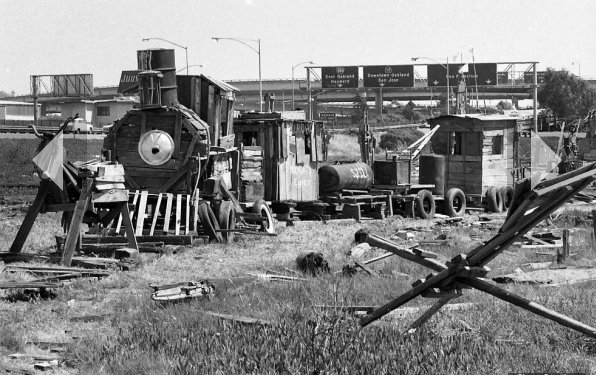
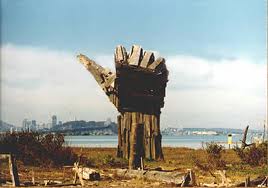
Countless Bay Area natives can recall their experience of seeing the Emeryville Mudflat sculptures in the 60s, 70s and 80s, either while driving along 80 between San Francisco and points east, or by actually parking at the site and getting dirty among the art, as Michelle Orr so fondly recalls doing.
Not everyone agreed on the artistic value of the large-scale sculptures, which were constructed by unpaid and unsanctioned sculptors, using old tires, driftwood, and other found debris. There were giant animals and creatures of all kinds, as well as trains, planes, and buildings, all of which attracted foot traffic and, some government agencies claimed, contributed to ecological disruption and ground and water contamination.
A Time Magazine article on the Mudflats from 1964 described them like this:
“Most of the derelict sculptures wash away with the tide. But some are such masterpieces that they regularly cause crack-ups by gawking drivers on the nearby freeway. One is a 12-ft. gallows with the 13 steps and a hanging effigy, its neck snapped at a medically correct angle. Another is a dinosaur and pterodactyl combination well planted in the muck.”
By the mid-80s, Caltrans began removing the sculptures, and eventually fenced off the area and eliminated them completely. A new state park and a wider highway helped the memory of the art park fade a bit, but it will never be entirely gone from the minds of those who were kids when the sculptures loomed their largest, feeding young imaginations whizzing by.

 Rosamond Press
Leave a comment