
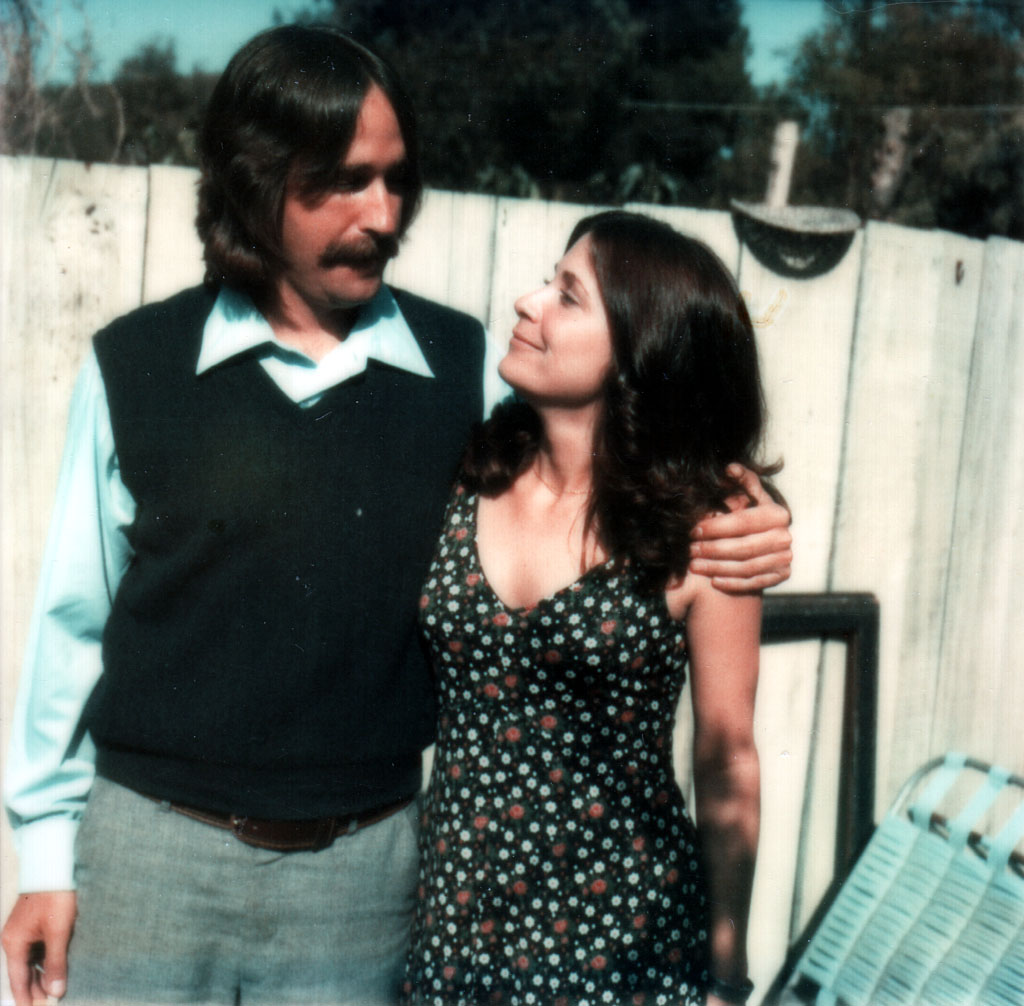
Over the past five years, I have talked about Rena Easton putting herself in danger when she sat on the other side of the rock at our beach near Jenner. Only this morning after looking at some past posts do I realize why when recalling this scene, tears well in my eyes. It’s Christine sitting there.
“Rena. Don’t panic. Listen to me. You are not safe where you are. Get up slowly and walk towards me.”
We had gone to our beach on Highway One, and I was looking at tide pool creatures. When I looked up, Rena was gone. The beach was around fifty yards long surrounded by high cliffs and the sea. The waves were small, and I had not encountered a large wave while tide-pooling. I began to panic.
At the end of beach was a rock about seventy-five feet high that buttressed into the sea. The only place Rena could be was on the other side of this rock. My heart racing, I made my way on the large wet rocks, and there she was sitting on a rock looking intently at the water. I studied her profile. She was in deep thought and turmoil. She was fighting her demon. She told me in Santa Barbara she was afraid of the ocean. After reading Rena’s letter, I now know she was struggling with her mental illness. And I cry.
Rena was trying to come to terms with this un-controllable fear in her that was threatening to destroy her life. She was trying to make it go away, without success. I believe she had come to realize the beautiful sea was not source of her fear. There she was in one of the most beautiful places on earth, with a beautiful man, and she in a dark terrifying place full of ugliness. This is why I said in my letter I embrace the darkness she cam from, for she is there, most of the time.
“You are not safe where you are.”
If I was with Christine the morning she drowned, she would be alive, if, what I was told was the truth. In looking at the video of Rocky Point you can see the tumble of rocks under the ice plants that makes walking a treacherous ordeal. I hade been there, and thus could not believe my nephew Shannon when he told me he got hot jogging on these rocks. Shamus and his mother, Vicki Presco, convinced my seventeen year old daughter that I was mentally ill and making things up about people who love me.
A month after her mother died, Shannon said this to me on the phone;
“My friends think my life is in danger. Be careful, Greg. The first thing they are going to do is make you out to be insane.”
Christine’s 272 page autobiography was disappeared. The ghost writer said;
“What few notes there were, were the ideations of a woman who was not well when she wrote them.”
In the next few blogs, I am going to destroy Shamus Dundon’s testimony. Anyone who would tell deliberate lies about a tragic death, is either severely mentally ill, or, covering up something very vital facts.
Look at this video? Would you allow your beloved sister to go down there during a strong wind? Why would Christine take her eight year old daughter down there to look in the tide-pools?
There are no tide-pools at Rocky Point and Christine knew that, because she had to have dined at the Rocky Point Restaurant which is a hundred yards away from the house that sat on even more treacherous rocks. Look at the people at the bottom of the video. This is steep. There is no jogging done here. Succeeding in making someone appear insane, who just wanted the truth, is evil!
Rena Easton was the Muse of Pending Death. I am going to do a painting of her sitting on the other side of that rock twenty-four years before Christine drowned!
Jon Presco
Copyright 2014
https://rosamondpress.wordpress.com/2013/08/12/going-into-shock-ptsd/
https://rosamondpress.wordpress.com/2012/10/11/two-beautiful-beings-by-the-sea/
Jonathan Livingston Seagull, written by Richard Bach, is a fable in novella form about a seagull learning about life and flight, and a homily about self-perfection. It was first published in 1970 as “Jonathan Livingston Seagull — a story.” By the end of 1972, over a million copies were in print, Reader’s Digest had published a condensed version, and the book reached the top of the New York Times Best Seller list where it remained for 38 weeks. In 1972 and 1973 the book topped the Publishers Weekly list of bestselling novels in the United States.
The book tells the story of Jonathan Livingston Seagull, a seagull who is bored with the daily squabbles over food. Seized by a passion for flight, he pushes himself, learning everything he can about flying, until finally his unwillingness to conform results in his expulsion from his flock. An outcast, he continues to learn, becoming increasingly pleased with his abilities as he leads a peaceful and happy life.
One day, Jonathan is met by two gulls who take him to a “higher plane of existence” in that there is no heaven but a better world found through perfection of knowledge, where he meets other gulls who love to fly. He discovers that his sheer tenacity and desire to learn make him “pretty well a one-in-a-million bird.” In this new place, Jonathan befriends the wisest gull, Chiang, who takes him beyond his previous learning, teaching him how to move instantaneously to anywhere else in the Universe. The secret, Chiang says, is to “begin by knowing that you have already arrived.” Not satisfied with his new life, Jonathan returns to Earth to find others like him, to bring them his learning and to spread his love for flight. His mission is successful, gathering around him others who have been outlawed for not conforming. Ultimately, the very first of his students, Fletcher Lynd Seagull, becomes a teacher in his own right and Jonathan leaves to teach other flocks.
Part One[edit]
Part One of the book finds young Jonathan Livingston frustrated with the meaningless materialism and conformity and limitation of the seagull life. He is seized with a passion for flight of all kinds, and his soul soars as he experiments with exhilarating challenges of daring and triumphant aerial feats. Eventually, his lack of conformity to the limited seagull life leads him into conflict with his flock, and they turn their backs on him, casting him out of their society and exiling him. Not deterred by this, Jonathan continues his efforts to reach higher and higher flight goals, finding he is often successful but eventually he can fly no higher. He is then met by two radiant, loving seagulls who explain to him that he has learned much, and that they are there now to teach him more.
Part Two[edit]
Jonathan transcends into a society where all the gulls enjoy flying. He is only capable of this after practicing hard alone for a long time (described in the first part). The learning process, linking the highly experienced teacher and the diligent student, is raised into almost sacred levels. They, regardless of the all immense difference, are sharing something of great importance that can bind them together: “You’ve got to understand that a seagull is an unlimited idea of freedom, an image of the Great Gull.” He realizes that you have to be true to yourself: “You have the freedom to be yourself, your true self, here and now, and nothing can stand in your way.”
Part Three[edit]
In the third part of the book are the last words of Jonathan’s teacher: “Keep working on love.” Through his teachings, Jonathan understands that the spirit cannot be really free without the ability to forgive, and that the way to progress leads—for him, at least—through becoming a teacher, not just through working hard as a student. Jonathan returns to the Breakfast Flock to share his newly discovered ideals and the recent tremendous experience, ready for the difficult fight against the current rules of that society. The ability to forgive seems to be a mandatory “passing condition.”
“Do you want to fly so much that you will forgive the Flock, and learn, and go back to them one day and work to help them know?” Jonathan asks his first student, Fletcher Lynd Seagull, before getting into any further talks. The idea that the stronger can reach more by leaving the weaker friends behind seems totally rejected.
Hence, love, deserved respect, and forgiveness all seem to be equally important to the freedom from the pressure to obey the rules just because they are commonly accepted.
Part Four[edit]
In 2013 Bach took up a non-published fourth part of the book, which he had written with the original, then edited, polished, and sent to a publisher. Bach reported that it was a near-death experience, which occurred in relation to a nearly fatal plane crash in August, 2012, which inspired him to finish the fourth part of his novella.[1] In February 2014 the 138 page booklet Illusions II was published on the Kindle Direct Publishing, further to this near death experience.
 Rosamond Press
Leave a comment