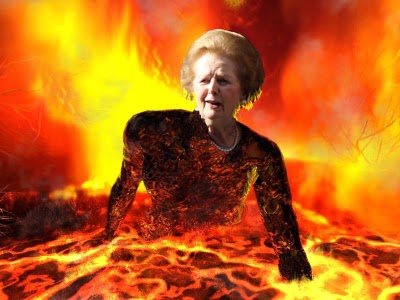
 The Christian-right is going after Obamacare and Foodstamps after failing to win one Crusade they started. Many Christians will think I have it out for Christians. I do. For twenty five years I have watched them destroy the world, then hide behind Jesus like demon children behind their mother’s apron.
Jon Presco
I posted on this group about Christian Co-terrorists.
http://groups.yahoo.com/group/WTC-Terrorism/message/20032
Posted By: •prosemont prosemont Send Email Send Email
Wed Oct 9, 2002 7:18 am |
•Options Up Thread
View Source
Use Fixed Width Font
Unwrap Lines
If you can muster a theologian to your side, I will debate this
discovery with him or her. Of Course, you wouldn’t be able to judge
who is telling the truth, or making the better points, because you
more then likely have not read the Bible! You told this group you are
an atheist. That you offer any kind of opinion on my post, is par for
the course. Just because you post, or respond to the astute posts of
others, does not offer real “proof” you know jack-shit!
My discovery is timely, as I heard Jerry Farwell was on 60 Minutes
talking about the ‘End Time’ and how it relates to the going to war
with Iraq, Babylon, that has been labeled ‘The Beast’ in the Bible.
Jerry said 80% of the Jews will be killed in the war of Armegeddon.
Those who do not convert, will go to hell. In a Democracy the
opposing opinion is usually heard so the People can dicide. However,
most people in America don’t know Jack-shit about the Bible, they
leaving that up to any wacco minister who comes along, and tells them
how to vote as well as what to believe. Just because you can open a
Bible and spout scripture, does not mean you know jack-shit!
The pertinent question here is, what does President Bush believe?
Ralph Reed said Bush inherited the mission of Pat Robertson, who
wrote the difinitive book on the ‘End Time’ many Republican
politicians subscribe to. Did this book affedt the recent vote to go
to war?
You Republcians give sanctuary to the TV Jesus, and claim he is
consulted about so many of our Nation’s affairs of State. Before the
Civil War got under way, Ministers of the North and South had heated
debates. When the Men of God lost the argument about owning the right
to OWN and SELL another human being, then the South launched a
campaign of TERRORISM.
It is my contention that Jesus as Adam born the New Eve, and they
brought the New Heaven and Earth as promised “before this generation
is through.” That Kingdom of Adam, the ‘Son of God’, was destroyed by
Roman forces and quislings. I have restored it in part. The ‘End
Time’ prophecy is a FRAUD, invented by false Christian teachers as a
TOOL of TERRORISM, this ‘End Time Extortion employed to drive more
sheep into the Church so they can be fleeced!
Bring on your champion Defleecer, and I will lay his lessons low!
Jon
By Andrew Gilligan
9:10AM BST 01 Sep 2013
In the league table of people who should keep quiet over Syria, Alastair Campbell and Tony Blair are right at the top. But, last week, there they were anyway.
It would be “hugely irresponsible and incredibly dangerous” not to intervene, warned Mr Campbell, Mr Blair’s former director of communications.
Mr Blair went further; Western policy, he said, was “at a crossroads: commentary or action; shaping events or reacting to them”.
It is Mr Blair and Mr Campbell who are more directly responsible than anyone else for the disaster that befell Britain on Thursday night.
For the first time in 25 years, and for only the third time in human history, a government intentionally used chemical weapons as instruments of mass murder against its own citizens.
Related Articles
Syria: Obama’s decision ‘start of historic American retreat’
01 Sep 2013
Syria crisis: the wives whispering in David Cameron’s ear
01 Sep 2013
Ed Miliband faces growing criticism from Labour ranks
31 Aug 2013
Syria crisis: Anti-war protesters claim public opinion victory
31 Aug 2013
‘There’s no military solution – yet’ says former head of Army
01 Sep 2013
Damascus waits for its missiles
31 Aug 2013
British MPs voted to turn their backs and place their fingers in their ears.
There is no doubt that Parliament spoke for the country. The Blair-style military ambition to “shape events” is precisely, of course, what so many people fear.
The Blair-style protestations about weapons of mass destruction are precisely, of course, what so many people distrust.
But, as someone who was involved in exposing the deceits over Iraq, reporting the concerns of David Kelly, the late MoD weapons scientist, the unfortunate truth is that this time the country is wrong, and Mr Blair and Mr Campbell are right.
In the first half of last year, Syria was the site of a liberation war, waged largely by comparative moderates, which the Assad government was losing.
It would have been relatively easy to intervene then, arming the rebels, creating humanitarian safe zones, threatening military strikes, and forcing the regime to the negotiating table.
Barack Obama and David Cameron refused to act, and for this, too, of course, Mr Blair and Mr Campbell must share the blame. Scarred by the hubris and lies of their predecessors, the British and American leaders just did not want to get involved.
I was involved there, too. In autumn 2011, I was the first Western journalist to meet President Bashar al-Assad since the uprising.
He used an interview with me to threaten Mr Obama and Mr Cameron with an “earthquake” if they got involved. They believed him; I’m not sure they should have.
Because we refused to act for so long, the choices before us are now much harder than they need have been then. The regime is stronger and more confident; it has seen how weak and unwilling the West is.
Its main ally, Russia, which last year at least talked of forcing Assad out, has sniffed the weakness too, and hardened its support for him. The rebels are nastier, more influenced by Islamists and jihadis.
But that is not, as so many MPs seemed to think, a reason for doing nothing. It is an argument for acting quickly because every week of further delay just makes the choices even harder than they already are.
It was not surprising, of course, that the debacle of Iraq loomed so large on Thursday.
But in that session, it was striking how so many opponents of action repeated the same mantras from the Iraq debate, without pausing to reflect whether they really applied in the same way.
Ed Miliband, the Labour leader, said the UN process must take its course. There’s no harm giving the inspectors a few days to report. But what could they tell us that we don’t know already? And what further action could the UN take, since Russia would be bound to use its veto?
Over Iraq, the UN process genuinely was forestalled, precisely because it genuinely could have exposed the need for action as false. Over Syria, the UN process is being used by those who do not want military action under any circumstances.
Those who talk of the importance of acting within international law seem rather to have overlooked the customary principle of international law that says chemical warfare has been banned for the last 90 years.
Of course, some even doubt that the regime was behind the chemical attack, calling it a rebel provocation to bring the West into the war. Culpability is not a question that the UN inspectors will address – but this cannot have been the rebels.
Amateurs can create crude chemical weapons and use them to kill small numbers of people.
But it is extraordinarily difficult for anyone except a professional army and the organs of a state to use them, as they did here, in a way that kills 1,400 and injures thousands. You need manufacturing plants.
You need sophisticated delivery systems, such as the missiles that US intelligence says were fired from regime-held areas 90 minutes before the first reports of civilians starting to choke on chemical weapons.
The regime’s motives are the only thing that raise any doubt. If they were already winning, why would they do something likely to bring military action down on their heads? Some say that it was a test of the West’s resolve and, interestingly, the attacks occurred precisely a year after President Obama promised that any such attack would be a “red line” for US intervention.
That may be part of it, but there may also be another explanation. It’s not clear, and never has been clear, how united and cohesive the regime is. In a small way, I saw that with my Assad interview, which was arranged through a personal back-channel without the knowledge of the ministry of information and the Syrian PR machine.
With the chemical attack, someone at a lower level may have miscalculated or overreached.
Another Miliband argument is that military intervention could cause “consequences” in the region, or a humanitarian crisis. There already have, alas, been one or two “consequences” of not acting.
One hundred thousand people are dead and a landmark event in history, a chemical weapons attack against civilians, has occurred. As for a humanitarian crisis, the Labour leader may not have noticed that there is one of those already, too.
The fact is that air strikes don’t usually suck you in to full-scale land war. In fact, they often work. They worked in Kosovo. They worked in Bosnia, another civil conflict with a dominant aggressor but not terribly attractive good guys. They worked in Libya. Western ground troops never had to fight in any of these places.
Bosnia, not Iraq, is the parallel which Mr Cameron wants us to draw. Having laughed at the weakness of the West, the Serbs took us rather more seriously when the Nato missiles started falling.
The air strikes and the West’s arming of the Croats, the Serbs’ main opponents, did not, as predicted, create a “level killing field”, but resulted in the Serbs losing territory, the power balance shifting and all sides coming to Dayton, in the US, to negotiate a lasting peace.
Air strikes on Syria – and they will happen, regardless of Britain’s views – will need to be more than Mr Obama’s recently promised “shot across the bows”.
They need to be big enough to frighten the regime, and they need to be coupled with far more support of the better rebels, to create facts on the ground that might bring Assad to a Dayton of his own.
It’s very far from certain, of course, that this will work. But what’s clear is that the longer we leave it, the stronger Assad becomes and the more action we eventually have to take to tilt the balance.
If no action is taken at all, the alternative is the West’s enemies everywhere taking heart, chemical attacks on a regular basis, and perhaps hundreds of thousands more deaths.
The reason why chemical weapons are regarded with more horror than the conventional kind is simply that they make it easier and quicker to kill people.
Watching the scenes in the Commons last week, some said that Iraq was looking like Britain’s Vietnam, a terrible defeat that caused a crippling loss of national confidence.
That loss of nerve seemed clear enough in the mealy-mouthed letter produced by the Joint Intelligence Committee about the Syria attack – so much more cautious, even though the evidence was far stronger, than its gung-ho 2003 pronouncements on Saddam Hussein,
The fear we saw in that document, and the fear of many in the Foreign Office and the Ministry of Defence about any form of military action, is a consequence of the fact that Britain’s intelligence and foreign policy establishment was never really forced to come to terms with its failures over Iraq.
Nobody was punished; indeed, the key culprit, Sir John Scarlett, was promoted. Ten years after the war, the Chilcot inquiry has still to report.
In the US, at least to some extent, there has been a cleansing process.
Perhaps as a result, the statements by John Kerry, the secretary of state, have been so much more forceful and passionate than those of his British counterparts.
“This matters to us,” said Mr Kerry. “It matters to who we are, to our leadership and our credibility in the world. It matters if the world speaks out in condemnation and nothing happens.
“We know that after a decade of conflict, the American people are tired of war. Believe me, I am, too. But fatigue does not absolve us of our responsibility. Just longing for peace does not bring it about.”
Someone, at least, seems to have got the idea, even if Britain has not.
 Rosamond Press
Leave a comment