
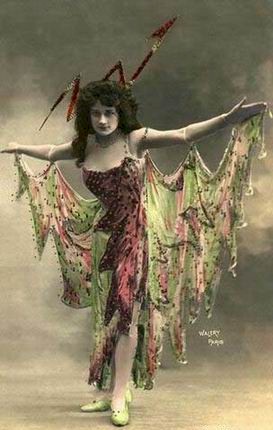
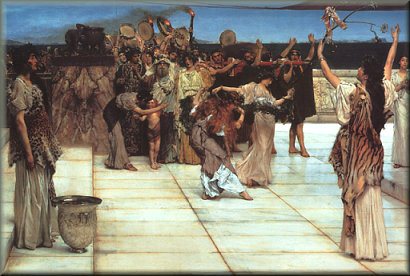
 I watched Cats last night. I was reminded of Maenads who worshiped Dionysus whose mother was Peresphone in one legend. Born of in the bowels of Hades? Phantom of the Opera, the Master Playwrite, Master of Disguises – and The Ceremonial Dance!
Like Christianity many groups of peoples created their own cult so as to own the whole of Dionysus. Indeed, Jesus Christ is a Dionysus Copy – but why?
All members of my family suffered from alcoholism. All but one of the Rosamond Women were drinkers. My daughter sleeps with Bacchus and raises my seven year old grandson to be a champion boozer – someday. When I got sober I declared myself a Nazarite. My family hated me for doing that, and excommunicated me.
In a conversation I had with my aunt Lillian she describes this neighbor cat outside her sliding glass door in the rain. It wants to come in, but she won’t let it in. In the background I hear her friends, the chinking of wine glasses, the description of the warm fire, and the cold cat.
“That cat is you!” Lillian said cruelly after informing me she had gone with Tom Snyder’s biography – behind my back, like Heather and her mother did. Of course this makes me ‘The Chosen One, a very important player in the play!
The cruelest thing THE WOMEN did was smooze my mother. After we left Rosamond’s funeral, my friend said this;
“I’ve never been to a Theme Funeral…..”Don’t let the dream die!”
Michael had seen Stacey Pierrot selling herself and this theme at the Rosamond Gallery, an hour after my sister’s body was sent off to be cremated. Pierrot approached Rosemary and I, got down on one knee, took my mother’s hand, and said;
“Don’t let the dream die!”
Then, they bid their ghost writer to do a real hatchet job on Rosemary Rosamond – days after her death.
That these women thought it was traditional to castrate the brother in a Carmel courtyard, and on the internet, is fascinating. They gave Rosamond’s fans the idea that a famous female artist should get HER REVENGE from the Land of the Dead, starting with A MALE ARTIST that stood in their way.
Going after a unfamous artist of any gender – is unheard of. There is a Family of Artists in the world. It took me months to discover – I was in their way. They were already hacking me to pieces with their little crescent moon shaped knives, eating of my flesh, and drinking my blood.
While the Gallery Gargoyles are doing this to an artist, they are being directed by the misogynist older brother, Mark Presco who is lurking behind instructing the Gargoyles on how I should dealt with. It is O.K.to be used by a man who hates women, in order to destroy any artist that loves women, because the art world owes these women some power, even though they are not artists, own no gifts, and know nothing about nothing.
But, they got vaginas, their foot in the door, that got my adult niece disqualified and thrown in jail by the two named female executors. She didn’t know she was in their way, either. These witches acted in a extremely COVERT manner. They destroyed my nieces legacy their mother WILLED to them. It was a Covert Cat Fight! This is real feminine history – they made! I will make damn sure they get full credit!
Here is THEIR MAN, when they needed one. I will marry them to Mark Presco in real art history – forever!
http://mbpresco.blogspot.com/2008/08/problem-with-womens-movement.html
http://mbpresco.blogspot.com/2008/08/problem-with-womens-movement.html
http://mbpresco.blogspot.com/2008/08/problem-with-womens-movement.html
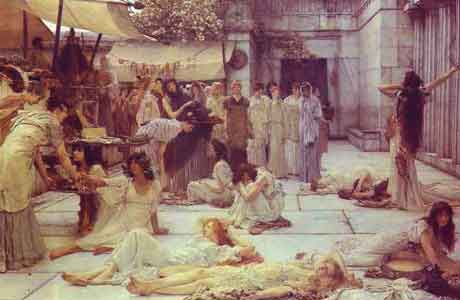
Above is a painting that captured the Rosamond Women coming alive after we were gone. The Queen of the Underworld is dead. Long live the Queen!
Jon Presco
Copyright 2013
These learned individuals had reason to consider Dionysus’s mother a virgin, as, again, he was also said to have been born of Persephone/Kore, whom, once more from Epiphanius, was herself deemed a “virgin,” or parthenos. In this regard, professor emeritus of Classics at the University of Pennsylvania Dr. Donald White (183) says, “As a title ‘Parthenos’ was appropriate to both Demeter and Persephone…”
Persephone and Hades; Attic red-figured kylix, c. 440-430 BC.; Vulci, Italy (Photo: Marie-Lan Nguyen)The fact that Persephone is associated with parthenogenesis, the scholarly term for “virgin birth,” lends credence to the notion that Dionysus was virgin-born. As related further by Rigoglioso in Virgin Mother Goddesses of Antiquity (111):
Persephone’s connection with the parthenogenetic pomegranate is attested in text and iconography. In speaking directly about the Eleusinian Mysteries, Clement of Alexandria (Exhortation to the Greeks 2:16) informs us that the pomegranate tree was believed to have sprung from the drops of the blood of Dionysus…
Although Dionysus is depicted as being the product of a “rape” by Zeus, the story is little different from the impregnation of the Virgin Mary by Yahweh without her consent, especially in consideration of the identification of Dionysus’s very blood with parthenogenesis. In this regard, Rigoglioso also states, “I contend that Persephone’s eating of the pomegranate was the magical action that instigated her ability to conceive parthenogenetically.”
Also, in the museum in Naples has been kept an ancient marble urn showing the birth/nativity of Dionysus, with two groups of three figures on either side of the god Mercury, who is holding the divine baby, and a female figure who is receiving him.[2]
This depiction resembles the gospel story of “wise men” or dignitaries, traditionally held to number three, approaching Joseph, the divine child and Mary.
Miracles
Dionysus holding a drinking cup, surrounded by grapes and vines. (Red-figure amphora by the Berlin Painter, c. 490-480 BCE; Vulci, Italy; Louvre, Paris)The miracles of Dionysus are legendary, as is his role as the god of wine, echoed in the later Christian story of Jesus multiplying the jars of wine at the wedding feast of Cana (Jn 2:1-9). Concerning this miracle, biblical scholar Dr. A.J. Mattill remarks:
This story is really the Christian counterpart to the pagan legends of Dionysus, the Greek god of wine, who at his annual festival in his temple of Elis filled three empty kettles with wine-no water needed! And on the fifth of January wine instead of water gushed from his temple at Andros. If we believe Jesus’ miracle, why should we not believe Dionysus’s? (Leedom, 125)
Dionysus’s miracle of changing water to wine is recounted in pre-Christian times by Diodorus (Library of History, 3.66.3). As the god of the vine, Dionysus is depicted in ancient texts as traveling around teaching agriculture, as well as doing various other miracles, such as in Homer’s The Iliad, dating to the 9th century BCE, and in The Bacchae of Euripides, the famous Greek playwright who lived around 480 to 406 BCE.
“Dionysus’s blood is the wine of the sacrifice.”
It is further interesting that the Communion as practiced today within Catholicism also had a place within the cult of Dionysus, as Campbell points out:
Dionysus-Bacchus-Zagreus-or, in the older, Sumero-Babylonian myths, Dumuzi-absu, Tammuz-…whose blood, in this chalice to be drunk, is the pagan prototype of the wine of the sacrifice of the Mass, which is transubstantiated by the words of consecration into the blood of the Son of the Virgin. (Campbell, MG, 4.23)
Epithets
In an Orphic hymn, Phanes-Dionysus is styled by the Greek title Protogonos or “first-born” of Zeus, also translated at times as “only-begotten son,” although the term Monogenes would be more appropriately rendered as the latter. He is also called “Soter” or “Savior” in various inscriptions, including a bronze coin from the Thracian city of Maroneia dating to circa 400-350 BCE.[3] Like Jesus in his aspect as the Father, Dionysus is called Pater, or “father” in Greek.
“Dionysus is ‘first-born,’ ‘Savior’ and ‘Father.’”
The title “King of Kings” and other epithets may reflect Dionysus’s kinship with Osiris: During the late 18th to early 19th dynasties (c. 1300 BCE), Osiris’s epithets included, “the king of eternity, the lord of everlastingness, who traverseth millions of years in the duration of his life, the firstborn son of the womb of Nut, begotten of Seb, the prince of gods and men, the god of gods, the king of kings, the lord of lords, the prince of princes, the governor of the world whose existence is for everlasting.” (Budge, liii)
Death/Resurrection
Dionysus’s death and resurrection were famous in ancient times, so much so that Christian father Origen (c. 184-c. 254) felt the need to address them in his Contra Celsus (IV, XVI-XVII), comparing them unfavorably, of course, to those of Christ. By Origen’s time, these Dionysian mysteries had already been celebrated for centuries. Dionysus/Bacchus’s resurrection or revival after having been torn to pieces or otherwise killed earned him the epithet of “twice born.”
‘[S]cene in the underworld. Dionysos mounting a chariot is about to leave his mother, Semele, and ascend’
(Kerenyi, pl. 47)
Moreover, it was said that Dionysus/Bacchus “slept three nights with Proserpine [Persephone],”[4] evidently referring to the god’s journey into the underworld to visit his mother. Like Jesus, the god is claimed also to have “ascended to heaven,” such as by Church father Justin Martyr (First Apology, 21; Roberts I, 170). Note that Dionysus is depicted here as an adult, rising out of the underworld after death, with a horse-driven chariot so typical of a sun god. One major astrotheological meaning of this motif is the sun’s entrance into and exit from the cave (womb) of the world at the winter solstice.
Hence, in Dionysus we have yet another solar hero, born of a virgin on “December 25th” or the winter solstice, performing miracles and receiving divine epithets, being killed, giving his blood as a sacrifice, resurrecting from the dead after three days in Hades/Hell, and ascending into heaven. These motifs have all been claimed of the gospel figure of Jesus Christ since antiquity and have to do not with the adventures of a “historical” Jewish savior but with the ubiquitous solar mythos and ritual.

 Rosamond Press
Leave a comment