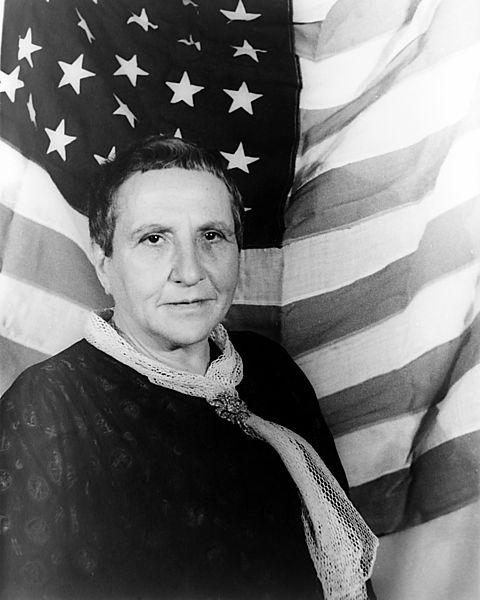
 This morning I discovered that Gertrude Stein lived on 13th. Avenue in Oakland, two blocks from my great grandparents. It was here that Gertrude coined the phrase
“There is no there there”
When I was with Rena in Nebraska I ran past her the idea that I would move to Lincoln and set up a studio.
“You won’t like it here. There’s nothing here.” spoke my Muse.
“You’re here!” I replied, and listened to the prairie wind blow around the lonely tumble weeds of my mind.
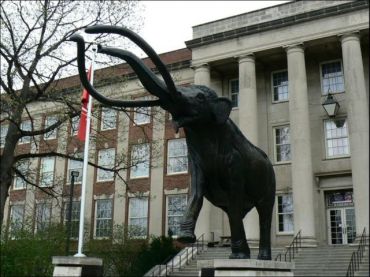
I am going to do a painting of my Muse and I sitting on the steps of ‘Elephant Hall’ the museum on the grounds of the University of Nebraska, for this is the scene I came back here for. This was a great moment in the history of a Artist and his/her – Muse!
Gertrude Stein said she always knew she would be a historian since she was a little girl. She held a famous Salon in Paris. I could find very little history on Art in Nebraska even though there was a show titled ‘Important People and Major Events’. My kindred, Thomas Hart Benton tops the list. My kindred, John Fremont did not make the list, even though there is a town named after the co-founder of the Republican Party and its first Presidential candidate. ‘The Pathfinder’ set out near Grand Island Nebraska to explore the Oregon Territory. His wife, Jessie Benton wrote the journals of this exploration, and held a famous Salon at Black Point in San Francisco. Susan Benton held a Salon in Paris. Her son, Philip Boileau was titled the ‘Painter of Fair Women’.
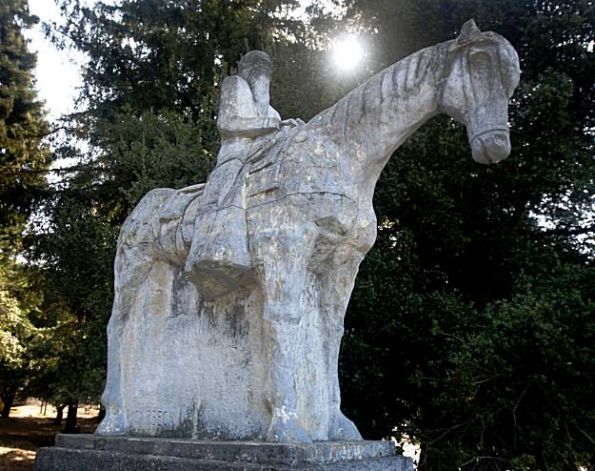
Then there was ‘The Hights’ the Salon Joaquin Miller held in the Oakland Hills above the fruit farm my grandparents owned. Miller used to carry my father on the trolly when Melba went to San Francisco to see Victor’s father, a professional gambler. Miller made a huge statue of John Fremont on a horse overlooking the bay. He called himself a “fruit farmer and poet”. When he died 500 members of the Bohemian Club came to the Hights to perform a special ceremony.
From Grand Island Nebraska, to Oakland California. There is something here – here! After exchanging the world’s second greatest kiss, my friend Brian threw us out of his apartment – along with his tent – that I set up in the backyard on Congress Avenue.
I am a Bohemian Historian and see myself as the Five of Cups. I look into the past, my past. I keep a good eye on the future, for I am preserving the Bohemian Culture in this blog ‘Royal Rosamond Press’.
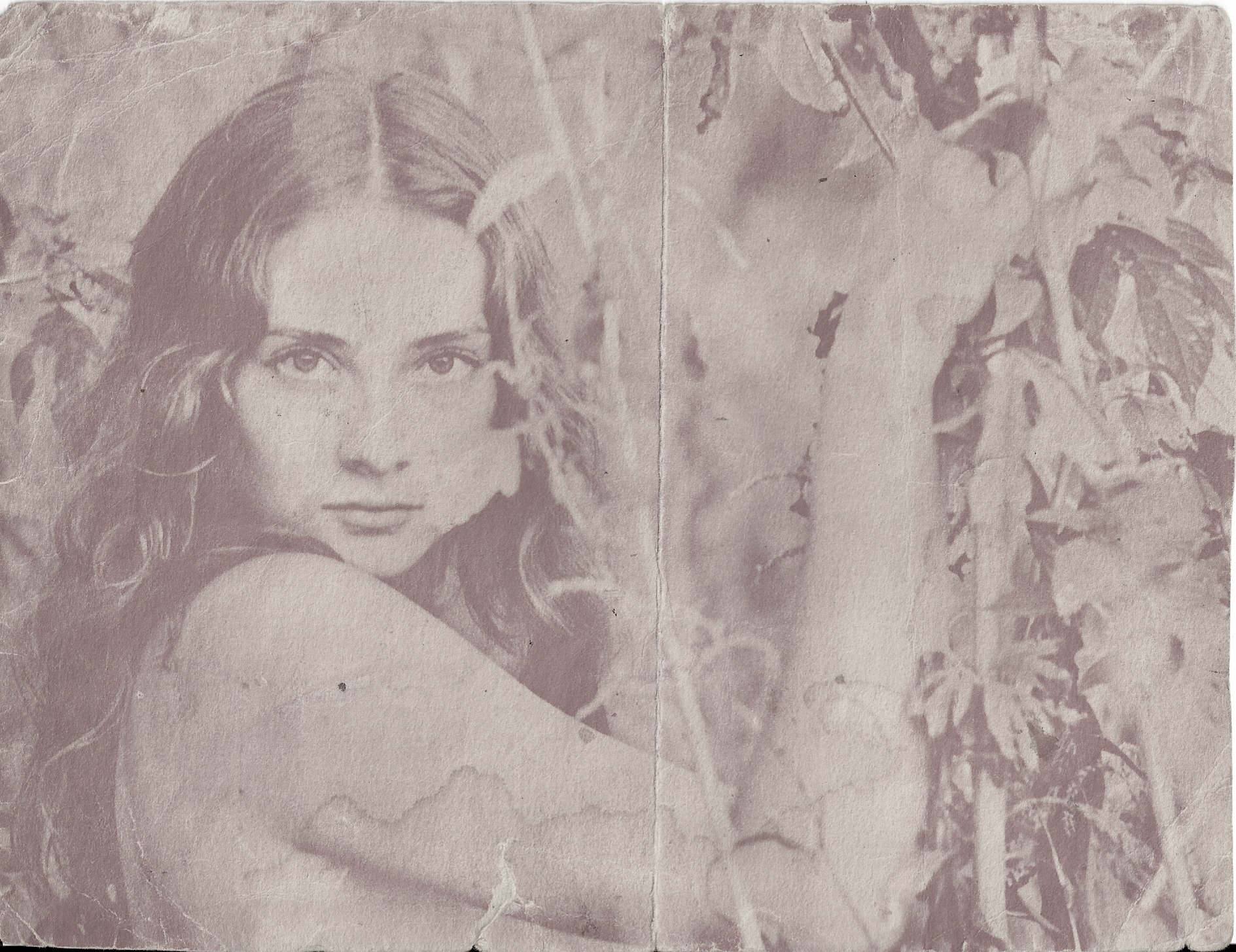
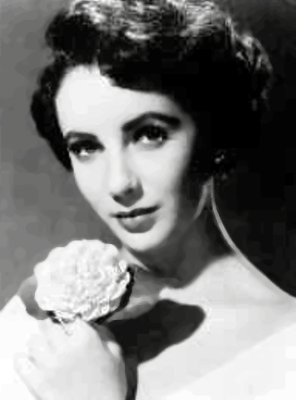
I have placed Rena’s photo next to Gertrude’s because Christine Rosamond Benton and Gertrude were famous women that came out of Oakland. My painting I did of Rena inspired Rosamond to take up art. I am gathering this history for the Oakland Museum.
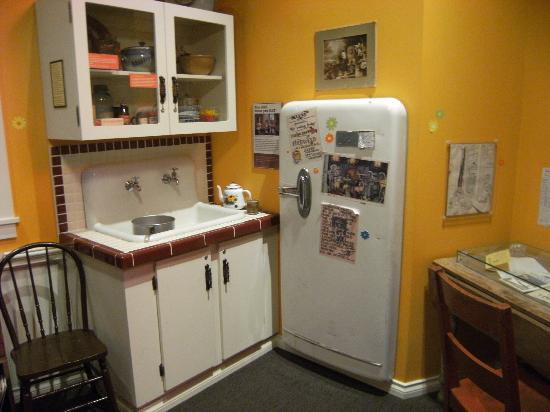
Above is a photo of the Hippie Communal Kitchen set up in the Vancouver Museum. It reminds me of the house on 13th. St. where I lived with the Loading Zone. My friend, Peter Shapiro, lived in the Oakland Hills with members of the Tower of Power.
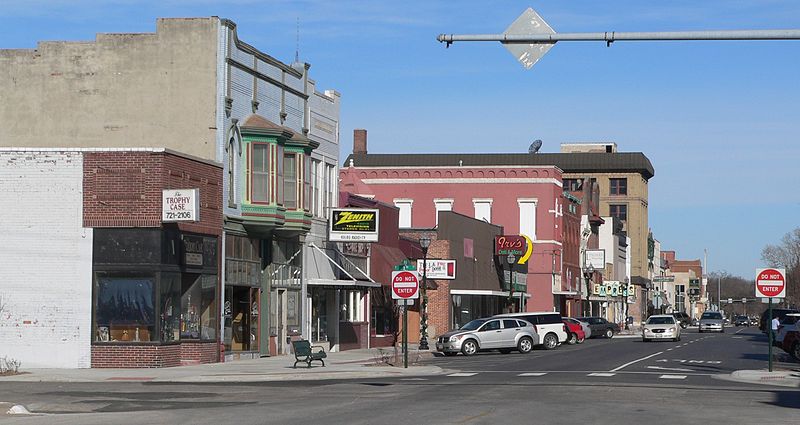
Fremont City is seen in the top photo. I am tempted to move there and set up a studio in that Victorian with the triangle windows. There is where you make it! The problem many folks have in Nebraska is, they can’t get over the death of Jesus. They got to buck-up, and look to the future of their towns.
Below is Stein’s other famous quote about a “rose”. Above is a painting of my mother, Rosemary Rosamond. Christine posed for this image of our mother holding an empty wine glass and exposing one breast. This is a Madonna. Christine modeled for some her paintings including ‘Rosemary Circa 1950’. If Rena had married me, then Rosamond could have used her sister-in-law as a model. Has anyone considered the possibility that I am a Muse seeking to inspire ‘The Ideal’?
Jon Presco
Copyright 2013
The sentence “Rose is a rose is a rose is a rose.” was written by Gertrude Stein as part of the 1913 poem Sacred Emily, which appeared in the 1922 book Geography and Plays. In that poem, the first “Rose” is the name of a person. Stein later used variations on the sentence in other writings, and “A rose is a rose is a rose” is probably her most famous quotation, often interpreted as meaning “things are what they are,” a statement of the law of identity, “A is A”. In Stein’s view, the sentence expresses the fact that simply using the name of a thing already invokes the imagery and emotions associated with it, an idea also intensively discussed in the problem of universals debate where Peter Abelard and others used the rose as an example concept. As the quotation diffused through her own writing, and the culture at large, Stein once remarked “Now listen! I’m no fool. I know that in daily life we don’t go around saying ‘is a … is a … is a …’ Yes, I’m no fool; but I think that in that line the rose is red for the first time in English poetry for a hundred years.” (Four in America) [1]
She herself said to an audience at Oxford University that the statement referred to the fact that when the Romantics used the word “rose” it had a direct relationship to an actual rose. For later periods in literature this would no longer be true. The eras following romanticism, notably the modern era, use the word rose to refer to the actual rose, yet they also imply, through the use of the word, the archetypical elements of the romantic era.
http://en.wikipedia.org/wiki/Salon_(Paris)
Beginning with the theme of Important People and Major Events — often the traditional starting point for our comprehension of history — the exhibition explores the topic through several diverse premises, including Discovery and Exploration, Revolutions, and Social History.
Organized by Sharon L. Kennedy, curator of cultural and civic engagement, and Brandon K. Ruud, curator of transnational American art, the exhibition presents major figures and events — along with some overlooked moments and people — from the past.
Among the artists included are Thomas Hart Benton
Along with a “A rose is a rose is a rose,” “there is no there there” is one of Gertrude Stein’s most famous quotes. It appears in Gertrude Stein, Everybody’s Autobiography (Random House 1937, p 289) and is often applied to the city of her childhood, Oakland, California. Defenders and critics of Oakland have debated what she really meant when she said this in 1933 after coming to San Francisco on a book tour. She took a ferry to Oakland to visit the farm she grew up on, and the house she lived in near what is now 13th Avenue and E. 25th Street in Oakland. The house had been razed and the farmland had been developed with new housing in the 3 decades since her father had sold the property and moved closer to the commercial hub of the neighborhood on Washington Street (now 12th Avenue). She wrote:
She took us to see her granddaughter who was teaching in the Dominican convent in San Raphael, we went across the bay on a ferry, that had not changed but Goat Island might just as well not have been there, anyway what was the use of my having come from Oakland it was not natural to have come from there yes write about it if I like or anything if I like but not there, there is no there there. [93]
…but not there, there is no there there. … Ah Thirteenth Avenue was the same it was shabby and overgrown. … Not of course the house, the house the big house and the big garden and the eucalyptus trees and the rose hedge naturally were not there any longer existing, what was the use …
It is a funny thing about addresses where you live. When you live there you know it so well that it is like an identity a thing that is so much a thing that it could not ever be any other thing and then you live somewhere else and years later, the address that was so much an address that it was like your name and you said it as if it was not an address but something that was living and then years after you do not know what the address was and when you say it it is not a name anymore but something you cannot remember. That is what makes your identity not a thing that exists but something you do or do not remember.
He made the front page of almost every newspaper in the country when he died Feb. 17, 1913. The San Francisco Call reported, “The world is in mourning today for the last of the immortal California trio — Bret Harte, Mark Twain and Joaquin Miller, said by Lord (Alfred) Tennyson to be the greatest poet this country ever produced.”
It was Miller’s wish to be cremated on the funeral pyre he built at the Hights on a knoll behind his home. He wanted his ashes to be scattered among the trees he had planted, but his wish could not be carried out because of city ordinances. Instead, the poet was cremated at the Oakland Crematory, with a modest funeral limited to family and a few friends held a few days later.
Then on May 25, 1913, members of the Bohemian Club orchestrated a memorial service at the Hights, with 500 people in attendance. Miller’s ashes were scattered in a fire built on his pyre.
“As if in applause at the honor of being done their master the winds of the Hights stirred from over the distant hills, caught the ashes from the flames and bore them to their hundred and one resting places over the Hights,” the Call reported.
Miller’s widow and daughter sold the Hights to Oakland in 1919, and it became the nucleus of the 500-acre park.
Gertrude Stein (February 3, 1874 – July 27, 1946) was an American art collector of seminal modernist paintings and an experimental writer of novels, poetry and plays that eschewed the narrative, linear, and temporal conventions of 19th-century literature. She was born in West Allegheny (Pittsburgh), Pennsylvania, raised in Oakland, California, and moved to Paris in 1903, making France her home for the remainder of her life.
For some forty years, the Stein home on the Left Bank of Paris would become a renowned Saturday evening gathering place for expatriate American artists and writers, and others noteworthy in the world of vanguard arts and letters. Entrée and membership in the Stein salon was a sought-after validation, signifying that Stein had recognized a talent worthy of inclusion into a rarefied group of gifted artists. Stein became combination mentor, critic, and guru to those who gathered around her. A self-defined “genius”, she was described as an imposing figure with a commanding manner whose inordinate self-confidence could intimidate. Among her coterie she was referred to as “Le Stein” and with less laudatory deference as “The Presence”.[1][2][3]
In 1933, Stein published the memoirs of her Paris years titled The Autobiography of Alice B. Toklas, which became a literary bestseller. The advent of this book elevated Stein from the relative obscurity of cult literary figure, into the light of mainstream attention.[4]
Near the end of her life, Stein said: “I always wanted to be historical from almost a baby on, I felt that way about it…”[4]
As the legend of the 1909 founding of CWC goes, Joaquin Miller used to invite his writing friends, including Jack London, Gertrude Stein, and John Muir to his home for picnics, literary discussions, and bohemian theatrics in the flat area that is now the Fire Circle. In the 1930s the CWC helped to create Joaquin Miller Park as it is today.

 Rosamond Press
Leave a reply to Royal Rosamond Press Cancel reply