


 In 1969 I declared myself a New Pre-Raphaelite. In 1971 I did a large canvas of Rena Victoria. She was standing on a grassy hill looking towards the setting sun that turned the sky into a rainbow. She was wearing a thalo-blue cape bordered in stars. A crescent moon was behind her head, like a crown. The Tarot card ‘The Priestess’ was a model. I called Rena and her grandmother answered the phone. She told me she was outside in the field, and, she would call to her. Just then, Rena came inside.
“It’s your friend Greg calling from California.”
Rena picked up the phone and was excited.
“Greg! I was just outside in the filed watching the sunset. There were incredible colors, red, orange, and a pretty blue. All of a sudden hundreds of blackbirds rose out of the grass and flew all around me. If you were here, I would give you such a kiss!”
It was the first time I talked to Rena’s grandmother who was very concerned about her when she was with me.
“Thank you for taking good care of her, and getting her home safe.”
Only then did I realize I had rescued this beautiful maiden, who wanted to give me another wonderous kiss, that linger this very day……….a long distant kiss.
“Rena! You have described the painting I am doing of you. I need a photo of your profile.”
The next day Rena goes into a photo booth and sends me her image. She has her sunglasses atop her head. She holds back her hair. I lost this treasured image.
Everyone close to us knew my sister Christine intercepted the greatness destined for me. No one knew this more then Christine, who tried to rectify this, make amends. After leaving Rena in Nebraska, I took on the Mafia in Boston. I had duties to perform.
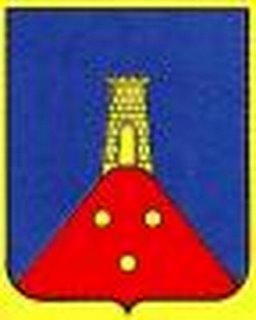
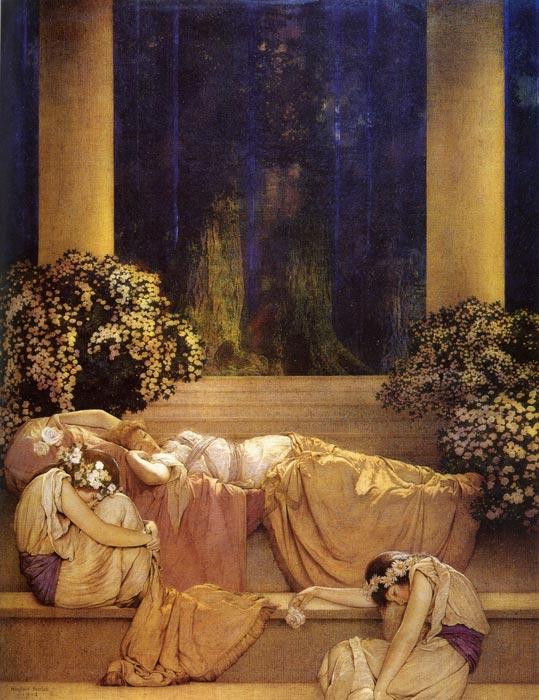
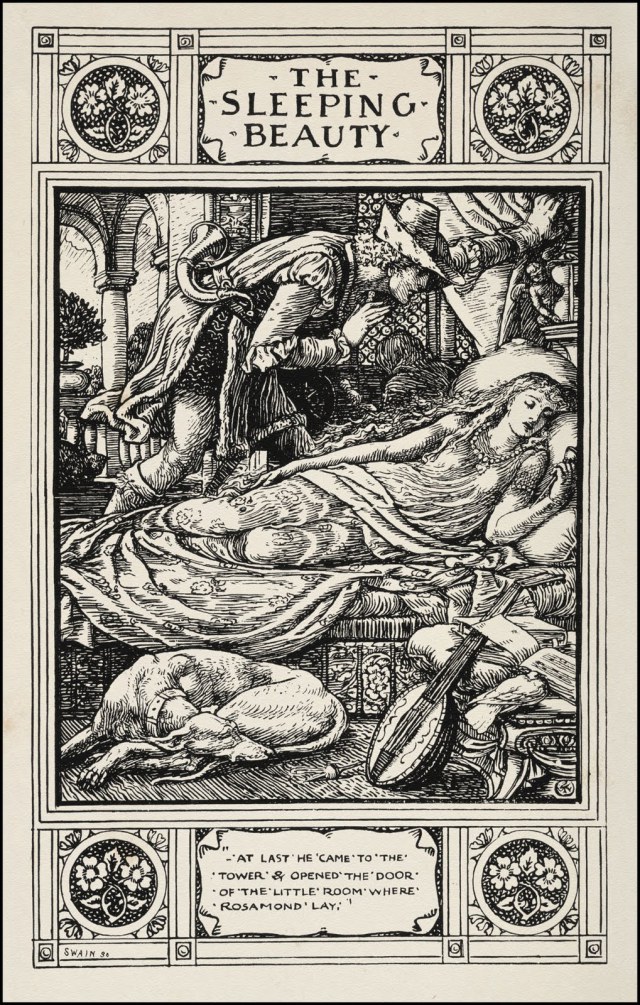
King Arthur looks like Sleeping Beauty in the Pre-Raphaelite painting. I could not be more dead to my family then I am at this moment. I am in a deep sleep. I am in need of that kiss. I am at rest atop Rouge Mountain.
Jon
http://www.wiseoldgoat.com/papers/floris.html
Rutger Hauer …. Floris von Rosemund
Derval de Tana …. Sindala
Fred Stillkrauth ….. van Rossum
Ferdy Maine ….. van Grauberg
Peter Pickl ….. Sergeant
Simone Rethel ….. Viola
In the Rider-Waite-Smith Tarot deck, upon which many modern decks are based, The High Priestess is identified with the Shekhinah, the female indwelling presence of the divine. She wears plain blue robes and sits with her hands in her lap. She has a lunar crescent at her feet, “a horned diadem on her head, with a globe in the middle place”[1] similar to the crown of the ancient Egyptian goddess Hathor, but with the horns having a shape more like half-crescents, and a large cross on her breast. The scroll in her hands, partly covered by her mantle, bears the word TORA. She is seated between the white and black pillars—’J’ and ‘B’ for Jachin and Boaz—of the mystic Temple of Solomon. The veil of the Temple is behind her: it is embroidered with palm leaves and pomegranates.[2] The motif that hangs behind the High Priestess’s throne, veiling what ever mysteries she guards, is suggested in the pattern of The Empress’ gown. The two are sisters, one bringing life into the world, the other inviting the living to the esoteric mysteries. Further behind all of that is what seems to be a body of water, most probably the sea. The water flows through most of the cards of the Rider-Waite-Smith Tarot.
http://en.wikipedia.org/wiki/The_High_Priestess
Avalon
Burne-Jones Last Sleep of Arthur in Avalon v2.jpg
The Last Sleep of Arthur by Edward Burne-Jones
Historia Regum Britanniae location
Creator
Geoffrey of Monmouth
Genre
Arthurian legend
Type
Legendary island of the dead
Notable characters
King Arthur, Morgan le Fay
Avalon or Ynys Afallon in Welsh (probably from the Welsh word afal, meaning apple) is a legendary island featured in the Arthurian legend. It first appears in Geoffrey of Monmouth’s 1136 pseudohistorical account Historia Regum Britanniae (“The History of the Kings of Britain”) as the place where King Arthur’s sword Excalibur (Caliburnus) was forged and later where Arthur was taken to recover from his wounds after the Battle of Camlann. Avalon was associated from an early date with mystical practices and people such as Morgan le Fay.
Contents
[hide] 1 Etymology
2 In Arthurian legend
3 Connection to Glastonbury 3.1 Other locations for Avalon
4 Non-Arthurian notability
5 References
6 See also
Etymology[edit]
Geoffrey of Monmouth called it in Latin Insula Avallonis in the Historia. In the later Vita Merlini he called it Insula Pomorum the “isle of apples”. The name is generally considered to be of Welsh origin (though an Old Cornish or Old Breton origin is also possible), derived from Old Welsh abal, “apple”, or aball, “apple tree” (in later Middle Welsh spelled aval, avall; now Modern Welsh afal, afall).[1][2][3][4] In Breton, apple is spelled “aval”/ “avaloù” in plural. It is also possible that the tradition of an “apple” island among the British was influenced by Irish legends concerning the otherworld island home of Manannán mac Lir and Lugh, Emain Ablach (also the Old Irish poetic name for the Isle of Man),[1] where Ablach means “Having Apple Trees”[5] – derived from Old Irish aball (“apple”)—and is similar to the Middle Welsh name Afallach, which was used to replace the name Avalon in medieval Welsh translations of French and Latin Arthurian tales). All are etymologically related to the Gaulish root *aballo- (as found in the place name Aballo/Aballone, now Avallon in Burgundy or in the Italian surname Avallone) and are derived from a Common Celtic *abal- “apple”, which is related at the Proto-Indo-European level to English apple, Russian яблоко (jabloko), Latvian abele, et al.[6][7]
In Arthurian legend[edit]
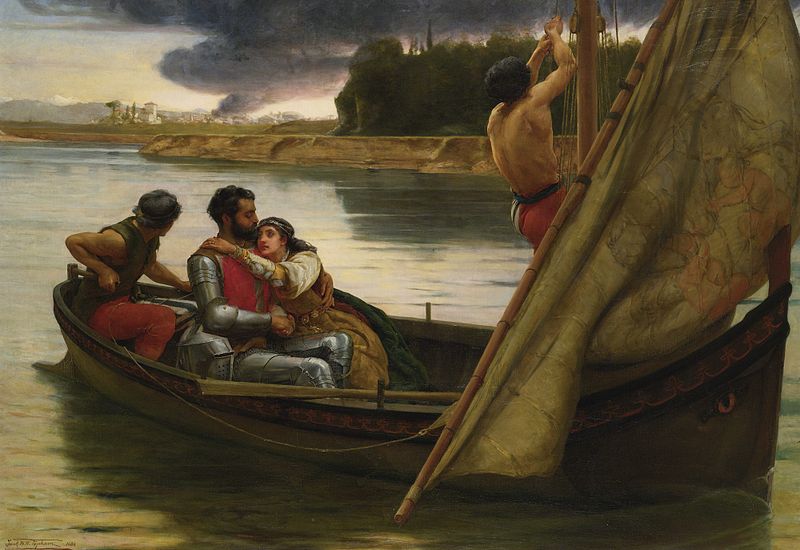
Voyage of King Arthur and Morgan Le Fay to the Isle of Avalon by Frank William Warwick Topham (1888)
According to Geoffrey in the Historia and much subsequent literature which he inspired, Avalon is the place where King Arthur is taken after fighting Mordred at the Battle of Camlann to recover from his wounds. Welsh, Cornish and Breton tradition claimed that Arthur had never really died, but would inexorably return to lead his people against their enemies. The Historia also states that Avalon is where his sword Caliburn (Excalibur) was forged. Geoffrey dealt with Avalon in more detail in Vita Merlini, in which he describes for the first time in Arthurian legend the enchantress Morgan le Fay as the chief of nine sisters (Moronoe, Mazoe, Gliten, Glitonea, Gliton, Tyronoe, Thiten and Thiton)[8] who live on Avalon. Geoffrey’s description of the island indicates a sea voyage was needed to get there. His description of Avalon here, which is heavily indebted to the early medieval Spanish scholar Isidore of Seville (being mostly derived from the section on famous islands in Isidore’s famous work Etymologiae, XIV.6.8 “Fortunatae Insulae”), shows the magical nature of the island:
The island of apples which men call “The Fortunate Isle” (Insula Pomorum quae Fortunata uocatur) gets its name from the fact that it produces all things of itself; the fields there have no need of the ploughs of the farmers and all cultivation is lacking except what nature provides. Of its own accord it produces grain and grapes, and apple trees grow in its woods from the close-clipped grass. The ground of its own accord produces everything instead of merely grass, and people live there a hundred years or more. There nine sisters rule by a pleasing set of laws those who come to them from our country.[9]
By comparison, Isidore’s description of the Fortunate Isles reads:
“The name of the Isles of the Fortunate signifies that they bear all good things, as if happy and blessed in the abundance of their fruits. Serviceable by nature, they bring forth fruits of valuable forests (Sua enim aptae natura pretiosarum poma silvarum parturiunt); their hilltops are clothed with vines growing by chance; in place of grasses, there is commonly vegetable and grain. Pagan error and the songs of the secular poets have held that these islands to be Paradise because of the fecundity of the soil. Situated in the Ocean to the left of Mauretania, very near the west, they are separated by the sea flowing between them.”[10]
In medieval geographies, Isidore’s Fortunate Islands were identified with the Canaries.[11]
Connection to Glastonbury[edit]
Around 1190, Avalon became associated with Glastonbury, when monks at Glastonbury Abbey claimed to have discovered the bones of Arthur and his queen. It is in the work of Gerald of Wales we find this connection made for the first time and it clearly draws on Geoffrey:
What is now known as Glastonbury was, in ancient times, called the Isle of Avalon. It is virtually an island, for it is completely surrounded by marshlands. In Welsh it is called Ynys Afallach, which means the Island of Apples and this fruit once grew in great abundance. After the Battle of Camlann, a noblewoman called Morgan, later the ruler and patroness of these parts as well as being a close blood-relation of King Arthur, carried him off to the island, now known as Glastonbury, so that his wounds could be cared for. Years ago the district had also been called Ynys Gutrin in Welsh, that is the Island of Glass, and from these words the invading Saxons later coined the place-name ‘Glastingebury’.[12]
Though no longer an island in the twelfth century, the high conical bulk of Glastonbury Tor had been surrounded by marsh before the surrounding fenland in the Somerset Levels was drained. In ancient times, Ponter’s Ball Dyke would have guarded the only entrance to the island. The Romans eventually built another road to the island.[13] As Gerald says, Glastonbury’s earliest name in Welsh was Ineswitrin (or Ynys Witrin), the Isle of glass, a name noted by earlier historians which shows that the location was at one point seen as an island. The discovery of the burial is described by chroniclers, notably Gerald of Wales, as being just after King Henry II’s reign when the new abbot of Glastonbury, Henry de Sully, commissioned a search of the abbey grounds. At a depth of 5 m (16 feet) the monks discovered a massive treetrunk coffin and a leaden cross bearing the inscription:
Leaden cross inscribed with Arthur’s epitaph. from Camden, Britannia (1607)
Hic jacet sepultus inclitus rex Arthurus in insula Avalonia.(“Here lies renowned King Arthur in the island of Avalon”).
Accounts of the exact inscription vary, with five different versions existing. The earliest is by Gerald in “Liber de Principis instructione” c. 1193, who not only viewed the cross in person but traced the lettering, and his transcript reads: “Here lies buried the famous King Arthur with Guinevere his second wife in the isle of Avalon”. Inside the coffin were two bodies, who Giraldus refers to as Arthur and “his queen”; the bones of the male body were described as being gigantic. The account of the burial by the chronicle of Margam Abbey says three bodies were found, the other being of Mordred.[14] In 1278, the remains were reburied with great ceremony, attended by King Edward I and his queen, before the High Altar at Glastonbury Abbey, where they were the focus of pilgrimages until the Reformation.
The Glastonbury burial is tainted with the suggestion of forgery as an example of pseudoarchaeology. Historians today generally dismiss the authenticity of the find, attributing it to a publicity stunt performed to raise funds to repair the Abbey, which was mostly burned in 1184.[15] Long before this William of Malmesbury, a historian interested in Arthur, said in his history of England “But Arthur’s grave is nowhere seen, whence antiquity of fables still claims that he will return.”[16] As William wrote a comprehensive history of Glastonbury De antiquitae Glatoniensis ecclesie around 1130 which discussed many pious legends connected to the Abbey, but made no mention of either Arthur’s grave or a connection of Glastonbury to the name Avalon, stating firmly it was previously known as Ineswitrin, this raises further suspicions concerning the burial. It is known for certain the monks later added forged passages to William’s history discussing Arthurian connections.[17] The fact that the search for the body is connected to Henry II and Edward I, both kings who fought major Welsh wars, has had scholars suggest that propaganda may have played a part as well.[18] Gerald, a constant supporter of royal authority, in his account of the discovery clearly aims to destroy the idea of the possibility of King’s Arthur’s messianic return: “Many tales are told and many legends have been invented about King Arthur and his mysterious ending. In their stupidity the British [i.e. Welsh, Cornish and Bretons] people maintain that he is still alive. Now that the truth is known, I have taken the trouble to add a few more details in this present chapter. The fairy-tales have been snuffed out, and the true and indubitable facts are made known, so that what really happened must be made crystal clear to all and separated from the myths which have accumulated on the subject.”[19]
The burial discovery ensured that in later romances, histories based on them and in the popular imagination Glastonbury became increasingly identified with Avalon, an identification that continues strongly today. The later development of the legends of the Holy Grail and Joseph of Arimathea by Robert de Boron interconnected these legends with Glastonbury and with Avalon an identification which also seems to be made in Perlesvaus. The popularity of Arthurian Romance has meant this area of the Somerset Levels has today become popularly described as The Vale Of Avalon.[20] In more recent times writers such as Dion Fortune, John Michell, Nicholas Mann and Geoffrey Ashe have formed theories based on perceived connections between Glastonbury and Celtic legends of the otherworld and Annwn in attempts to link the location firmly with Avalon, drawing on the various legends based on Glastonbury Tor as well as drawing on ideas like Earth mysteries, Ley lines and even the myth of Atlantis. Arthurian literature also continues to use Glastonbury as an important location as in The Mists of Avalon, A Glastonbury Romance and The Bones of Avalon. Even the fact Somerset has many apple orchards has been drawn in to support the connection. Glastonbury’s connection to Avalon continues to make it a site of tourism and the area has great religious significance for Neopagans, Neo-druids and as a New Age community, as well as Christians. Hippy identification of Glastonbury with Avalon seen in the work of Michell and in Gandalf’s Garden also helped inspire the Glastonbury Festival.[21]
 Rosamond Press
Leave a comment