

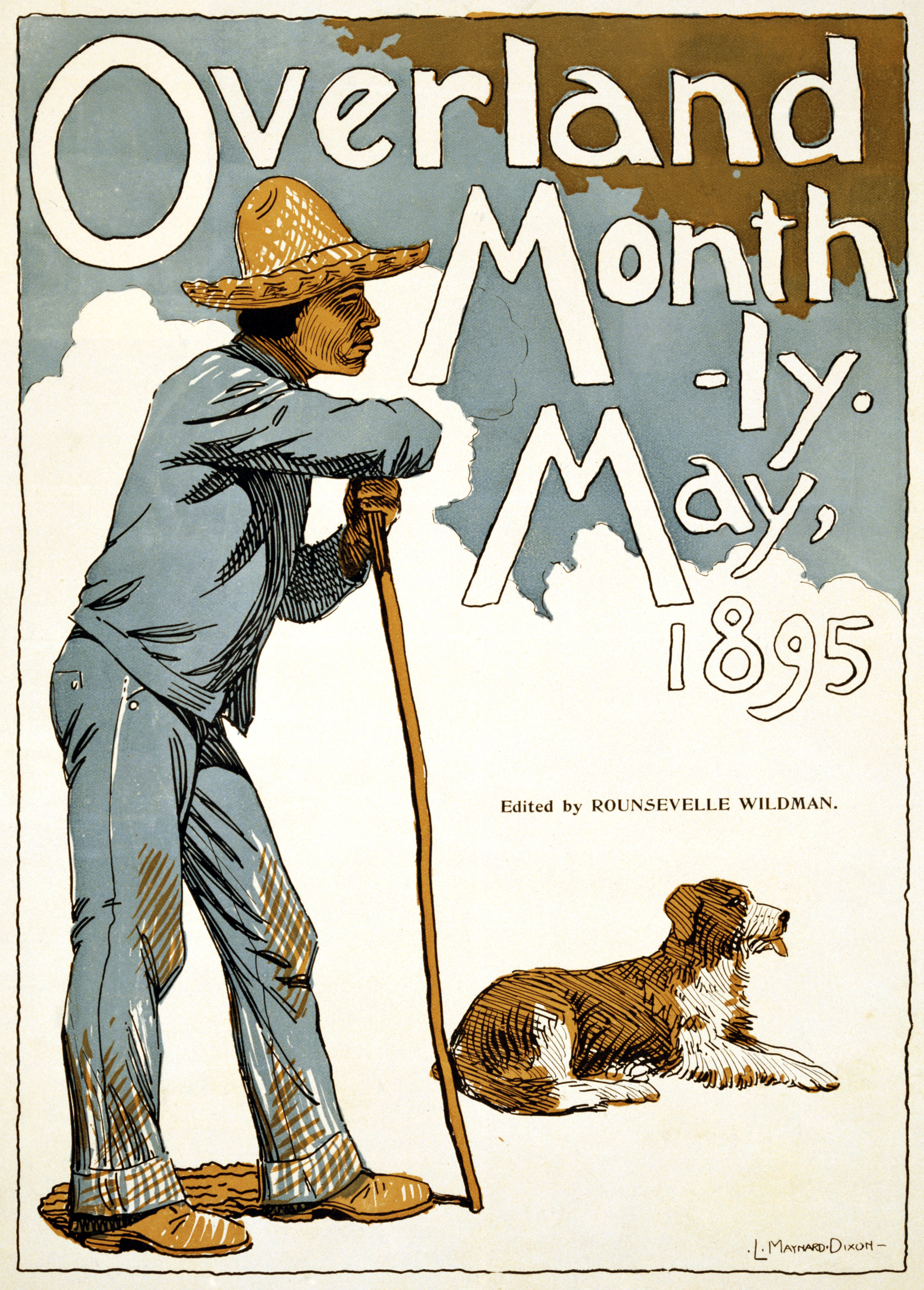
 Roy Reuben Rosamond published stories in Out West that began as ‘The Overland Monthly’ that was published by the writer, Bret Harte, whose patron was my kindred, Jessie Benton. Before radio and television Americans read magazines to get their feel for the land. Folks back East wanted to go West and live like natives, wanderers, and gold miners. Folks wanted to live half-naked in tents. They wanted to bond with Squaw Girls, dig for gold, and never work again. Minus the drugs, many Americans wanted to be Hippies. When the right-wing evangelicals put down the California Dream – they destroyed America! With their god, Ronald Reagan, they made Californians out to be dirty, in need of bath – like most campers!
In 1911 Royal wrote ‘The Squaw Girl’ and took out “Dramatic rights” on his short story lest it be stolen from him and made into a movie. I suspect Rena has some native American blood. She was not a dame full of gab. When we came into town, down from our mountain top, we had an aura about us. Folks moved out of our way. We had staked out our claim. Older women, averted their eyes. They say they don’t got one – an ego that is – but Rena knew exactly where they kept it hidden, and got their goat every time – but good! Sometimes I would look back in her wake to behold the damage.
Rena walked like a gunslinger. She had a steady gaze. She had no girlfriends growing up. She couldn’t stand chatty girls. She thought her older sisters were immature. Rena Victoria did not drop out of the inane popularity contest. She was never in it!
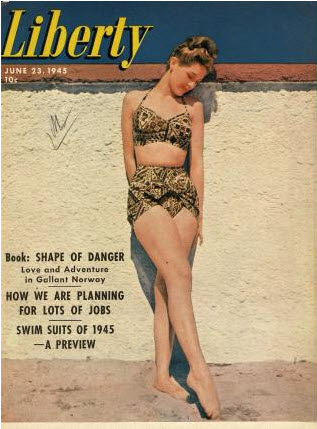
Royal published some stories in Liberty Magazine. He wrote of a maiden in a bathing suit getting much attention. There were campers at the Chautauqua campground listening to debaters on Ventura Beach.
Americans used to have real opinions. Our women were real, too. Yesterday I admonished a young woman texting because she couldn’t stay within the painted lines on the road. Today, men aren’t allowed any opinions about women. Women mostly text other women. We used to pick up good vibrations, but, we must text someone to make sure. By the time we get an answer, we’ve driven into a telephone pole. Folks on drugs don’t drive this bad.
Jon Presco
In 1862 James Mason Hutchings, an Englishman who arrived in California during the Gold Rush, published Scenes of Wonder and Curiosity in California. In his book you’ll find the following passage:
Almost every Californian has seen Monte Diablo. It is the great central landmark of the state. Whether we are walking in the streets of San Francisco, or sailing on any of our bays and navigable rivers, or riding on any of the roads in the Sacramento and San Joaquin Valleys, or standing on the elevated ridges of the mining districts before us—in lonely boldness, and at almost every turn, we see Monte del Diablo. Probably from its apparent omnipresence we are indebted to its singular name, Mount of the Devil.
That same year another local resident, twenty-six years of age, used Monte del Diablo as the setting for one of his earliest stories. Like Hutchings, Bret Harte (a native of Albany, New York) had moved to California during the Gold Rush years and he too had just begun a career as a writer.
The young Harte made the acquaintance of the abolitionist Jessie Benton Frémont, who hosted a highly regarded salon in San Francisco. The wife of 1856 Republican presidential candidate (and future Union Army commander) John Frémont, she became a champion of Harte’s writing and continued to support him after the Frémonts left California for the war. In early 1862 she wrote to Atlantic Monthly editor James T. Fields to recommend the story “The Legend of Monte del Diablo,” calling Harte “a fresh mind filled with unworn pictures.” Another local abolitionist, the minister Thomas Starr King, also wrote Fields to recommend the selection (which he had not yet even read). As Gary Scharnhorst notes in a recent biography of Harte, Fields accepted the story but was not all that impressed, writing to Mrs. Frémont, “Your young friend fails to interest. He is not piquant enough for the readers of the Atlantic.”
The story appeared in the September 1863 issue of the magazine, alongside Thoreau’s “Life Without Principle.” Five years later, Harte would write “The Luck of the Roaring Camp” and “The Outcasts of Poker Flat,” the two stories which made him internationally famous—and they would both appear in Overland Monthly, the California-based magazine he himself edited.
Over the course of the next century, “The Legend of Monte del Diablo” became an enduring favorite among the residents of Contra Costa County in California, and eventually the legend itself became part of regional lore. In 1959 the local chapter of the Knights of Columbus voted to change its name to the Father Jose A. Haro Council in honor of the “Jesuit Priest from the early San Pablo Mission who administered to the Bal Bognes Indians, about 1770, in our immediate vicinity of San Pablo.” As the recently renamed council’s own website now sheepishly admits, both Father Haro and the mission he founded were Bret Harte’s wholly fictitious inventions.
https://rosamondpress.wordpress.com/2011/07/01/george-wharton-james/
http://en.wikipedia.org/wiki/The_Squaw_Man_(1914_film)
Directed by Oscar Apfel and Cecil B. DeMille and produced by DeMille and Jesse L. Lasky, the screenplay was adapted by Beulah Marie Dix from the 1905 stage play, of the same name, written by Edwin Milton Royle.
The Overland Monthly
The Overland Monthly was a California-based monthly magazine published in the 19th and 20th century.
Publication History
The Overland Monthly began publication with the July 1868 issue, and continued until the end of 1875, when it suspended publication. In 1880, the same publishers started The Californian, which in 1882 became The Californian and Overland Monthly, and in January 1883 reverted to The Overland Monthly (starting again with Volume I, number 1). In 1923 the magazine merged with Out West to become Overland monthly and the Out West magazine. The magazine ceased publication with the July 1935 issue.

 Rosamond Press
Leave a comment