

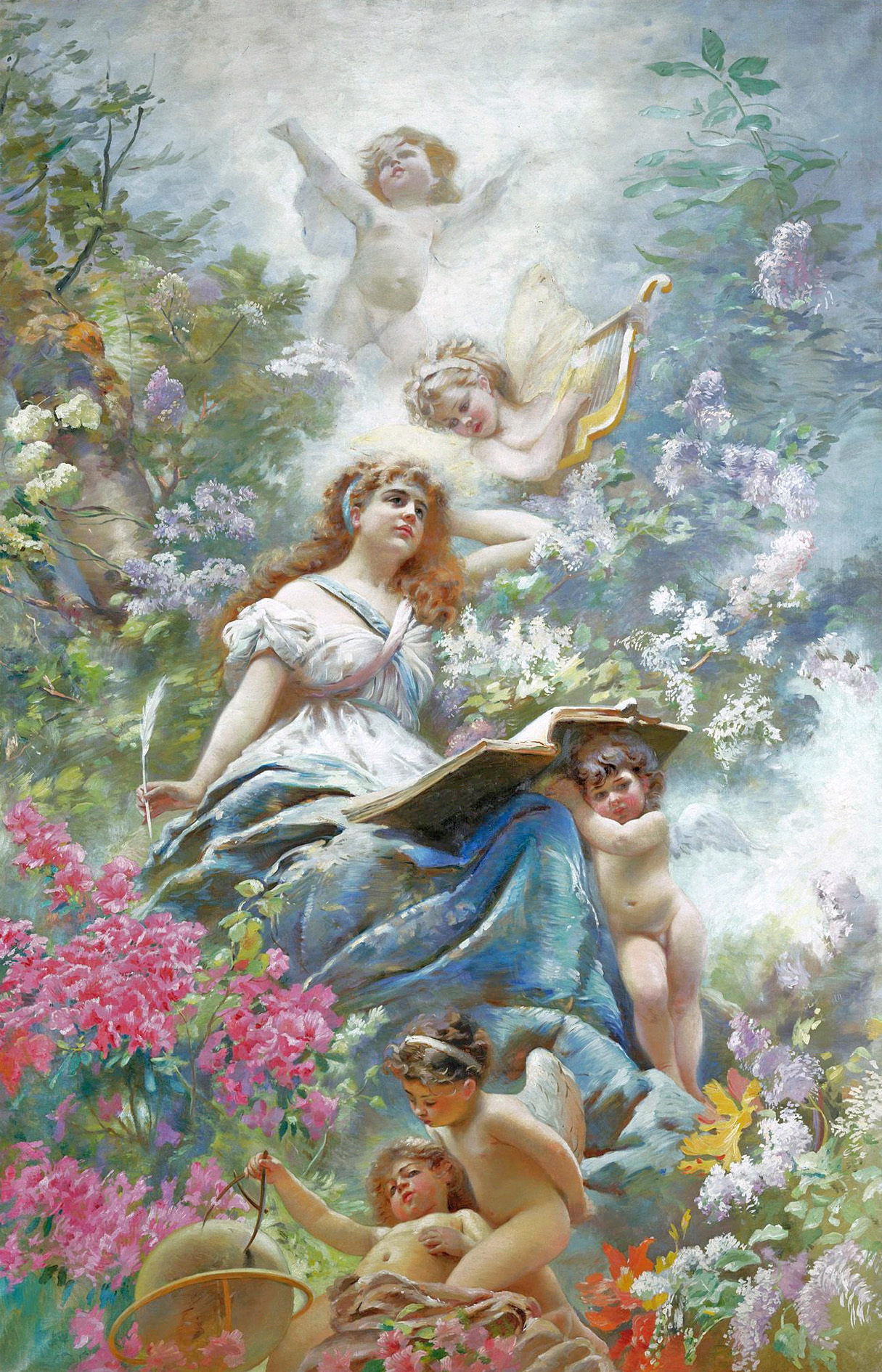
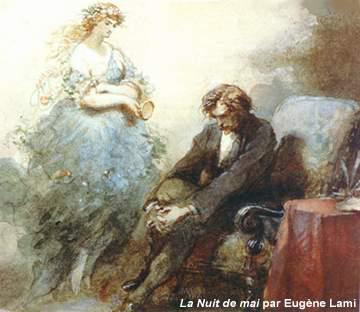
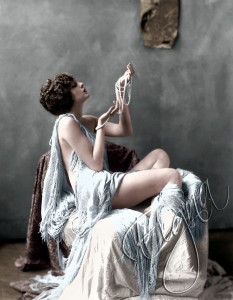
 I did not know Rena’s middle name until I discovered her beautiful daughter had died. I so wanted to find a photograph of Kathleen and Rena, to know that my Muse was still alive. But, to no avail.
I believe Rena knew nothing about the Muse, or, intended to be one. The Fates had their way with us. The world was in want of a golden vision, something worthy – that will live forever!
Please allow me to speculate why Rena came home again. She did not want to haunt that distant shore. She wanted to bring her children home, so they can experience small town life in America, and perhaps save the planet with a winning argument. Is there a Muse of those who love to debate?
My Muse inspires me to seek the Higher Self and Purpose.
Yesterday they announced Detroit is going to auction off its art, the contents of a museum, because that city declared bankruptcy.
Calling all Muses!!!!!
In Enya’s song ‘Be Where You Are’ – that was perhaps Kathleen’s favorite – we find Courtly Love, and the unattainable. How we deal with our great losses and separations, is to send Orpheus into the underworld to look for his beloved. Our hero promises he will not turn to behold his very beautiful wife, until he reaches the surface, but, can’t resist. Orpheus beholds her beautiful face, and she slips back into the void. Here is the birth of the Museum and the idea of immortality coming to dwell with mortals. All we need is a glimpse.
We must have a great debate as to why Art is worth saving, and becoming the banner of our Western Culture.
We are here to read, to dance, to write poems, and capture beauty on a canvas. We came here to love, and romance the rose. We will know our home, and house ourselves in the glory of creation.
Jon
Muse
The nine muses—Clio, Thalia, Erato, Euterpe, Polyhymnia, Calliope, Terpsichore, Urania, Melpomene—on a Roman sarcophagus (2nd century AD, from the Louvre)
The Muses (Ancient Greek: Μοῦσαι, moũsai:[1] perhaps from the o-grade of the Proto-Indo-European root *men- “think”[2]) in Greek mythology, poetry and literature, are the goddesses of the inspiration of literature, science and the arts. They were considered the source of the knowledge, related orally for centuries in the ancient culture that was contained in poetic lyrics and myths.
The Muses, the personification of knowledge and the arts, especially literature, dance and music, are the nine daughters of Zeus and Mnemosyne (who was memory personified). Sometimes they are referred to as water nymphs, associated with the springs of Helicon and with Pieris. According to Pausanias in the later 2nd century AD,[3] there were three original Muses, worshiped on Mount Helicon in Boeotia. In later tradition, four Muses were recognised: Thelxinoë, Aoedē, Arche, and Meletē, said to be daughters of Zeus and Plusia or of Uranus. In Renaissance and Neoclassical art, the dissemination of emblem books such as Cesare Ripa’s Iconologia (1593 and many further editions) helped standardize the depiction of the Muses in sculpture and painting.
The Muses were both the embodiments and sponsors of performed metrical speech: mousike (whence the English term “music”) was just “one of the arts of the Muses”. Others included Science, Geography, Mathematics, Philosophy, and especially Art, Drama, and inspiration. Some authors invoke Muses when writing poetry, hymns or epic history. The invocation typically occurs at or near the beginning, and calls for help or inspiration, or simply invites the Muse to sing through the author. The British poet Robert Graves popularised the concept of the Muse-poet in modern times.[citation needed] His concept was based on pre-12th century traditions of the Celtic poets, the tradition of the medieval troubadours who celebrated the concept of courtly love, and the romantic poets.
Muse reading a scroll, perhaps Clio (Attic red-figure lekythos, Boeotia c. 435–425 BC)
In Boeotia, the homeland of Hesiod, a tradition persisted[4] that the Muses had once been three in number. Diodorus Siculus quotes Hesiod to the contrary, observing:
Writers similarly disagree also concerning the number of the Muses; for some say that there are three, and others that there are nine, but the number nine has prevailed since it rests upon the authority of the most distinguished men, such as Homer and Hesiod and others like them.[5]
Diodoros also states (Book I.18) that Osiris first recruited the nine Muses, along with the Satyrs or male dancers, while passing through Ethiopia, before embarking on a tour of all Asia and Europe, teaching the arts of cultivation wherever he went.
The Muses, the personification of knowledge and the arts, especially literature, dance and music, are the nine daughters of Zeus and Mnemosyne (memory personified). Hesiod’s account and description of the Muses was the one generally followed by the writers of antiquity. It was not until Roman times that the following functions were assigned to them, and even then there was some variation in both their names and their attributes: Calliope -epic poetry; Clio -history; Euterpe -flutes and lyric poetry; Thalia -comedy and pastoral poetry; Melpomene -tragedy; Terpsichore -dance; Erato -love poetry; Polyhymnia -sacred poetry; Urania -astronomy.
Three ancient Muses were also reported in Plutarch’s Quaestiones Convivales [6] (9.I4.2–4).[7] The Roman scholar Varro relates that there are only three Muses: one who is born from the movement of water, another who makes sound by striking the air, and a third who is embodied only in the human voice. They were Melete or Practice, Mneme or Memory and Aoide or Song.
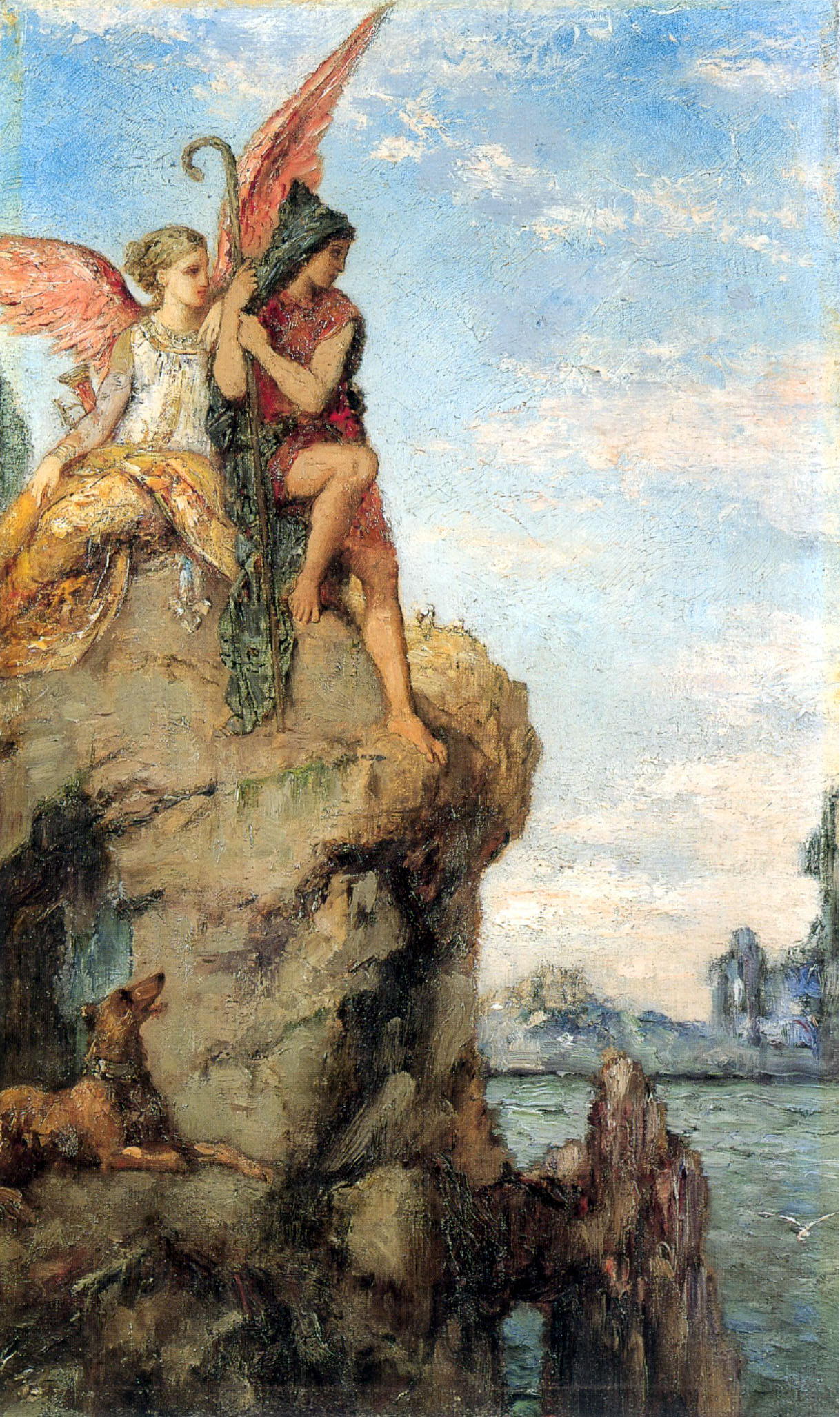
Gustave Moreau, Hesiod and the Muse (1891)—Musée d’Orsay, Paris
However the Classical understanding of the muses tripled their triad, set at nine goddesses, who embody the arts and inspire creation with their graces through remembered and improvised song and stage, writing, traditional music, and dance.
In one myth, King Pierus, king of Macedon, had nine daughters he named after the nine Muses, believing that their skills were a great match to the Muses. He thus challenged the Muses to a match, resulting in his daughters, the Pierides, being turned into chattering magpies[8] for their presumption.
Sometimes they are referred to as water nymphs, associated with the springs of Helicon and with Pieris. It was said that the winged horse Pegasus touched his hooves to the ground on Helicon, causing four sacred springs to burst forth, from which the muses were born.[1] Athena later tamed the horse and presented him to the muses.
Antiquity set Apollo as their leader, Apollon Mousagetēs (“Apollo Muse-leader”).[9] Not only are the Muses explicitly used in modern English to refer to an artistic inspiration, as when one cites one’s own artistic muse, but they also are implicit in words and phrases such as “amuse”, “museum” (Latinised from mouseion—a place where the muses were worshipped), “music”, and “musing upon”.[10]
According to Hesiod’s Theogony (7th century BCE), they were daughters of Zeus, the second generation king of the gods, and the offspring of Mnemosyne, goddess of memory. For Alcman and Mimnermus, they were even more primordial, springing from the early deities, Uranus and Gaia. Gaia is Mother Earth, an early mother goddess who was worshipped at Delphi from prehistoric times, long before the site was rededicated to Apollo, possibly indicating a transfer to association with him after that time.
Pausanias records a tradition of two generations of Muses; the first being daughters of Uranus and Gaia, the second of Zeus and Mnemosyne. Another, rarer genealogy is that they are daughters of Harmonia (the daughter of Aphrodite and Ares) which contradicts the myth in which they were dancing at the wedding of Harmonia and Cadmus. This later inconsistency is an example of how clues to the true dating, or chronology, of myths may be determined by the appearance of figures and concepts in Greek myths.[citation needed]
Compare the Roman inspiring nymphs of springs, the Camenae, the Völva of Norse Mythology and also the apsaras in the mythology of classical India.
In myth[edit]
Polyhymnia, the Muse of sacred poetry, sacred hymn and eloquence as well as agriculture and pantomime.
According to Pausanias in the later 2nd century AD,[11] there were three original Muses, worshiped on Mount Helicon in Boeotia: Aoidē (“song” or “tune”), Meletē (“practice” or “occasion”), and Mnēmē (“memory”). Together, these three form the complete picture of the preconditions of poetic art in cult practice. In Delphi three Muses were worshiped as well, but with other names: Nētē, Mesē, and Hypatē, which are assigned as the names of the three chords of the ancient musical instrument, the lyre. Alternatively they later were called Cēphisso, Apollonis, and Borysthenis, whose names characterize them as daughters of Apollo.
In later tradition, four Muses were recognized: Thelxinoë, Aoedē, Arche, and Meletē, said to be daughters of Zeus and Plusia or of Uranus.
One of the persons frequently associated with the Muses was Pierus. By some he was called the father (by a Pimpleian nymph: called Antiope by Cicero) of a total of seven Muses, called Neilo (Νειλώ), Tritone (Τριτώνη), Asopo (Ἀσωπώ), Heptapora (Ἑπτάπορα), Achelois, Tipoplo (Τιποπλώ), and Rhodia (Ῥοδία).[12]
In one myth, the Muses judged a contest between Apollo and Marsyas. They also gathered the pieces of the dead body of Orpheus, son of Calliope, and buried them. In a later myth, Thamyris challenged them to a singing contest. They won and punished Thamyris by blinding him and robbing him of his singing ability.
Though the Muses, when taken together, form a complete picture of the subjects proper to poetic art, the association of specific Muses with specific art forms is a later innovation. The Muses were not assigned standardized divisions of poetry with which they are now identified until late Hellenistic times.
 Rosamond Press
Leave a comment