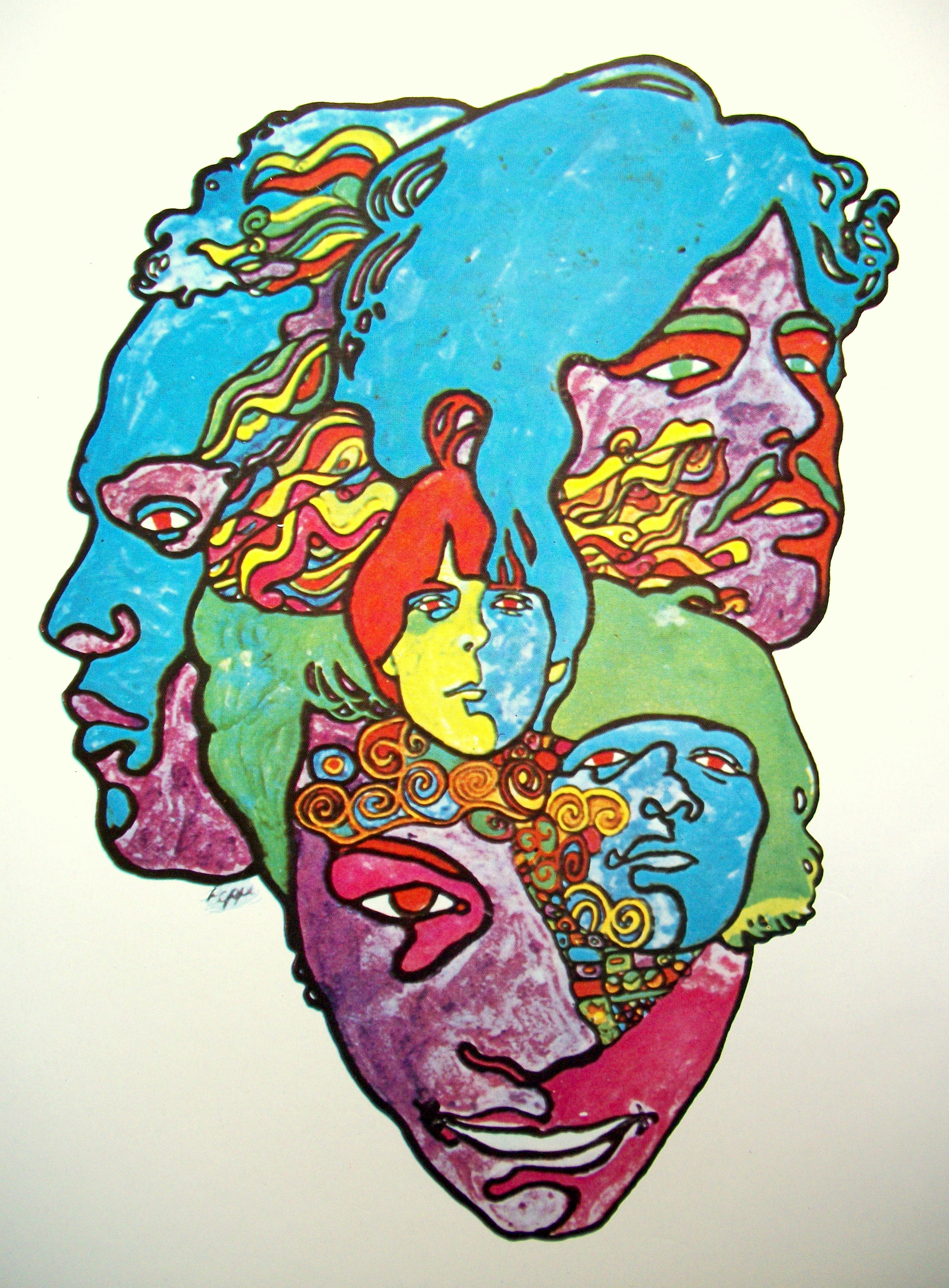

 I am considering leaving the US for the first time and seeing Paris. It is an old dream I shared with my first love, Marilyn Reed, one of the sexiest and radical woman alive. I do not think I will find as much culture there as I have found in America. However, culture is dead in the New World thanks to the Christian-Right who has made a name for itself fighting a Jihad against the Sexy Intellectual Beast that many ex-patriot authors brought home to the Land of Savages. The Great Gatsby is dead. It is my goal to see a musical produced around the music of the extinct rock group, Love. Perhaps France is open to this idea.
Someone who wrote a review of the Raging Family mentioned the Manson Family. My friend, Bryan MacLean was invited to the Polanski home the day the Manson family showed up. He did not go – of course!
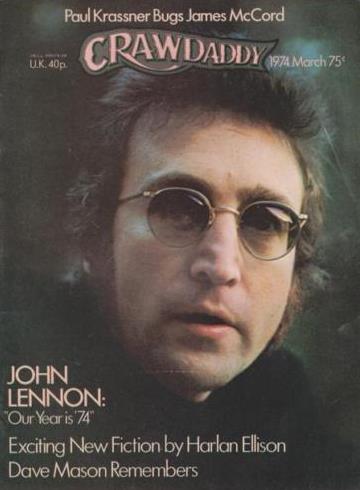
I lived down the street from the Mel Lyman Family in Boston. I encountered a lone gunman one night. He founded the first Rock Magazine, Crawdaddy. Mel is my kindred, the husband of Jessie Benton, the daughter of the famous artist, Thomas Hart Benton, whose grandfather was the author of Manifest Destiny. Senator Benton and his brother, Jesse, got in a gun and knife fight with Andrew Jackson. He looks like my ex-brother-in-law, the muralist, Garth Benton, the father of my niece, Drew Benton.
Below is a video ‘Live and Let Live’ by Love. Play this song while watching the Moulin Rouge video that is turned down, and bring the Intellectual Sexy Beast come alive!
Jon Presco
Here’s a brief recap of The Raging Family’s bio: raised and home-schooled by bohemians in Upstate New York; lived in Eugene, Oregon until driven from their house by local authorities because of noise and behavior complaints; settled down in an enclave somewhere in the hills outside of town to focus on music and art. If you ask me it all sounds a little cultish, and at the risk of becoming Sharon Tate to their Manson Clan, I’m gonna throw my support behind The Raging Family’s latest “concept” album. Black Holes is ostensibly a journey through space and time……
The man who was stalking me, got to the tower as I did.
“What are you doing here?” he asked.
“What are you doing here? I asked.
“I’m guarding this place? he answered.
“Are you packing a gun?
“Yes!” he answered.
We now had an ecorteric conversation on freedom of speech, and the idea of folks carrying guns to protect their point of view. There is no doubt what-so-ever that I was talking to Paul Williams, an armed guard for Mel Lyman and his wife, Jessie Benton, who are found in my family tree, after Christine married Garth Benton.
Paul would later flee for his life from the Lyman Family, he convinced they were a dangerous cult who would kill anyone who threatened them.
I met Jessie once at the Fort Hill commune. I lived down the street two blocks in a commune I and four friends founded in 1970. We exchanged food and ideas.
With the rekindling of the Culture Wars by the Pope over sonic imaging and birth control, I must assume the War on Hippie Bohemians has been rasied from the Dead – Heads. When you add together my history with alternative societies and thinking, you can conclude I am the Big Boss Bohemian Man – the Last Hippie Man Standing!
Come and get me – Ratzinger! You dirty rat!
https://rosamondpress.wordpress.com/2012/03/17/mel-lymans-culture-war/
https://rosamondpress.wordpress.com/2012/03/19/snow-down-on-fort-hill/
Crawdaddy! was the first U.S. magazine of rock and roll music criticism.[1] Created in 1966 by college student Paul Williams in response to the increasing sophistication and cultural influence of popular music, Crawdaddy! was self-described as “the first magazine to take rock and roll seriously.”[1][2]
Preceding both Rolling Stone and Creem, Crawdaddy! is regarded as the U.S. pioneer of rock journalism[1] and was the training ground for many rock writers just finding the language to describe rock and roll,[3][4] which was only then beginning to be written about as studiously as folk music and jazz.[5] The magazine spawned the career of numerous rock and other writers. Early contributing writers included Jon Landau, Sandy Pearlman, Richard Meltzer and Peter Knobler.[6]
http://www.adena.com/adena/usa/hs/hs23.htm
http://www.adena.com/adena/usa/hs/hs23.htm
On the morning of September 4, 1813, the Benton brothers arrived in Nashville and took their saddle-bags to the City Hotel, to avoid, Colonel Benton said, a possibility of unpleasantness, as Jackson and his friends were accustomed to make their headquarters at the Nashville Inn, diagonally across the Court-House Square. Each of the Bentons wore two pistols. At about the same time Jackson, Coffee, and Stockley Hays arrived at the Inn, all armed and Jackson carrying a riding whip. The news was over town in a moment. Jackson and Coffee went to the post-office, a few doors beyond the City Hotel. They went the short way, crossing the Square and passing some distance in front of the other tavern where the Bentons were standing on the walk.
Returning, Jackson and Coffee followed the walk. As they reached the hotel Jesse Benton stepped into the barroom. Thomas Benton was standing in the doorway of the hall that led to the rear porch overlooking the river. Jackson started toward him brandishing his whip. “Now, defend yourself you damned rascal!” Benton reached for a pistol but before he could draw Jackson’s gun was at his breast. He backed slowly through the corridor, Jackson following, step for step. They had reached the porch, when, glancing beyond the muzzle of Jackson’s pistol, Benton saw his brother slip through a doorway behind Jackson, raise his pistol and shoot. Jackson pitched forward, firing. His powder burned a sleeve of Tom Benton’s coat. Thomas Benton fired twice at the falling form of Jackson and Jesse lunged forward to shoot again, but James Sitler, a bystander, shielded the prostrate man whose left side was gushing blood.
The gigantic form of John Coffee strode through the smoke, firing over the heads of Sitler and Jackson at Thomas Benton. He missed but came on with clubbed pistol. Benton’s guns were empty. He fell backward down a flight of stairs. Young Stockley Hays, of Burr expedition memory, sprang at Jesse Benton with a sword cane and would have run him through had the blade not broken on a button. Jesse had a loaded pistol left. As Hays closed in with a dirk knife, Benton thrust the muzzle against his body, but the charge failed to explode.
General Jackson’s wounds soaked two mattresses with blood at the Nashville Inn. He was nearly dead – his left shoulder shattered by a slug, and a ball embedded against the upper bone of that arm, both from Jesse Benton’s pistol. While every physician in Nashville tried to stanch the flow of blood, Colonel Benton and his partizans gathered before the Inn shouting defiance. Benton broke a small-sword of Jackson’s that he had found at the scene of conflict. All the doctors save one declared for the amputation of the arm. Jackson barely understood. “I’ll keep my arm,” he said.
Senator Thomas Hart Benton on Manifest Destiny (1846)
It would seem that the White race alone received the divine command, to subdue and replenish the earth: for it is the only race that has obeyed it-the only race that hunts out new and distant lands, and even a New World, to subdue and replenish . . . .
The Red race has disappeared from the Atlantic coast; the tribes that resisted civilization met extinction. This is a cause of lamentation with many. For my part, I cannot murmur at what seems to be the effect of divine law. I cannot repine that is this Capitol has replace the wigwam-this Christian people, replaced the savages-white matrons, the red squaws . . . . Civilization, or extinction, has been the fate of all people who have found themselves in the trace of the advancing Whites, and civilization, always the preference of the Whites, has been pressed as an object, while extinction has followed as a consequence of its resistance . . . .
The van of the Caucasian race now top the Rocky Mountains, and spread down on the shores of the Pacific. In a few years a great population will grow up there, luminous with the accumulated lights of the European and American civilization. There presence in such a position cannot be without it influence upon eastern Asia. . . .
The Mongolian, or Yellow race is there, four hundred millions in number spreading almost to Europe; a race once the foremost of the human family in the arts of civilization, but torpid and stationary for thousands of years. It is a race far above the Ethiopian, or Black-above the Malay, or Brown, (if we admit five races)-and above the American Indian or Red; it is a race far above all these, but still far below the White and like all the rest, must receive an impression from the superior race whenever they come in contact . . . .
The sun of civilization must shine across the sea; socially and commercially the van of the Caucasians, and the rear of the Mongolians, must intermix. They must talk together, and trade together, and marry together. . . . Moral and intellectual superiority will do the rest; the White race will take the ascendant, elevating what is susceptible of improvement-wearing out what is not. . . . And thus the youngest people, and the newest land, will become the reviver and the regenerator of the oldest . . . .
It is in this point of view, and as acting upon the social, political, and religious condition of Asia, and giving a new point of departure to her ancient civilization, that I look upon the settlement of the Columbia river by the van of the Caucasian race as the most momentous human event in the history of man since his dispersion over the face of the earth.
Thomas Hart Benton (April 15, 1889 – January 19, 1975) was an American painter and muralist. Along with Grant Wood and John Steuart Curry, he was at the forefront of the Regionalist art movement. His fluid, sculpted figures in his paintings showed everyday people in scenes of life in the United States. Though his work is strongly associated with the Midwest, he studied in Paris, lived in New York City for more than 20 years and painted scores of works there; summered for 50 years on Martha’s Vineyard off the New England coast; and also painted scenes of the American South and the American West.
 Rosamond Press
Leave a comment