


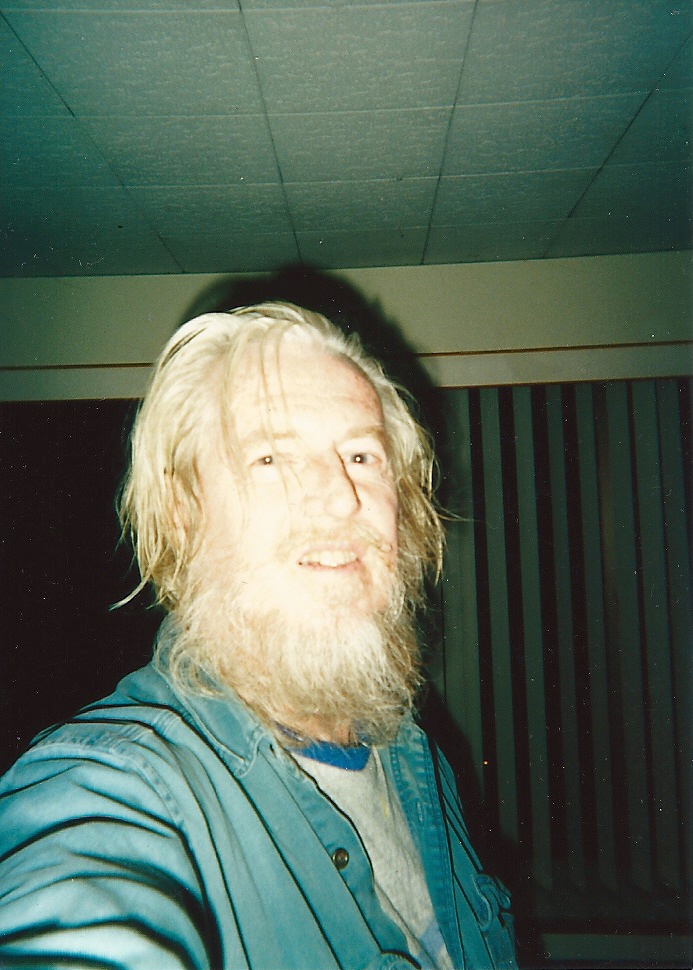
 Soon after I met Edwin Malcolm Corbin I told him a truth that pained him.
“You should have documented everything you did and submitted it as a paper to Harvard. You were the last Trailblazer. You represent the movement of the European Man who as gone as far West as he can. It is all gone, now. You and Katrine were – the last. The lab – has disapeared. The Great Experiment – is over!”
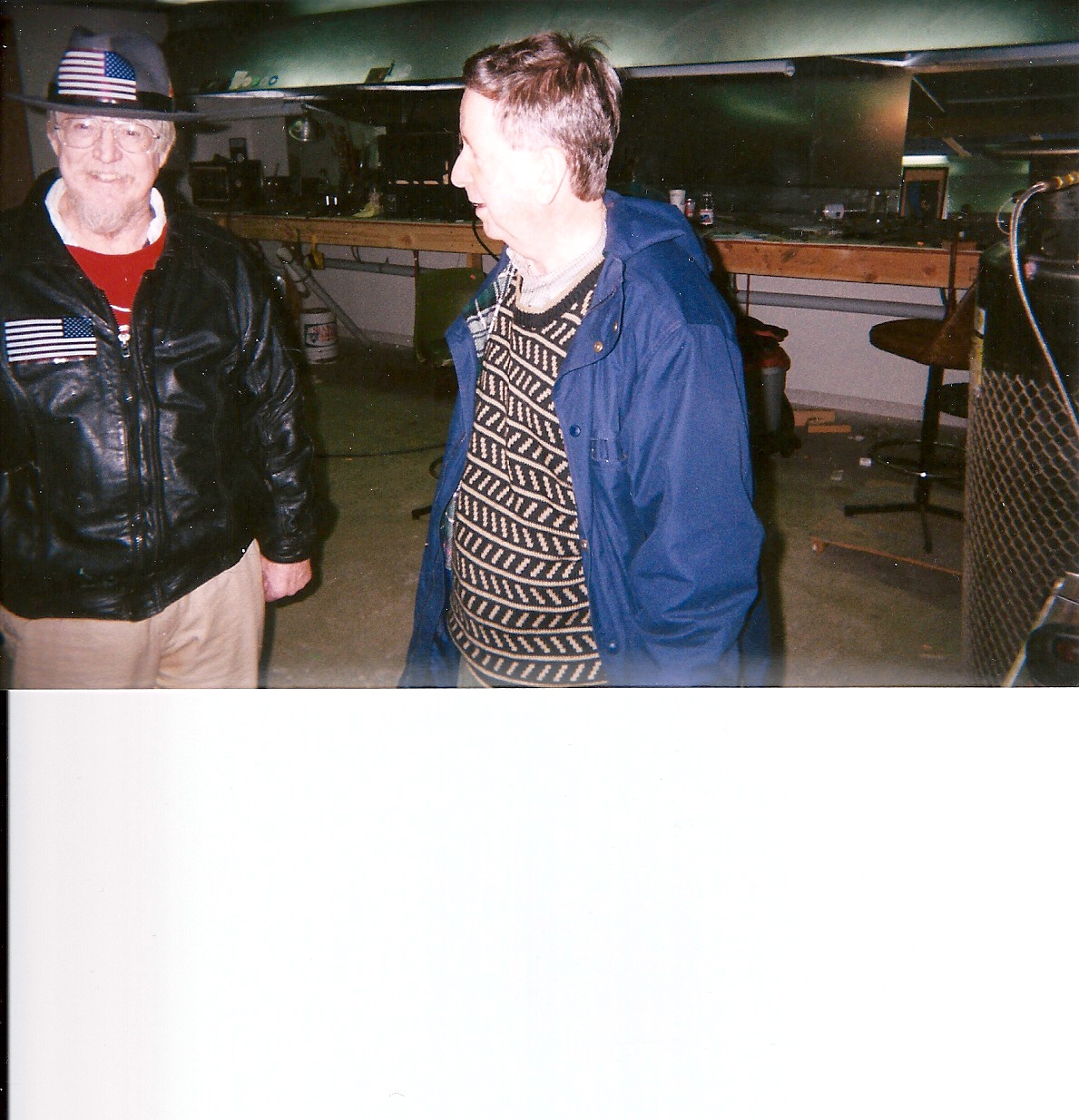
Ed was on his way to being a bitter old man when we met in 1997. He and Katrine were divorced, and my friend moved to Eugene in order to help put his Wild Children through public school. All Ed wanted to do was drink a lot of beer, and get drunk. Our mutual friend, Mark Gall, called Ed a “Wild Man”. We got Ed into Serenity Lane, and he was sober for six months before he fell off the wagon. I blame the poetic long distant telephone conversations Ed was having with his Harvard Chum, Tom Tom, a Mad Poet who dropped out of society and taught his craft on a Navajo reservation in New Mexico, I believe. Tom loved hard liquor and was snookered when he call the lad he went to Europe with, and read his latest poem. This was like striking a match in a fireworks factory.
Check out the reflection of the Sober Ed in the window of Serenity Lane – his Weird. The Corbin Kids have been in business together and were/are ‘The Raging Family’.
http://www.eugeneweekly.com/2006/05/18/localsonly3.html
Mark and his family used to stay on the Corbin Ranch where Katrine raised goats for their wool to knit with. Here is the Vita of Mr. Gall whom I go fishing with up the McKenzie River.
http://pages.uoregon.edu/mgall/vita.htm
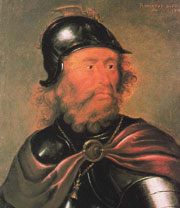
Above is a photo of Otto Rayburn, the Ozark Historian, who recorded the vanishing past of the Scott-Irish folks who settled in the Appalachian Mountains. I own his letter wherein he asks Royal to goet his poet friends in California interested in a Poets Retreat in the Ozark Mountains. In one of his history books is my grandfather, Royal Rosamond, riding a dead horse, and, the Thomas Hart Benton family who would become my kindred when my famous sister married the muralist, Garth Benton. The Corbin Family fits with these. They need to hire a historian and get their act together. Ed is a Gandalf, a Wild Man – for real! His grandfather was Robert Bruce Wallace, a descendant of Robert Bruce and King Malcolm of Scottland, thus, Edwin was ‘The King of the Woods’.
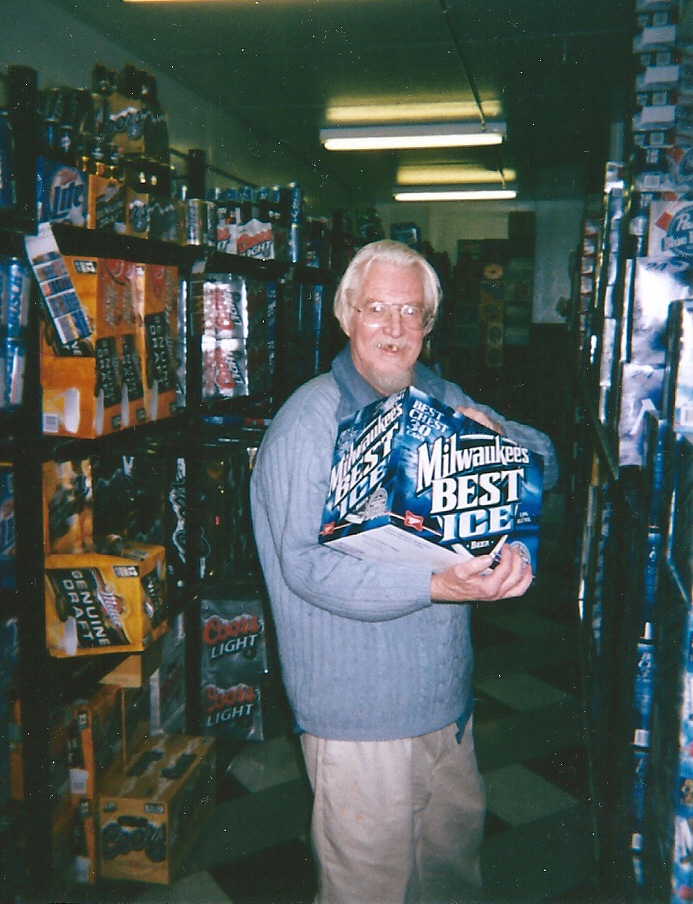
Above is a photo of Ed loading up on five cases of beer that he packed in the back of my little 1977 Toyota – along with a months supply of groceries. Tomorrow I will be getting new shocks on the Mustardmobile in order to drive more safely, they blown for a long time. If we were a reality series, there would be a scene where we argue over who ditzed my pride and show – and didn’t want to pay to get it fixed.
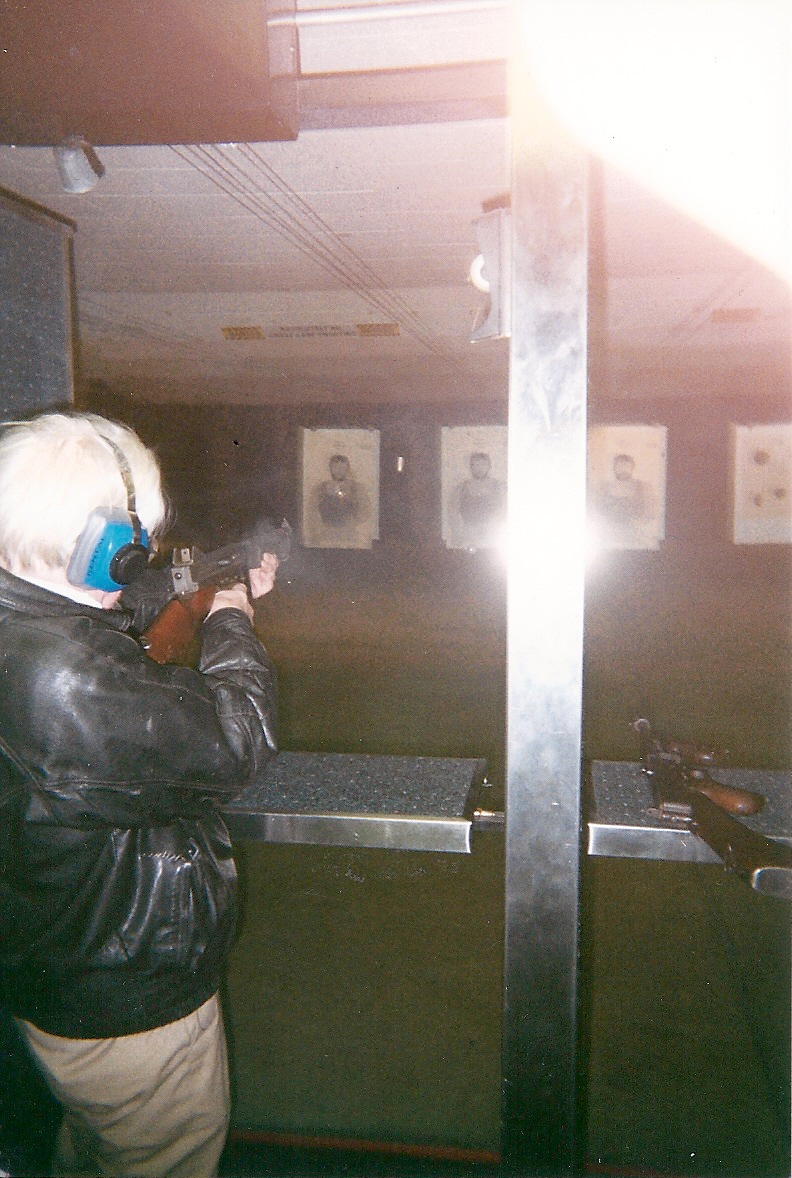
Above is a photo of Ed, Mark, and I shooting a Tommy Gun out on the highway. What folks want to see on American TV these days, is wild men drinking a shit load of beer while they run around in the woods acting like real men as they shoot off their guns. Ed is the Last of the Wild Men. He was the Real McCoy, because, you got to be crazy to do what he did – with a degree from Harvard. I mean, Ed was supposed to the next Great Gatspy. He threw it all away, and ran half-naked into the beloved woods of his Scottish ancestors.
“Freedom!”
Freedom for the Wild Man and his Raging Family!
Jon Presco
http://en.wikipedia.org/wiki/Wild_man
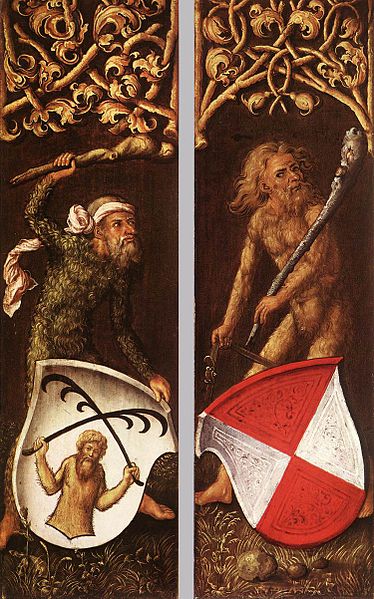
The wild man (also wildman, or “wildman of the woods”, archaically woodwose or wodewose) is a mythical figure that appears in the artwork and literature of medieval Europe, comparable to the satyr or faun type in classical mythology and to Silvanus, the Roman god of the woodlands.
The defining characteristic of the figure is its “wildness”; from the 12th century they were consistently depicted as being covered with hair. Images of wild men appear in the carved and painted roof bosses where intersecting ogee vaults meet in the Canterbury Cathedral, in positions where one is also likely to encounter the vegetal Green Man. The image of the wild man survived to appear as supporter for heraldic coats-of-arms, especially in Germany, well into the 16th century. Renaissance engravers in Germany and Italy were particularly fond of wild men, wild women, and wild families, with examples from Martin Schongauer (died 1491) and Albrecht Dürer (1471–1528) among others.
http://abcnews.go.com/Nightline/video/duck-dynasty-inside-kingdom-redneck-royalty-19173169
Duck Dynasty is a reality television series on A&E. It shows the lives of the Robertson family, who became wealthy from their family-operated business, Duck Commander, operated in West Monroe, Louisiana, which makes products for duck hunters, primarily the duck call named Duck Commander. The Robertson men, brothers Phil and Si, and Phil’s sons Jase, Willie, and Jep, are known for their long, flowing beards.
http://www.historic-uk.com/HistoryUK/HistoryofScotland/William-WallaceRobert-The-Bruce/
Here’s a brief recap of The Raging Family’s bio: raised and home-schooled by bohemians in Upstate New York; lived in Eugene, Oregon until driven from their house by local authorities because of noise and behavior complaints; settled down in an enclave somewhere in the hills outside of town to focus on music and art. If you ask me it all sounds a little cultish, and at the risk of becoming Sharon Tate to their Manson Clan, I’m gonna throw my support behind The Raging Family’s latest “concept” album. Black Holes is ostensibly a journey through space and time……
http://www.3hive.com/2005/05/the_raging_fami.php
Lonnita Sheets b. March 8, 1951 m. ca. 1969 Jim Lowry
m. ca. 1971 Kenneth Corbin
9 Shane Andrew Lowry b. Feb. 10, 1970
9 Robert Adrian Corbin b. May 23, 1972
9 Jeremey Allen Corbin b. August 20, 1975
9 Angela Renee Corbin b. July 16, 1976
http://mypage.siu.edu/leverett/walgen.html
http://www.oocities.org/heartland/meadows/2303/robertbruce.html
https://rosamondpress.wordpress.com/2013/02/09/poetry-is-the-truth/
https://rosamondpress.wordpress.com/2013/01/11/ravola-of-thunder-mountian/
She was survived by two sons, Kendall Wallace (Susanne) Corbin of Eagan, Minn., and Edwin Malcolm Corbin of Eugene, Ore.; five grandsons, Kendall Bruce Corbin and Ian Andrew Corbin (and their mother, Jane Hammond Corbin) of Minneapolis, and Cosmos, Freeman and Eden (and their mother, Kathryn Corbin Parker) of Eugene; three great-grandchildren, Marcus, Sylvia Fay and Griffin Corbin; and a niece, Joan Popenoe. She was preceded in death by her husband on July 22, 1999; her parents, Emilie Susan (Cavenagh) Wallace and Robert Bruce Wallace; two sisters, Winifred (Barton) and Helen Lucile (Popenoe); a niece, Sydney Barton (Robinson); and a nephew, Frank Popenoe.
Terminology [edit]
The first element of woodwose is usually explained as from wudu “wood”, “forest”. The second element is less clear. It has been identified as a hypothetical noun wāsa “being”, from the verb wesan, wosan “to be”, “to be alive”.[1] The Old English form is unattested, but it would have been wudu-wāsa or wude-wāsa.
Late 15th century tapestry from Basel, showing a woodwose being tamed by a virtuous lady
Terminology in the Middle Ages was more varied. In Middle English, there was the term woodwose (also spelled wodewose, woodehouse, wudwas etc.).[2][3] Wodwos[4] occurs in Sir Gawain and the Green Knight (ca. 1390).[5] The Middle English word is first attested in the 1340s, in references to the “wild man” decorative artwork popular at the time, in a Latin description of an embroidery of the Great Wardrobe of Edward III,[6] but as a surname it is found as early as 1251, of one Robert de Wudewuse. In reference to an actual legendary or mythological creature, the term is found in the 1380s, in Wycliffe’s Bible, translating שעיר (LXX δαιμόνια, Latin pilosi) in Isaiah 13:21[7] The occurrences in Gawain and the Green Knight dates to shortly after Wycliffe’s Bible, to ca. 1390.[8]
The Fight in the Forest, drawing by Hans Burgkmair, possibly of a scene from the Middle High German poem Sigenot, about Dietrich von Bern
Old High German had schrat, scrato or scrazo, which appear in glosses of Latin works as translations for fauni, silvestres, or pilosi, identifying the creatures as hairy woodland beings.[3] Some of the local names suggest connections with figures from ancient mythology. Common in Lombardy and the Italian-speaking parts of the Alps is the term salvan or salvang, which derives from the Latin Silvanus, the name of the Roman tutelary god of gardens and the countryside.[3] Similarly, folklore in Tyrol and German-speaking Switzerland into the 20th century included a wild woman known as Fange or Fanke, which derives from the Latin fauna, the feminine form of faun.[3] Medieval German sources give as names for the wild woman lamia and holzmoia (or some variation);[9] the former clearly refers to the Greek wilderness demon Lamia while the latter derives ultimately from Maia, a Greco-Roman earth and fertility goddess who is elsewhere identified with Fauna and who exerted a wide influence on medieval wild-man lore.[3] Slavic has leshy “forest man”.
Various languages and traditions include names suggesting affinities with Orcus, a Roman and Italic god of death.[3] For many years people in Tyrol called the wild man Orke, Lorke, or Noerglein, while in parts of Italy he was the orco or huorco.[10] The French ogre has the same derivation,[10] as do modern literary orcs.[11] Importantly, Orcus is associated with Maia in a dance celebrated late enough to be condemned in a 9th- or 10th-century Spanish penitential.[12]
The term was usually replaced in literature of the Early Modern English period by classically-derived equivalents, or “wild man”, but it survives in the form of the surname Wodehouse or Woodhouse (for instance in the name of the author P. G. Wodehouse, or Jane Austen’s character Emma Woodhouse). “Wild man” and its cognates is the common term for the creature in most modern languages;[3] it appears in German as wilder Mann, in French as homme sauvage and in Italian as uomo selvatico “forest man”.[13]
Origins [edit]
Further information: Silvanus (mythology), Satyr, Dusios, and Faun
Figures similar to the European wild man occur worldwide from very early times. The earliest recorded example of the type is the character Enkidu in the ancient Mesopotamian Epic of Gilgamesh.[14]
The portrayal of Nebuchadnezzar II in the Book of Daniel (2nd century BC) greatly influenced the medieval European concepts.[15] Daniel 4 depicts God humbling the Babylonian king for his boastfulness; stricken mad and ejected from human society, he grows hair on his body and lives like a beast. This image was popular in medieval depictions of Nebuchadnezzar. Similarly, late medieval legends of Saint John Chrysostom (died 407) portray the saint’s asceticism as making him so isolated and feral that hunters who capture him cannot tell if he is man or beast.[16]
Pontus and his train disguised as wild men at the wedding of Genelet and Sidonia. Illustration of a manuscript of a German version of Pontus and Sidonia (CPG 142, fol. 122r, ca. 1475)
The medieval wild-man concept also drew on lore about similar beings from the Classical world such as the Roman faun and Silvanus. Several folk traditions about the wild man correspond with ancient practices and beliefs. Notably, peasants in the Grisons tried to capture the wild man by getting him drunk and tying him up in hopes that he would give them his wisdom in exchange for freedom.[17] This suggests a connection to an ancient tradition – recorded as early as Xenophon (died 354 BC) and appearing in the works of Ovid, Pausanias, and Claudius Aelianus – in which shepherds caught a forest being, here called Silenus or Faunus, in the same fashion and for the same purpose.[17]
On top of mythological influences, medieval wild man lore also drew on the learned writings of ancient historians, though likely to a lesser degree.[18] These ancient wild men are naked and sometimes covered in hair, though importantly the texts generally localize them in some faraway land,[18] distinguishing them from the medieval wild man who was thought to exist just at the boundaries of civilization. The first historian to describe such beings, Herodotus (c. 484 BC – c. 425 BC), places them in western Libya alongside the men with no heads and with eyes in their chests and dog-faced creatures.[19] After the appearance of the former Persian court physician Ctesias’s writings on India, which recorded Persian beliefs about the subcontinent, and the conquests of Alexander the Great, India became the primary home of fantastic creatures in the Western imagination, and wild men were frequently described as living there.[19] Megasthenes, Seleucus I Nicator’s ambassador to Chandragupta Maurya, wrote of two kinds of men to be found in India whom he explicitly describes as wild: first a creature brought to court whose toes faced backwards; second a tribe of forest people who had no mouths and who sustained themselves with smells.[20] Both Quintus Curtius Rufus and Arrian refer to Alexander himself meeting with a tribe of fish-eating savages while on his Indian campaign.[21]
Medieval representations [edit]
Some of the earliest evidence for the wild-man tradition appears in the above-mentioned 9th- or 10th-century Spanish penitential.[12] This book, likely based on an earlier Frankish source, describes a dance in which participants donned the guise of the figures Orcus, Maia, and Pela, and ascribes a minor penance for those who take part in what was clearly a resurgence of an older pagan custom.[12] The identity of Pela is unknown, but the earth goddess Maia appears as the wild woman (Holz-maia in the later German glossaries), and names related to Orcus were connected to the wild man through the Middle Ages, indicating that this dance was an early version of the wild-man festivities celebrated through the Middle Ages and surviving in pockets of Europe through modern times.[12]
Wild people, in the margins of a late 14th century illumination
Celtic mythology [edit]
The 9th-century Irish tale Buile Shuibhne[22] (The Madness of Sweeney) describes how Shuibhne or Sweeney, the pagan king of the Dál nAraidi in Ulster, assaults the Christian bishop Ronan Finn and is cursed with madness as a result. He begins to grow feathers and talons as the curse runs its full course, flies like bird and spends many years travelling naked through the woods, where other madmen live, where he composes verse. In order to be forgiven by God, King Suibhne composes a beautiful poem of praise to God before he dies. There are further poems and stories recounting the life and madness of King Suibhne.[23] The Welsh told a similar story about Myrddin Wyllt, the origin of the Merlin of later romance. In these stories Myrddin is a warrior in the service of King Gwenddoleu ap Ceidio at the time of the Battle of Arfderydd. When his lord is killed at the battle, Myrddin takes to the Caledonian Forest in a fit of madness which bestows him with the ability to compose prophetic poetry; a number of later prophetic poems are attributed to him.[24] The Life of Saint Kentigern includes almost the same story, though here the madman of Arfderydd is instead called Lailoken, which may be the original name.[22] The fragmentary 16th-century Breton text An Dialog Etre Arzur Roe D’an Bretounet Ha Guynglaff (Dialog Between Arthur and Guynglaff) tells of a meeting between King Arthur and the wild man Guynglaff, who predicts events which will occur down to the 16th century.[25]
Geoffrey of Monmouth recounts the Myrddin Wyllt legend in his Latin Vita Merlini of around 1150, though here the figure has been renamed “Merlin”. According to Geoffrey, after Merlin witnessed the horrors of the battle:
…a strange madness came upon him. He crept away and fled to the woods, unwilling that any should see his going. Into the forest he went, glad to lie hidden beneath the ash trees. He watched the wild creatures grazing on the pasture of the glades. Sometimes he would follow them, sometimes pass them in his course. He made use of the roots of plants and of grasses, of fruit from trees and of the blackberries in the thicket. He became a Man of the Woods, as if dedicated to the woods. So for a whole summer he stayed hidden in the woods, discovered by none, forgetful of himself and of his own, lurking like a wild thing.
Speculum Regale [edit]
A wild man is described in Konungs skuggsjá (Speculum Regale or “the King’s Mirror”), written in Norway around 1250:
It once happened in that country (and this seems indeed strange) that a living creature was caught in the forest as to which no one could say definitely whether it was a man or some other animal; for no one could get a word from it or be sure that it understood human speech. It had the human shape, however, in every detail, both as to hands and face and feet; but the entire body was covered with hair as the beasts are, and down the back it had a long coarse mane like that of a horse, which fell to both sides and trailed along the ground when the creature stooped in walking.
Late Medieval Pageants [edit]
King Charles VI of France and five of his courtiers were dressed as wild men and chained together for a masquerade at the tragic Bal des Sauvages which took place in Paris at the Hôtel Saint-Pol, 28 January 1393. They were “in costumes of linen cloth sewn onto their bodies and soaked in resinous wax or pitch to hold a covering of frazzled hemp, “so that they appeared shaggy & hairy from head to foot”.[26] In the midst of the festivities, a stray spark from a torch set their highly flammable costumes ablaze, burning several courtiers alive; the king’s own life was saved through quick action by his aunt, Joann, Duchesse de Berry, who covered him with her dress.
Post-medieval reception [edit]
The wild man was used as a symbol of Mining in late medieval and Renaissance Germany. It appears in this context in the coats of arms of Naila and of Wildemann. The town of Wildemann in the Upper Harz was founded in 1529 by miners who according to legend met a wild man and wife when they ventured into the wilds of the Harz range
Shakespeare [edit]
In Shakespeare’s The Winter’s Tale (1611) the dance of twelve “Satyrs” at the rustic sheep-shearing (IV.iv), prepared by a servant’s breathless account:
Masters, there is three carters, three shepherds, three neat-herds, three swine-herds, that have made themselves all men of hair, they call themselves Saltiers,[27] and they have a dance which the wenches say is a gallimaufrey[28] of gambols…
conflates wild men and satyrs. Shakespeare may have been inspired by the episode in Ben Jonson’s masque Oberon, the Faery Prince (performed 1 January 1611), where the satyrs have “tawnie wrists” and “shaggy thighs”; they “run leaping and making antique action”.[29]
Tolkien [edit]
The term wood-woses or simply Woses is used by J. R. R. Tolkien to describe a fictional race of wild men, which are called also Drúedain, in his books on Middle-earth. According to Tolkien’s legendarium, other men, including the Rohirrim, mistook the Drúedain for goblins or other wood-creatures and referred to them as Púkel-men (Goblin-men). He allows the fictional possibility that his Drúedain were the “actual” origin of the wild men of later traditional folklore. British poet Ted Hughes used the form wodwo as the title of a poem and a 1967 volume of his collected works.[30]
Interpretations [edit]
Distorted accounts of apes may have contributed to both the ancient and medieval conception of the wild man. In his Natural History Pliny the Elder describes a race of silvestres (wild) creatures in India who had humanoid bodies but a coat of fur, fangs, and no capacity to speak – a description that fits gibbons indigenous to the area.[20] The ancient Carthaginian explorer Hanno the Navigator (fl. 500 BC) reported an encounter a tribe of savage men and hairy women in what may have been Sierra Leone; their interpreters called them “Gorillae”, a story which much later gave rise to the name of the gorilla species and could indeed have related to a great ape.[20][31] Similarly, the Greek historian Agatharchides describes what may have been chimpanzees as tribes of agile, promiscuous “seed-eaters” and “wood-eaters” living in Ethiopia.[32]
As the name implies, the key characteristic of the wild man is his wildness. “Civilised” citizens regarded wild men as beings of the wilderness, and as such as representing the antithesis of civilization. Scholar Dorothy Yamamoto has noted that the “wilderness” inhabited by the wild man does not truly indicate a place totally beyond human reach, but rather the liminal zone at the edge of civilization, the place inhabited by hunters, criminals, religious hermits, herdsmen, and others who frequent the margins of human activity.[33] Other characteristics developed or transmuted in different contexts. From the earliest times our sources associated wild men with hairiness; by the 12th century they were almost invariably described as having a coat of hair covering their entire bodies except for their hands, feet, faces above their long beards, and the breasts and chins of the females.[34]
 Rosamond Press
Leave a comment