
 On Tuesday I had lunch with my kindred, Michael Dundon. I opened my fortune cookie and read;
“A long-lost relative will soon come along for your benefit.”
I showed Michael my fortune, and he read it. When I got home, my mailman handed me another installment from the Trust set up by late uncle, Vincent Rice. Today I will pay the funeral expenses for my dear friend, Hollis Lee Williams, whom I adopted with monies from the Rice Trust. Hollis believed he would find his fortune in the Cherokee Rolls that he searched in vain. Since I can remember, my mother told her children were a quarter Cherokee via Mary Magdalene Rosamond’s mother, Mary Heil, who was a hundred percent Cherokee. I began my search in the rolls this morning.
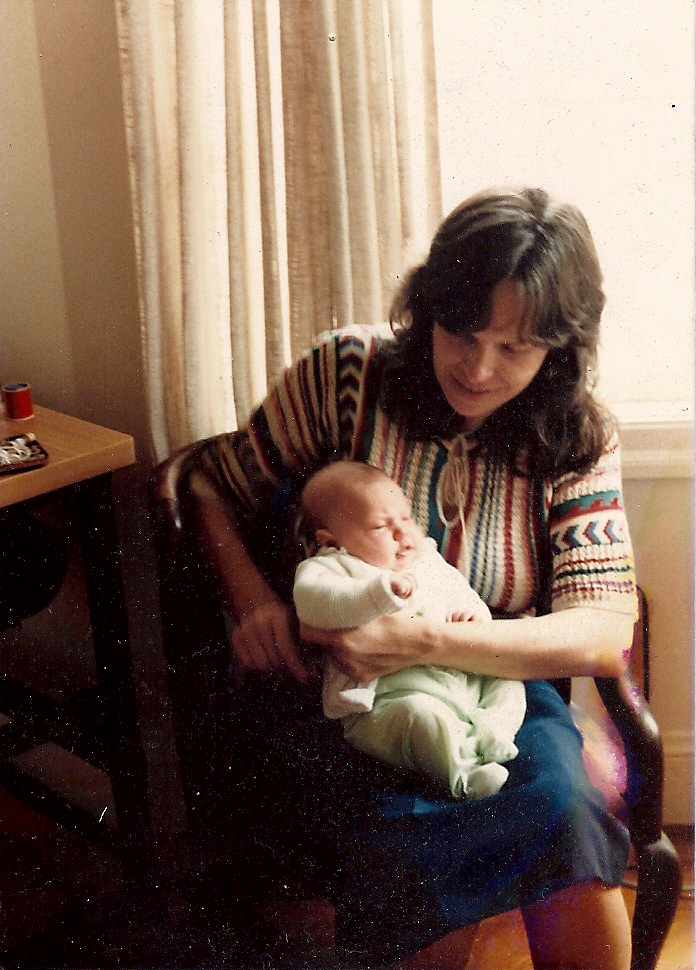
Above is a photo of my daughter, Heather Hanson. She is three weeks old. I am living a hundred yards down the street and am not told I am a father. My parents died not knowing their son was a father thanks to the evil selfishness of Patrice Hanson, who convinced her husband – the convict – that Heather was his baby girl.
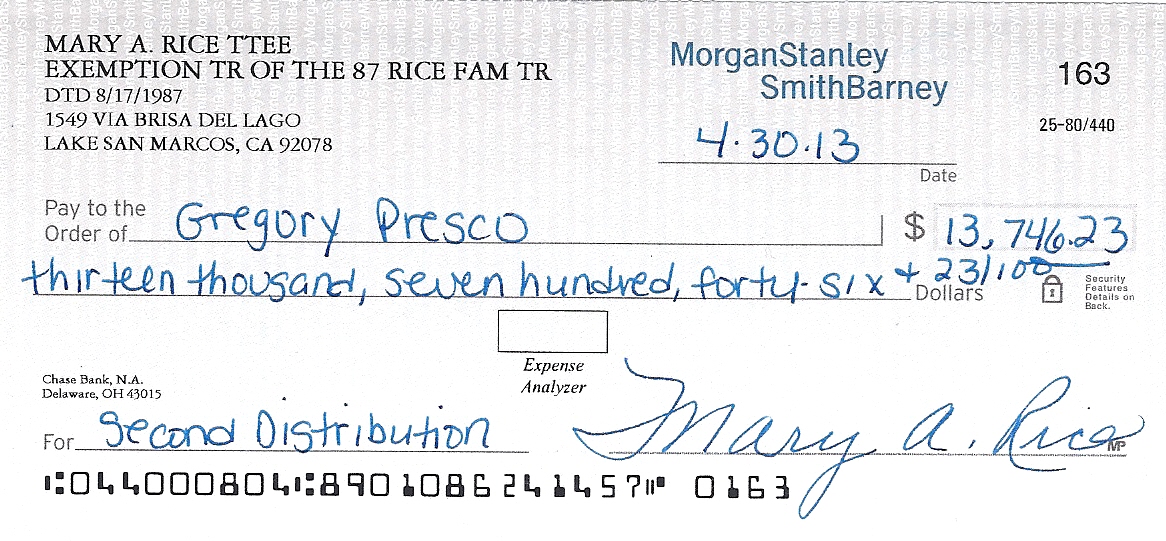
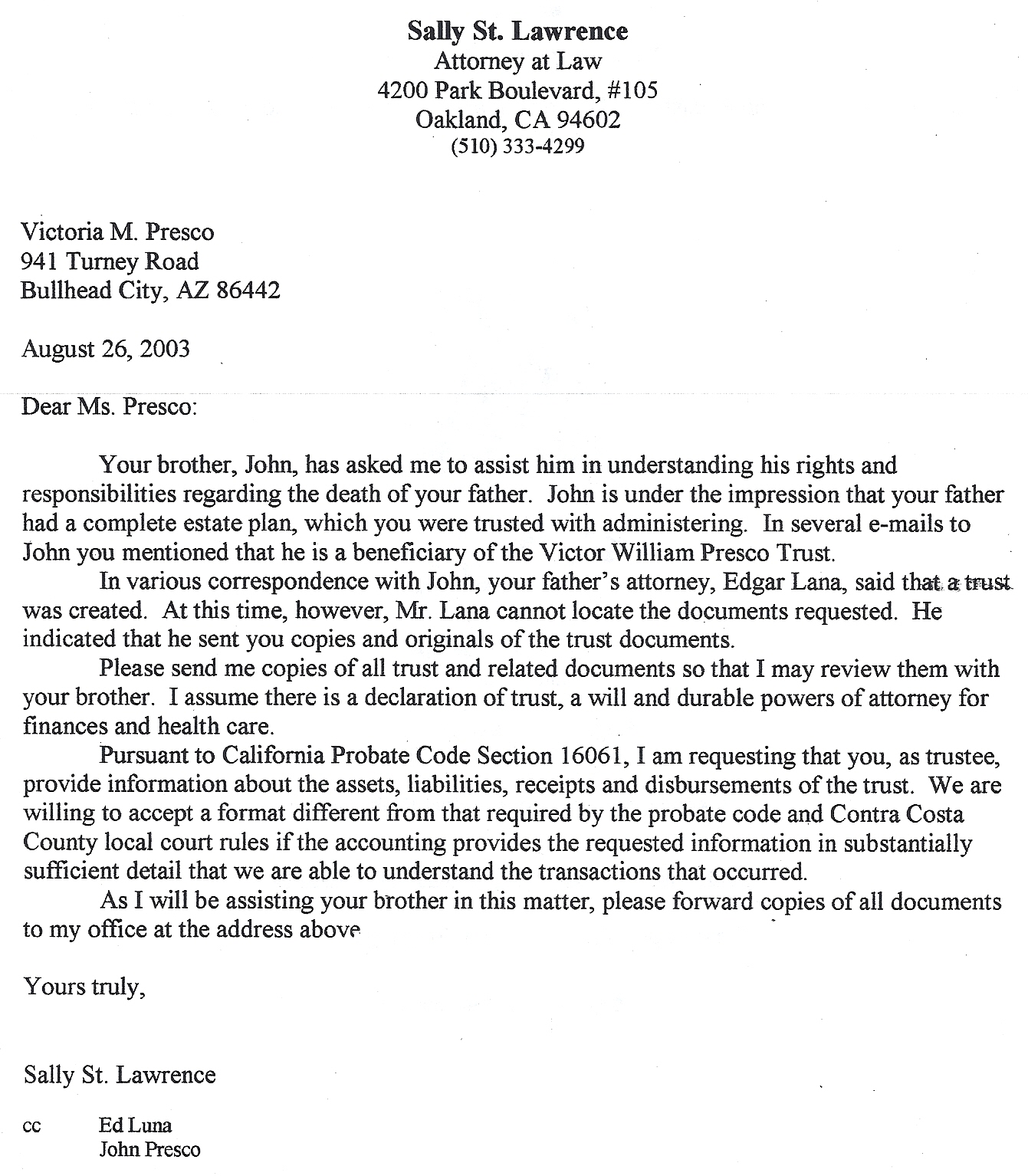
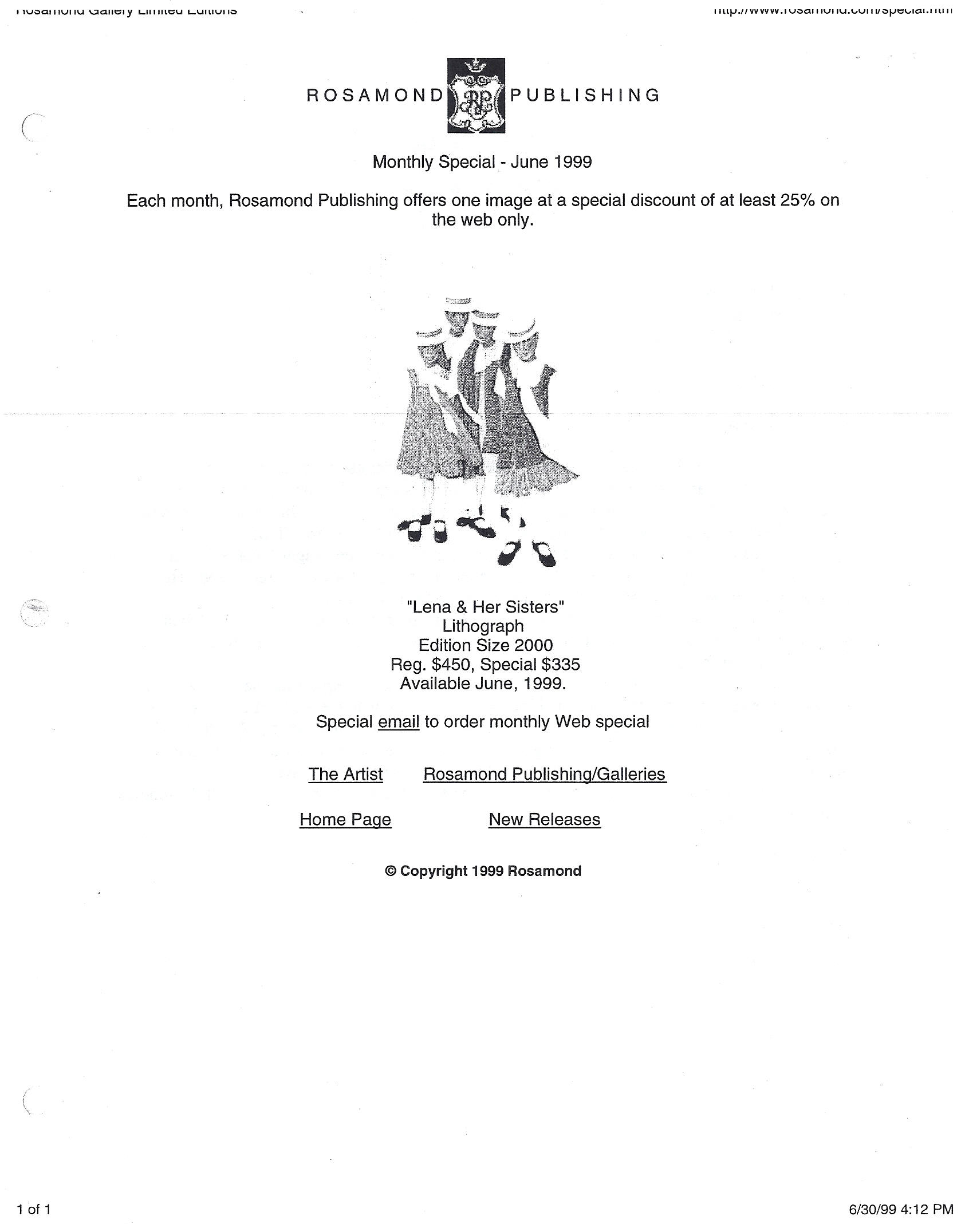
Above is a letter an attorney sent my evil sister, Vicki Presco, who formed a secret bond with my daughter and turned her against me after we found each other. Vicki was Vic Presco’s Trustee and refused to give me the Rosamond prints my father left me. Heather ended up with them. Stacey Pierrot lied to me about selling some of these prints at the Rosamond Gallery in order to get me to contribute to her biography of Rosamond. Vic and Mark stole this artistic legacy from Christine’s heirs. I demand Vicki donate Mark’s share of the Rice Trust – that he gave to her – to my Nazarite Church.
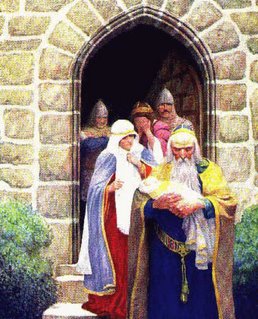
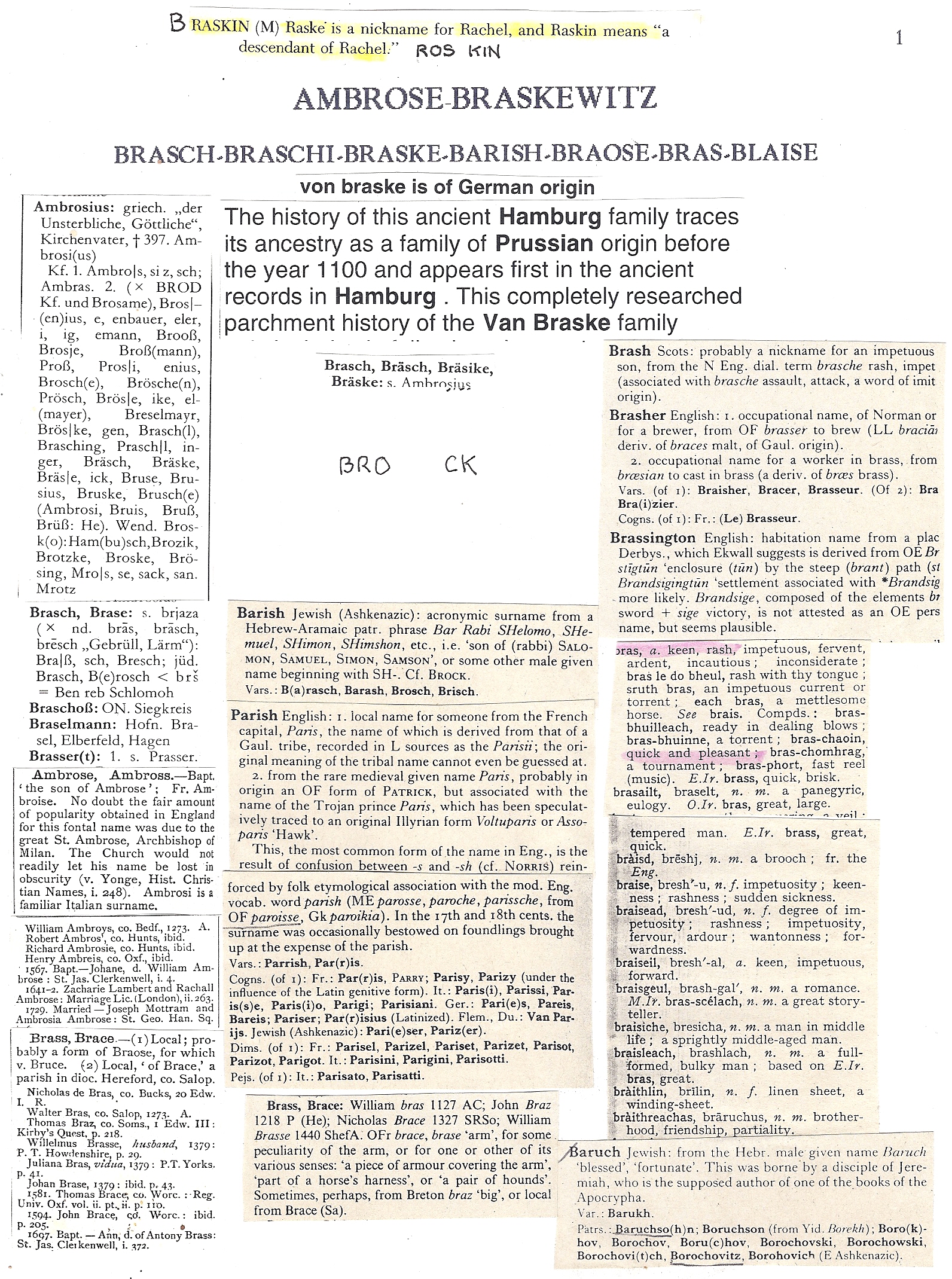
Above is a painting of Merlin coming for King Arthur – when he was three weeks old. Merlin was name Ambrosius as a boy. I suspect he was a foundling that are given the name PARISH if left at a church. BARISH and BRASCH may be the root of Ambrosius. With my discovery of the Norse Grail, I take back all that has been taken from me by a den of thieves and liars!
Above is a card Hollis and I got of Liz Brenner. We were forming the Liz fan club when Hollis died. We fell in love with her when she played volleyball and were looking forward to following her when she played basketball and softball. Liz is a candidate for Sports Illustrated College Athlete of the Year. We were going to get this song played at one of her games:
Jon Presco Braskewitz
Oregon’s Multi-sport standout Liz Brenner has been named a finalist for the Sports Illustrated College Athlete of the Year.
The award celebrates one female and one male collegiate student-athlete who has demonstrated excellent performance on the field and in the classroom, while also displaying sportsmanship and commitment to the community.
The sophomore from Portland has competed in four varsity sports for the Ducks: volleyball, basketball, softball and track & field. In the classroom, the psychology major owns a 3.07 grade point average, and is pursuing a minor in business administration.
“There are wrongs against people that are not viewed as crimes or
civil wrongs by human law. Perhaps the Torah is saying that even when
society provides no redeemer – no redress – God still acts as
redeemer. There is, nevertheless, a higher justice.”
Another duty of the go’el was to redeem his kinsman from slavery
if sold to a stranger or sojourner (Lev. xxv. 47-55). In both cases
much depended upon the nearness or remoteness of the year of jubilee,
which would automatically release either the land or the person of
the kinsman from subjection to another.”
http://cherokeeregistry.com/index.php?option=com_content&view=article&id=387&Itemid=582
http://www.comanchelodge.com/cherokee-rolls.html
The Cherokee Freedmen Controversy is an ongoing political and tribal dispute between the Cherokee Nation of Oklahoma and descendants of the Cherokee Freedmen regarding tribal citizenship. During the American Civil War, the Cherokee who supported the Union abolished the practice of African slavery by act of the Cherokee National Council in 1863. The Cherokee Freedmen became citizens of the Cherokee Nation in accordance with a treaty made with the United States government a year after the Civil War ended. In the early 1980s, the Cherokee Nation administration amended citizenship rules to require direct descent from an ancestor listed as “Cherokee By Blood” on the Dawes Rolls. The change stripped descendants of the Cherokee Freedmen of citizenship and voting rights unless they satisfied this new criterion. About 25,000 Freedmen were excluded from the tribe.
On March 7, 2006, the Cherokee Supreme Court ruled that the descendants of the Cherokee Freedmen were unconstitutionally kept from enrolling as citizens and were allowed to enroll in the Cherokee Nation. Chad “Corntassel” Smith, then-Principal Chief of the Cherokee Nation, called for an emergency election to amend the constitution in response to the ruling.[1] After a petition was circulated, a special election held on March 3, 2007 resulted in a constitutional amendment that disenrolled the Cherokee Freedmen descendants. This led to several legal proceedings in United States and Cherokee Nation courts in which the Freedmen descendants continued to press for their treaty rights and recognition as Cherokee Nation members.[2] The 2007 constitutional amendment was voided in Cherokee Nation district court on January 14, 2011, but was overturned by a 4-1 ruling in Cherokee Nation Supreme Court on August 22, 2011 before the special run-off election for Principal Chief. The ruling excluded the Cherokee Freedmen descendants from voting in the special election.
After the freezing of $33 million dollars in funds by the Department of Housing and Urban Development and a letter from the Assistant Secretary of the Bureau of Indian Affairs in response to the ruling, an agreement in federal court between the Cherokee Nation, the Freedmen descendants and the US government allowed the Freedmen to vote in the special election. Bill John Baker was elected Principal Chief in the special election and inaugurated in October 2011. The Cherokee Supreme Court dismissed an appeal of the election results by former chief Chad Smith.
Both sides filed complaints in federal court in Tulsa, Oklahoma by July 2012; the Cherokee say the 1866 treaty does not require them to give full citizenship to the Freedmen, who continue to seek full rights.
Merlin was the illegitimate son of a monastic Royal Princess of Dyfed. The lady’s father, however, King Meurig ap Maredydd ap Rhain, is not found in the traditional pedigrees of this kingdom and was probably a sub-King of the region bordering on Ceredigion. Merlin’s father, it is said, was an angel who had visited the Royal nun and left her with child. Merlin’s enemies claimed his father was really an incubus, an evil spirit that has intercourse with sleeping women. The evil child was supposed to provide a counterweight to the good influence of Jesus Christ on earth. Merlin, fortunately, was baptized early on in his life, an event which is said to have negated the evil in his nature, but left his powers intact. The original story was presumably invented to save his mother from the scandal which would have occurred had her liaison with one Morfyn Frych (the Freckled), a minor Prince of the House of Coel, been made public knowledge.
Legend then tells us that after the Roman withdrawal from Britain and the usurpation of the throne from the rightful heirs, Vortigern was in flight from the Saxon breakout and went to Snowdonia, in Wales, in hopes of constructing a mountain fortress at Dinas Emrys where he might be safe. Unfortunately, the building kept collapsing and Vortigern’s house wizards told him that a human sacrifice of a fatherless child would solve the problem. One small difficulty was that such children are rather hard to find. Fortunately for Vortigern’s fortress, Merlin was known to have no human father and happened to be available.
Before the sacrifice could take place, Merlin used his great visionary powers and attributed the structural problem to a subterranean pool in which lived a red and a white dragon. The meaning of this, according to Merlin, was that the red dragon represented the Britons, and the white dragon, the Saxons. The dragons fought, with the white dragon having the best of it, at first, but then the red dragon drove the white one back. The meaning was clear. Merlin prophesied that Vortigern would be slain and followed on the throne by Ambrosius Aurelianus, then Uther, then a greater leader, Arthur. It would fall to him to push the Saxons back.
True to the prophecy, Vortigern was slain and Ambrosius took the throne. Later, Merlin appears to have inherited his grandfather’s little kingdom, but abandoned his lands in favour of the more mysterious life for which he has become so well known. After 460 British nobles were massacred at a peace conference, as a result of Saxon trickery, Ambrosius consulted Merlin about erecting a suitable memorial to them. Merlin, along with Uther, led an expedition to Ireland to procure the stones of the Chorea Gigantum, the Giant’s Ring. Merlin, by the use of his extraordinary powers, brought the stones back to a site, just west of Amesbury, and re-erected them around the mass grave of the British nobles. We now call this place Stonehenge.
Melchizedek or Malki Tzedek (pron.: /mɛl.ˈkɪz.ə.dɪk/[1]); Hebrew: מַלְכִּי־צֶדֶֿק malkī-ṣeḏeq) translated as “my king (is) righteous(ness)”) was a king and priest mentioned during the Abram narrative in the 14th chapter of the Book of Genesis.
He is introduced as the king of Salem, and priest of El Elyon (“God most high”). He brings out bread and wine and blesses Abram and El Elyon.[2] Chazalic literature, specifically Targum Jonathan, Targum Yerushalmi, and the Babylonian Talmud, presents the name (מלכי־צדק) as a nickname title for Shem, the son of Noah.[3]
In Christianity, according to the Letter to the Hebrews, Jesus Christ is identified as a priest forever in the order of Melchizedek, and so Jesus assumes the role of High Priest once and for all.
In the majority of Masoretic Hebrew text the name is written in as two words (“malki zedek”),[4] but in the Septuagint, New Testament, Latin Vulgate and Authorised King James Version it appears as one word.[5]
[edit] Etymology
The Epistle to the Hebrews,[6] along with Philo[7] and Josephus,[8][9] interpret the name “malki” as meaning “the king”,[10] and “tzedek”, meaning “righteous(ness)” or “justice”.[11] This interpretation is upheld by modern scholars because in the Dead Sea Scroll 4QAmram 2.3 is found the opposite name Melchi-resha (“king of evil”) for a chief angel of darkness.[12]
Based on the detail that the word “malki” appears to contain a first-person singular possessive pronoun, connoting a meaning of “my king”, the Ramban opines that the name implies “my king is tzedek”, based on the notion that the city of Salem is associated with the attribute of “tzedek” (righteousness).[13]
However, it is also possible that malchi is not a possessive pronoun but genitive case. Although these case suffixes were already archaic at the time of writing, in proper names they were preserved longer. Such a reading would yield “king of righteousness”, consistent with the ancient interpretations above.
Lebanese Protestant scholar Kamal Salibi cites Arabic cognates[14] to suggest that the words “malki zedek” can be interpreted as mouthful of offering, so that the verse begins And food the king of Salem brought out, bread and wine … [15] The implication is to say that the king (whether of Sodom or of Salem) brought out food, then blessed Abraham and El Elyon. If the Albright reading, “a king allied to him”[16][17] is also accepted, this would then imply that the whole interchange was with the King of Sodom.
[edit] Theophoric association
Main article: Theophory in the Bible
Some scholars provide a theophoric association on the latter part of the name, Ṣedeq (“righteousness”) as an epithet of a Canaanite god,[18] translating to “Sedeq is my king/lord”. Ṣedeq and El Elyon (“God most high”) may have been two epithets of the same Jebusite god, identified as an astral deity, perhaps eponymous of Salem itself: Salim or Shalem (שלם) is attested as a god, presumably identified with the evening star, in Ugaritic mythology; URUŠalim in this case would be the city of Salim, the Jebusite astral deity.[19]
Parallel theophoric names, with Sedeq replaced by Yahu, are those of Malchijah and Adonijah, both biblical characters placed in the time of David.[20]
Bible commentators associate Meleḵi-ṣedeq מלכי־צדק) as a parallel to the king Adoni-ṣedeq אדני־צדק), with the common denominator of both being king of Salem.[21] It has been suggested that ‘zedek’ might be connected to the Pheonician root Συδνκ = “Zedek” = “Jupiter”.[22]
[edit] Samaritan variance
Genesis calls Melchizedek “king of Salem”, traditionally taken to be the name for Jerusalem prior to the Binding of Isaac.[23]
The Samaritan Pentateuch reads “שלמו” (lit. “his peace” or in contextual flow “allied with him”) in place of the Masoretic “שלם” (Salem). With the difference being the altering of the final Mem into the two letters מ (middle Mem) and ו (vav). William F. Albright views the Samaritan wording as authentic[16] as does the New American Bible[17]
Regardless of the residence of Malkizedek, Samaritan tradition identified a “Salem” as a place on the slopes of Mount Gerizim which served as a blessing place of the children of Israel upon their initial crossing of the Jordan river[citation needed].
The Samaritans allocate Gerizim (and not Jerusalem) as the site intended for the Temple, and thus the “שלמו” text serves an obvious sectarian purpose. Yet, it[clarification needed] is not solely associated with the Samaritans, being found also in the 3rd- or 2nd-century BC Book of Jubilees and even in the Septuagint version of Genesis.[24]
Ambrose was born into a Roman Christian family about 340 and was raised in Trier.[2] His father was Aurelius Ambrosius,[3][4] the praetorian prefect of Gaul;[1][page needed] his mother was a woman of intellect and piety. Ambrose’s siblings, Satyrus (who is the subject of Ambrose’s De excessu fratris Satyri) and Marcellina, are also venerated as saints.[5] There is a legend that as an infant, a swarm of bees settled on his face while he lay in his cradle, leaving behind a drop of honey. His father considered this a sign of his future eloquence and honeyed tongue. For this reason, bees and beehives often appear in the saint’s symbology.
Ambrosius Aurelianus
From Wikipedia, the free encyclopedia
Jump to: navigation, search
“Aurelius Ambrosius” redirects here. For the 4th-century Bishop of Milan, see Ambrose.
Ambrosius Aurelianus, Welsh: Emrys Wledig; called Aurelius Ambrosius in the Historia Regum Britanniae and elsewhere, was a war leader of the Romano-British who won an important battle against the Anglo-Saxons in the 5th century, according to Gildas. He also appeared independently in the legends of the Britons, beginning with the 9th-century Historia Brittonum.
Contents
[hide]
1 According to Gildas
2 Other accounts
3 In popular culture
4 Notes
According to Gildas [edit]
Ambrosius Aurelianus is one of the few people that Gildas identifies by name in his sermon De Excidio et Conquestu Britanniae, and the only one named from the 5th century.[1] Following the destructive assault of the Saxons, the survivors gather together under the leadership of Ambrosius, who is described as:
“… a gentleman who, perhaps alone of the Romans, had survived the shock of this notable storm. Certainly his parents, who had worn the purple, were slain by it. His descendants in our day have become greatly inferior to their grandfather’s [avita] excellence.”
We know from Gildas that he was of high birth, and had Roman ancestry; he was presumably a Romano-Briton, rather than a Roman from elsewhere in the empire, though it is impossible to be sure.[1] It also appears that Ambrosius was a Christian: Gildas says that he won his battles “with God’s help”.[1] According to Gildas, Ambrosius organised the survivors into an armed force and achieved the first military victory over the Saxon invaders. However, this victory was not decisive: “Sometimes the Saxons and sometimes the citizens [meaning the Romano-British inhabitants] were victorious.”
Two points in this brief description have attracted much scholarly commentary. The first is what Gildas meant by saying Ambrosius’ family “had worn the purple”. Roman Emperors and Roman males of the senatorial class wore clothes with a purple band to denote their class so the reference to purple may be to an aristocratic heritage. Roman military tribunes (tribuni militum), senior officers in Roman legions, wore a similar purple band so the reference may be to a family background of military leadership. In the church “the purple” is a euphemism for blood and therefore “wearing the purple” may be a reference to martyrdom[2] or a bishop’s robe.
 Rosamond Press
Leave a comment