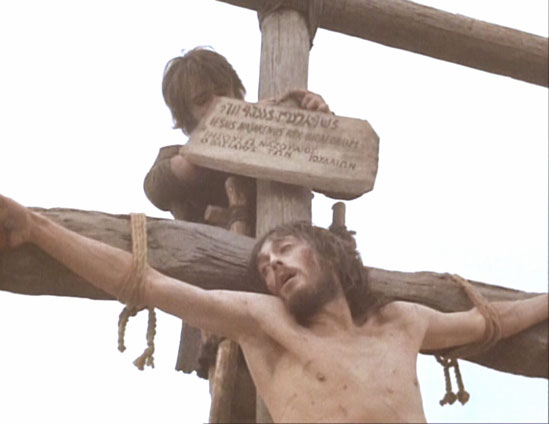
 I am coming to believe that Jesus gave Judas thirty pieces of silver in order for him to redeem that property that once belonged to his kindred Ruth, and Elimelech, a name that means “My God is my King”. The Moabites worshipped Molach, wich is also spelled Melech. Melkart is “king of the city”. I suspect the land David built his temple upon once belonged to the Moabites and Elimelech. Jesus has come to reclaim this land as the Go’el redeemer of the Ruth and the Moabites. I suspect the words nailed above his head, read;
“King of the city” or “God is my king”
The Jews had come to hate the Moabites. This is why Saint Paul hunted down members of the first church. This is why Jesus rose from the dead, as did the Moabite Saints in Mathew 27:53.
Jesus was a Moabite Gentile spreading his people’s message to other Gentiles. The Jews made the Moabites their slaves.
Freedom!
Jon the Nazarite
Copyright 2013
This nameRuth 4:3 “And he said unto the kinsman, Naomi, that is come again
out of the country of Moab, selleth a parcel of land, which [was] our
brother Elimelech’s:”
Boaz and Ruth had discussed all of the business of Naomi. Boaz
knew that Naomi was poor. She, perhaps, had to sell the land for a
living. This other near kinsman was, possibly, the older brother of
Boaz, since he says, our brother Elimelech. That would answer why the
other man had the first right as the near-kinsman redeemer.
Ruth 4:4 “And I thought to advertise thee, saying, Buy [it]
before the inhabitants, and before the elders of my people. If thou
wilt redeem [it], redeem [it]: but if thou wilt not redeem [it, then]
tell me, that I may know: for [there is] none to redeem [it] beside
thee; and I [am] after thee. And he said, I will redeem [it].”
The land was not to be sold to a stranger. Either Boaz, or his
brother, would have to buy it to keep it in the family name. This is
said before these witnesses, so there will be proof later. The man
immediately says he will redeem it, because he wants the land.
Ruth 4:5 Then said Boaz, What day thou buyest the field of the
hand of Naomi, thou must buy [it] also of Ruth the Moabitess, the wife
of the dead, to raise up the name of the dead upon his inheritance.
Now, there is a new twist to the circumstances. The other man has
to marry Ruth, to be able to redeem the land. Boaz reminds him that
Ruth is a Moabitess. He does not stress the fact that she is a Hebrew
by marriage to a Hebrew. His first child will belong to Ruth’s dead
husband.
Ruth 4:6 “And the kinsman said, I cannot redeem [it] for myself,
lest I mar mine own inheritance: redeem thou my right to thyself; for
I cannot redeem [it].”
It seems, he already had a family, and his inheritance would have
been divided into so many pieces, it would be almost lost for the
family. He does not love Ruth, as Boaz does, or nothing would stop
him. He says in front of all the witnesses, that Boaz can redeem the
land and Ruth. This is just what Boaz wanted to hear.
Ruth 4:7 “Now this [was the manner] in former time in Israel
concerning redeeming and concerning changing, for to confirm all
things; a man plucked off his shoe, and gave [it] to his neighbour:
and this [was] a testimony in Israel.”
We see by this that, the “taking off of one’s shoe and giving it
to someone” gave them the right to walk on the land they were
unwilling to walk on. When the man gives Boaz his shoe, he is giving
his right as near kinsman to Boaz.
Ruth 4:8 “Therefore the kinsman said unto Boaz, Buy [it] for
thee. So he drew off his shoe.”
The proof that Boaz is free to buy the land and to marry Ruth, is
shown when the man takes his shoe off, and gives it to Boaz. The
transaction is sealed with witnesses.
Ruth 4:9 “And Boaz said unto the elders, and [unto] all the
people, Ye [are] witnesses this day, that I have bought all that [was]
Elimelech’s, and all that [was] Chilion’s and Mahlon’s, of the hand of
Naomi.”
We may assume, that Naomi either went with Boaz to transact this,
or she came up later, and sold the land to Boaz. Naomi knew that she
would be welcome to live with Ruth and Boaz. After all, she was the
one who planned all of this.
Ruth 4:10 “Moreover Ruth the Moabitess, the wife of Mahlon, have
I purchased to be my wife, to raise up the name of the dead upon his
inheritance, that the name of the dead be not cut off from among his
brethren, and from the gate of his place: ye [are] witnesses this
day.”
Elimelech
The book of Ruth opens with a presentation of several characters. Such early setting out of the “players” is quite unusual in Biblical writing. Much more common is the pattern in which a single character is introduced, his fathers and forefathers are fully described, and his story then related. The focus is usually on one person and not on the group. It follows, therefore, that these characters must be important in setting the theme of the book.
Now it is true that Machlon, Kilyon, and Elimelech pass quickly from the scene and Orpah follows them soon thereafter. Yet, they throw a shadow over the entire story. As we explained in the introduction, the restoration of Elimelech’s seed by Boaz through Levirite marriage to Ruth, constitutes the first redemptive cycle of the book; in this lies the importance of early introduction of Ruth’s former husband, brother-in-law and their father.
Who was Elimelech? The text does not really tell us but the Sages do, and so, we will engage in ‘reverse engineering’, trying to grasp their view of this complex personality and then to appreciate the antecedents of their interpretation. We will not focus overmuch on the details as much as on the concepts. We must be aware that they taught in “riddles and parables (Proverbs 1, 2)” and that our task is extract and restate their message in the conceptual language that we use today.
There is a paucity of clues but the first one is the Elimelech’s name itself. We assume that names of Biblical characters are not accidental but reflect their essense or memorialize pivotal events of their lives. This makes perfect sense when we consider that Biblical individuals were called by several different names over their lifetimes and that names were given in remembrance of major events. There were no state registries or social security numbers and names served a much more fluid purpose than they do today.
For example: “And he called his name Noach, meaning to say, “This one will give us comfort (e-noach-meinu) (Genesis 5, 29)”. Here the name reflects the man’s essence.”The name of one was Peleg, for in his days, the entire world became divided (ni-peleg-a) (Geneis 10,25)” This name was was given for Dispersion (after the Tower of Babel) that occurred during Peleg’s lifetime. “The ancestors, since they knew their genealogies, would derive names from events. We, who are not certain of our genealogies, derive names from our forefathers. Rabbi Shimon Ben Gamliel said: The ancestors who used the power of Divine Inspiration drew names out of (future) events; we who do not have access to Divine Inspiration, draw names from our forefathers (Genesis Rabbah 37,7).”
What does the name Elimelech mean? Ordinarily it would be translated as, ” My God is King”. The Sages, however, read it with a slight difference in pronunciation as “Elai Melech” – “For he said: “Kingship is due to me (Ruth Rabba 2,5)”. What could have led them to this interpretation? It seems that they are pointing out a certain “disconnect” between the name and the behavior. Would man who truly believes that His God is King abandon his people at the time of famine? In addition, why would a private individual carry a name that signifies royalty. We know of Abimelech, son of the leader Gideon and Abimelech, the King of Gerar. The name of Achimelech, the priest who gave aid to David at Nob, reflects his elevated stature (Leviticus Rabbah 1,3) and Malchizedek was the King of Salem (Malkiel in Numbers 25, 24 deserves a separate discussion). When kings ruled, “My God is King”, denoted not only spiritual but also political power. “And Gideon said to them: I shall not rule over you and my son shall not rule over you, Hashem shall rule over you (Judges 8, 22). ”
The second clue that this name is meant to be interpreted is how the verse presents it. It purposefully draws our attention to it, for it first tells us that “a man went out” and then tells us that “the name of the man was Elimelech”. The usual pattern is the reverse; first, we are told a man’s name and familial antecedents and only then are his actions described. There is literally a gap between the man and what he called himself.
Finally, the description of Elimelech departure is frugal and bereft of detail. This suggests that the Narrator was not happy with him, for when God approves of a journey, it, the participants, their families, and even their livestock are described in loving detail (See Ezra 2, 66-67, after commentary Nachalat Yosef).
The resolution to these irregularities is primarily exegetical. It must be, the Sages reasoned, that Elimelech misread his destiny. He thought that he would be King. He was right in that Kingship was destined to come from his progeny; yet he was also grievously wrong for he himself was not fitting to become king of Israel. Instead, it was God who demonstrated His sovereignty by bringing about the chain of events that culminated in the establishment of monarchy in Israel.
Apparently Elimelech abandoned his people because they scorned their leaders. They rejected him as they rejected others. He was right, but, was there, perhaps, a personal element in his reaction?
“The man’s name was Elimelech. How did Elimelech know that strict justice was (loose) in the world? When he saw that his generation scorned great men, he said, “Surely I shall go from here so that I will not be caught among them” (Zohar Chodosh 77a).
Elimelech was one of the great men and authorities in Israel. When the years of famine came he said, “Now all of them will come to my door post, each one with his begging cup in his hand. He arose and fled from them (Ruth Rabbah 1, 4).” Apparently he was willing to help only if he wears the mantly of authority.
Is this the behavior of a leader who loves and cares for his people, even if they do not fully deserve his respect?
Ezekiel (10, 3) castigates the leaders of Israel as being “foxes in the ruins”. The Midrash explains: “What does a fox watch out for in the ruins? When it sees people coming, it immediately runs away. You, leaders, did not stand among the ruins like Moses did. What was Moses like? Like a faithful shepherd whose corral- fence fell as darkness approached. He stood and surrounded it with rebuilt walls from three directions. A space remained that he did not manage to rebuild. He stood in the opening and blocked it with his body. A lion approached and he fought off the lion. A wolf approached and he fought the wolf. You, leaders, did not stand at the opening like Moses. Had you done so, you would have been able to even withstand God’s anger (Petichta Ruth Rabbah 5).
Elimelech appears to have been a man of faith who did not or could not be fully faithful. He was a leader who possessed the requisite qualities, except for that of deep love and concern for his flock and of disregard of his own worthiness and rights. Perhaps he was not even fully aware of this failing but God was.
Can one dismiss the sincerity of a man of faith who fails to always live up to his convictions? Can one, on the other hand, forgive and excuse his deficiencies and the damage that they bring about?
Humans cannot see beyond these two alternatives but God has another choice. He deals out Justice, rejecting the bad and rewarding the good. Elimelech was severely punished for his failings but the good within him was preserved and rewarded and he became the progenitor of the Royal line.
 Rosamond Press
Leave a comment