
 “Vígnjótr raised the stone in memory of Hróðmundr, his father, for the Värendish husbandman (= from the district of the virðar). May God help his soul! Ásgautr cut the runes.[1]
The name Rosamond is als0 spelled Hrosmund that onomastists say means “horse Protection”. I have my doubts. Tolkien was a Beowulf scholar and names Frodo’s aunt, Rosamond. Rosamond is a woman’s name that rises from the depth of our past, and is applical to the lost power of women with the advent of Christian men who demonized rulers of the Norse who were not members of the Judaic pantheon. Or, were they?
Jon Presco
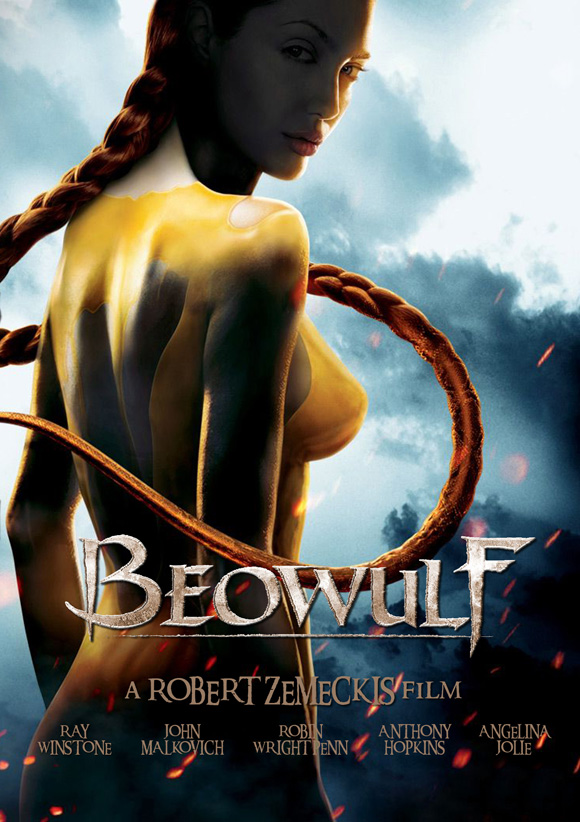
Hrethric, Hrothmund, and Freawaru are the children of King Hrothgar and Queen Wealhtheow of the Spear-Danes. Hrethric and Hrothmund are young princes and neither of them is yet ready to succeed their father as king, which makes their mother worry that Beowulf might try to usurp the throne from them. The young princess Freawaru is married to Ingeld the Heathobard, an attempt to create peace between two tribes through a marital alliance.
Skjöldunga saga and Bjarkarímur
The Skjöldunga saga[36][37] and Bjarkarímur[36] tell a similar version to that of the Hrólfr Kraki’s saga, but with several striking differences. Ingeld (Ingjaldus) of Beowulf reappears, but it is Ingeld who is the father of Froda (Frodo), and unlike in Hrólf Kraki’s saga, Ingeld takes Froda’s place as the half-brother of Healfdene (Haldan).
Hrothgar, from the Old English Hrōðgār, is an Anglo-Saxon form attested in Beowulf and Widsith, the earliest sources to mention the character. In non-Anglo-Saxon sources, the name appears in more or less corresponding Old Icelandic, Old Danish, or Latinized versions. He appears as Hróarr, Hroar, etc. in Norse sagas and poetry, and as Ro or Roe in the Danish Latin chronicles. The form Hrōðgār is thought to have derived from the Proto-Norse *Hrōþigaizaz[3] (famous spear, i.e. Roger). It should be noted, however, that the corresponding Old Norse name Hróarr and its variations are not derived from *Hrōþigaizaz, but from the very close names *Hrōþiwarjaz (famous defender) or *Hrōþiharjaz (famous warrior). However, these two names which resulted in Hróarr in Scandinavia, did not have any corresponding Anglo-Saxon form, and so Hrōðgār was their closest equivalent.[4]
HROD
see Hróðmundr
HROM
see Rosamund (German)
Old Norse
ráð = ‘advise, counsel, decision’ [1] [2] [3] [4]
ráð = ‘advise, counsel, decision, might, household, marriage’ [5]
ráða = ‘to advise, to counsel, to be mighty, to rule, to decide, to guess’ [5]
ráða = ‘to advise, to counsel’ [1] [2] [3] [6] [7] [4]
Gothic
garedan = ‘to provide’ [6]
garēdan = ‘to counsel, to provide’ [7]
garēdan = ‘to advise, to counsel, to be mighty, to rule, to decide, to guess’ [5]
rêdan = ‘to counsel’ [4]
Old Swedish
raþ = ‘advise, counsel, decision’ [3]
raþa = ‘to advise, to counsel’ [3]
Old Saxon
râd = ‘counsel’ [4] [8]
rād = ‘advise, counsel, decision, might, household, marriage’ [5]
rādan = ‘to advise, to counsel’ [7]
rādan = ‘to advise, to counsel, to be mighty, to rule, to decide, to guess’ [5]
Anglo-Saxon
rǽd = ‘counsel’ [6]
rǣd = ‘counsel’ [4]
rǽdan = ‘to discern, advise, read, persuade’ [6]
rǣdan = ‘to counsel’ [4]
Old English
rǣd = ‘advise, counsel, decision, might, household, marriage’ [5]
rǣdan = ‘to advise, to counsel’ [7]
rǣdan = ‘to advise, to counsel, to be mighty, to rule, to decide, to guess’ [5]
Middle Low German
rāt = ‘resources necessary for living’ [9]
rāten = ‘to advise, to guess’ [9]
Old High German
rāt = ‘resources necessary for living’ [9]
rāt = ‘advise, counsel, decision, might, household, marriage’ [5]
rât = ‘counsel’ [4]
rātan = ‘to advise, to guess (originally ‘to think about something’)’ [9]
rātan = ‘to advise, to counsel’ [7]
rātan = ‘to advise, to counsel, to be mighty, to rule, to decide, to guess’ [5]
râtan = ‘to counsel’ [4]
http://www.nordicnames.de/wiki/RAD
http://www.nordicnames.de/wiki/R%C3%A1%C3%B0mundr
Proto-Norse
*munduR = ‘protector’ [1]
Old Norse
mund = ‘hand, protection’ [1] [2]
mundr = ‘gift for a bride’ [1] [2] [3]
Old High German
munt = ‘hand, protection, tutelage’ [3]
Old Frisian
mund = ‘tutelage, guardianship’ [3]
mond = ‘tutelage, guardianship’ [3]
Anglo-Saxon
mund = ‘flat hand, protection’ [3]
Transliteration of the runes into Latin characters
[uih]i[k]utr : resti : sten (:) ef(t)r : ru[mu]nt : faþ[ur : sin] : (k)uþ : hialbi : selu : bunta : uirskum : hiuk : askutr : [þuni][1]
[edit] Transcription into Old Norse
P: Vigniutr(?) ræisti stæin æftiR Hromund(?), faður sinn. Guð hialpi salu! Bonda virðskum hiogg Asgautr runaR/Þunni(?).
Q: Vigniutr ræisti stæin æftiR Hromund, faður sinn – Guð hialpi salu! – bonda virðskum. Hiogg Asgautr runaR.[1]
[edit] Translation in English
P: Vígnjótr(?) raised the stone in memory of Hróðmundr(?), his father. May God help (his) soul. Ásgautr cut the runes / Ásgautr Þunni(?) cut for the husbandman from Virðskr.
Q: Vígnjótr raised the stone in memory of Hróðmundr, his father, for the Värendish husbandman (= from the district of the virðar). May God help his soul! Ásgautr cut the runes.[1]
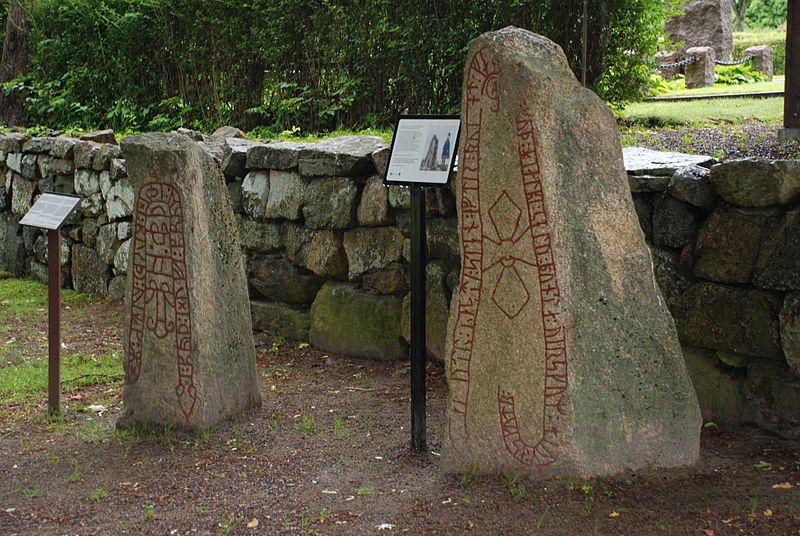
Småland Runic Inscription 1 or Sm 1 is the Rundata designation for a Viking Age memorial runestone carved on a granite stone that is 1.7 meters in height. Together with Sm 3, it was raised in its current location along the churchyard wall in 1966. The inscription consists of runic text in the younger futhark carved within a text band that runs along the outer edge of the stone. A cross is carved in the central area. As the ends of the runic text band are damaged, the inscription is classified as being probably carved in runestone style RAK, which is considered to be the oldest classification. This is the classification for inscriptions with runic text bands with straight ends that do not have any beast or serpent heads attached. The inscription was carved by a runemaster with the normalized name of Åsgöt. Åsgöt also signed inscription Sö 296 in Skälby and three other surviving runestones are attributed to him based on stylistic analysis.
The runic text states that the runestone was raised by a man named Vigniutr in memory of his father Hromund. Rundata recognizes two possible transcriptions and translations of the runic text, with the first designated as P in the transcription and translation listed below published by Magnus Källström in 2007 and the second designated as Q published by Evert Salberger in 2000.[1] The Q version refers to Värend, which in the Middle Ages was the most populous part of Småland. Consistent with the cross, the text includes a prayer for the soul of Hromund.
[edit] Inscription
[edit] Transliteration of the runes into Latin characters
[uih]i[k]utr : resti : sten (:) ef(t)r : ru[mu]nt : faþ[ur : sin] : (k)uþ : hialbi : selu : bunta : uirskum : hiuk : askutr : [þuni][1]
[edit] Transcription into Old Norse
P: Vigniutr(?) ræisti stæin æftiR Hromund(?), faður sinn. Guð hialpi salu! Bonda virðskum hiogg Asgautr runaR/Þunni(?).
Q: Vigniutr ræisti stæin æftiR Hromund, faður sinn – Guð hialpi salu! – bonda virðskum. Hiogg Asgautr runaR.[1]
[edit] Translation in English
P: Vígnjótr(?) raised the stone in memory of Hróðmundr(?), his father. May God help (his) soul. Ásgautr cut the runes / Ásgautr Þunni(?) cut for the husbandman from Virðskr.
Q: Vígnjótr raised the stone in memory of Hróðmundr, his father, for the Värendish husbandman (= from the district of the virðar). May God help his soul! Ásgautr cut the runes.[1]
[edit] Sm 2
Småland Runic Inscription 2 or Sm 2 is the Rundata designation for a now-lost Viking Age runestone which is believed to be hidden within one of the churchyard walls. Before the historic significance of runestones was understood, they were often re-used as materials in the construction of churches, walls, and bridges. The text of the stone was recorded during one of the earlier national surveys of runestones. It states that the stone was raised by a man named Ábjôrn in memory of a man named Tóki Óníðingr. The name Óníðingr, which with the ó- prefix means the opposite of the Old Norse pejorative word níðingr, was a word used to describe a man as being virtuous. Óníðingr is used as a descriptive word in some runic inscriptions and is translated in the Rundata database as “unvillainous.” It is used as a descriptive term on inscriptions Ög 77 in Hovgården, Sö 189 in Åkerby, Sm 5 in Transjö, Sm 37 in Rörbro, Sm 147 in Vasta Ed, and DR 68 in Århus, and appears as a name or part of a name on inscriptions Ög 217 in Oppeby and Sm 131 in Hjortholmen.[2]
http://en.wikipedia.org/wiki/Runestone
The main purpose of a runestone was to mark territory, to explain inheritance, to boast about constructions, to bring glory to dead kinsmen and to tell of important events. In some parts of Uppland, the runestones also appear to have functioned as social and economical markers.[14]
Virtually all the runestones from the late Viking Age make use of the same formula. The text tells in memory of whom the runestone is raised, who raised it, and often how the deceased and the one who raised the runestone are related to each other. Also, the inscription can tell the social status of the dead person, possible foreign voyage, place of death, and also a prayer, as in the following example,[20] the Lingsberg Runestone U 241:
And Danr and Húskarl and Sveinn had the stone erected in memory of Ulfríkr, their father’s father. He had taken two payments in England. May God and God’s mother help the souls of the father and son.[20][21]
[edit] Stone raisers
Most runestones were raised by men and only one runestone in eight is raised by a single woman, while at least 10% are raised by a woman together with several men. It is common that the runestones were raised by sons and widows of the deceased, but they could also be raised by sisters and brothers. It is almost only in Uppland, Södermanland, and Öland that women raised runestones together with male relatives. It is not known why many people such as sisters, brothers, uncles, parents, housecarls, and business partners can be enumerated on runestones, but it is possible that it is because they are part of the inheritors.[20]
The sources relate that Haldan has a half-brother named Ingjaldus and a queen Sigrith with whom he has three children: the sons Roas and Helgo and the daughter Signy.
Ingjaldus is jealous of his half-brother Haldan and so he attacks and kills him, and then marries Sigrith. Ingjaldus and Sigrith then have two sons named Rærecus and Frodo. Their half-sister Signy stays with her mother until she is married to Sævil, the jarl of Zealand. Ingjaldus, who is worried that his nephews will want revenge, tries to find them and kill them, but Roas and Helgo survive by hiding on an island near Skåne. When they are old enough, they avenge their father by killing Ingjaldus.
The two brothers both become kings of Denmark, and Roas marries the daughter of the king of England. When Helgo’s son Rolfo (whom Helgo begat with his own daughter Yrsa) is eight years old, Helgo dies and Rolfo succeeds him. Not much later, Roas is killed by his half-brothers Rærecus and Frodo, whereupon Rolfo becomes the sole king of Denmark.
This version agrees with all other versions of the legend of
(Roas) and Halga (Helgo) by making them sons of Healfdene (Haldan) and by presenting Hrothgar as the uncle of Hroðulf (Rolfo). It agrees with Beowulf and Hrólfr Kraki’s saga by mentioning that they had a sister, and by dealing with their feud with Froda (Frodo) and Ingeld (Ingjaldus), although there is a role reversal by making Ingeld the father of Froda instead of the other way round. It agrees with the other Scandinavian versions by treating Halga’s incestuous relationship with his own daughter Yrsa. Moreover, it agrees with all other versions, except for Hrólfr Kraki’s saga, by presenting Hrothgar as a king of Denmark, although it agrees with Hrólfr Kraki’s saga by marrying Hrothgar to an Anglo-Saxon woman. Another agreement with Hrólfr Kraki’s saga is the information that their sister was married to a Sævil Jarl, and that they had to hide on an island fleeing their kin-slaying uncle, before they could kill him and avenge their father.
Queen Wealhþeow serving Hroðgar (background, centre) and his men
Hroðgar, King Hroþgar, “Hrothgar”, Hróarr, Hroar’, Roar, Roas or Ro was a legendary Danish king, living in the early 6th century.[1]
A Danish king Hroðgar appears in the Anglo-Saxon epics Beowulf and Widsith, and also in Norse sagas, Norse poems, and medieval Danish chronicles. In both Anglo-Saxon and Scandinavian tradition, Hroðgar is a Scylding, the son of Healfdene, the brother of Halga, and the uncle of Hroðulf. Moreover, in both traditions, the mentioned characters were the contemporaries of the Swedish king Eadgils; and both traditions also mention a feud with men named Froda and Ingeld. The consensus view is that Anglo-Saxon and Scandinavian traditions describe the same person.
Due to his inspiration from Hrómundar saga Gripssonar, during the writing of The Lord of the Rings (see The History of The Lord of the Rings) Tolkien at first foresaw a link between the wights and the Ringwraiths, initially describing the Black Riders as horsed wights, but the suggestion that they were the same kind of creatures was dropped in the published work. In the final work there remained a link between them: the wights were now spirits sent by the Witch-king of Angmar.
Barrow-wights are wraith-like creatures in J. R. R. Tolkien’s world of Middle-earth, based on the Old Norse Draugr. Barrow refers to the burial mounds they inhabited and wight is a Middle English word for “living being” or “creature”, especially “human being”.[1] It does not necessarily mean “spirit” or “ghost”; it is cognate to modern German “Wicht”, meaning small mythical creatures (also “Wichtelmännchen”). Tolkien borrowed this concept from Norse mythology, see e.g. Waking of Angantyr and Hrómundar saga Gripssonar. The name Barrow-wight itself was first recorded in 1869 in the Eiríkr Magnússon and William Morris translation of Grettis saga, which features a fight with such a creature.[2]
Evil spirits (perverted Maiar or possibly spirits of Orcs, fallen Avari, or evil Men)[citation needed] were sent to the Barrow-downs by the Witch-king of Angmar in order to prevent a resurrection of the destroyed Dúnedain kingdom of Cardolan.[citation needed]
They animated the dead bones of the Dúnedain buried there, as well as older bones of Edain from the First Age which still were buried there.[citation needed]
During the Fellowship of the Ring, Frodo Baggins and company were trapped in the Barrow-downs, and nearly slain by a barrow-wight. It was mentioned in The Lord of the Rings Appendix A that Frodo was trapped in the cairn of the last prince of Cardolan; Merry’s exclamation on waking from his trance suggests this. Frodo sliced off the wight’s hand; then, when the wight extinguished the dim light in the cavern where the company was imprisoned, Frodo called upon Tom Bombadil, who expelled the wight from the barrow.
mundar saga Gripssonar or The Saga of Hromund Gripsson is a legendary saga from Iceland. The original version has been lost, but its content has been preserved in the rímur of Hrómundr Gripsson published in Fernir forníslenzkar rímnaflokkar (1896). These rímur were the basis for the not very appreciated Hrómunds saga which is found in the MS of the Arnamagnæan Codex, nr 587, 4°, and which is preserved in the Fornaldarsögur.
According to the Sturlunga saga, the original version was composed by the farmer Rolf of Skálmarnes and was recited by him on the wedding of Reykjahólar in 1119.
The saga is about Hrómundr serving king Óláf Warrior-King (Óláfr konungr liði) and Hrómund’s battles with the berserker Hröngvið and as well as the undead witch-king Þráinn, a draugr (he was a former king of Gaul, Valland). Þráinn had killed 420 men including the Swedish king Semingr with his enchanted sword Mistletoe (Mistilteinn.) Hrómund grapples with Þráinn and wins, burns his body and takes Mistletoe. Later he fights the two kings of Sweden named Haldingr, and their champion Helgi Haddingjaskati (Hröngvið’s brother) who is aided in battle by his lover Kára’s magic. During the battle, she is in the shape of a swan, and she is probably based on the Valkyrie Kára. By mistake Helgi hurts the swan with his sword and is no longer protected by Kára’s magic, and is killed by Hrómund. After some adventures, Hrómund slays the last Swedish king Haldingr.
The saga reflects parts of the lost Káruljóð which is mentioned in the prose section of Helgakviða Hundingsbana II. This section says that Helgi Hundingsbane and his lover, the Valkyrie Sigrún are reborn as Helgi Haddingjaskati and Kára.
According to Landnámabók, Hrómundr Gripsson was the paternal great-grandfather of Ingolfr Arnarson, and this means that he would have lived in Norway in the first half of the 8th century.
It is probably not a historic account of real events since it was remarked by king Sverre of Norway, who heard it, that it was an amusing lying tale.
[edit] Sweden
Hrómundr has been connected to Swedish legends of Ramunder hin Onde (Hrómundr the Evil). In these traditions he was a wild and evil Viking who founded the estate of Ramundeboda in the forest of Tiveden, Sweden. His daughter Skaga constructed the Skaga stave church.
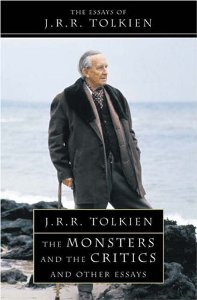
J.R.R. Tolkien was a prominent Beowulf scholar; his Beowulf: The Monsters and the Critics was a turning point in the modern study of the poem, moving the focus from its historical to its literary significance.[1] Tolkien also left two substantial unpublished manuscripts concerning Beowulf. The first, a more substantial version of the previously mentioned critical essay, was edited by Michael D.C. Drout and published as Beowulf and the Critics.[2] The second is a partial poetic and full prose translation of the epic, including commentary.[3] The latter was a minor media sensation on its ‘discovery’ in 2003 and was also to be prepared for publication by Drout, but as of 2010 this was not forthcoming.[4] The unpublished manuscript is kept at the Bodleian Library in Oxford.[5]
Tolkien looked highly upon Beowulf, and it both indirectly and directly influenced his own imaginative work. The episode in The Hobbit where Bilbo steals a cup from Smaug’s horde, for example, is a conscious homage to a similar theft in Beowulf.[6]

 Rosamond Press
Leave a reply to Royal Rosamond Press Cancel reply