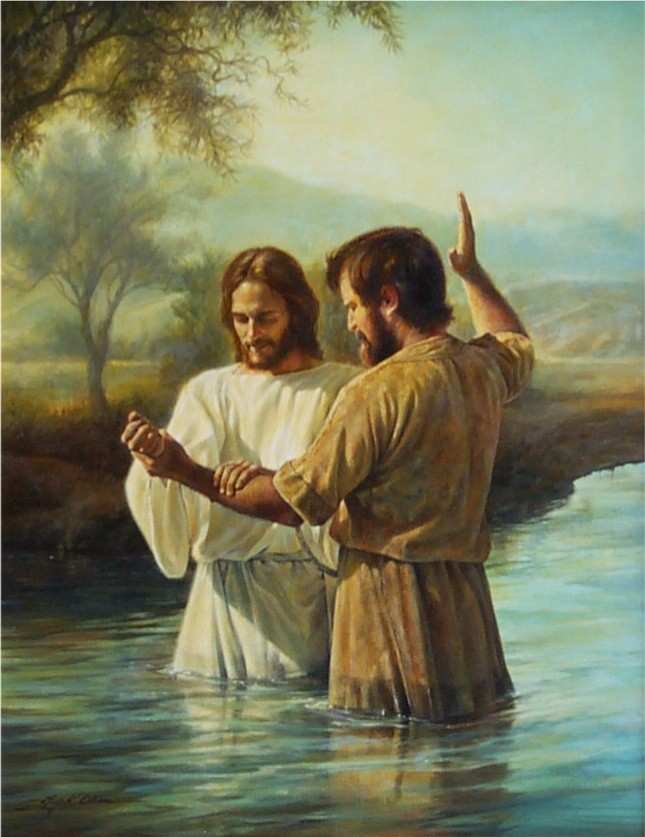
 Paul encounters disciples, or, teachers of John the Baptist’s church in Ephesus that I suspect are ministering to the remnants of the ten tribes who left when David slaughtered the Benjaminites and the Priests of Shiloh, then, with the help of his Philistine kindred (he had to have married a Philistine) he put a crown – a foreign thing – on his head. The problem with this, is, that David was a fictional person created much later by a king of Judah who put a crown on his head. David was created in order to do ‘The Dirty and Bloody Work’ of cutting other folks out of ‘The Word of God’ the religious history of the Jews. This king may have driven out the Ten tribes, or, sold them into slavery. He invited a foreign army to come in and take them away. Consider the story of Joseph.
Paul, who was the Pharisee of Pharisees, and thus knew his Torah, probably knew David was pure fiction, and took a big gamble. Paul claims he destroyed the Church of God throughout the Diaspora, when in truth he did not, and this church was thriving. It was a stroke of brilliance, full of devious cunning. Paul could not point to a group of folks as ‘The destroyers’ because, they did not exist, and thus there was NO PROOF. Paul is his own proof. Leaders of the way are incredulous, and try to stop Paul whose Gentile followers are growing. Convincing local rulers ‘The Way’ is subversive, he gets legal papers giving him permission to destroy the first church – OF JEWS!
Paul did not begin his persecution in Jerusalem. This is a great lie. When he went to Jerusalem, the Bishop of God’s Church, James the Just – a Nazarite and brother of Jesus – bids Paul to take the vow of the Nazarite to prove he is not spreading a false teaching. Paul fails the test, is arrested, and taken to Rome in chains. His fate is unknown. But, HIS VIRUS he put in the WORD OF GOD lives on – doing much damage!
More then likely John and Jesus’ church was destroyed in the war with Rome in 70 A.D.
If you believe God would create such a flawed religions, then you are out of your mind!
Jon Presco
Copyright 2013
After John the Baptist…
Continued from here.
__________
We know what happened to John. Herod Antipas arrested and then beheaded him. Rulers don’t take nicely to those who announce that another king is coming who is going to replace their kingdom with a better one. In Matthew, Mark, and Luke, which are sometimes called the Synoptic gospels, Jesus does not start proclaiming the kingdom until John is arrested.
But the impact of John the Baptist seems to have continued for decades after he died. For example, there were some people who were still following his teaching at Ephesus in Acts 18-19. The first is Apollos in Acts 18:24-28. He is instructed in the “Way of the Lord” and proclaimed the coming of Jesus, but was only aware of the baptism of John. Apparently, John the Baptist must have proclaimed “the way of the Lord.” It is interesting that both Isaiah 40 and Malachi 3 use the word “way.” These are the passages the gospels remember in relation to John’s prophetic ministry. So it is not a stretch to say that John must have proclaimed quite literally “the Way of the Lord” as one of his key messages.
Followers of the Way were thus individuals who believed John’s message–whether they believed in Jesus or not. Apollos could be a follower of the Way and know very little about Jesus. What he knew was John the baptizer’s prediction that the “anointed one,” the messiah, was coming. The Gospels also remember this message as part of what John proclaimed: “The one who is more powerful than I is coming after me; I am not worthy to stoop down and untie the thong of his sandals” (Mark 1:7, NRSV).
Acts 19:1-7 reinforces this interpretation. Paul finds certain “disciples” at Ephesus. These individuals only know the baptism of John. They do not seem to know much of anything about Jesus. When Acts calls them “disciples,” it must not mean followers of Jesus but followers of the Way, followers of the movement started by John the Baptist.
For Acts, receiving the Spirit is the big distinction between the two movements. The Jesus movement was part of the Baptist movement. Both were followers of the Way. But the Jesus movement believed Jesus was the messiah John predicted, and it involved the Holy Spirit. Jesus’ followers received the Holy Spirit. At some point, John’s baptism became distinguished from baptism “in the name of Jesus,” so much so that Paul has the followers of the Baptist get re-baptized so they will receive the Holy Spirit in Acts 19.
The Gospel of John indirectly supports interpretation. One of the intriguing features of the Gospel of John is the extent to which it downplays John the Baptist in relation to Jesus. John never actually mentions John baptizing Jesus. John’s presentation implies that the Baptist’s mission is basically over once Jesus arrives (e.g., 1:36-37; 3:30). Only John’s gospel tells of Jesus’ followers baptizing at the same time as the Baptist. Finally, in contrast to Matthew 11:14, the Gospel of John denies that John the Baptist is Elijah (1:21).
Why would the Gospel of John downplay John the Baptist so much more than the other gospels? A possible answer is that, as we see in Acts 18-19, there were followers of John the Baptist at Ephesus who not only did not follow Jesus. There may have been followers of the Way there who opposed the Jesus movement, who opposed the idea that Jesus was the messiah. John and Acts are thus written in such a way as to make it clear that Jesus is the one John predicted. [1]
So not only did John proclaim the coming judgment of God and the potential restoration of political Israel. He was one of those Jews who also predicted the coming of a king to rule Israel in this coming kingdom, the messiah. [2] In preparation, he called Israel to repent and to wash themselves in the Jordan, symbolizing the washing and forgiveness of their sins.
What a massive movement he must have started! We do not know much about it apart from those of his followers who went on to believe Jesus was the messiah John was predicting. But at the time his movement must have paralleled that of Jesus and may have been even bigger. Some in this movement of the Way may have known very little about Jesus at all. It must not have been clear at the time that John endorsed Jesus as the one he predicted.
In fact, we can read passages like Matthew 11:2-6 as the Baptist himself having some uncertainty. John is in prison but sends some of his followers to ask Jesus if he is the one. The things he is doing make him a prime candidate. But John must not have been entirely certain. [3] Perhaps John was expecting Jesus to be more “political” and “military” than he was.
What is clear is that all four gospels see Jesus’ ministry in continuity with that of the Baptist. In Matthew, Mark, and Luke, Jesus is baptized by John, which indicates that Jesus at least mostly endorsed John’s message. As many Jesus scholars have argued, this fact has enormous implications for how we understand Jesus’ own mission and message. [4] We must understand Jesus’ words not as wise sayings a philosopher might say but as words said against this historical background.
[1] The incident in Acts 19 is thus not about entire sanctification (as many holiness revivalists preached in the late 1800s/early 1900s). Still less is it about the necessity of tongues as evidence of truly being converted (certain Pentecostal groups). Acts 19, including its added evidence of tongues, was originally a polemic against followers of John the Baptist who did not believe Jesus was the messiah.
[2] Again, if we have to pick a Jewish group his message best fits, it would be the Essenes.
[3] This scene has of course given rise to much speculation as to John’s motives, especially if you bring Luke 1 and John 1 into the conversation.
[4] One of the first to point out this fact was A. E. Harvey, Jesus and the Constraints of History E. P. Sanders’ Jesus and Judaism then built on this approach.
Problem: John the Baptist still had disciples
Verses: John 3:25-28, others; Status: Minor
Like Jesus, John the Baptist was a historical figure who definitely existed. Nevertheless, it has been argued that the gospels do not present an accurate picture of John. I’d like to examine one problem, that of John’s disciples (this was brought to my attention by Paul Tobin).
All the gospels agree that John came to prepare the way for Jesus. For example, this is Luke 3:16:
John answered them all, saying, “I baptize you with water, but he who is mightier than I is coming, the strap of whose sandals I am not worthy to untie. He will baptize you with the Holy Spirit and with fire. (ESV)
It would seem logical that, when Jesus arrived on the scene, John would point his disciples to him and instruct them to follow Jesus. And yet, there are verses where we are told that John still had disciples. For example, this is Matthew 9:14:
Then the disciples of John came to him [Jesus], saying, “Why do we and the Pharisees fast, but your disciples do not fast?” (ESV)
Mark 2:18 and Luke 5:33 also mention that the disciples of John were behaving differently from the disciples of Jesus.
In a different context, we are told at Luke 7:18-23 and Matthew 11:2-6 that John’s disciples were relaying messages between him and Jesus.
I’m not sure what to make of all this. On the one hand, being a disciple of John doesn’t rule out also being a disciple of Jesus. I think this could resolve the problem of the messengers: they could have been disciples of both teachers. Also, since John was thrown in prison, it’s possible that many of his followers were never told that they should be following Jesus. That might solve the fasting problem – if these disciples of John were still following the “old rules”.
Perhaps the most difficult problem is John 3:25-28:
Now a discussion arose between some of John’s disciples and a Jew over purification. And they came to John and said to him, “Rabbi, he who was with you across the Jordan, to whom you bore witness – look, he is baptizing, and all are going to him.” John answered, “A person cannot receive even one thing unless it is given him from heaven. You yourselves bear me witness, that I said, ‘I am not the Christ, but I have been sent before him.’ (ESV)
This passage sums up the whole problem. Why are these particular disciples – who should be aware that Jesus is the Messiah – still following John? Well, you might say that John’s followers loved him so much that they were unhappy to leave him. That seems possible. Alternatively, perhaps they hadn’t quite “got it” yet.
Even after his death, history records that John had many followers who were not Christians, but this can be explained away if we accept that not every follower of John would have been fully aware of all his teachings. It’s still a bit odd though.
In the end, I’ve not found any really sharp contradiction here, but it’s definitely a thorny issue.
 Rosamond Press
Leave a comment