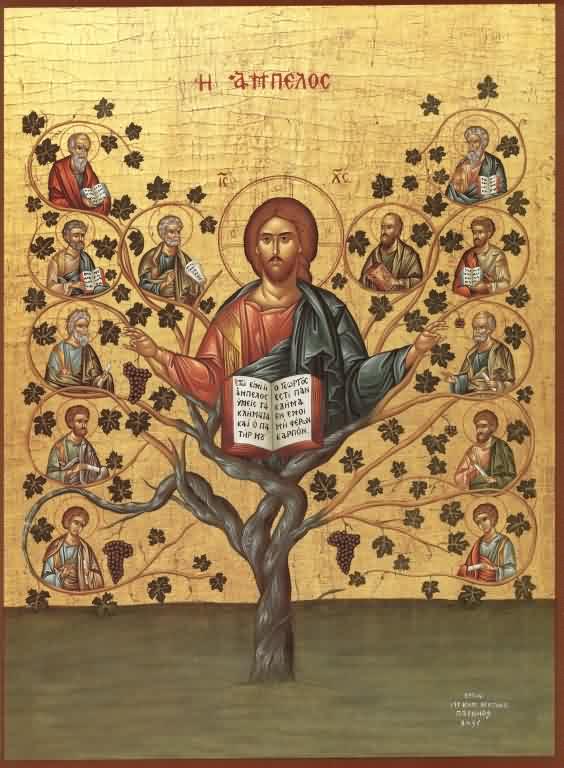
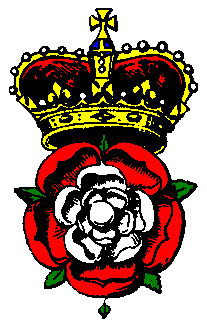
 My Grandmother was Mary Magdalene Wieneke, a surname that comes from “vine”. The Wieneke cote of arms depicts a bunch of grapes. After marrying Royal, her name was now Mary Magdalene Rosamond “rose of the world”
There is no name like hers. Modern Grail scholars would assign this name to a mythical person for various reasons that I need not subscribe to or bless. Mary will be an immortal when I reveal a real Grail Lineage that was established in the twelfth century.
In horse there is a rose.
Jon Presco
“We wait in anticipation for the White Horseman-the Rose of the World, the
golden age of humanity! Nothing will be able to forestall the coming of the
last, Pale Horseman: Gagtungr will see the one he has been preparing for so many
centuries born in human form. But the era of the Rose of the World will
immeasurably reduce the number of spiritual victims. It will succeed in raising
a number of generations of ennobled humanity. It will give spiritual fortitude
to millions, even billions, of those wavering. By warning about the coming
Antichrist, and pointing him out and unmasking him when he appears, by
cultivating unshakeable faith within human hearts and a grasp of the
metahistorical perspectives and global spiritual prospects within human minds,
it will insure generations and generations against the temptations of the future
spawn of darkness.”
http://liz-taylor.com/elizabeth_taylor_homepage.htm
How could anyone have known at that time that this lovely child would grow up to be one of the most beautiful women in the world, most photographed, envied, maligned in the press, but adored by fans and friends all over the world. She has a history of illnesses, some of them life threatening. The most recent being her having a brain tumor removed and hip replacement surgery. She has been through it all but has always emerged victorious over these health setbacks.
Her battle with pills and alcohol is well documented as are her marriages and I will not dwell on the private aspects of her life. Only her career. After all the sorrow and tragedy she has had throughout her life, she still remains to her friends and fans alike, a wonderful human being and a great humanitarian who alone has raised millions of dollars to fight the dreaded disease AIDS.
http://www.sacredconnections.co.uk/holyland/rosatemplum.htm
In the Canon of the New Testament, it is said that Jesus was descended from the Davidic royal lineage. Could it be that the ‘Prince’ pillar at Rosslyn Chapel symbolises Christ Jesus and a royal rose lineage of the true vine of Christic descent? Bearing in mind the esoteric tradition that a holy bloodline issued from a holy union between Jesus and Mary Magdalene, also said to be of royal descent, then might the speculative ‘Princess’ pillar represent Mary Magdalene? If this is the case then the central pillar (usually referred to as the Journeyman’s pillar) could represent a continuation of the Christic rose lineage, thus this might be referred to as the ‘Rose’ pillar. Interestingly, a line from a poem by one of the old welsh bards reads: “Christ the Concealed, pillar of peace” (ref. Cyclops Christianus by Algernon Herbert, 1849).
Margaret Starbird, a Roman Catholic scholar, in her seminal work The Woman with the Alabastar Jar: Mary Magdalene and the Holy Grail, writes: “I believe that it was the spread of the heresy of the Holy Grail that caused this surprising transformation of Mary Magdalene from prostitute to Sister-Bride in artistic representations during the twelfth century. The Mary depicted in many of these medieval paintings was not a ‘repentant sinner’ or a ‘reformed prostitute’, nor was she merely a friend of Jesus. She was his beloved.” It may be of interest to note that Mary Magdalene is revered in Provence, France (ancient Gaul) as “the Saint Apostle of Provence” thus elevating her to an apostolic status. In this same work, Margaret Starbird states that Provence: “….had been the centre of a cult of Mary Magdalene for centuries, as witness the numerous chapels, fountains, springs, and other geographical landmarks in the region that bear her name. She was the patron saint of gardens and vineyards throughout the region….It was not accidental that the cult of the Rose (an anagram of Eros) flourished and bloomed in the garden of Provence.” She further remarks: “The idiom ‘under the sign of the rose’ actually meant something specific for the initiated. For them….the secret is the rose – the red rose of the other Mary, the Mary who represents Eros, the passionate bridal aspect of the feminine, which was denied by the established church.”
One of the telluric ley lines traversing Scotland has been named the “Rose Line” which may pass through the Masonic Templar Chapel at Roslin (Rose Line?), located a few miles south of Edinburgh. This Chapel is a Templar Mausoleum for the Sinclair (originally St. Clair) family whom it has been alleged are descended from what has been referred to as the Jesus Holy Bloodline. A 19th century writer, W. F. C. Wigston, describes Rosslyn Chapel as “a Masonic Temple…. the cradle of Scotch Masonry, if not of something deeper still.” Writing about the symbolism of the Chapel, Wigston refers to the rose on the keystone of the east window, and he goes on to say: “The predominant ornaments are the Fleur-de-Lis, the Rose, and the Sunflower. Upon the roof of the aisles is the engrailed cross of the founders, St. Clairs, once hereditary Grand Masters of Scotch Masonry.” (Bacon Shakespeare and the Rosicrucians, 1888).
In Medieval times the Virgin Mary, mother of Jesus, was known as Santa Maria della Rosa, and according to a 19th century antiquary, Godfrey Higgins, in his magnum opus Anacalypsis Vol. II, 1836: “Jesus was called the Rose – the rose of Sharon”. This may suggest that Jesus was of a rose lineage, hence a possible genealogical connection with the Clan St. Clair of Roslin – Roseline? It is interesting to note from the signature of Sir William Sinclair, a former Earl of Rosslyn, that he signed his name St. Clair of Roselin. Sir William Sinclair (St. Clair) was referred to as the “last of the Roslins” and his death in 1778 terminated “the lordly line of high St. Clair.” Furthermore, ancient Scottish charters were witnessed by a certain Roger de Roselyn (my italics).
http://rosemagdalyn.blogspot.com/
http://archive.constantcontact.com/fs014/1101389983006/archive/1102586916923.html
We are the “Sisters of the Sacred Rose”, the Rose Ray, keepers of the sacred Heart, and together with you, are the ascended Goddess, the rays of Creation that represent the Sacred Divine Feminine. Shekinah with Magdalene, Mother Mary and the Hathors over light the Sister of the Sacred Rose.
One of the most beautiful and significant symbols of the Western Mysteries is the Rose. The Rose and the Grail share many spiritual resonances. The word ‘chalice’ comes from the Latin word, calyx, which means cup, and is the name given to the cup-like sepals of a flower which support the petals. Both these symbols suggest the receptive vessel of the soul, opening to receive the in-pouring of Divine influence. Indeed the symbolism of the Rose is even more complex than the Grail, given the beauty of its form, the number and arrangement of the petals with their velvety texture, the intoxicating perfume and, deep inside, the hidden golden heart enfolded within the petals, concealing the Mystery of the Centre. A 12th century Persian poet wrote, “Mystery glows in the rose bed, the secret is hidden in the rose.” Not surprisingly, the rose has long been recognized as the western equivalent of the eastern lotus as a symbol of the unfolding of higher consciousness.
In medieval Europe, the Rose as a symbol of union with the divine may have been influenced by Arabian and Persian teachings from the time when Spain was an Islamic country. The Sufi teacher, Hazrat Inayat Khan writes:
Just as the rose consists of many petals held together, so the person who attains to the unfoldment of the soul begins to show many different qualities. The qualities emit fragrance in the form of a spiritual personality. The rose has a beautiful structure, and the personality which proves the unfoldment of the soul has also a fine structure, in manner, in dealing with others, in speech, in action. The atmosphere of a spiritual being pervades the air like the perfume of a rose.
The Goddess and the Rose
As well as being a symbol of mystical union, the Rose is particularly associated with the numinous beauty of the goddess and the love her presence evokes within the human heart. It was the most revered flower in ancient Egypt, sacred to Isis herself. Petals, whole flowers and wreaths of roses have been found heaped upon the oldest tombs in the pyramids. The famous Latin work, Metamorphoses or the Golden Ass, by Apuleius, is an allegory of the trials of an initiate, Lucius, (Light) who seeks liberation from his unfortunate transformation into a donkey. He is finally initiated by Isis himself and returned to his human shape by virtue of her roses.
Alexander the Great was said to have brought roses to the West, and they can be discovered in profusion in the mythology of classical Greece. Hecate, goddess of the crossroads and the underworld was sometimes depicted wearing on her head a garland of five-petalled roses. Roses are particularly associated with Aphrodite, the goddess of love. One legend tells that the first roses sprang from her tears while another says that it was a gift for gods to celebrate her rising from the sea. Yet another story goes that the rose was originally white, but became red when the goddess pricked her feet on the thorns as she sought her slain lover. In Rome, an effigy of the goddess Cybele, known as the Magna Mater, (Great Mother) was celebrated by being carried in procession covered with roses. A Greek legend tells that it was Cybele herself who created the rose, as she was jealous of Aphrodite and wanted to make something on earth more beautiful than her in their rivalry for Adonis. The priestess of Aphrodite wore wreaths of white roses, and the paths of her sanctuary were strewn with roses.
In the Roman era, Aphrodite became Venus, to whom the rose was also sacred. It was also in Rome that the ancient expression, sub rosa, ‘under the rose,’ originated, referring to the ancient custom of hanging a rose over a council table to indicate that everything spoken was to remain secret. This custom may have derived from an ancient Egypt image of Horus, the divine son of Isis, called Harpocrates by the Greeks, sitting within a rose with his finger to his lips, ordaining silence about the mysteries.
Pagan flower festivals were soundly denounced when Christianity became the official religion of the Roman Empire. The Church Fathers regarded roses as damnable, because of their association with Venus, and even banned them from graveyards. The festivals continued in Germany for a while after, with the rose-garden (or rose grove) being identified with the mountain of Venusburg, and witches came to be called “visitors of the grove.”
The Faery Rose
As the rose was sacred to the goddess, it stands to reason that it should also be sacred to the Faery Queen. Her rose is the original wild variety which had five green sepals and five petals in a circle. Her other special flowers, the apple-blossom and the hawthorn, also have five petals apiece, and belong to the same family as the Rose. As you learned in the course on Sacred Earth Magic, faeries are attracted to rose oil.
In Germany, the rose belongs to the dwarves and is under their protection. In many places it is customary to ask permission of their king before picking lest one lose a hand or foot. In the famous story of Beauty and the Beast, Beauty’s father plucks a rose for his daughter which angers the Otherworld denizen of the land.
In the Scottish ballad of Tam Lin, the heroine, Janet, plucks a ‘double rose’ at the well of Carterhaugh and attracts the attention of its Guardian, Tam Lin. Once a human knight, this young man had been held in captivity in the faery realm by its queen.
She had na pu’d a double rose,
A rose but only twa,
Till upon then started young Tam Lin,
Says, Lady, thou’s pu nae mae.
Why pu’s thou the rose, Janet,
And why breaks thou the wand?
Or why comes thou to Carterhaugh
Withouten my command?
Tamlin had now become the Guardian or Genus Loci of the sacred well, and was angry that his roses had been picked by an intruder. Yet, as the flower of love, the rose in this ballad is also a prelude to the coming union between Janet and Tamlin.
The Rose also appears in connection with the Underworld goddess in the German story of Tannhäuser, a 13th century minnesinger, or troubadour, whose adventures were retold in Wagner’s famous opera of the same name. Although laced with some heavy Christian moralising, the story is essentially the same as that of the Scottish legend of Thomas the Rhymer, whose meeting with the queen of Elfland and journey with her into the Eildon Hills, is one of the fundamental stories of the UnderRealm and Faery tradition, as recounted in the first course in this series. Tannhäuser is riding by the Mountain of Venus, when the goddess herself appears before him ‘as a white, glimmering figure of matchless beauty.’ The Rose of the goddess is all around her: a soft roseate light glows around her, and her handmaidens scatter roses at her feet. She leads the lovestruck minstrel into the mountain, and wherever she steps, flowers spring up to create a ‘radiant track.’ Tannhäuser follows her into her palace deep in the heart of the mountain and spends seven years there in delight and revelry, just as Thomas did with the Faery Queen.
Rosa Mystica
During the era of courtly love in 12th century France, the Rose became the chief symbol of the newly re-emerging feminine principle. It represented romantic love, and especially the beloved lady herself, in many of the poems of the troubadours. Under Christianity, the foremost personification of the Divine Feminine was, of course, the Virgin Mary, so it was perhaps inevitable that the Rose became her special flower as it had been for the goddesses of old.
Soon the mysterious rose, sacred to Venus in earlier times, became the flower of the Virgin Mary, who herself became the Rosa Mystica. The temple of Jupiter Capitolinus became St. Peter’s, the temple of Juno Lucina the church of S. Maria Maggiore, and the processions honouring the Mother of God walked on rose petals, just as the processions carrying the images of the pagan gods had done.
So Mary became the Mystic Rose, just as she had become an image of the Grail. One legend goes that the Archangel Gabriel wove 150 roses into three wreaths for Mary. Red roses became the symbol of Mary’s sorrows, as they had once been for Aphrodite, only now the reason given was that drops of Christ’s blood spilt upon a thornbush. White roses signified Mary’s joy, and the golden rose her glory. So similar were these devotions to the pagan goddess of old, that in 440 C.E., Isidore of Pelusium warned: “We should really be more careful in marking the difference between the heathen Magna Mater and our Magna Mater Mary.”
Mary was given many rose-names, including Rose of Sharon, the Rose-garland, the Wreath of Roses, and Queen of the Most Holy Rose-garden. The litany of Loreto called her ‘Rosa Mystica,’ the Mystic Rose. She was often addressed as the ‘Rose without a Thorn’ because she was as pure as the original rose that grew in the Garden of Eden. According to the Christian legend, the thorns came only when it was planted on earth after Adam and Eve were expelled from the garden. Mary was regarded as a ‘second Eve’ whose purity restored her to the paradise from which Eve had been driven. She was considered the perfect example of our union with God, so the Rose became a symbol of the union between Christ and Mary, as in this 15th century poem:
There is no rose of such vertu
As is the rose that bare Jesu,
Alleluia.
For in this rose conteined was
Heaven and earth in littel space,
Res miranda. . .
When the magnificent Gothic cathedrals soared above the skyline of medieval cities from the 12th century onwards, many of them displayed ‘rose windows,’ beautiful circular mandalas illuminated with richly-colored stained glass.
Most were dedicated to Mary and situated at the west end, the direction of the Feminine. Perhaps the most famous is the Rose of France window at Notre Dame de Chartres Cathedral, which was built on what was once the most important centre of the Druids in ancient Gaul. Mary is seated at the centre, holding the Christ Child, surrounded by circles of doves, angels, kings and prophets. The famous 11-circuit labyrinth below has the same dimensions as the window, which is as high up on the western wall as the labyrinth is away from it. If you could fold the wall over onto the floor, the rose window would be perfectly superimposed upon the labyrinth, the centre of which is called the rosette.
The Rose Garden
The earliest gardens of the desert lands of the Middle East were designed to emulate Eden, with four streams flowing out to the four directions, and a Tree of Life in the center. From Persia came gardens laid out like mandalas, surrounded by four walls, suggestive of seclusion and completion, with a fountain of crystal water in the centre. Tree and fountain are both feminine symbols of the creative source of life that emerges mysteriously from the unseen world that lies behind our own, continually renewing and being renewed. In fact, our word ‘Paradise’ comes from the Persian word for a garden. The medieval rose-garden was purposefully laid out in this four-square design, making it a mirror of the original primal harmony of Eden, so that by the 12th century, the rose-garden had become the standard image of paradise.
The Cistercian monks created beautiful rose gardens in the cloisters of their monasteries, and the Cistercian monk, Alanus de Insulis, described the earthly paradise as a place of the eternal spring, flaming with roses that never wither or die.
One of the greatest works of medieval literature is The Romance of the Rose, an allegory of courtly love composed by two French poets in the 13th century. It tells how a young man dreams of a beautiful rose which he desires above all else. He enters a four-square rose garden in search of the Rose that is held captive within. Some esoteric scholars believe that rather than extolling romantic love, The Romance of the Rose is a treatise on spiritual initiation, whose true purpose was deliberately concealed in allegorical images to avoid the censure of the church. A. E. Waite writes:
The Romance of the Rose is the epic of ancient France. It is a profound work in a trivial guise, as learned an exposition of the mysteries of occultism as that of Apuleius.
 Rosamond Press
Leave a comment