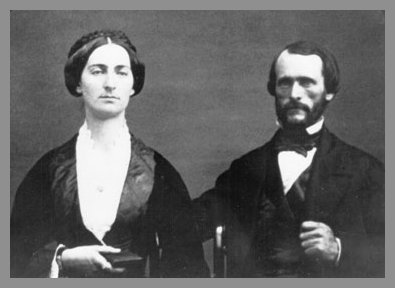
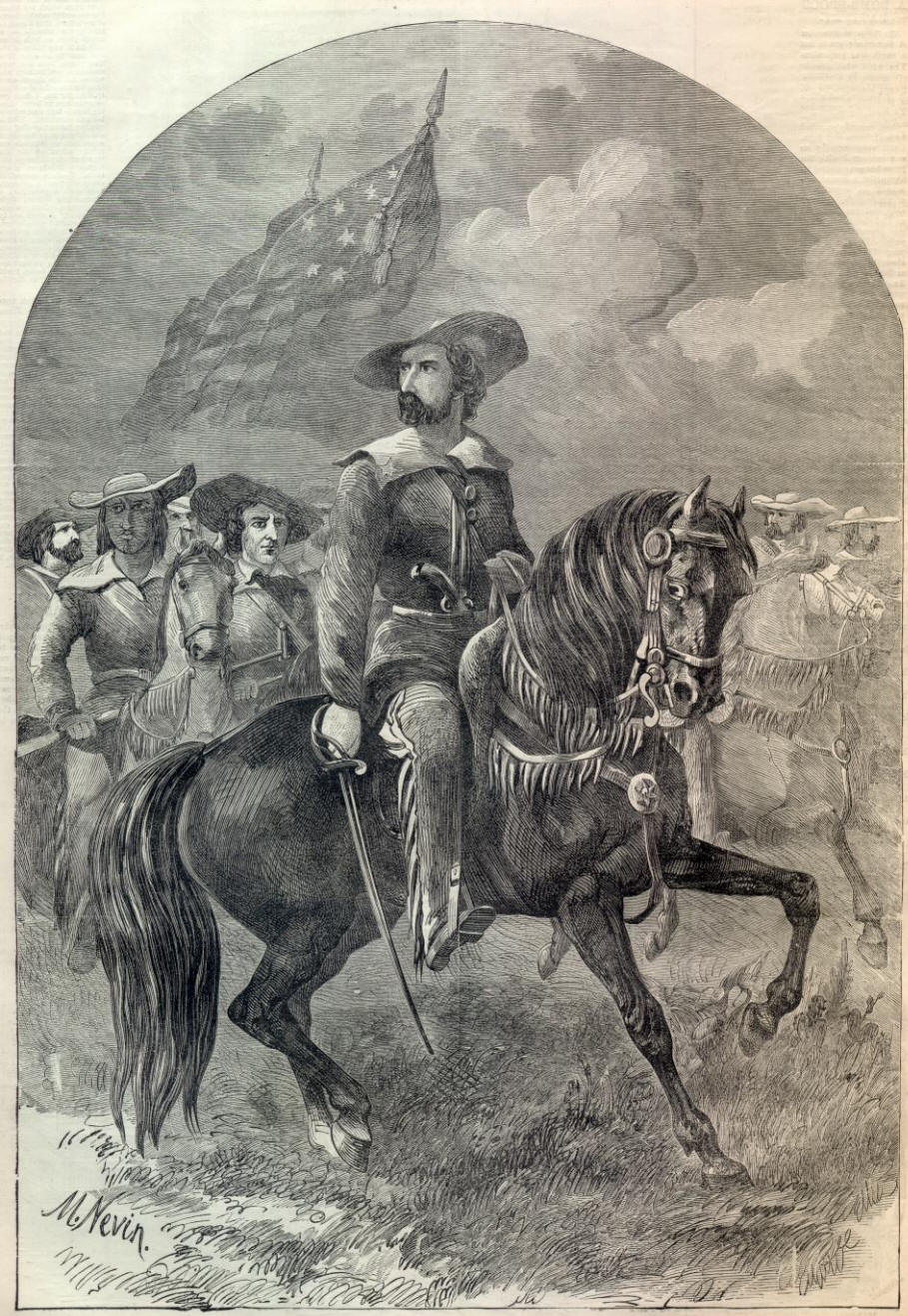
 Last night I discovered PBS has aired two shows on the Abolitionists. The last show of the series will be aired tomorrow. They had to mention John Fremont, and his wife, Jessie Benton, or something is terribly wrong. For over six years I have championed the history of the Fremonts after I concluded Jesus came to restore the Jubilee the Sanhedrin did away with a century before Jesus was born. Like John, Jesus was baptizing freed slaves into the LIVING kingdom of God here on earth. Paul, a Pharisee, believed in the Resuscitation of the DEAD and a kingdom after Death. The man from Tarusus exposes his hand when he bids slaves to remain slaves, and to expect their freedom to come only – AFTER DEATH.
God erred when he wrote the following….
Gen. 17:12, and Ex 12:40.
….
“For the generations to come every male among you who is eight days old must be circumcised, including those born in your household or bought with money from a foreigner–those who are not your offspring.”
It took Him a little while to know He had made a big mistake, thus, He sent His prophet, His Son of God, to bring humanity a remedy, being, all of humanity can become a Child of God – but first you must be set free!
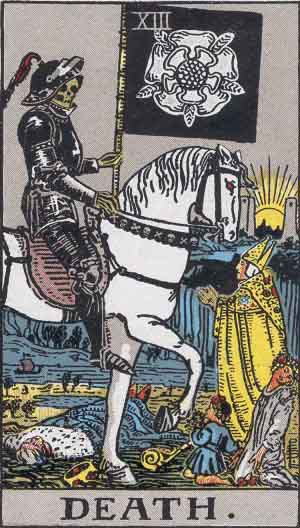
Death – has arrived! What comes after this leader of the God’s Parade is all of Humanity – SET FREE! We who love freedom – are reborn this day!
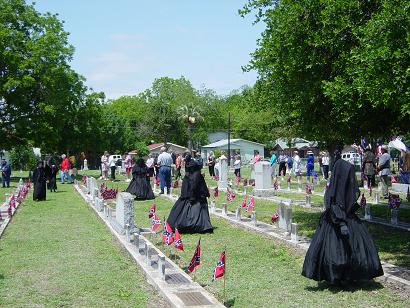
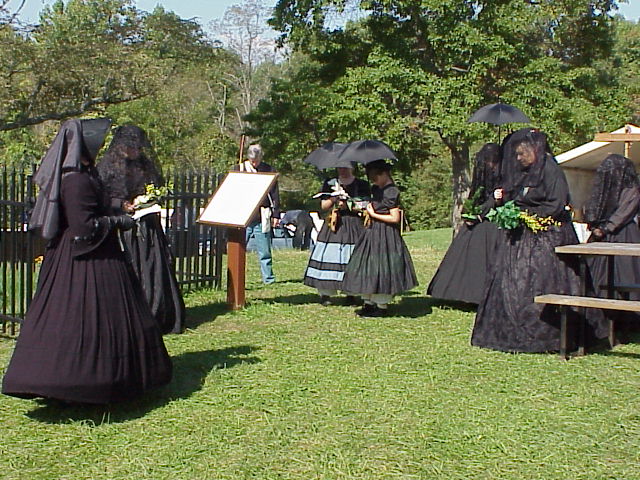
The Black Rose of the evangelical South is trying to resurrect the Confederacy. They send women dressed in black to the graves of dead Confederate soldiers. They want the South – TO RISE AGAIN! It is these Black Roses who summon Death who in this instance represents a sweeping change about to take place on this very day, the day Martin Luther Kings was born, and the duly elected black President is inaugurated for a second term.
Death took our champions away from us, us Democrat Liberals. Jack, Bobby and Martin are with us, still, for we as a Democratic People who believe in rule by majority and elected leaders, have persevered. We have overcome the last night of the Living Dead, who rose from their tombs and did their best to destroy us. When God Himself comes to dwell amongst His People, this last gasp of the Dark Prince, occurs. God is with us. God’s champion carries a banner that holds the White Rose of true eternal Life and Love. The Rose Freeman of the World – are victorious! Only God can grant us Eternal Life, and make for us, a Eternal Promise.
Rejoice People of the United States! Rejoice. For your sorrow has turned to joy! It is the dawning of a New Day. That old day, will never come this way again. We are Free!
Jon the Jubilee Redeemer
BLACK ROSE
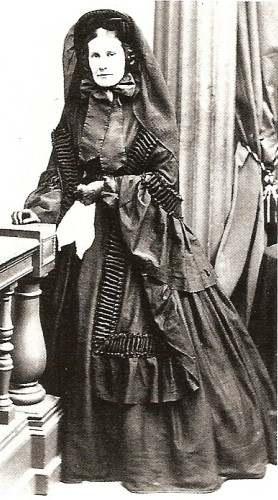
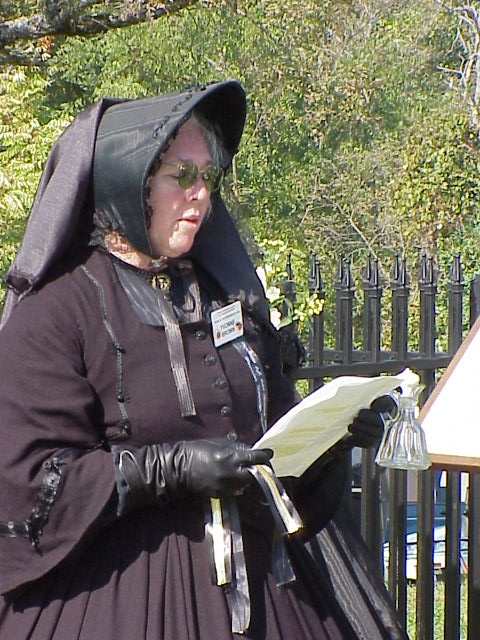
The Black Rose is part of the Texas Society Order of Confederate Rose. The purpose of the Black Rose is to participate in Memorial, Marker Dedications and Graveside Services. In the 1860’s widows would dress in all black attire, also known as “Widow Weeds” during a period of mourning. The ladies who supported the widow (her friends) at the funeral would also be dressed in black. The ladies wore black because they did not want to attract attention to themselves.
As members of the Black Rose we portray the widow and her friends. We dress in “Widow Weeds” and assist the Sons of Confederate Veterans and the United Daughters of the Confederacy with their Memorial, Marker Dedications and Graveside Services. We pay our respect with a small service which includes laying flowers, sprinkling rose petals or placing a wreath on the gravesite.
The requirements to be a member of the Black Rose are:
1. Be a member of the TSOCR in good standing.
2. Have the proper 1860’s style clothing. Consisting of the following:
a. Black dress or black skirt and blouse.
b. Black hat with mourning veil.
c. Black gloves.
d. Black cape, shawl or jacket if worn
e. No jewelry except jet black earrings, a brooch, or a wedding ring.
3. There are no membership fees for the Black Rose.
The picture of the lady at the top of this page is a lady in “Widow Weeds”. The picture was taken from the book, “Who wore what?” by Juanita Leisch
http://www.confederate-rose.org/States/NCOCR/BlackRose.htm
At the 1998 NCOCR convention in Charlotte, the “Society of the Black Rose” was approved by the members as a part of the state organization. The goals of the founder were to organize a statewide network to help with memorial services, to enlighten the men and ladies to proper persona and to offer services or assist with services locally and statewide and services in other states by invitation. The structure was setup to have a “Keeper of the Rite” who would serve as a contact person and keeper of the services that can be adopted to help the SCV or anyone honoring a Confederate or a Confederate Memorial in their region. The Keeper of the Rite is assisted by a phone coordinator who has a list of the members and phone numbers and calls when widows were needed. With Winston-Salem as the dividing line, regions were divided by East and West.
The Black Rose was named in honor of the greatest widow in the Confederacy who risked her personal safety for the Confederate Cause and lost her life trying to help The Cause, Rose O’Neal Greenhow.
The Black Rose can assist locally as small groups with memorial services or programs, and as a state group for special services. The JEB Stuart Foundation was our first group program and has since become an annual event for the Black Rose. By invitation, we represented the NCOCR in Charleston, SC, last November for the reinterment of the 22 sailors, and one child whose remains were exhumed from beneath the Citadel football stadium. Locally, we have assisted with a reinterment Raleigh and in Newton for Old Soldiers Memorial Day. On Confederate Memorial Day, many ladies assisted their SCV Camps with the service and/or placed wreaths. There is a need for this group and the service we can offer.
The Society of the Black Rose is a volunteer Order within the NCOCR to perpetuate the persona of a War Between the States widow at SCV functions, memorial services, grave dedications, etc.; and is open to any dues-paying member of the NCOCR (no additional dues required). At present, we have 35 members and are still growing.
Abolitionists
http://video.pbs.org/video/2297138723/
http://www.pbs.org/wgbh/americanexperience/films/abolitionists/
The basic theme of the card is Death. However, Waite says in The Pictorial Key that it is “more fitly represented…by one of the apocalyptic visions than by the crude notion of the Reaping Skeleton.” He is possibly referring to Revelation 6:8, “another horse appeared, deadly pale, and its rider was called Plague.” The death theme explains the black color of armor and banner and the four figures: temporal and spiritual, male and female, old and young – death comes to everyone.
1. Atop the cliff in the background we see a path, towers, and a sun that silhouettes a city, i.e., the mystical journey to the New Jerusalem. Notice the similarities to the imagery on the Temperance card. In Renaissance art, the “new earth” (i.e. following the apocalypse) is typically represented as a city, the New Jerusalem. This representation appears on 15th-16th century World cards.
In The Pictorial Key, Waite says: “Behind it lies the whole world of ascent in the spirit…between two pillars on the …horizon there shines the sun of immortality.” The image of the rising sun may come from the Golden Dawn Consecration ceremony for the Vault.
Regardie p 264f: “I have passed through the gates of Darkness unto Light. I have fought upon Earth for good. I have finished my work. I have entered into the invisible. I am the Sun in his rising…the Opener of the day…I am the Lord of Life, triumphant over Death…I am the preparer of the Pathway, the Rescuer unto the Light! Out of the Darkness, let the Light arise.” This is essentially a Rosicrucian image of the mystical journey and notice the roses on the bishop’s cloak, the woman’s hair and the banner.
2. A number of other themes also come together in this card – the red plume from the Fool card and the fourth river from the Garden of Eden. The bishop wears the three crosses from the Hierophant card and also the crossed circles from that card. A vertical strip of cloth with three crosses appears in Masonic ritual attire. The crosses represent the 3 basic initiations that the wearer has experienced: Apprentice, Fellow Craft, and Master.
The submissive kneeling woman resembles the Strength card, particularly the flowers in the hair. Besides the obvious cross-reference to the Moon card, the two towers may also hint at Boaz and Jachin, the pillars of Solomon’s Temple that appear on the High Priestess card. The pillars were situated in the west and so the rising sun would have been visible between them as one looked to the East. These pillars also appear in the rituals of Freemasonry and the Golden Dawn. There would also be a reference to the Knights Templars, also known as The Knights of Christ of the Temple of Jerusalem.
3. The rose on the banner is drawn in the manner of the Rosicrucian symbol. Examples of this same symbol can be found in Waite’s The Secret Tradition in Freemasonry (pp 227, 248, 550). In the background of the card, along the near shoreline there appear to be three black crosses. These may represent tombstones in keeping with the Death theme, but may also hint at the Cross, the second element of the “Rosy Cross” symbol. In The Real History of the Rosicrucians and The Brotherhood of the Rosy Cross, Waite depicts the Rosicrucians as an occult “church within the church” of Christianity.
Into the cloth of Rosicrucianism, Waite weaves the Knights Templar, Alchemy, Kabballah, Levi, Papus, Masonry, and the Golden Dawn. The three founders of the Hermetic Order of the Golden Dawn were members of the Societas Rosicruciana in Anglia. The Higher or Inner Order of the Golden Dawn was known as Rosae Rubeae et Aureae Crucis. When the Golden Dawn broke up and Waite formed his own version of the society, he called it the Fellowship of the Rosy Cross.
The rose is not a symbol commonly associated with the Templars; however, on the Gothic Cathedrals that they helped to design, there was a large rosette over the ogive archway. In the Adeptus Minor initiation of the Hermetic Order of the Golden Dawn, the initiate is introduced to the “Vault of the Adept.” This is a reconstruction of the tomb in which the mythical Christian Rosenkreutz was buried for 120 years, and from which he arose. On the ceiling of the “Vault” was a stylized white rose (same sort of rose as seen on the Death card but with 22 petals). It would be the first thing seen when the lid was removed from the coffin and the resurrected mystic opened his eyes. So its presence on the Death card may symbolize a note of optimism – there is a rebirth following the Death represented here. Waite may be suggesting that this is not the Death that comes at the end of life, but the Mystical Death.
4. The Bishop’s hat/crown is shaped like a long-nosed fish, such as a gar or pike. The Golden Dawn assigned this card to the Hebrew letter Nun which means fish. However, see The Fool, footnote 6 for a caveat about assuming that the Hebrew letters can be found in the Waite-Smith designs.
5. Many of the details on the card appear to be drawn from the advanced Templar orders of Freemasonry. There were a number of such advanced programs within the English lodges (e.g., Knight of the Red Cross, Knight Templar, and Knight of Malta), and the original Order of the Golden Dawn society was set up as a sort of advanced Masonic degree program. Two of the officials at the Templar initiation ceremonies are the Sovereign Master (enthroned and wearing a crown) and the Prelate in robes and bishop’s miter.
There is a possible connection to the King and Bishop on Waite’s card. In addition, other officials wear gauntlet gloves with a cross (see pp 124 & 131 Knight Templarism Illustrated, C. A. Blanchard, 1911). As a part of their ceremonial garb, masons wear a sheepskin apron. The way the apron is worn and the symbols on the apron indicate the levels or degrees that the wearer has achieved.
The apron of the Templar orders shows a Skull and Crossbones as seen on the reins of Death’s horse. The historical Knights Templars didn’t wear black armor but Waite says (A New Encyclopedia of Freemasonry Vol 1, p 114): “There are grades of Christican Chivalry which connect with Black, and in particular the Order of the Temple.” The “battle banner” of the Templars was divided into a black and white half by a vertical stripe. The banner on the Waite-Smith Death card is solid black, so the match with the Templar banner is questionable – but suggestive, nonetheless.
The cross on the chest of the Death figure is made deliberately hard to see, perhaps to obscure the reference of the Templars. The Templars wore a red cross on white, their sergeants-at-arms wore red on Brown/Black. The representation on the Death card is closer to the uniform of the Teutonic Knights, an early offshoot from the Templars who wore a black mantle with a white cross. The Hierus, one of the officers in the Golden Dawn ceremonies, wore a black mantle with a white cross (Regardie p 349) – but the cross is over the heart, not centered.
The advanced Masonic grade of Knight Commander of the Temple has the cross as one of its symbols (Waite The Secret Tradition in Freemasonry p 287) and the Sovereign Grand Inspector-General, a grade from the Masonic order of Teutonic Knights (Ibid. p 287) wears a Teutonic cross on the chest (Ibid. p 269),
6. There are also higher Masonic orders associated with Rosicrucianism. In the grade of the Red Cross of Rome and Constantine (Waite “The Secret Tradition in Freemasonry” p 239), the cubic stone (i.e., the ‘perfect ashlar’ suggested in the High Priestess throne and the cubic Chariot) now becomes the Rose, seen on Death’s banner. The initiation for the grade of Sovereign Prince Rose-Croix of Heredom includes a ceremony of Death: “Death must be tasted in its bitterness” (Waite The Secret Tradition in Freemasonry, pp 237 and 320).
7. The Templars had a fleet of ships, so the ship in the background may be another veiled reference. The Templar ships were probably merchant ships typical of the Mediterranean rather than the “Viking” style ship on the card. On the other hand, the Teutonic Knights ruled areas along the Baltic Sea and might well have had ships like those shown on the card. So Waite might also be making veiled reference to all of the warrior monks, not just the Knights Templar.
8. Although the image of Death on Horseback is found on older decks, the specific image on the Waite/Smith deck is from a Durer print: “The Knight, Death, and Time.” The horse is a close copy from the print. What I find interesting is that the Waite-Smith card does not represent the figure of “Death” from the Durer print, but the figure of the Knight!! Perhaps another Waite-esque reference to the Templars?
9. Directly below the ‘Viking Ship’ there is a black object that looks like an upside-down letter F. It’s a stretch, but this could be the Enochian letter Drun. The Golden Dawn assigned the Death card to Hebrew Nun = English N = Enochian Drun. The Enochian alphabet can be found on page 652 of Regardie: The Golden Dawn.
10. There appears to be a cave entrance in the background cliff – right above the ship. There also appears to be an arrow on that hillside, pointing to the cave. The arrow may be mistaken for a spur on the riders heel, except there is a gap between the arrow and the heel and it is not actually attached.
The cave may be a hint at Dante’s journey into the underworld, the Mystic’s “dark night of the soul,” which may be the logical path from the Death card to the Moon, Sun, and New Jerusalem symbols at the top of the background cliff. At the beginning of the Divine Comedy, Dante finds himself is a dark wood, perhaps suggested on the Death card by the black trees near the cave entrance. Dante has become exhausted trying to scale the sheer mountain to reach God. His guide, Virgil, appears and tells him that he must “go another way” and leads him down into the Inferno, symbollizing the death of the self needed for the mystical journey. Only then can Dante climb the Mount Purgatory and reach Paradisio.
This may be hinted at in Waite’s commentary on the Card (Pictorial Key) where he says: “transformation and passage from lower to higher,” that is, from the cave entrance to the top of the cliff. He also states: “the exotic and almost unknown entrance, while still in this life, into the state of mystical death.” In Waite’s Azoth or the Star in the East (p 190), we find: “It is the portentious darkness of initiation, the passage of the soul through Hades, the Kingdom of Pluto…which precedes the evolution of the inner light.”
The reference to Dante’s mystical journey may also be hinted at by the rose on Death’s banner since Dante describes one of the levels of Paradisio as a great rose.
Your Tarot reading is divided into sections: your past, your present and your future. Where a card lands affects what it means to you and to your overall reading.
Death is probably best in the past position. This indicates that you have gone through a wrenching change that involved loss and a helpless inability to do anything about it. Whether it was a childhood scar or a recent breakup, this card here is solidified as no longer being able to capture you. It may be the concrete foundation on which your present situation rests, but it is most definitely not a surface that will come back to haunt you in anything other than bad memories. The permanence of what happened is lessened in power by the finality of it all.
In the present position, this card indicates that you are paring down to the minimum to deal with a massive change in your life. You may be breaking up or under great duress. You might be worried about your job and out of touch with the world around you as obsessions about the economy become preoccupations. You might be involved with a foreclosure or other tragic loss of personal property. One thing about the Death card is that it is impossible to fight. You might want to consider accepting the fate that has occurred and seek to work within it today for a happier tomorrow.
http://permalink.gmane.org/gmane.culture.templar.rosemont/1246

 Rosamond Press
Leave a comment