



 Shortly after I met my wife-to-be, Mary Ann Tharaldson, she showed me two first edition books signed by her lover, Thomas Pynchon. I tried to read Gravity’s Rainbow, and V, but soon abandoned them. In researching Pynchon’s connections to Jazz, I discovered a character in V, called Vera Meroving. There is a wiki-Pynchon that says this about Vera, and other characters whose name starts with a V, which is a letter Dan Brown made famous in his Da Vinci Code. There is a bad priest named in V that was written in 1963 long before Holy Blood, Holy Grail made it on the scene. Here is another portal into the Labyrinth.
“V./Victoria Wren/Vheissu/Vera Meroving/Veronica Manganese/Valletta/The Bad Priest is the titular character and a mysterious woman who appears in several incarnations throughout the novel.”
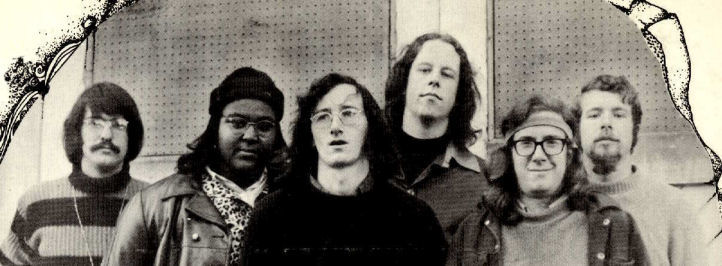
The only thing Mary Ann would tell me about Thomas, whom she lived in Mexico with for two years, is that he had her stand nude before a mirror holding a rose. This inspired me to do a large nude drawing of my ex-wife holding a rose. Her doctor told Mary Ann she had the most beautiful V shape mound, which I captured in 1980. When we exchanged vows Mary Ann became kin to Mary Magdalene Rosamond, and the famous artist, Rosamond. Bryan Maclean sang at our wedding, but did not come to the reception. Here are the folks who were there;
Rosemary Rosamond Miles
Robert Miles
Christine Rosamond Partlow
Shannon Rosamond
Rick Partow
Mark Presco and his girlfriend
Tim O’Connor and his French girlfriend
Marilyn Godfrey
Joan
Marilyn was my first girlfriend whose sister, Shanah, was married to Ron Jefferson, a jazz drummer for Les MacCann. Shanah helped her lover, Carlos Moore, write the biography of ‘Fela that is playing on Broadway. Marilyn went to live with Shanah in Paris and met some heavy duty radicals. When Shanah disappeared, her mother contacted ex Black Panther leader, Eldridge Cleaver, who found her.
Consider Manson’s Helter Skelter and Joan, who was Mary Ann’s good friend that came to her families Thanks Giving dinner to find five members shot dead by black radicals because her father worked for Standard Oil.
Tim O’Connor is the son of the actor of the same name who played an alien Ambassador in Star Trek. My ex-brother-in-law, Rick Partlow, who won a Grammy for his sound work on Battle Star Gallactia.
Mary Ann was good friends of Richard and Mimi Farina, the sister of Joan Baez. Mary Ann did a life-size portrait of Mimi. Richard was a good friend of Thomas Pynchon.
Bryan MacLean sold his artwork in Westwood, where his ex-lover, Christine Rosamond, was discovered in 1972. Bryan taught me some guitar cords, and was inspired by Robert Johnson, and played his ‘Crossroads’.
My kindred may appear in Bosch’s ‘The Wedding FEast at Cana’.
Robert Miles was in Vietnam, he marrying my mother just before he left for war where he did hideous things according to Tim and his girlfriend who talked to him at my wedding reception.
Mark Presco is an extreme right-wing fascist who is the mold for the Tea Party crazies.
Maryilyn is married to the black jazz artist, Kenny Reed, and introduced me to her good frined, Les MacCann, when she was fifteen. He played us a new tune on his baby grand as we looked down on the lights of Hollywood. The jazz great, J.J. Johnson, made Marilyn dinner one night, and was about to ut the moves on her when she informed hims she was only fourteen.
Before our wedding day, Mary Ann and I spent the night in Marilyn’s bed she gave up for us. Marilyn made the dress my ex is wearing, thus, completing Pynchon’s Jazz Mythos.
When Mary Ann and I returned to Oakland, Peter Shapiro of the Loading Zone gave us a great reception for our hip friends in the Bay Area.
Playing by the rules that dozens of Holy Grail authors have set down before, alas, I get the LAST WORD.
Jon Presco
Copyright 2013
http://v.pynchonwiki.com/wiki/index.php?title=Vera_Meroving
This is the Wiki for Thomas Pynchon’s V.. Besides using the Alphabetical Index and the page-by-page annotation, you can also take a look at V. covers, read the reviews, or provide insights or observations.
In the novel Leigh Teabing explains to Sophie Neveu that the figure at the right hand of Jesus in Leonardo da Vinci’s painting of “The Last Supper” is not the apostle John, but actually Mary Magdalene. Leigh Teabing says that the absence of a chalice in Leonardo’s painting means Leonardo knew that Mary Magdalene was the actual Holy Grail and the bearer of Jesus’ blood. Leigh Teabing goes on to explain that this idea is supported by the shape of the letter “V” that is formed by the bodily positions of Jesus and Mary, as “V” is the symbol for the sacred feminine. The absence of the Apostle John in the painting is explained by knowing that John is also referred to as “the Disciple Jesus loved”, code for Mary Magdalene.
V./Victoria Wren/Vheissu/Vera Meroving/Veronica Manganese/Valletta/The Bad Priest is the titular character and a mysterious woman who appears in several incarnations throughout the novel.
Herbert Stencil finds her mentioned in his father Sidney’s journal. She first appears as Victoria Wren in Egypt and Florence. In this incarnation, she is most human and the least mysterious. She is present during several plots, but always on the fringe of the action. Later, we see her appear as Vera Meroving in a German colony in South Africa. Sidney Stencil meets her for the last time in his life as Veronica Manganese in Malta. Although she appears as a female human, it is also inferred that V. is manifest in the possibly mythical place of Vheissu, or the city of Valletta. V. also apparently dies after her incarnation as the Bad Priest. The fact that V. is masquerading as a man this time is unique among…
http://www.pynchon.pomona.edu/v/xebec.html
http://en.wikipedia.org/wiki/The_Marriage_Feast_at_Cana_(Bosch)
http://en.wikipedia.org/wiki/Eldridge_Cleaver
Kurt Mondaugen, who will appear again in Gravity’s Rainbow, is the central character in a story set in South-West Africa (now Namibia) partly during a siege in 1922 at which one Vera Meroving is present, but most notably in 1904, during the Herero Wars, when South-West Africa was a German colony.
Thomas Pynchon (1937 – ) is a contemporary Amercian author of the first rank, creator of several marvelously intricate novels. Pynchon also seems to have spent some time listening closely to jazz in the late fifties, and the inclusion of allusions and echoes of that jazz scene provides additional enjoyment for those of us who also know jazz.
Pynchon’s first novel V (1961) includes a minor character named McClintic Sphere. Pynchon introduces him in a remarkable section (page 47 in my Bantam edition) with a whole series of links, allusions, echoes, and satirical reflections of the late 1950’s and Ornette Coleman’s legendary Five Spot appearance in Greenwich Village.
The section starts with several of the New York cast arriving at a Greenwich Village nightclub called the V-Note:
1. V for the title of the novel and an elusive woman, object of a novel-long search by one of the characters.
2. V as in the Roman Numeral for Five = Five Spot. This famous club featured Thelonious Monk and John Coltrane (1957) in a legendary engagement; it was the nightclub where Ornette Coleman first opened in November 1959 (and where he played a number of times over the following years)
3. V-Note. The Note = Half Note. Another Greenwich Village club, and another venue at which Coleman played during the period
McClintic Sphere is playing onstage when the group enters. Sphere is Thelonious Monk’s middle name (Monk was a frequent performer in the village at the time and as noted is closely associated with the Five Spot). McClintic may be an echo of Coleman’s unusual first name. (The only jazz musician with a somewhat similar first name would be Kenny Dorham, whose given first name was McKinley. He performed regularly in New York during that period and may be associated with groups that played the Five Spot).
p. 48 “He blew a hand-carved ivory alto saxophone” Obvious reference to the plastic alto saxophone which Ornette used in the late fifties, evidently because it was cheaper than a metal sax and because it gave him a more flexible sound. “…with a 4 1/2 reed” Also a reference to the 4 1/2 strength reed which Ornette used in Los Angeles (described by Don Cherry in a famous passage in an interview with Joe Goldberg).
The next paragraphs include some nice descriptions of the reactions in the audience, from those who simply left, to those from other groups who were unwilling to reject it, to those few who liked it. This directly echoes the reports in down beat about Coleman’s first appearances at the Five Spot in 1959.
“The group on the stand had no piano: it was bass, drums, McClintic and a boy he had found in the Ozarks who blew a natural horn in F”. This is an echo of the Ornette Coleman Quartet, and the natural horn may be a reference to the unusual pocket trumpet which Don Cherry favored at the time. (Cherry was of course from Los Angeles). “The bass was small and evil-looking and his eyes were yellow with pinpoints in the center”. I have no idea which of Ornette’s bassists this refers to-possibly David Izenzon? The bassist at the time of course was Charles Haden, by no means small and evil looking. The next paragraph is a biting description of some of those in the audience, “mostly those who wrote for Downbeat magazine or the liners of LP records…”. (Reader Clay Thurmond also points out that Sphere’s playing is described here as “something else”–which is the title of Coleman’s first LP on Contemporary Records recorded in 1958).
http://www.wildmusic-jazz.com/oc_pynchon.htm
http://www.hitchhikingpoet.com/
An original Irish American Folksinger / Bluesman. Born in Chicago, grew up in Hollyweird. Tim spent an eight year period of his life hitchhiking over 300,000 miles in 26 countries. O’Connor has three songs in the feature film “Dead Calm”. A high seas chiller thriller, starring Nicole Kidman, Sam Neill and Billy Zane. In the summer of 1999 Tim made a solo crossing of the North Atlantic Ocean in his sail boat “Theanna”. From Nantucket Island to the Netherlands. He lives on his boat in Holland. He has recently completed writing ten books about his mad adventures. The Hitchhiking Poet’s songs and stories go together like a hot dog and a bun, the books are done. So are the CD’s And the DVD’s. ” I’m a late bloomer with a sense of humor.” Tim O’Connor the Hitchhiking Poet makes his living by singing and playing his songs and the Blues.
Have Guitar will travel…..interested in giving Tim a gig? Send him an email.
Live Video’s
Footage of Tim O’Connor solo and with The Beer Brothers
http://www.hitchhikingpoet.com/
They were formed in Oakland, California in 1966 by singer-keyboardist Paul Fauerso, following the dissolution of his jazz group The Tom Paul Trio. The original lineup was Fauerso, bassist Bob Kridle, drummer Ted Kozlowski (replaced by George Newcom), and guitarists Peter Shapiro and Steve Dowler,[2] both formerly of Berkeley psychedelic rock band The Marbles, who had supported Jefferson Airplane at the historic “Tribute to Dr. Strange”, the inaugural Family Dog promotion concert held at San Francisco’s Longshoreman’s Hall in October 1965.
The Loading Zone’s first major concert was the Trips Festival at the Longshoreman’s Hall in January 1966.[3] Although primarily an R&B band, The Loading Zone added contemporary psychedelic influences and soon became a popular attraction on the burgeoning Bay Area music scene. The Loading Zone was based at the Berkeley venue The New Orleans House, but performed numerous times at major venues including the Fillmore West.
Although The Loading Zone occasionally headlined, the group is better known for supporting some of the biggest acts of the period including Cream, The Who, The Byrds, Big Brother & the Holding Company, The Grateful Dead, Country Joe & The Fish, Howlin’ Wolf, Sam & Dave, Chuck Berry and Buddy Miles.[4][5]
Kurt Mondaugen, who will appear again in Gravity’s Rainbow, is the central character in a story set in South-West Africa (now Namibia) partly during a siege in 1922 at which one Vera Meroving is present, but most notably in 1904, during the Herero Wars, when South-West Africa was a German colony.
Herero Wars,
The Herero and Namaqua Genocide is considered to have been the first genocide of the 20th century.[1][2][3][4][5] It took place between 1904 and 1907 in German South-West Africa (modern day Namibia), during the scramble for Africa.
On January 12, 1904, the Herero people, led by Samuel Maharero, rebelled against German colonial rule. In August, German general Lothar von Trotha defeated the Herero in the Battle of Waterberg and drove them into the desert of Omaheke, where most of them died of thirst. In October, the Nama people also rebelled against the Germans only to suffer a similar fate.
In total, from 24,000 up to 100,000 Herero and 10,000 Nama died.[6][7][8][9][10] The genocide was characterized by widespread death by starvation and thirst because the Herero who fled the violence were prevented from returning from the Namib Desert. Some sources also claim that the German colonial army systematically poisoned desert wells.[11][12]
In 1985, the United Nations’ Whitaker Report classified the aftermath as an attempt to exterminate the Herero and Nama peoples of South-West Africa, and therefore one of the earliest attempts at genocide in the 20th century. The German government recognized and apologized for the events in 2004, but has ruled out financial compensation for the victims’ descendants.[13]
http://en.wikipedia.org/wiki/Herero_and_Namaqua_Genocide
http://en.wikipedia.org/wiki/Helter_Skelter_(Manson_scenario)
Manson had been predicting racial war for some time before he used the term Helter Skelter.[3][4] His first use of the term was at a gathering of the Family on New Year’s Eve 1968. This took place at the Family’s base at Myers Ranch, near California’s Death Valley.[4][5]
In its final form, which was reached by mid-February 1969,[6] the scenario had Manson as not only the war’s ultimate beneficiary but its musical cause. He and the Family would create an album with songs whose messages concerning the war would be as subtle as those he had heard in songs of The Beatles.[3][7] More than merely foretell the conflict, this would trigger it; for, in instructing “the young love,”[8] America’s white youth, to join the Family, it would draw the young, white female hippies out of San Francisco’s Haight-Ashbury.[6][9][10] Black men, thus deprived of the white women whom the political changes of the 1960s had made sexually available to them, would be without an outlet for their frustrations and would lash out in violent crimes against whites.[10][11] A resultant murderous rampage against blacks by frightened whites would then be exploited by militant blacks to provoke an internecine war of near-extermination between racist and non-racist whites over blacks’ treatment. Then the militant blacks would arise to sneakily finish off the few whites they would know to have survived; indeed, they would kill off all non-blacks.[12][13][14]
In this holocaust, the members of the enlarged Family would have little to fear; they would wait out the war in a secret city that was underneath Death Valley that they would reach through a hole in the ground. As the only actual remaining whites upon the race war’s true conclusion, they would emerge from underground to rule the now-satisfied blacks, who, as the vision went, would be incapable of running the world; Manson “would scratch [the black man’s] fuzzy head and kick him in the butt and tell him to go pick the cotton and go be a good nigger….”[13][15]
http://www.chickenonaunicycle.com/Loading%20Zone.htm
https://rosamondpress.wordpress.com/2011/10/07/biography-of-christine-rosamond-benton/
Drummer Ron Jefferson was fixture of the postwar New York City bop landscape, collaborating with giants ranging from Lester Young to Coleman Hawkins. Born in the Big Apple on February 13, 1926, Jefferson begin his career as a tap dancer before turning to drums, touring and recording with a who’s who of bebop greats that also included Charles Mingus, Freddie Redd, and Roy Eldridge. He also spent a number of years in support of Oscar Pettiford, and with fellow Pettiford alums Charlie Rouse and Julius Watkins formed the Jazz Modes in 1957. When the trio split two years later, Jefferson signed on with Les McCann before settling in Los Angeles. There he cut his first session as a leader, the Pacifica date Love Lifted Me, in 1962, in addition to playing behind Groove Holmes, Zoot Sims, Carmell Jones, and Joe Castro. Jefferson also toured with the Roland Kirk-led Jazz and People’s Movement, and spent a number of years in Paris, drumming behind Hazel Scott and teaching music for the U.S. Embassy. In 1976, he also cut Vout Etes Swing! for the Catalyst label. Upon returning to New York, Jefferson hosted the cable TV series Miles Ahead with fellow drummer John Lewis. Despite a steady work schedule, he never attained the visibility or renown of many of his contemporaries, and after a brief illness died in Richmond, VA, on May 7, 2007.
read more
http://www.thetalkingdrum.com/fela.html
A fascinating hour in African and African American history visits the Twin Cities with the Tony Award-winning Broadway hit Fela! coming to St. Paul’s Ordway theater.
In 1969 Nigerian musician-composer Fela Anikulapo Kuti, visiting the U.S., encountered Sandra Smith of the Black Panther Party. Smith’s (today her last name is Isadore) fiery commitment to flying in the face of social and political oppression so inspired Kuti that on returning home, he fostered the genr
A fascinating hour in African and African American history visits the Twin Cities with the Tony Award-winning Broadway hit Fela! coming to St. Paul’s Ordway theater.
In 1969 Nigerian musician-composer Fela Anikulapo Kuti, visiting the U.S., encountered Sandra Smith of the Black Panther Party. Smith’s (today her last name is Isadore) fiery commitment to flying in the face of social and political oppression so inspired Kuti that on returning home, he fostered the genre Afrobeat, a fusion of African and American styles that, most significantly, incorporated political commentary. Not an altogether uncharacteristic development since Kuti was cousin to Nobel laureate writer Wole Soyinka.
Kuti’s name is also linked to two other iconic figures: horn player Hugh Masekela, with whom he studied, and Tony Allen who was his drummer for two decades and of whom he stated, “Without Tony Allen, there would be no Afrobeat.”
In 1986, Fela Kuti played Giants Stadium in New Jersey as part of the Amnesty International “A Conspiracy of Hope” concert on a bill with, among other luminaries, Carlos Santana, Sting and Bono of the band U2. Three years later came anti-apartheid album Beasts of No Nation with its cover depicting U.S. President Ronald Reagan, U.K. Prime Minister Margaret Thatcher and South African Prime Minister P. W. Botha.
Portraying Sandra Smith is accomplished performer Paulette Ivory (www.pauletteivory.com) whose track record includes creating the role of Nala in The Lion King (London) and touring the U.S. in Aida for which she was nominated the Helen Hayes Award for best lead actress. The Los Angeles-based, British-born star also has appeared on American television in Girlfriends, The Young and Restless and The Doctors and on the BBC in the long-running hit EastEnders.
In 1967, Eldridge Cleaver, along with Marvin X, Ed Bullins, and Ethna Wyatt, formed the Black House political/cultural center in San Francisco. Amiri Baraka, Sonia Sanchez, Askia Toure, Sarah Webster Fabio, Art Ensemble of Chicago, Avotcja, Reginald Lockett, Emory Douglas, Samuel Napier, Bobby Hutton, Huey Newton, and Bobby Seale were Black House regulars.[7]
Cleaver was a Presidential candidate in 1968 on the ticket of the Peace and Freedom Party.[8] Having been born on August 31, 1935, Cleaver would not have been the requisite 35 years of age until more than a year after Inauguration Day 1969. (Although the Constitution requires that the President be 35 years of age, it does not specify if he must have reached that age at the time of nomination, or election, or inauguration.) Courts in both Hawaii and New York held that he could be excluded from the ballot because he could not possibly meet the Constitutional criteria.[9] Cleaver and his running mate Judith Mage received 36,571 votes (0.05%).[citation needed]
Also in 1968, Cleaver led an ambush of Oakland police officers, during which two officers were wounded. In the aftermath of the ambush, Cleaver was wounded and seventeen-year-old Black Panther member Bobby Hutton was killed.[10] Charged with attempted murder, he jumped bail to flee to Cuba and later went to Algeria. Following Timothy Leary’s Weather Underground assisted prison escape, Leary stayed with Cleaver in Algeria; however, Cleaver placed Leary under “revolutionary arrest” as a counter-revolutionary for promoting drug use. Cleaver later left Algeria and spent time in France.[citation needed]
http://www.imdb.com/name/nm0663999/
Richard (Rick) Partlow was born in Kansas City, Kansas in 1948, the youngest of two boys, to Mr and Mrs. James E. Partlow. His Mother, Norma Jane VanDervort, born in 1921, a graduate of Ohio University, was an artist, singer, poet, lyricist, author (under Norma Kalina) and reporter. His Father, James Edwin Partlow
http://richardandmimi.com/
Richard Fariña was born in Brooklyn, New York, of Cuban and Irish descent. He grew up in the Flatbush neighborhood of Brooklyn and attended Brooklyn Technical High School. He earned an academic scholarship to Cornell University, starting as an engineering major, but later switching to English. While at Cornell he published short stories for local literary magazines and for national periodicals, including Transatlantic Review and Mademoiselle. Fariña became good friends with Thomas Pynchon, David Shetzline, and Peter Yarrow while at Cornell. He was suspended for alleged participation in a student demonstration against campus regulations and although he later resumed his status as a student, he ultimately dropped out in 1959, just before graduation.
Back in Manhattan, Fariña became a regular patron of the White Horse Tavern, the well-known Greenwich Village tavern frequented by poets, artists, and folksingers, where he befriended Tommy Makem. It was there that he met Carolyn Hester, a successful folk singer. They married eighteen days later. Fariña appointed himself Hester’s agent; they toured worldwide while Fariña worked on his novel and Carolyn performed gigs. Fariña was present when Hester recorded her third album at Columbia studios during September 1961, where a then-little-known Bob Dylan played harmonica on several tracks. Fariña became a good friend of Dylan’s; their friendship is a major topic of David Hajdu’s book, Positively 4th Street: The Lives and Times of Joan Baez, Bob Dylan, Mimi Baez Fariña, and Richard Fariña.
Fariña then traveled to Europe, where he met Mimi Baez, the teenage sister of Joan Baez in the spring of 1962. Hester divorced Fariña soon thereafter, and Fariña married 17-year-old Mimi in April 1963. Thomas Pynchon was the best man. They moved to a small cabin in Carmel, California, where they composed songs with a guitar and Appalachian dulcimer. They debuted their act as “Richard & Mimi Fariña” at the Big Sur Folk Festival in 1964 and signed a contract with Vanguard Records. They recorded their first album, Celebrations For a Grey Day,[1] with the help of Bruce Langhorne, who had previously played for Dylan. Due to his brief life, Fariña’s musical output was limited. The Fariñas released three albums, one was released after his death.

 Rosamond Press
Leave a reply to Royal Rosamond Press Cancel reply