



 This morning I spoke to “My Phoenician Princess” a term of endearment I applied to Virginia Hambley after her father told me the Hambley’s are found in Cornwall, and there is a legend they descend from Phoenicians. I went to google and found a genealogical site that appeared to confirm this legend. Hannibal is a suggested source name of Hambley. I sent a copy of this site to Clarke, along with photos of the de Bourmont family of France, as well as images of the Hambley home in North Carolina where Clarke was born. Clarke told me all the wealth of E.C. Hambley did not get down to his parents, it lost in capital adventures. As a Captain in the U.S. Airforce he met his wife to be who is kin to Victor de Bourmont a member of the Vichy government.
Clarke hinted his marriage was a rescue mission that is not discussed because of immigration problems. The de Bourments are kindred to much French Royalty. Virginia speaks fluent French. We were attracted to each at first sight. When I suggested we have a child, Virginia told me her mother bid her to get her tubes tide due to her short memory loss. She has burned a legion of pans on the stove. When ran into each other at the store two weeks after we broke up, she asked me if I was coming over. When I informed her we parted ways, she said;
“We did?”
We never broke up again, and have been dear freinds for fourteen years.
When I told my princess I was poised to do genealogical battle with members of the Sinclair family who suggest they are kindred of Jesus, she hear me out, and the first question out of her mouth was;
“These legends may be wonderful and amazing, but, can anything be proven? And if not, what is it all for?”
Virginia is extremely intelligent, and if not forher head injury, she would have become a scholar. Virginia grew up in Old Lyme and went sailing with her father who looks likes Ramses 2 who had red hair and thus may be kindred to the Scythians and the Sea Peoples. Virginia has a kingly beaked nose like Clarke and Ramses.
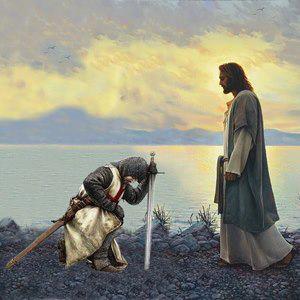
Above is a painting of a Knights Templar bowing down before Jesus who “wore the purple” a dye made by the Phoenicians. The title nailed above his head may have read “King of the City”. Legeand puts Jesus in Britain near Cornwall, he brought there by his kindred, Joseph of Arimathea. If you turn the image of Jesus into a Pheonician Princess, then here is a descendant of the Rougemont Templars paying homage to the Grail Bloodline.
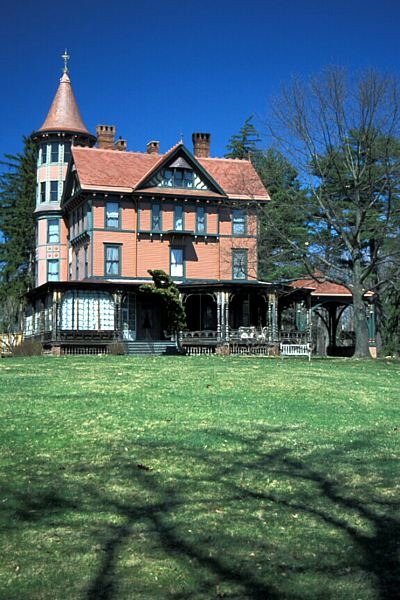
I am googling the web to see if the Sinclairs have put Joseph in their pile because in 2008 National Geographic did a DNA search for ancient Phoenicians. I suggested to Virginia she may want her DNA tested in the near future. Above are stately mansions Viriginia’s kindred dwelt in.
Jon Presco
Copyright 2012
Phoenician Blood Endures 3,000 Years, DNA Study ShowsAmitabh Avasthi
for National Geographic News
October 30, 2008
Ancient maritime traders of the Mediterranean may have left behind a large genetic footprint in the region, where 1 in 17 men still harbors Phoenician DNA, according to a new study.
The findings could fill a gap in the history of the Phoenician civilization, which originated two to three thousand years ago in the eastern Mediterranean—in what is now Lebanon and Syria—and included prominent traders, according to Chris Tyler-Smith, lead author and associate researcher at National Geographic Society’s Genographic Project. (The National Geographic Society owns National Geographic News.)
2,500-Year-Old Greek Ship Raised off Sicilian Coast (August 11, 2008) Bible-Era Artifacts Highlight Archaeology Controversy (April 18, 2004) Native American DNA Links to Six “Founding Mothers” (March 13, 2008) “By the time of the Romans they more or less disappeared from history, and little has been known about them since,” Tyler-Smith added. “Our motivation was to really identify their genetic traces.”
(Related: “Who were the Phoenicians” in National Geographic magazine, October 2004.)
The new research could also help scientists understand the genetic impact of other human migrations, such as military campaigns by the Greeks and the Mongols, Tyler-Smith said.
DNA Markers
Tyler-Smith and colleagues used historic and archeological records, along with information from DNA samples.
The research team analyzed the Y chromosome of 1,330 men from historic Phoenician trading centers in the Mediterranean regions of Syria, Palestine, Tunisia, Morocco, Cyprus, and Malta.
Unlike mitochondrial DNA—which is passed down from mothers—the Y chromosome, passed down by fathers, is thought to provide more detailed genetic information.
Analyses of the Y chromosomal data revealed the presence of at least seven related genetic lineages from places around the Mediterranean Sea where Phoenicians had lived.
These lineages suggest that the Phoenicians contributed their genes to at least six percent of the modern populations of historic Phoenician trading outposts.
“Our findings suggest that the Phoenicians left behind a genetic legacy that persists till modern times,” Tyler-Smith said.
The legends of Joseph of Arimathea
But there’s much more to Joseph of Arimathea than is found in the gospels. A whole host of other stories have grown up around him…
•He was the first person to bring Christianity to Britain, having been sent with other disciples by St Philip
•He built Britain’s first church (some say this was actually the first church in the world)
•He was Mary’s uncle, and thus Jesus’ great-uncle
•He was a merchant who visited England to buy Cornish tin
•He took Jesus with him to England when Jesus was a teenager (local legends say that among the places they visited were St Just in Roseland and St Michael’s Mount)
•He brought to England two vials containing the blood and sweat of Jesus (or two vials containing the sweat of Jesus)
•He brought the Holy Grail to England and hid it in a well at Glastonbury, now called the Chalice Well
Joseph was related to Jesus
This story may originate from the tradition that the senior male relative of a crucified person was obliged to deal with the body. Jesus’ father was no longer around, so if Joseph of Arimathea did volunteer for the task, that suggests that he must have been related to Jesus in some important way.
Joseph of Arimathea in England
There are two well-known legends about visits Joseph paid to the West of England.
However when historians looked at the evidence, they could find no mention of Joseph of Arimathea until the 13th century. It’s been suggested that the association of Joseph of Arimathea with Glastonbury was a deliberate ploy to add to the status of Glastonbury by associating it with such a prestigious person.
Joseph visited England with the young Jesus
One of the abiding legends of early English Christianity is that Joseph of Arimathea visited the West Country of England with the teenage Jesus. Both Somerset and Cornwall claim to have been visited by Joseph and Jesus.
The contemporary troubadour Van Morrison has put the legend to music in his song Summertime in England…
…Won’t you meet me down by Avalon
In the summertime in England
In the Church of St. John…
Did you ever hear about Jesus walkin’
Jesus walkin’ down by Avalon?
Van Morrison, Summertime In England, from the album Common One
The name ‘Avalon’ refers to Glastonbury, and Glastonbury parish church is dedicated to St John.
But far better known is this poem by William Blake, based on the same legend, and famously set to music by Sir Hubert Parry as ‘Jerusalem’:
And did those feet in ancient time
Walk upon England’s mountains green?
And was the holy Lamb of God
On England’s pleasant pastures seen?
And did the countenance divine
Shine forth upon our clouded hills?
And was Jerusalem builded here
Among those dark satanic mills?
Bring me my bow of burning gold!
Bring me my arrows of desire!
Bring me my spear! O clouds, unfold!
Bring me my chariot of fire!
I will not cease from mental fight,
Nor shall my sword sleep in my hand,
Till we have built Jerusalem
In England’s green and pleasant land.
William Blake (1757-1827)
The legend of the Glastonbury Thorn
The Glastonbury Thorn (Crataegus monogyna ‘Biflora’) is a variety of hawthorn that flowers twice a year in winter and spring – or, given suitable conditions, at Christmas and Easter.
The legend states that Joseph of Arimathea became a missionary after the death of Jesus and was eventually sent to England to preach the Gospel. He took with him the Holy Grail, and his pilgrim’s staff.
After landing in England he made his way to Glastonbury. When he stuck his pilgrim’s staff in the ground at Wearyall Hill it overnight turned into a flowering thorn tree.
In time Joseph converted thousands to Christianity, including, it is said, 18,000 in a single day at the town of Wells. He also converted Ethelbert, the local king.
Joseph went on to found Glastonbury Abbey.
He became so well-known and admired that when he died at the age of 86, his body was carried by six kings in the funeral procession.
The Glastonbury Thorn is said to flower on Christmas Day every year, and blossom from the plant in the churchyard of St John’s Church Glastonbury is said to be used to decorate the Christmas breakfast table of the Queen each year.
St John’s Church has a stained glass window commemorating Joseph of Arimathea.
Britain, Phoenicia’s Secret Treasure, and its Conversion to Christianity
The Legendary Tin Mines of Cornwall
When Rome was still a tiny village on the Palatine Hill, Phoenician traders were sailing their ships the length and breadth of the Mediterranean and beyond in search of goods to be sold or traded for a handsome profit. There were great risks in making a long sea voyage and bringing home a valuable cargo, but the enormous profit that could be made from selling the goods made the risks worthwhile. The key was to trade a product that was unique, very desirable, hard to get, or desperately needed for other products that were common in the land of the people with whom you were trading. These products may be rare and desirable someplace else, and the trader now had something with which he could once again make a profit.
Tin was just such a product in the ancient world. Tin was vital to the ancients because it was needed in the making of bronze. Bronze was an alloy, or a mixture of two or more metals. To make bronze, the metal smith mixed copper with the proper amount of tin. Copper tools and weapons by themselves were too soft and did not long remain sharp. Tin made the copper harder and also made the molten metal fill the mold more completely when it was cast into useful objects like axe heads, hammers, and jewelry. So many useful articles were made of bronze in ancient times that no civilization could thrive very long without a supply of it or the copper and tin needed to make it.
The deposits of tin in the ancient world were usually small and not very plentiful. The Phoenicians discovered the tin deposits of the British Isles through their own exploring and seeking out of new products and markets for them. They kept the knowledge of the Cornish tin mines a closely guarded secret so they could control trade in the metal and charge a high price for it. After the Punic wars, Carthage, the one remaining city of the Phoenicians, became less and less an important economic power. With their well – known efficiency and thoroughness, the Romans counted access to the British tin mines as one of the advantages of conquering the island. Julius Caesar knew of the importance of British tin when he invaded the island in 55 to 54 B.C. After the conquest of Britain during the reign of Claudius, the Romans were in control of most of the world’s supply of the metal. Hence, the closely guarded treasure secret of Britain’s tin passed hands from the Phoenicians to the Romans.
The fact that tin trade existed is too well attested to need proof. Herodotus as early as 445 BC speaks of the British Isles as the Tin Islands or Cassiterides. Pytheas (352-323 BC) mentions the tin trade, as does also Polybius (circa 160). Diodorus Siculus gives a detailed description of the trade. He tells us that the tin was mined, beaten into squares, and carried to an island called Ictis, joined to the mainland at low tide, which is generally held to be Mount St. Michael in Cornwall, although some have identified it with Falmouth. Thence it was shipped to Morlais, and transported across France on pack horses to Marseilles. From Marseilles it was again shipped to Phoenicia. Innumerable ancient workings in Cornwall still attest the trade, and tin is still mined there today. Lord Avebury and Sir John Evans held the opinion that the trade existed as early as 1500 BC, and Sir Edward Creasy in his History of England writes: “The British mines mainly suppled the glorious adornment of Solomon’s Temple”. This matter ties in very well with the involvement of Phoenician builders with construction of Solomon’s Temple.
Travel Between the Eastern Mediterranean and Britain
Before going into the controversial question of Glastonbury, Joseph of Arimathea and the stories or legends which surround it, one needs to stop at a few points to determine some basic givens. Glastonbury is traditionally the first Christian sanctuary in Great Britain, visited, so legend has it, by Joseph of Arimathea and Saints David & Patrick. It has a strong tradition in British history dating back to the time of King Arthur who is said to have been buried at the Abbey beside his lovely wife Queen Guinevere. His body was moved at a later date. Further, at Glastonbury Joseph of Arimathea is said to have planted the Holy Thorn tree which is still growing there today. Also, a holy well is supposed to be still found there.
The strong tradition tying Joseph of Arimathea with Glastonbury and the Phoenician tin trade with Cornwall may have strong thread of truth that ties them together. The only known sailors who came from the Eastern Mediterranean to Britain were Phoenician. Hence, the elementary conclusion is that Joseph of Arimathea, if he really made the trip(s), must have done it on Phoenician ships.
If this hypothesis is accepted, further reading on the subject could be accommodated. However, some claims and details seem far fetched but are presented herewith for your consideration despite their implausibility.
Below, the account is presented as is even though the author does not necessarily agree with this presentation in its totality.
However, for historical reference presents this some what irrefutable point of evidence:
Historians William of Malmesbury, Maelgwyn of Llandaff and Polydore Vergil all place Joseph of Arimathea at Glastonbury. Even the four Church councils of Pisa 1409, Constance 1417, Sienna 1424 and Basle 1434, mention that “the Churches of France and Spain must yield in points of antiquity and precedence to that of Britain as the latter Church was founded by Joseph of Arimathea immediately after the passion of Christ.”
Joseph of Arimathea, Tin Merchant
According to the Talmud, Joseph of Arimathea was said to have been an uncle of the Virgin Mary, being a younger brother of her father. He gained his wealth as an importer in the tin trade, which existed between Cornwall and Phoenicia.
Joseph along with St. John buried Jesus after the crucifixion. Joseph, in the tin trade, made a lot of trips to Britain, where being a rich merchant made close contact with royalty; namely Kings Beli, Lud, Llyr and Arviragus, who gave Joseph and his companions some 2000 acres of land, tax free. Arviragus would become God’s “Protectorate” for the Cradle of Christianity, Glastonbury. Caradoc, Pendragon of England, would become God’s “Protectorate” of the fledgling English Church.
Joseph of Arimathea was a man of refinement, well educated, and one who possessed many talents, had extraordinary political and business ability. He has been called one of the richest men in the world. He learned about that tin trade from the Phoenicians, which then was akin in importance to that of steel today. They had been bringing ore from England for centuries. Joseph was well educated, a member of the ruling political body of the whole country. In St. Jerome’s translation, Joseph’s official title is given as ‘Nobilis Decurio’, a minister of mines for the Roman empire, with direct access to Pilate himself. He was no slouch. How better to protect Jesus, after Joseph the carpenter died, and insure the seeding and growth of the Gospel in England.
The basic story of Joseph’s trip to England varies in some details from account to account. But the bare facts are that Joseph, with many disciples traveled from the holy land by Phoenician boat and landed at Marseilles (a Phoenician trading post), in the Vienoise province of the Gauls (France). From there he went on to England established seminaries and sent out missionaries. In his “Ecclesiastical Annals”, Cardinal Baronius, Curator of the Vatican library, gives this account. “In that year the party mentioned was exposed to the sea in a vessel without sails or oars. The vessel drifted finally to Marseilles and they were saved. From Marseilles Joseph and his company passed into Britain and after preaching the Gospel there…”
How many of the disciples were with Joseph of Arimathea during his short stay in Gaul, before going on to England, is hard to say. Various existing records agree in part with the Cardinal Baronius record, naming among the occupants of the castaway boat Mary Magdalene, Martha, the hand-maiden Marcella, Lazarus whom Jesus raised from the dead, and Maximin the man whose sight Jesus restored. Other records state that Philip and James accompanied Joseph. Others report that Mary, the wife of Cleopas, and Mary, the mother of Jesus, were also in the boat. Here’s Cardinal Baronius’ complete list of passengers:
St. Mary, wife of Cleopas
St. Martha
St. Lazarus
St. Eutropius
St. Salome
St. Cleon
St. Saturninus
St. Mary Magdalene
Marcella, the Bethany sisters’ maid
St. Maximin
St. Martial
St. Trophimus
St. Sidonius (Restitutus)
St. Joseph of Arimathea
Philip was waiting for the travelers in France. There is testimony asserting his commission in Gaul, all of which alike state that he received and consecrated Joseph, preparatory to his embarkation and appointment as the Apostle to Britain.
Although there are some who would argue for France being first, most records agree that Britain, at Glastonbury was the Root of the Christian movement. One would expect that history would show that the missionary activities would flow out of the well-spring of Christianity. And well does history record this. The Gaulic records state that for centuries the Archbishops of Treves and Rheims were all Britons supplied by the mother church at Glastonbury-Avalon. St. Cadval, a famed British missionary, going out from Glastonbury, founded the church of Tarentum, Italy, A.D. 170 four hundred years before the time of St. Augustine and at least fourteen years after King Lucius Christianized all of Britain in A.D. 156!
Converts literally flooded into Glastonbury for conversion, baptism, instruction and missionary assignment. Philip sent, from Gaul alone, one hundred sixty disciples to assist Joseph and his team with the crowds. And it is surely known that helpers were sent from other places beside France.
One of the first to go out from Glastonbury was Mary and Martha’s brother Lazarus. He headed straight back to Marseilles where he held the Bishopric for seven years. But that was only natural. France was a Family Thing for the Bethany household. Mary and Martha both lived out their lives, preaching and teaching in the south of France. “The Coming of The Saints,” by Taylor is a good book on the subject.
Many famous names are recorded as having been associated with Glastonbury-Avalon:
Sidonis, Saturninus, and Cleon taught and supported other missionaries in Gaul, then returned to Britain.
Martial’s parents, Marcellus and Elizabeth were there along with St Zacchaeus.
Parmena, disciple of Joseph, was appointed the first Bishop of Avignon.
Drennalus, helped Joseph found the church at Morlaix. He was then appointed to Treguier as it’s first Bishop.
Beatus founded the church in Helvetia, after receiving his baptism and education at Avalon.
Beatus was baptised by St. Barnabas, the brother of Aristobulus, sent in advance by St. Paul to Britain. He is referred to in scripture as Joses, the Levite.
Mansuetus was consecrated the first Bishop of the Lotharingians A.D. 49, with his See at Toul. He also founded the church at Lorraine.
Historical note:
WildersteinFrom Wikipedia, the free encyclopediaJump to: navigation, search Wilderstein
House in 2007
General information
Architectural style Queen Anne
Location Rhinebeck, NY, USA
Coordinates 41°53′38.40″N 73°56′31.81″W / 41.894°N 73.9421694°W / 41.894; -73.9421694Coordinates: 41°53′38.40″N 73°56′31.81″W / 41.894°N 73.9421694°W / 41.894; -73.9421694
Construction started 1852
Design and construction
Client Thomas Holy Suckley
Architect John Warren Ritch, Arnout Cannon, Joseph Burr Tiffany
Wilderstein is a 19th-century Queen-Anne-style country house on the Hudson River in Rhinebeck, Dutchess County, New York, USA.
Contents [hide]
1 History
2 Location
3 Further Reading
4 References and external links
[edit] HistoryIn 1852, Thomas Holy Suckley, a businessman and real-estate investor as well as a member of the wealthy Beekman and Livingston family, purchased the river-front property, which until then had served as a sheep meadow for the adjacent Wildercliff estate.
Suckley and his wife Catherine Murray Bowne chose the property as a building site for their mansion, because they considered the landscape a good match for their picturesque aesthetic ideal. The name “Wilderstein” (“wild stone” in German) was chosen by Suckley to allude to an American Indian petroglyph found nearby and reflect the site’s historical significance.
View of the Hudson River from WildersteinThe mansion commissioned for the site was a two-storey Italianate villa designed by architect John Warren Ritch. In 1888, Thomas Suckley’s son Robert Bowne Suckley and his wife, Elizabeth Philips Montgomery, undertook a remodelling and enlargement of the house. This work was carried out by the local architect Arnout Cannon from Poughkeepsie. The style of the mansion was changed to a Queen Anne style country house. A third floor, a multi-gabled attic, a circular five-storey tower, a porte-cochere, and a verandah were added in the process. The new interior of the building was designed by Joseph Burr Tiffany, a cousin of Louis Comfort Tiffany. The rooms of ground floor were done in Historic Revival Style and in the aesthetic movement style using materials such as use mahogany, leather, stained glass, and linen.
In parallel to the redesign of the mansion proper, the grounds of the estate were transformed by landscape architect Calvert Vaux according to the American Romantic Landscape style. Vaux’s design comprised the creation of a network of drives and trails, the positioning of specimen trees and ornamental shrubs as well as the placement of an eclectic set of out buildings such as a carriage house, a gate lodge, and a potting shed. Gazebos and garden seats were positioned at carefully chosen vantage points.
In total, three generations of the Suckley family inhabited the mansion. The last family member was Margaret (Daisy) Suckley, a cousin of Franklin D. Roosevelt for whom she trained his famous terrier Fala. Margaret (Daisy) Suckley died in the Wilderstein mansion in 1991 in her 100th year.
Margaret (Daisy) Suckley was instrumental in forming Wilderstein Preservation, a private society; she opened the house to the public at Christmas 1984. Although very little restoration work was carried out during her lifetime, efforts have since been undertaken such as the renovation of the tower in 1994, replacement of the main roof in 1997, restoration of the siding on the second and third floor in 2001, repairs on the porte-cochere and the north porch in 2002, and restoration work on the verandah in 2006.
[edit] LocationThe address of the mansion is 330 Morton Road, Rhinebeck, NY 12572, New York. It is a contributing property to the Hudson River Historic District, a National Historic Landmark.
Louis-Auguste-Victor, Count de Ghaisnes de Bourmont (2 September 1773 – 27 October 1846) emigrated from France soon after the outbreak of the French Revolution. A lifelong royalist, he fought with the counter-revolutionary Army of Condé for two years, then joined the insurrection in France from three more years before going into exile. He was arrested after assisting the Georges Cadoudal conspiracy, but escaped to Portugal.
http://www.piednoir.net/staoueli/histoire/amedee.html
Collaborator Testifies on Killings of 7 Jews : World War II: The first Frenchman tried for crimes against humanity insists he ‘tried to find another solution.’
March 30, 1994|SCOTT KRAFT | TIMES STAFF WRITER
PARIS — Nazi collaborator Paul Touvier, his voice barely a whisper at times, testified in his defense Tuesday, giving a detailed account of the decision to execute seven Jews during World War II and portraying himself as a troubled functionary acting only under German orders.
“Right to the end, I tried to find another solution,” said Touvier, 78, the first Frenchman ever brought to trial on charges of crimes against humanity. Shown photographs of the slain Jews, mouths and eyes wide open in death, Touvier sputtered, “These photos . . . it’s horrible.”
Ads by Google
Find Books on AbeBooksFind Millions of Books from Thousands of Sellers on AbeBooks http://www.AbeBooks.com
Public Arrest Records1) Enter Name and State. 2) Access Full Background Checks Instantly. InstantCheckmate.com
Touvier, the former intelligence chief of the pro-Nazi French militia, has been on trial for 10 days in a court in Versailles, where a jury of nine is deciding his fate. The maximum penalty under French law is life in prison.
The trial, and the legal battle waged to bring Touvier to court after his arrest in 1989, has renewed a painful, 50-year-old debate in France over the Vichy government’s collaboration with the German occupation during World War II.
Touvier, who was hidden for 45 years by right-wing Catholic priests and monks, has admitted that he handpicked the men who executed the seven Jews in Rillieux-la-Pape, near Lyons, on June 29, 1944. The executions were in reprisal for the assassination by Resistance fighters of the Vichy regime’s propaganda chief, Philippe Henriot, after the D-Day landing.
In earlier testimony, Touvier had claimed memory lapses. But Tuesday, he said he wanted to give a full account of the events leading up to the executions.
He said he had just returned to Lyons from Vichy on June 28, 1944, when his French superior, Victor de Bourmont, told him of Henriot’s death and of the decision by Lyons Gestapo chief Werner Knab to respond with “a spectacular execution of 100 Jews.”
“De Bourmont was panic-stricken, and I was panic-stricken too,” Touvier testified, noting that an agreement then was struck, cutting the number of Jews to be executed.
“We tried to reduce the number of victims from 30,” he said. “I said we would do seven at a time.”
Touvier said Knab became preoccupied with other matters and didn’t notice the change in number. Touvier’s aide, Albert Reynaud, chose the seven prisoners, he testified.
“We could not avoid the catastrophe,” Touvier had testified earlier. “But I did, even so, save 23 human lives.” That is the crux of Touvier’s defense: that he was following German orders and that, by his actions, some lives were saved.
The seven refugees, ages 23 to 64, were lined up against the wall of a cemetery in Rillieux and shot one by one, first in the back, then in the head. “It had been decided. It had been done,” Touvier said.
Victor de Bourmont is a member of one of the largest Angevin aristocratic families. He was born 1907 in Pontivy and died in March 1945 in Pomerania near Kolberg (Korlin). It comes down to many aristocratic families the region and Brittany, including de Cossé-Brissac, and Rohan. Many of his ancestors were under the former Regime, presidents or advisors of the Chamber of Auditors from Brittany and Normandy.
Married in 1938, he left behind him, to his death four young children.
Biography[Edit]
Son of army, his father was captain at the beginning of the war of 14-18 to the 160e regiment of infantry, and then in 1917, squadron leader. The same year, uncle Victor died in Verdun in the ravine of the fountains. After the war, in 1920, Victor learned to know Germany, when his father was assigned to the army of occupation of the Rhine. He lived in Landau (1921), and in Recklinghausen (1924). The family remained ten years in Germany, and returned in Brittany as in 1930.
He was the eldest of nine siblings.
Army, Victor de Bourmont was lieutenant in the 1930s in the Sharpshooters, in Tunisia. During the second world war, he joined the militia , which he was the Chief in Lyon (with Touvier under his command), and then the SS Charlemagne Division in 1944. He was promoted to Hauptsturmführer and commanded as the 57e infantry regiment of the division which opposed theRed Armyon the eastern front. He had under his command, among others, Henri Fenet. 57E Régiment was incorporated into the 32e German infantry division. The latter was commander in 1944-1945, lieutenant-general Hans Boeckh-Behrens.
Purple robe my Savior wore, oh, what shame for me He bore
As He stood alone forsaken on that day.
And they placed upon His head piercing thorns of blood-stain red
His raiment was a scarlet purple robe.
II. Purple: v. 2, 5, There are several things we learn about the robe being purple:
A. Is A Perfect Blend Of Blue And Red: Blue shows his royalty, and red shows his humanity. That is who Jesus was. God’s perfect man and man’s perfect God. He was God’s Christ become Man’s Jesus. He was all man and all God at the same time!
B. Provided By The Harvesting Of A Shellfish In The Mediterranean Sea: It took 250,000 mollusks to make one ounce of the die. These creatures were killed in order to color the thread of purple. Each person who wore this color wore a robe that told of great sacrifice. None wore it as a symbol of sacrifice more than our Lord.
C. Canaan means “Land of the Purple”: Jesus wore the robe and gave the sacrifice that we might live in Canaan, the land of the purple.
D. Purple was the color of royalty: They put it on Jesus to mock him as the king of the Jews. But the one who they mocked as king was the King Of Kings! They knew him not as king, but he was a king who became a beggar so that beggars like you and me could be kings! II Cor 8:9 “For ye know the grace of our Lord Jesus Christ, that, though he was rich, yet for your sakes he became poor, that ye through his poverty might be rich.”
An Aquiline nose (also called Roman nose, hook nose or beak nose) is a human nose with a prominent bridge, giving it the appearance of being curved or slightly bent. The word aquiline comes from the Latin word aquilinus (“eagle-like”), a reference to the curved beak of an eagle.
with certainty.” Microscopic inspection of the roots of Ramesses II’s hair proved that the king’s hair was originally red, which suggests that he came from a family of redheads.[64] This has more than just cosmetic significance: in ancient Egypt people with red hair were associated with the god Seth, the slayer of Osiris, and the name of Ramesses II’s father, Seti I, means “follower of Seth
Jesus bloodline hypotheses parallel other legends about the flight of disciples to distant lands, such as the one depicting Joseph of Arimathea traveling to England after the death of Jesus, taking with him a piece of thorn from the Crown of Thorns, which he later planted in Glastonbury. Historians generally regard these legends as “pious fraud” produced during the Middle Ages.
Was Jesus dead when taken down of the Cross or was he in a state of suspended animation ?
Did Joseph of Arimathea discover that Jesus still had life in him after he had laid him down in his own sepulchre,and that later he come and removed him ,kept him in hiding until he could get him out of the country, as he went on his travels along the north coast Africa with Jesus.This could be the way how the Shroud of Tunis got there. Joseph is said to have traded with the people of Cornwell, to have died & been buried there along with the Holy Grail. With Jesus along with him as a friend.
ICSinclair@ symphonytel.com
http://sinclairfactsfictionanddna.blogspot.com/
http://news.nationalgeographic.com/news/2008/10/081030-phoenician-dna-genographic-missions.html

 Rosamond Press
Leave a comment