




 Last week I got a call from my friend Peter Shapiro from his house in the Dominican Republic. Peter was the lead guitarist for the Marbles and the Loading Zone who played at the first Acid Test at Longshoreman’s Hall in SF. I had got homesick for the Bay Area after watching the Giants in the World Series. I told Peter the old guard is gone, there no one to guard the Bohemian Fort. I talked to our mutual friend, Chris, who lives in the Village in New York. I told her about my little light I had been putting on my bedstead, and the time our mutual friends went camping and forgot to bring one – a light. We ended our conversation with the mention of hurricane Sandy due to arrive in a couple of days. Chris knows all the old Beats and Hipsters of the city about to be plunged into darkness. When I get premonitions about a pending disaster, I gather my little battery lights and candles.
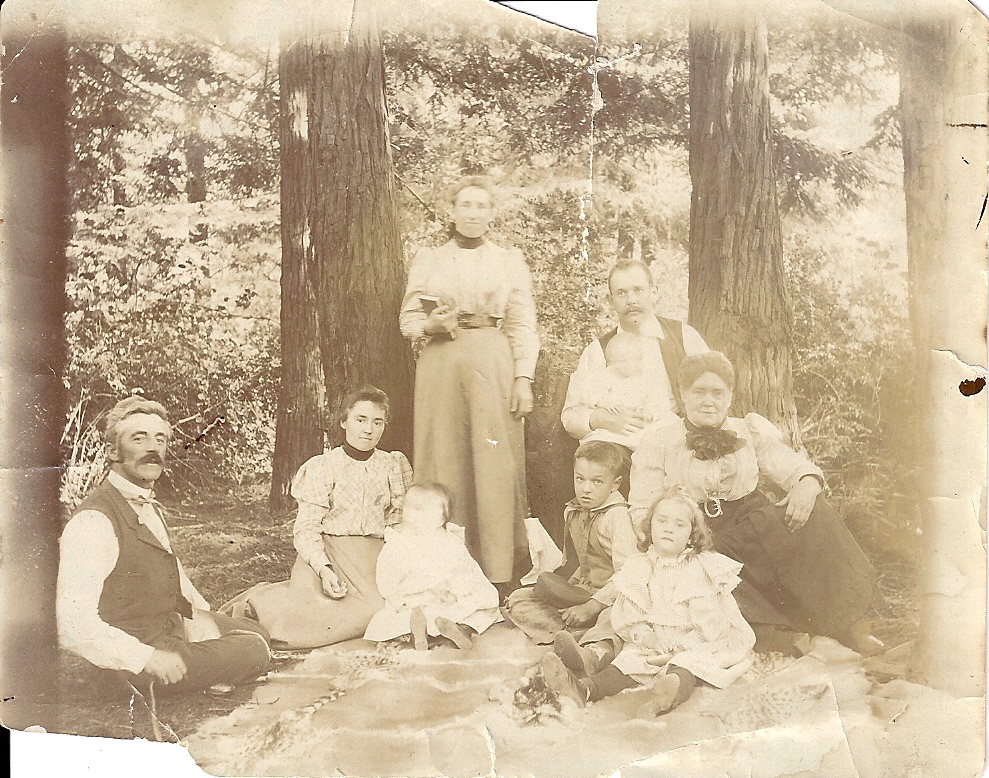
My blog ‘The Bohemian Democratic Register’ crashed last year wiping out the history I gathered on World Bohemianism. I have considered going back to live in Oakland, where I was born perhaps to prepare for my second death. However, the home sickness I feel deep inside is the one I felt while in my mother’s womb, coming from my Bohemian Ancestors in Charlottenburg where Prince William and Harry can trace their bloodline. That the Stuttmeisters used Charlottenburg as their surname, beckons me to Berlin here my Huguenot kindred were given refuge, and where my Bohemian bloodline tripped the lights fantastic.
Then came those beer guzzling Prussian braggarts with lethal iron contraptions strapped to their Aryan penis, they full of military nationalism as they goose-stepped onto other folks land and wasted their nations’ treasure fucking up people’s lives.
Parasites!
tomorrow we Bohemians get a chance to vote down the Rich Evangelical Military War Machine that does not empower the White Victim Man, and will bring him to ruin – again. These Creative Berliners came to America and were Jessie and John Fremont’s bodyguards. These Beliners were co-founders of the Republican Party. It time to unite under the banner of ‘The Rose of the World’.
Jon Presco
Is Berlin the coolest city in the world? Special
Like this article16
RiccardoBy Riccardo Valsecchi
Feb 24, 2010 in Lifestyle
1 comment
By Riccardo Valsecchi.
+ 3 of 5 ◄ ►
Berlin – The capital of Germany is thriving. In addition to the historic Turkish community, a new category of migrants are populating the city and they’re not just looking for a job, but for a cool way to live.
What is the coolest city in the world?
“Of course, Berlin,” replies Aleksandra, a Russian student at the Universität der Kunste, the prestigious institution of music and arts located in the suggestive square of Pariser Platz, next to the Brandenburg Gate.
With more than 3.4 million inhabitants, Berlin is the second most populous city in the European Union after London.
Although only 13.9 percent of the population has foreign nationality- a datum not comparable with other metropolis as London, Paris or New York – a new multicultural and multiethnic scene is gaining ground.
According to the Statistical Bureau of Berlin-Brandenburg, Amt für Statistik Berlin-Brandeburg, the number of foreign citizens who have chosen Berlin as place of residence, has been increasing by 1.5 percent every year since 2006.
“If you compare [Berlin today] with the 1950s or the 1960s, when almost all the foreigners were ‘gastarbeiter’ – guest workers – and most of them moved from Turkey and the former Yugoslavia, today the situation is completely different,” explains Edith Pichler, lecturer at the Humboldt Universität. “The new immigrants are successful professionals, freelancers and artists. They are looking not for a job opportunity, but for a better quality of living and a new stimulus for their activities.”
The reasons are clear: Berlin, which has a 14 percent unemployment rate, a large debt accumulated from reconstruction after reunification and lacks relevant industries, is poor. Also, the cost of living is cheaper than any other metropolis in Western nations.
These characteristics, to whom we should add the peculiarity of Berlin history, which makes the German capital the icon of the darkest period of the 20th century, have allowed it to build a reputation of being an underground city where the bohemian style of life is still possible.
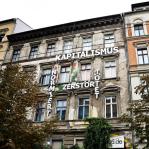
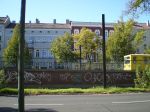
Kreuzberg is part of the borough of Friedrichshain-Kreuzberg, which is divided by the Spree river and by the East Side Gallery, a 1.3 km long section of the Berlin Wall. The area was considered the center of the underground West Berlin scene during the 1970s and 1980s, when David Bowie, Iggy Pop and Lou Reed lived there.
Rery Maldonado, a Bolivian writer, blogger and journalist, is sitting at the Ankelklause, a little and smoky kneipe (the German word for pub) over the bank of the river. She has been living in Berlin since 1997.
“If you are a writer, a musician or an artist, you can’t live in any other city than Berlin,” she said. “Due to the low price of apartments, you can survive easily; moreover, there are a lot of opportunities to promote your works, even if the competition is high.”
Riccardo Valsecchi
Rery Maldonado, a Bolivian writer, blogger and journalist, sitting at the Ankelklause, a little and smoky kneipe – the German word for pub – over the bank of the Spree.
Like this image2“Many artists are coming day after day to participate in the cultural life of the city,” says Tobias Delius, a well-known saxophonist and clarinetist of the European Free Jazz scene. Delius moved here from Amsterdam in 2007. “Berlin is experiencing an outstanding artistic flowering, which could be compared to the most well-known music scenes, as New York, Copenhagen or Amsterdam. The difference is that living here and finding a place where practicing or performing is absolutely cheaper than any other cities.”
“Here,” says Michael Obert, a German book author and travel journalist, “you can live without speaking the local language. I have many friends from UK, USA, France, Spain and South American countries, who have been living in Berlin since years and they don’t still speak a single word of German.”
Obert’s apartment is located in Prenzlauer Berg, an old district part of the former East Berlin that became a centre for bohemian Berlin youth during the 1990s. Prenzlauer Berg has recently become a popular area for the current wave of American and European immigrants: “G8-Bevölkerung”, a G8 population, as the journalist H. Sußebach classified ironically the inhabitants of the district in an article published in the German newspaper Die Zeit in November 2007.
“Of course, if you go for a walk in Casting Allee – the way how Berliners name Prenzlauer Berg’s famed street Kastanienallee for the attitude of its inhabitants to show themselves as they are modeling on the catwalk -,” points out Franziska Klauke, a young lawyer who has just finished her legal practice, “you will hear only English or Spanish conversations; but if you look at the boroughs which surround the central districts, the situation is completely different.”
Riccardo Valsecchi
“Casting Allee”, the way how Berliners name Prenzlauer Berg’s famed street Kastanienallee for the arrogant attitude of its inhabitants
Like this image5Berlin is subdivided into 12 boroughs: less than 3 percent of foreign citizens are living in the peripheral areas of Marzhan, Lichtenberg and Treptow-Köpenicker in the Eastern part of the city. The percentage of foreigners is higher in Western boroughs such as Charlotenburgh-Wilmersdorf (19,1 percent), Spandau (10 percent), Reinickendorf (10 percent) and Neukolln (22,6 percent) where the working class and Turkish community are concentrated since the 1950s and the 1960s.
Which integration could be possible without sharing a common language?
Read more: http://digitaljournal.com/article/288035#ixzz2BM9SVHDB
 Rosamond Press
Leave a comment