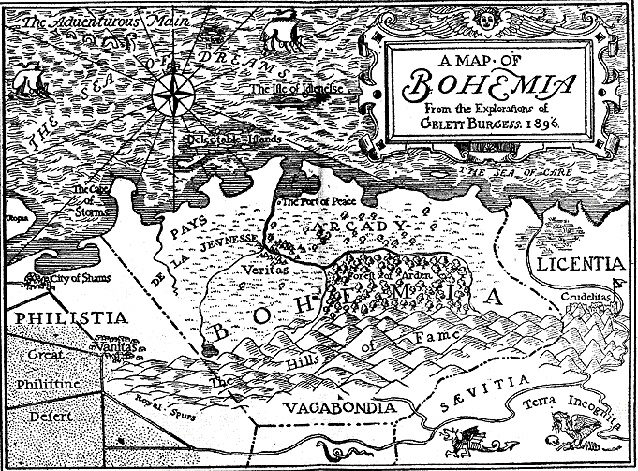
 Romney and his gang of prudes want to kill the Bohemian Movement, isolate 47% of population in the West that are not good consumers for the Chinese capitalist to prey upon. Lowering one expectations is forbidden. You must want to own a washer and dryer – and two cars.The Hippe Movement rebelled against commercialism for the sake of the rich. Either the rich provide well-paying jobs – or shut the hell up! Get out of our way, you filthy rich parasites who scoop the cream off the top and call their theft ‘Compassionate Trickle-Down Capitalism’.
We Bohemians are not Leftists. We refuse to make the Red Chinese filhty rich while rich anglo-saxons hide their money in the Cayman Islands so none of it TRICKLES DOWN.
Jesus was a Hippie – and not an adventure capitalist! And that’s a fact – Jack!
Jon
BERLIN // Left-wing activists in Berlin have been setting fire to Porsches in an increasingly violent campaign against the gentrification of the city that gained a reputation for rundown, Bohemian trendiness after the fall of the Wall 20 years ago. Authorities say 169 Porsches, Mercedes and other luxury vehicles and company vans have been destroyed in arson attacks since the beginning of the year, bringing the total since 2005 to more than 1,000.
Topic
EU
The campaigners have also been burning construction material at building sites of luxury apartments and hurling paint bombs at refurbished houses to vent their frustration at real estate developers who have been upgrading old buildings and renting them out to yuppies, a trend local people say will drive up rents and force them to move away. Police have advised Porsche drivers not to park their vehicles in Kreuzberg, a western district with many radical left-wingers and that houses squatters who have vowed in internet forums to “chase away the capitalists and reconquer our district”.
One house in Kreuzberg occupied by squatters has a sign that reads: “Anyone who buys property here will buy trouble.” The clash between housing developers and anti-capitalist activists who live in Kreuzberg and parts of the former East Berlin stems from mounting frustration among the local population with how the city has changed after two decades of investment. Much of eastern Berlin is looking cleaned up and has lost the transitional appearance that made it unique. The trend poses a long-term risk to Berlin’s Bohemian image, low rents and vibrant cultural scene that attracted artists from around the world to live here.
The opposition to Berlin’s gentrification reflects its strong left-wing streak, especially in the east where a majority of people still support the Left Party, the successor to the Communist party that used to rule East Germany. Tensions have grown sharply over the last year because of a number of high-profile luxury projects that include the construction of “Carlofts” – a patented design by two German architects that incorporates a car lift which allows residents to keep their vehicle in their apartment.
The 11 Carloft apartments cost between 486,000 (Dh2.5 million) and 1.3m and have been built in a rundown area of Kreuzberg where they seem out of place in a street lined with fast food outlets, internet cafes, betting shops and jobless men drinking beer in the mornings. The architects plan to build Carlofts elsewhere in Germany and around the world, including in Abu Dhabi. In Berlin, hundreds of people have protested against their construction and activists have smashed windows of the recently completed site.
Berlin is Germany’s largest city by far with a population of 3.4 million, but its rents and house prices are provincial by comparison with the thriving cities of Hamburg, Munich and Frankfurt. Its unemployment rate at 14 per cent is well above the national average of 8.1 per cent in June, and the city has little industry. Most newcomers to Berlin looking for a place to live were lured by the rough charm of the Mitte, Prenzlauer Berg and Friedrichshain districts, where many buildings had grown spectacularly dilapidated after decades of neglect under communism.
But developers quickly moved in and these areas have been transformed over the last 20 years. The East Berlin grunginess has given way to shiny façades and trendy restaurants. Ordinary residents too are unhappy with recent investment plans and have joined demonstrations against them. A project worth up to 5 billion to build office blocks and apartments on one of the last big inner-city wastelands left near the Wall – the banks of the Spree river at Kreuzberg – is on hold after 30,000 people voted against it in a local referendum.
“Berlin is starting to sell its face for money,” said Peter Stulz, one demonstrator who took part in a protest against the Spree investment plans. The expensive new projects are making long-time residents insecure. “There’s a feeling that we’re running short of cheap apartments,” said Andreas Müller, a spokesman of the Spree Pirates, a protest group. Berliners also demonstrated against the opening of the O2 World arena on the eastern bank of the Spree last year and against plans to build apartments on the site of the legendary Tempelhof airport, which was closed last year. Last month, some 1,800 police were deployed to stop hundreds of protesters from occupying the airport.
This year’s leftist May Day demonstrations in Berlin were accompanied by more rioting than usual with 346 people arrested and 479 police officers injured. The violence has put pressure on Mayor Klaus Wowereit’s city government of centre-left Social Democrats and the Left Party. The conservative opposition leader in the Berlin city parliament, Frank Henkel, said: “The state is capitulating in the face of left-wing terror. The radical left is testing how far it can go, and the government isn’t doing anything about it.”
The city government insists it is taking the attacks seriously but argues it is easy to set fire to cars unnoticed. Activists say recent news that the Carloft apartments are not selling as well as expected shows their campaign is succeeding. But the company says the financial crisis is to blame rather than paint bombs.
tists from the Tacheles shout slogans from behind a gate after security guards started to evict the tenants of one of the largest squats in the centre of Berlin. Photograph: John Macdougall/AFP/Getty Images
Darko stands behind an iron gate, his bare chest daubed in red paint with the words “victim of bank”. Four floors above him Reza, an Iranian painter, leans out of the window to pull up a basket of provisions.
The artists are among 20 who have locked themselves into Tacheles, one of Berlin’s last bastions of alternative subculture, and are fighting eviction ahead of plans to develop it as an office and luxury apartments complex.
“It will be a catastrophe for Berlin if this goes,” says Darko, a painter from Bosnia who came to Berlin for a weekend, fell in love with Tacheles and stayed. “There are very few places like this anywhere in the world, particularly in the centre of a capital city and five minutes from the government quarter.”
He is flanked by two black-clad security guards sent by the investor that is trying to clear the building.
Soon after the fall of the Berlin Wall the former 1930s department store in East Berlin was occupied by artists who saved it from plans to destroy it. It rapidly became a magnet for an international arts scene. While it has lost something of the edginess it enjoyed in its early days – when art lovers lounged around drinking beer in the garden – it remains a potent symbol of a free-thinking, artistic Berlin.
The Tacheles, with its trademark bright graffitied walls, a warren of bustling ateliers and workshops and gothic archways, has long since found its way into every guidebook.
Its demise 22 years after the collapse of communism would be a significant loss for a city whose Bohemian reputation is its biggest selling point, and further evidence, say critics, that Berlin is being gentrified beyond recognition.
“It’s time for the citizens of Berlin to ask what kind of future we want,” says Linda Cerna, spokeswoman for the artists. “Will we want to live in a city where everything has been sold or privatised and we just have shopping malls, gated communities and loft apartments?”
Tacheles is just the latest in a long line of public spaces that have been “lost” to private investors. At the same time rents are rising at a rate not seen since the end of the cold war while property investors are rapidly buying up chunks of a city where, unlike in most European capitals, real estate bargains are still to be found.
The developments have angered many Berlin residents and galvanised a growing band of anarchist protesters.
So it was hardly a surprise that there were objections last week to plans by BMW to set up an urban design showcase. A classic standoff between anti-gentrification protesters and the project managers – BMW together with New York’s Guggenheim Museum – led to the proposals for the district of Kreuzberg, a traditional home for political activists, being scrapped after police warned that the scheme was under threat of attack by leftwing extremists.
Thomas Girst, BMW spokesman, announced the group was “leaving Kreuzberg because of the high threat level determined by the police”. In a statement the Guggenheim expressed its disappointment that, as it saw it, its project had been misunderstood. “The foundation regrets having to make this decision, as the purpose is to create a space for public discussion, open to the widest possible range of views.”
Kreuzberg, which was one of the poorest districts, has been hugely gentrified since reunification. Last year it had the highest rental cost rises of any Berlin district. Jakob Augstein, a prominent commentator, has noted that big firms are flocking to Berlin and effectively “privatising” public spaces. “This city is forever selling itself to the highest bidder… whenever anyone comes with the cash, whether a car firm, a fashion company, a mobile phone company, they’re being allowed to claim anything they want from squares and streets to the Brandenburg Gate, you name it.”
But Rüdiger Schaper, writing in the Tagesspiegel, said Berlin, which is bankrupt to the tune of billions of euros, can ill afford to turn away those prepared to invest. “The future cannot just consist of penthouses and underground car parks,” he said. “But neither does it lie in littered open spaces and dilapidated buildings.”
Read more: http://www.thenational.ae/news/world/europe/berlins-bohemians-wage-war-on-rich#ixzz2BHTkIjCk
Follow us: @TheNationalUAE on Twitter | thenational.ae on Facebook
 Rosamond Press
Leave a comment