 When I was fifteen I asked my best friend, Bill Arnold, what he would do if it appeared I would become the next Hitler. Here is Bill’s answer.
“I would have to kill you!”
My father, brother, and mother were racists, and had Nazi leanings. Vic Presco told me he was tempted to go to Germany and join the Nazi Party. He told me this is why he joined the Merchant Marines, he not wanting to be forced to kill his fellow Aryans.
At Bill Cornwell’s bidding, my daughter conducted a emasculation of her father. She agreed with Bill that I was a “parasite” on society, and further more I did not want to serve my nation in the military. In my opinion, Bill is a Neo-Nazi racist, and, this appeals to my daughter for very interesting reasons, beginning with the idea there is something in our DNA.
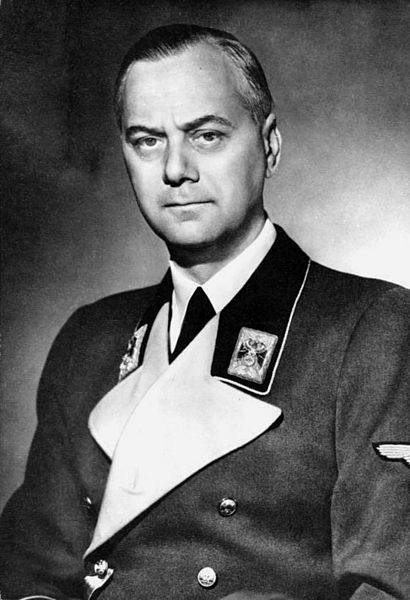
Three days ago I saw a program on Alfred Rosenberg who was Hitler’s Merlin who put together the Nazi Mythos and Grail cosmology. Alfred’s work resembles the rant of modern day Grail scholars who promote a Holy Grail Bloodline.
When I took LSD with the Purvis brothers, whose mother was an O’Neil and a British subject, we explored our DNA and the truth America was beginning to resemble Nazi Germany. Mario Savio proved Free Speech was dead in America. How about God?
Dick Army was the author of the Faith Based Initiative that allows churches to apply for grants to take care of the hungry and poor. Army is the Father of the Tea Party Patriots who in truth are Evangelicals in Humanist clothing. Evangelicals have declared war on Humanism. But, they must lie to defeat those who are not one of them. This is why Romeny lies.
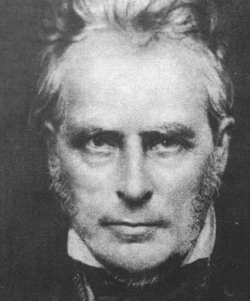
Dick is our nation’s Rosenberg. We are in deep doo-doo. Evangelicals follow the teaching of John Darby who invented a new cosmology in 1840. This false church created the Have and Have Not America. They have captured this democracy in a Evil Duality, where a daughter severs her father’s penis in public – with glee.
I did not put my daughter out of my life, she put me out of her life and the New Life and Vsion Bill and his racist Tea Bag extremists see for America. it is impossible for me to slander, or besmirch the character of my daughter, for, my brother, Mark Presco, would gleefully embrace Heather, as would my father – if he were alive!
The truth is, the Army of Dickeads would also embrace Heather and raise her high as their champion. They would give her bags of money for her loyalty to these abusers. This raises a question that has long begged to be asked; Was Jesus emasculated while helplessly hanging on a cross? Salome gleefully danced for the head of John the Baptist.
My daughter told me I was so insane, that I had no right to defend myself from her and Bill’s edicts. She tried to sever my voice.
As I told you, I died in order to flush the filthy Nazi sons of bitches from all the Grail Legends!
Get out! Get out of kindred’s party, and form you highly visible Nazi Party so that we loyal Americans can take action to stop your rise from hell!
Satan is titled “The invisible One”. Time to go back to McClure’s beach and drop the ring of Invislity in the Mountain of Doom!
Jon Presco
Copyright 2012
Emasculation is the removal of the genitalia (castration) of a male, notably the penis and/or the testicles.
By extension, the word has also come to mean to render a male less of a man, or to make a male feel less of a man by humiliation. This metaphorical usage of the word is much more common than the application of its literal meaning. It can also mean the reduction or removal of force behind a statute or legislation: for example, “the Triennial Act was emasculated by the Cavalier Parliament”.
The removal of male (pollen) parts of a plant, largely for controlled pollination and breeding purposes, is also called emasculation.
Alfred Ernst Rosenberg ( listen (help·info)) (12 January 1893 – 16 October 1946) was an early and intellectually influential member of the Nazi Party. Rosenberg was first introduced to Adolf Hitler by Dietrich Eckart; he later held several important posts in the Nazi government. He is considered one of the main authors of key Nazi ideological creeds, including its racial theory, persecution of the Jews, Lebensraum, abrogation of the Treaty of Versailles, and opposition to “degenerate” modern art. He is also known for his rejection of Christianity,[1] having played an important role in the development of Positive Christianity, which he intended to be transitional to a new Nazi faith.[2] At Nuremberg he was tried, sentenced to death and executed by hanging as a war criminal.
Alfred Ernst Rosenberg ( listen (help·info)) (12 January 1893 – 16 October 1946) was an early and intellectually influential member of the Nazi Party. Rosenberg was first introduced to Adolf Hitler by Dietrich Eckart; he later held several important posts in the Nazi government. He is considered one of the main authors of key Nazi ideological creeds, including its racial theory, persecution of the Jews, Lebensraum, abrogation of the Treaty of Versailles, and opposition to “degenerate” modern art. He is also known for his rejection of Christianity,[1] having played an important role in the development of Positive Christianity, which he intended to be transitional to a new Nazi faith.[2] At Nuremberg he was tried, sentenced to death and executed by hanging as a war criminal.
Contents
[hide]
1 Early life
2 Racial theories
3 Religious theories
4 Wartime activities
4.1 Reich Minister for the Occupied Eastern Territories
4.2 Wartime propaganda efforts
4.3 Trial and execution
5 Nazi policy and Rosenberg’s views
6 Family life
7 Writings
8 See also
9 Notes
10 References
11 External links
[edit] Early life
Rosenberg was born in 1893 in Reval (today’s Tallinn, in Estonia, then part of the Russian Empire) to a family of Baltic Germans: his father, Waldemar Wilhelm Rosenberg,[3] was a wealthy merchant from Latvia, his mother, Elfriede, was from Estonia. (Tallinn archivist J. Rajandi claimed in the 1930s that Rosenberg’s family had Estonian origins.)[4]
The young Rosenberg studied architecture at the Riga Polytechnical Institute and engineering at Moscow’s Highest Technical School[5][6] completing his Ph.D. studies in 1917. While in Riga, he was a member of the Baltic German student fraternity “Rubonia”. During the Russian Revolution of 1917 Rosenberg supported the counter-revolutionaries; following their failure he emigrated to Germany in 1918 along with Max Scheubner-Richter who served as something of a mentor to Rosenberg and to his ideology. Arriving in Munich, he contributed to Dietrich Eckart’s publication, the Völkischer Beobachter (People’s Observer). By this time, he was both an antisemite – influenced by Houston Stewart Chamberlain’s book The Foundations of the Nineteenth Century (one of the key proto-Nazi books of racial theory) – and an anti-bolshevik (as a result of his family’s exile).[7] Rosenberg became one of the earliest members of the German Workers Party (later the National Socialist German Workers Party, better known as the Nazi Party), joining in January 1919; Adolf Hitler did not join until October 1919. Rosenberg had also been a member of the Thule Society, with Eckart. After the Völkischer Beobachter became the Nazi party newspaper (December, 1920), Rosenberg became its editor in 1923.[8] Rosenberg was a leading member of Aufbau Vereinigung, Reconstruction Organisation, a conspiratorial organisation of White Russian émigrés which had a critical influence on early Nazi policy.[9]
In 1923, after the failed Beer Hall Putsch, Hitler—who had been imprisoned for treason—appointed Rosenberg as a leader of the Nazi movement, a position he held until Hitler’s release. Hitler remarked privately in later years that his choice of Rosenberg, whom he regarded as weak and lazy, was strategic; Hitler did not want the temporary leader of the Nazis to become overly popular or hungry for power, because a person with either of those two qualities might not want to cede the party leadership after Hitler’s release. However, at the time of the appointment Hitler had no reason to believe that he would soon be released, and Rosenberg had not appeared weak, so this may have been Hitler reading back into history his dissatisfaction with Rosenberg for the job he did.[10]
In 1929 Rosenberg founded the Militant League for German Culture. He later formed the “Institute for the Study of the Jewish Question”, dedicated to identifying and attacking Jewish influence in German culture and to recording the history of Judaism from an antisemitic perspective. He became a Reichstag Deputy in 1930 and published his book on racial theory The Myth of the Twentieth Century (Der Mythus des 20. Jahrhunderts) which deals with key issues in the national socialist ideology, such as the “Jewish question”. Rosenberg intended his book as a sequel to Houston Stewart Chamberlain’s above-cited book. Despite selling more than a million copies by 1945, its influence within Nazism (beyond providing specious intellectual cover for unintellectual governance) remains doubtful. It is often said to have been a book that was officially venerated within Nazism, but one that few had actually read beyond the first chapter or even found comprehensible.[11] Hitler called it “stuff nobody can understand”[12] and disapproved of its pseudo-religious tone.[7]
Rosenberg convinced Hitler of the Communist threat and of the supposed fragility of the Soviet Union’s political structure. “Jewish-Bolshevism” was accepted as a target for Nazism during the early 1920s.[7]
Rosenberg was named leader of the Nazi Party’s foreign political office in 1933, but he played little practical part in the role. His visit to Britain in that year was designed[by whom?] to reassure the British that the Nazis would not be a threat, and to encourage links between the new regime and the British Empire, was a notable failure. When Rosenberg laid a wreath bearing a swastika at the tomb of the unknown soldier, a British war veteran promptly threw it in the Thames.[13] In January 1934 Hitler granted Rosenberg responsibility for the spiritual and philosophical education of the Party and all related organizations.
[edit] Racial theories
As the Nazi Party’s chief racial theorist, Rosenberg oversaw the construction of a human racial “ladder” that justified Hitler’s genocidal policies. Rosenberg built on the works of Arthur de Gobineau, Houston Stewart Chamberlain and Madison Grant, as well as the beliefs of Hitler. He placed blacks and Jews at the very bottom of the ladder, while at the very top stood the white or “Aryan” race. Rosenberg promoted the Nordic theory which regarded Germans as the “master race”, superior to all others, including to other Aryans (Indo-Europeans).
Rosenberg reshaped Nazi racial policy over the years, but it always consisted of Aryan supremacy, extreme German nationalism and rabid antisemitism. Rosenberg also outspokenly opposed homosexuality – notably in his pamphlet “Der Sumpf” (“The Swamp”) – having viewed homosexuality (particularly lesbianism) as a hindrance to the expansion of the Nordic population.
Rosenberg’s attitude towards the Slavs was politically motivated and depended on the particular nation involved. He despised Czechs and Poles, and wrote “no considerations can be taken for Poles, Czechs etc., who are as impotent as they are valueless and overbearing. They must be driven back to the east, so that the soil may become free to be tilled by the horny hands of Teutonic peasants”. As a result of the ideology of “Drang nach Osten” Rosenberg saw his mission as the conquest and colonization of the Slavic East.[14][15] In Der Mythus des 20. Jahrhunderts Rosenberg describes Slavs, in particular Poles, as racial “subhumans”.[16] Regarding Ukrainians he favoured setting up a buffer state to ease pressure on the German eastern frontier, while agreeing with the notion that Russia should be exploited for the benefit of Germany[17]
[edit] Religious theories
Rosenberg argued for a new “religion of the blood,” based on the supposed innate promptings of the Nordic soul to defend its noble character against racial and cultural degeneration. He believed that this had been embodied in early Indo-European religions, notably ancient European (Celtic, Germanic, Baltic, Roman) paganism, Zoroastrianism and Vedic Hinduism. Unlike Heinrich Himmler, he had less attachment to Buddhism.[18][unreliable source?]
He rejected Christianity for its universality, for original sin, at least for Germans whom he declared on one occasion were born noble, and for the immortality of the soul.[19] Indeed, absorbing Christianity enfeebled a people.[20] Publicly, he affected to deplore Christianity’s degeneration owing to Jewish influence.[21] Following Chamberlain’s ideas, he condemned what he called “negative Christianity,” the orthodox beliefs of Protestant and Catholic churches, arguing instead for a so-called “positive” Christianity based on Chamberlain’s claim that Jesus was a member of a Nordic enclave resident in ancient Galilee who struggled against Judaism. For Rosenberg religious doctrine was not important; what mattered was that a belief should serve the interests of the Nordic race, connecting the individual to his racial nature. Rosenberg stated that “The general ideas of the Roman and of the Protestant churches are negative Christianity and do not, therefore, accord with our (German) soul.”[22] His support for Luther as a great German figure was always ambivalent.[23]
[edit] Wartime activities
Alfred Rosenberg around 1935
Alfred Rosenberg in 1939
In 1940 Rosenberg was made head of the Hohe Schule (literally “high school”, but in Germanic languages refers to a college), the Centre of National Socialist Ideological and Educational Research. He created a “Special Task Force for Music” (Sonderstab Musik) to collect the best musical instruments and scores for use in a university to be built in Hitler’s home town of Linz, Austria. The orders given the Sonderstab Musik were to loot all forms of Jewish property in Germany and of those found in any country taken over by the German army and any musical instruments or scores were to be immediately shipped to Berlin.[citation needed]
[edit] Reich Minister for the Occupied Eastern Territories
Following the invasion of the USSR, Rosenberg was appointed head of the Reich Ministry for the Occupied Eastern Territories (Reichsministerium für die besetzten Ostgebiete). Alfred Meyer served as his deputy and represented him at the Wannsee Conference. Another official of the Ministry, Georg Leibbrandt, also attended the conference, at Rosenberg’s request.
Rosenberg had presented Hitler with his plan for the organization of the conquered Eastern territories, suggesting the establishment of new administrative districts, to replace the previously Soviet-controlled territories with new Reichskommissariats. These would be:
Ostland (Baltic countries and Belarus),
Ukraine (Ukraine and nearest territories),
Kaukasus (Caucasus area),
Moskau (Moscow metropolitan area and the rest of nearest Russian European areas)
Such suggestions were intended to encourage certain non-Russian nationalism and to promote German interests for the benefit of future Aryan generations, in accord with geopolitical “Lebensraum im Osten” plans. They would provide a buffer against Soviet expansion in preparation for the total eradication of Communism and Bolshevism by decisive pre-emptive military action.
Following these plans, when Wehrmacht forces invaded Soviet-controlled territory, they immediately implemented the first of the proposed Reichskommissariats of Ostland and Ukraine, under the leadership of Hinrich Lohse and Erich Koch, respectively. The organization of these administrative territories led to conflict between Rosenberg and the SS over the treatment of Slavs under German occupation. As Nazi Germany’s chief racial theorist, Rosenberg considered Slavs, though lesser than Germans, to be Aryan. Rosenberg often complained to Hitler and Himmler about the treatment of non-Jewish occupied peoples.[24] He proposed creation of buffer satellite states made out of Greater Finland, Baltica, Ukraine, Caucasus.[17] He made no complaints about the murders of Jews. At the Nuremberg Trials he claimed to be ignorant of the Holocaust, despite the fact that Leibbrandt and Meyer were present at the Wannsee conference.[25]
[edit] Wartime propaganda efforts
Because the invasion of the Soviet Union intended to impose the New Order was essentially a war of conquest and extermination, German propaganda efforts designed to win over Russian opinion were, at best, patchy and inconsistent. Alfred Rosenberg was one of the few in the Nazi hierarchy who advocated a policy designed to encourage anti-Communist opinion.
Amongst other things, Rosenberg issued a series of posters announcing the end of the Soviet collective farms (kolkhoz). He also issued an Agrarian Law in February 1942, annulling all Soviet legislation on farming, restoring family farms for those willing to collaborate with the occupiers. But decollectivisation conflicted with the wider demands of wartime food production, and Hermann Göring demanded that the collective farms be retained, save for a change of name. Hitler himself denounced the redistribution of land as “stupid”.[26]
There were numerous German armed forces (Wehrmacht) posters asking for assistance in the Bandenkrieg, the war against the Soviet partisans, though, once again, German policy had the effect of adding to their problems. Posters for “volunteer” labour, with inscriptions like “Come work with us to shorten the war”, hid the appalling realities faced by Russian workers in Germany. Many people joined the partisans rather than risk being sent to an unknown fate in the west.[citation needed]
Another of Rosenberg’s initiatives, the “Free Caucasus” campaign, was rather more successful, attracting various nationalities into the so-called Eastern Legion (Ostlegionen), though in the end this made little difference.
[edit] Trial and execution
Alfred Rosenberg at the Nuremberg trials. Rosenberg is first from right, with Hans Frank (centre) and Alfred Jodl (left)
Rosenberg was captured by Allied troops at the end of the war. He was tried at Nuremberg and found guilty of conspiracy to commit crimes against peace; planning, initiating and waging wars of aggression; war crimes; and crimes against humanity.[27] He was sentenced to death and executed with other condemned co-defendants at Nuremberg on the morning of 16 October 1946.[28] Throughout the trial, it was agreed that Rosenberg had a decisive role in shaping Nazi philosophy and ideology; such examples include: his book, Myth of the Twentieth Century, which was published in 1930, where he incited hatred against “Liberal Imperialism” and “Bolshevik Marxism”; furthering the influence of the “Lebensraum” idea in Germany during the war; facilitating the persecution of Christian churches and the Jews in particular; and opposition to the Versailles Treaty.[29][30]
Alfred Rosenberg after his hanging
According to Howard K. Smith, who covered the executions for the International News Service, Rosenberg was the only condemned man, who when asked at the gallows if he had any last statement to make, replied with only one word: “No”.
[edit] Nazi policy and Rosenberg’s views
Hitler was a leader oriented towards practical politics, whereas, for Rosenberg, religion and philosophy were key and culturally he was the most influential within the party.[31] Several accounts of the time before the Nazi ascension to power, indeed, speak of Hitler as being a mouthpiece for Rosenberg’s views, and he clearly exerted a great deal of intellectual influence.[32]
Rosenberg’s influence in the Nazi Party is controversial. He was perceived as lacking the charisma and political skills of the other Nazi leaders, and was somewhat isolated. In some of his speeches Hitler appeared to be close to Rosenberg’s views: rejecting traditional Christianity as a religion based on Jewish culture, preferring an ethnically and culturally pure “Race” whose destiny was supposed to be assigned to the German people by “Providence”. In others, he adhered to the Nazi Party line, which advocated a “positive Christianity”.
After Hitler’s assumption of power he moved to reassure the Protestant and Catholic churches that the party was not intending to reinstitute Germanic paganism. He placed himself in the position of being the man to save Positive Christianity from utter destruction at the hands of the atheistic antitheist Communists of the Soviet Union.[33] This was especially true immediately before and after the elections of 1932; Hitler wanted to appear non-threatening to major Christian faiths and consolidate his power. Further, Hitler felt that Catholic-Protestant infighting had been a major factor in weakening the German state and allowing its dominance by foreign powers.
Some Nazi leaders, such as Martin Bormann, were anti-Christian and sympathetic to Rosenberg.[34] Once in power, Hitler and most Nazi leaders sought to unify the Christian denominations in favor of “positive Christianity”. Hitler privately condemned mystical and pseudoreligious interests as “nonsense”.[35] However, he and Goebbels agreed that after the Endsieg (Final Victory) the Reich Church should be pressed into evolving into a German social evolutionist organisation proclaiming the cult of race, blood and battle, instead of Redemption and the Ten Commandments of Moses, which they deemed outdated and Jewish.[36]
Heinrich Himmler’s views were among the closest to Rosenberg’s, and their estrangement was perhaps created by Himmler’s abilities to put into action what Rosenberg had only written.[37] Also, while Rosenberg thought Christianity should be allowed to die out, Himmler actively set out to create countering pagan rituals.[37]
Lieutenant Colonel William Harold Dunn (1898 – 1955) wrote a medical and psychiatric report on him in prison to evaluate him as a suicide risk:
He gave the impression of clinging to his own theories in a fanatical and unyielding fashion and to have been little influenced by the unfolding during the trial of the cruelty and crimes of the party.[38]
Summarizing the unresolved conflict between the personal views of Rosenberg and the pragmatism of the Nazi elite:
The ruthless pursuit of Nazi aims turned out to mean not, as Rosenberg had hoped, the permeation of German life with the new ideology; it meant concentration of the combined resources of party and state on total war.[39]
[edit] Family life
Rosenberg was married twice. He married his first wife, Hilda Leesmann, an ethnic Estonian, in 1915; after eight years of marriage, they divorced in 1923.[40] He married his second wife, Hedwig Kramer, in 1925;[40] the marriage lasted until his death. He and Kramer had two children; a son, who died in infancy, and a daughter, Irene; who was born in 1930.[41] His daughter has refused contact with anyone seeking information about her father.
 Rosamond Press
Leave a comment