
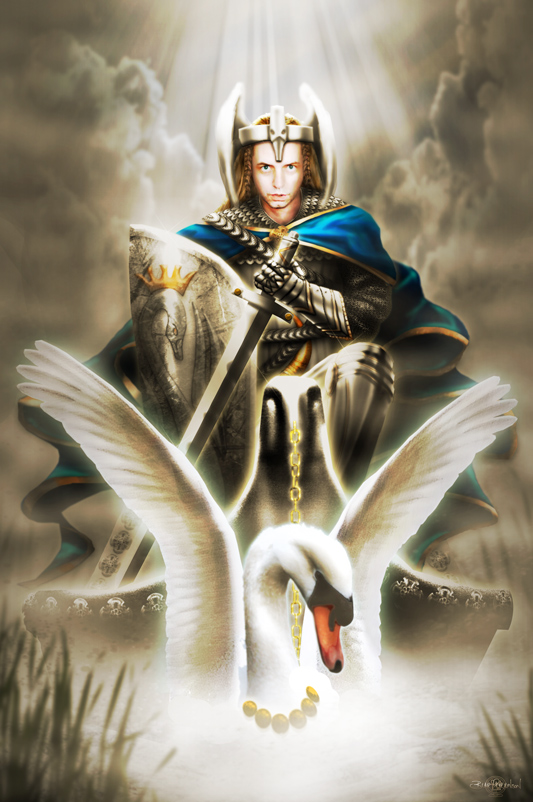
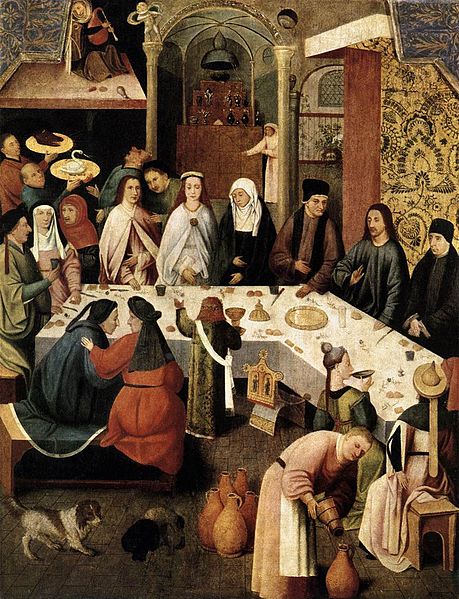
 Why did I die?
What is applicable to me, is applicable to my brother and father who were born before me. Victor and Marcus were, and are, neo-Nazi lovers of war, and haters of men who are not like them. They hate, and hated me, for I was born to save the Grail Legends that Hitler and his ilk attached themselves to – like leaches – and corrupted the Never Ending Quest. Mark Presco’s hatred and racisim has taken over the Republican Party founded by our kindred.
I was born to save the Flower and Swan Maidens. I died to save my country – and the world – from the dark men I was born unto. I am ‘The Light of Lohengrin’. I am the Swan Knight!
Here is the text that was posted on this blog by a reader. The words on the Rosemond cote of arms, are applicable to the Duke of Brabant and Lohengrin and his Grail Knights who served the the royal heirs of Brabant. This is the only proven Grail lineage in regards to the Arthurian Legends.
“Godeschalck Roesmondt also appears in the so called ‘Spechtbook’ (named after administrator Nicolaus Specht) of the Duke of Brabant, administrating goods the sovereign duke gave in loan to his knights and noblemen.
These families (De Roover, Roesmondt, Van Broeckhoven, Van Vladeracken etc.) are like the Duke of Brabant probably descendants of the former Duke of Lotharingen and therefore (via the counts of Taxandria) of Charlemagne.
The mentioned Jan Willems van Dongen, is by inheritage a bannerlord of the House van Arkel, also descending from Charlemagne and at that time Lord of High and Low Zwaluwe, vicount of Schoonhoven etc. etc. This is the very elite of Brabant at that time and probably all (noble) family related.”
Jon Presco
Copyright 2012
Loherangrin remains in Munsalväsche as a Grail Knight. Members of this order are sent out in secret to provide lords to kingdoms that have lost their protectors and Loherangrin is eventually called to this duty in Brabant, where the duke has died without a male heir. His daughter Elsa fears the kingdom will be lost, but Loherangrin arrives in a boat pulled by a swan and offers to defend her, though he warns her she must never ask his name. He weds the duchess and serves Brabant for years, but one day Elsa asks the forbidden question. He explains his origin and steps back onto his swan boat, never to return.
Elsa: In splendid, shining armour
a knight approached,
a man of such pure virtue
as I had never seen before:
a golden horn at his side,
leaning on a sword –
thus he appeared to me
from nowhere, this warrior true;
with kindly gestures
he gave me comfort;
I will wait for the knight,
he shall be my champion!
And then:
Chorus: Behold! Behold! What strange and wonderous things is this? A swan?
A swan is pulling a barque towards us!
A knight is standing upright in it!
How his armour shines! The eye is dazzled
by such splendour! Behold, he is coming ever closer!
The swan is pulling on a golden chain!
Lohengrin
From Wikipedia, the free encyclopedia
Jump to: navigation, search
This article is about the character. For other uses, see Lohengrin (disambiguation).
Lohengrin postcard from around 1900, unknown artist
Lohengrin is a character in German Arthurian literature. The son of Parzival (Percival), he is a knight of the Holy Grail sent in a boat pulled by swans to rescue a maiden who can never ask his identity. His story, which first appears in Wolfram von Eschenbach’s Parzival, is a version of the Knight of the Swan legend known from a variety of medieval sources. Wolfram’s story was expanded in two later romances. In 1848 Richard Wagner adapted the medieval tale into his popular opera Lohengrin.
Contents
[hide]
1 Origin
2 Later history
3 Notes
4 References
5 External links
[edit] Origin
Lohengrin first appears as “Loherangrin,” the son of Parzival and Condwiramurs in Wolfram von Eschenbach’s Parzival.[1] Wolfram’s story is a variation of the Knight of the Swan tale, previously attached to the Crusade cycle of medieval literature. Loherangrin and his twin brother Kardeiz join their parents in Munsalväsche when Parzival becomes the Grail King; Kardeiz later inherits their father’s secular lands, and Loherangrin remains in Munsalväsche as a Grail Knight. Members of this order are sent out in secret to provide lords to kingdoms that have lost their protectors and Loherangrin is eventually called to this duty in Brabant, where the duke has died without a male heir. His daughter Elsa fears the kingdom will be lost, but Loherangrin arrives in a boat pulled by a swan and offers to defend her, though he warns her she must never ask his name. He weds the duchess and serves Brabant for years, but one day Elsa asks the forbidden question. He explains his origin and steps back onto his swan boat, never to return.
The Knight of the Swan story was previously known from the tales of the ancestry of Godfrey of Bouillon, the first ruler of the Crusader Kingdom of Jerusalem. The story appears in the two versions of the tale Naissance du Chevalier au Cygne, which describes the Swan Knight Elias arriving to defend the dispossessed Duchess of Bouillon. They marry and have a daughter, Ida, who becomes the mother of Godfrey and his brothers. The Knight of the Swan is not the only altered version of a popular story Wolfram uses in his narrative; he makes Prester John the son of his character Feirefiz.
Lohengrin by Ferdinand Leeke
[edit] Later history
The story was picked up and expanded in the late 13th-century Lohengrin by a certain “Nouhusius” or “Nouhuwius,” who changed the character’s name and tied the romance’s Grail and Swan Knight elements into the history of the Holy Roman Empire.[2] The story follows Wolfram closely but adds certain details – notably, Princess Elsa’s questioning of her husband occurs only after prodding by an antagonist who spreads rumors that Lohengrin is not of noble blood – that extends the material into a full romance. In the 15th century, the story was taken up again for the anonymous Lorengel.[3] This version does not include the taboo against asking the protagonist about his mysterious origin and Lorengel and his princess can live happily ever after.
In 1848, Richard Wagner adapted the tale into his popular opera Lohengrin, arguably the work through which Lohengrin’s story is best known today.[4] Lohengrin appears to defend Princess Elsa of Brabant from the false accusation of killing her younger brother (who turns out to be alive and returns at the end of the opera). According to Wagner the Grail imbues the Knight of the Swan with mystical powers that can only be maintained if their nature is kept secret; hence the danger of Elsa’s question. The most famous piece from Lohengrin is the “Bridal Chorus” (“Here Comes the Bride”), still played at many Western weddings. Wagner’s Lohengrin was parodied in Victor Herbert’s 1906 burlesque The Magic Knight, and was reworked into Salvatore Sciarrino’s 1982 opera Lohengrin, which reduces the narrative to a manic hallucination.[5]
The first known Toney ancestor ever was Ralph the son of Hugh De Calvacamp. Hugh’s father was Malahulic/(Malahule)who came to the Normandy area of France from Norway on a Viking ship. He came with Rollo, or Rolph the Ganger. Hugh De Calvacamp’s father Malahulic was uncle to Rollo. Rollo was the leader of the group that our ancestors came with. He and his followers( taunted/annoyed/stalked or worse) the coastlines of France until the King gave him the area that is now Normandy.
Hugh De Calvacamp also had a son Hugh De Calvacamp Jr. He was given the Archbishopship of
 Rosamond Press
Leave a comment