
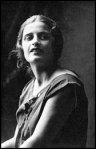

Laurence O’Donnell caught Paul Ryan with his pants down, he performing a lewd act of coitus interruptus when it came to making love to his Atheist Madonna, Ayn Rand. Imagine if our President said Ayn got him into politics. As the cock crowed three times, Ryan denied he knew Ayn Rand was an atheist, he only finding out later in life. This claim cast grave doubts on Ryan’s reading and comprehesion skills. But, put your doubt to rest. Here is Ryan speaking at a club that honors Rand.
Weeks after Barack Obama was sworn in as the duly elected President of the United States, instead of accepting the Voice of the People has been heard, and our collective will will be done, a group of Republicans met behind closed doors and viewed General Patton’s speech filmed in Hollywood. This film equates Obama and the Democrats as the enemy of the United States, and, every Republican should do their damnedest to make sure the President fails in everything he attempts to do for the good of all. This was before Obama introduced Obama-care. This is to say, Republicans who claim they uphold American ideals and family values, were willing to action to be sure the President is A FAILURE, and not a SUCCESS. This is SEDITION because our nation and other allied nations in the world were teetering on the edge of economic failure. To play devious political and religious games with the economic well being of tens of millions of people – while the west is at war with terrorists – is sedition, if not TREASON! Furthermore, it goes against the ideals wealthy Republicans raise as their banner, that powerful men own a divine right to do almost anything to get even richer – and more powerful. They can even be king-like if they follow the teaching of Ayn Rand, a citizen of the Soviet Union. To declare our President a Traitor, even the Anti-Christ because he is not making backroom deals with billionaires in order to enrich them, and himself, is to DISCARD their ideals they force upon us all. This is not mere hypocrisy, but, sedition, for they know their master plan is full of holes, is UN-AMERICAN – and only benefits them. This goes against the teaching of Jonathan Mayhew who came up with “no taxation without representation”. If millions of taxpayers are no longer represented in our Congress, why should they pay taxes?
Three years ago I switched parties and became a Republican. I did this to save this party founded by my kindred from traitors like Paul Ryan who along with other traitors have brought our governess and our two party system to a standstill. Most Americans are not being represented. If Romney and Ryan take the White House, nothing will be done. Our Government will cease to function. This is their plan that we now see comes from Russia, where Christian prophets have concluded the Anti-Christ would come. The evangelical prophet, John Hagee, says the Pope is the Ant-Christ. Ryan claims he is a Catholic, but his ambition to run for office comes from a stone cold atheist. Who admitted to Mike Wallace her ambition was to subvert the American Way.
In real life Patton was reprimanded for attacking a solider he accused of faking his illness, thus he was disabled, not able to fight for Country and God. Making sure everyone in America is in good health, is a matter of National Defense. The military is in crisis due to the obesity of our young who are not qualified to serve. I might be kin to Patton.
Jonathan Mayhew was against the Church of England that made America great before 1776. This church, and the loyalists, were all but destroyed in America, which suggests God nor Jesus founded this Democracy, for surely God & Son was for the King’s Church, as he was for the French Monarchy. But for the rise of the Soviet Union, no atheist has destroyed a church. Churches destroy churches.
Mayhew understood no one likes to pay their tax, thus, he used the TRUTH as a means to destroy the Church of England, for, American taxes went into the coffers of the King of England. When Billionaires pay no taxes, they are GETTING OUR TAXES! This is why Romney does not want us REAL AMERICANS to see his tax returns, because he records non-payment as a asset. Paul Ryan, helped Romney keep our taxes. We the People paid our taxes for the sake of the rich, some who are richer then any king that ever walked the earth!
Jon Presco
In law, sedition is overt conduct, such as speech and organization, that is deemed by the legal authority to tend toward insurrection against the established order. Sedition often includes subversion of a constitution and incitement of discontent (or resistance) to lawful authority. Sedition may include any commotion, though not aimed at direct and open violence against the laws. Seditious words in writing are seditious libel. A seditionist is one who engages in or promotes the interests of sedition.
Typically, sedition is considered a subversive act, and the overt acts that may be prosecutable under sedition laws vary from one legal code to another. Where the history of these legal codes has been traced, there is also a record of the change in the definition of the elements constituting sedition at certain points in history. This overview has served to develop a sociological definition of sedition as well, within the study of state persecution.
The difference between sedition and treason consists primarily in the subjective ultimate object of the violation to the public peace. Sedition does not consist of levying war against a government nor of adhering to its enemies, giving enemies aid, and giving enemies comfort. Nor does it consist, in most representative democracies, of peaceful protest against a government, nor of attempting to change the government by democratic means (such as direct democracy or constitutional convention).
Sedition is the stirring up of rebellion against the government in power. Treason is the violation of allegiance to one’s sovereign or state, giving aid to enemies, or levying war against one’s state. Sedition is encouraging one’s fellow citizens to rebel against their state, whereas treason is actually betraying one’s country by aiding and abetting another state. Sedition laws somewhat equate to terrorism and public order laws.
This week’s Newsweek features a fascinating portrait of House Budget Committee Chairman Paul Ryan as an acolyte of novelist-philosopher Ayn Rand. Rand, of course, is perhaps the archetypical enemy of the common good. Jonathan Chait writes:
The enduring heart of Rand’s totalistic philosophy was Marxism flipped upside down. Rand viewed the capitalists, not the workers, as the producers of all wealth, and the workers, not the capitalists, as useless parasites…
One conservative making that point was Ryan. His citation of Rand was not casual. He’s a Rand nut. In the days before his star turn as America’s Accountant, Ryan once appeared at a gathering to honor her philosophy, where he announced, “The reason I got involved in public service, by and large, if I had to credit one thinker, one person, it would be Ayn Rand.” He continues to view Rand as a lodestar, requiring his staffers to digest her creepy tracts.
While Rand criticized Marxism, she joined in Marx’s condemnation of religion. She called Christianity the “”the best kindergarten of communism possible.” An avid atheist, she saw religions’ support for the common good as antithetical to her individualistic philosophy.
As Paul Ryan leads the Republicans push towards immoral cuts to programs protecting families and the poor while giving tax breaks to millionaires, we must remember his proposal is rooted in Ayn Rand’s twisted view of individualism, not the commitment to the common good that runs through all religions.
The Alien and Sedition Acts were four bills passed in 1798 by the Federalists in the 5th United States Congress in the aftermath of the French Revolution and during an undeclared naval war with Britain and France, later known as the Quasi-War. They were signed into law by President John Adams. Opposition to Federalists among Democratic-Republicans reached new heights at this time since the Democratic-Republicans had supported France. Some even seemed to want an event similar to the French Revolution to come to the United States to overthrow the government.[1] When Democratic-Republicans in some states refused to enforce federal laws, and even threatened to rebel, Federalists threatened to send the army to force them to capitulate.[2] As the unrest sweeping Europe was bleeding over into the United States, calls for secession reached unparalleled heights, and the fledgling nation seemed ready to rip itself apart.[2] Some of this was seen by Federalists as having been caused by French and French-sympathizing immigrants.[2] The acts were thus meant to guard against this real threat of anarchy. Democratic-Republicans denounced them, though they did use them after the 1800 election against Federalists.[3] They became a major political issue in the elections of 1798 and 1800. They were very controversial in their own day, as they remain to the present day. Opposition to them resulted in the highly controversial Virginia and Kentucky Resolutions, authored by James Madison and Thomas Jefferson.
Generation One
1. John PRESTON was born in 1687 in Newton, Timivady, Donegal, Ireland. He married Elizabeth Patton, daughter of Henry Patton and Sarah Lynn, in 1716 in Ireland. He died in 1747 in Tinkling Springs in Augusta Co., VA and is buried in the Tinkling Spring Church cemetery.
John immigrated on August 26, 1738 arriving in Virginia from Whitehaven on the ship Walpole commanded by John Preston’s brother-in-law, Col. James Patton. Despite an eventual estrangement between the families, Patton and Preston worked together in land speculation. Col. Patton’s 1747 survey of 7500 acres at Draper was subdivided for settlers by William Preston in 1754. This land eventually became the Radford and Christiansburg area.
Elizabeth PATTON was born on December 25, 1700 in Burncrannack, Ireland. She died on December 25, 1776 in Greenfield, Botetourt Co., VA, at age 76. Elizabeth Patton was a sister of Col. James Patton of Donnegal and emigrated with him to Virginia in 1740.
Children of John Preston and Elizabeth Patton were as follows:
+ 2. i. Margaret PRESTON, born 1727 in Ireland; married Rev. John Brown.
+ 3. ii. Letitia PRESTON, born 1729 in Ireland; married Col. Robert Breckinridge.
+ 4. iii. William PRESTON, born December 25, 1729 in Newton-Limavady, Donegal, Ireland; married Susanna Smith.
+ 5. iv. Ann PRESTON, born 1739 in Ireland; married Francis Smith.
+ 6. v. Mary PRESTON, born 1740 in Augusta Co., VA; married John Howard.
7. vi. James PRESTON was born in 1742 and baptized October 18, 1742. He died young.
Col James Lynn Patton
Memorial
Photos
Flowers
Edit
Share
Learn about removing the ads from this memorial…
Birth:
Jul. 8, 1692
Derry, Northern Ireland
Death:
Jul. 30, 1755
Augusta County
Virginia, USA
““““““““““““““““““““““““““““““
“The Pattons were originally landed gentry seated at Ferrochie, Fifeshire, Scotland. The progenitor of the Irish branch of the family, William Patton, M.A., was born in Scotland; had immigrated to Northern Ireland during the King James Plantation. He was in County Donegal by 1626 as Rector of the parishes of Ramoigh and Clonmary, Barony of Raphoe and later at Aughnish, Barony of Kilmacrenan. Rev William Patton and his wife, Margaret, made their home at an estate called ‘Groghan’, and reared two sons, Henry and John. Henry’s son, also named Henry, married Sarah Lynn, daughter of David Lynn of Kilmacrenan and a descendant of the Lynns of Loch Lynn, in Scotland. Henry and Sarah lived in the Manor of Springfield, Parish of Clondevaddock, Barony of Kilmacrenan, County Donegal.
James was a younger son, born in 1692 in Newton, Limavaddy, not slated to inherit any of the Patton estates, so he went to sea when very young. The book goes on to say, “A very impressive ship’s master he must have been, as he was a ‘man of gigantic statue, handsome and dignified and of remarkably commanding powers’. He was dark-haired and brown-eyed and over six feet two inches tall.” It is said that James took part in the War with France called “Queen Anne’s War” which terminated in 1713.
James Patton took up several thousand acres on the New River, in what is now Montgomery Co, Virginia. Here, on the river, Phillip and Mary (Preston) Barger built a fort and began a settlement. To this day, it is known as the “Barger’s Fort”, and across the ridge Patton built a fort and began a settlement known as “Draper’s Meadows”. Here the Drapers, Ingles, McDonalds, Cloyds, etc. made their first home in the New World. Patton’s home was called “Solitude” and it was here, in July, 1755, Col. James Patton met a tragic death when much of the settlement was wiped out on a bright Sunday morning by the savage tomahawk. It is said that Patton had sent his nephew, William Preston, on an errand to Sinking Spring near present day Newport. Drapers Meadows is now known as Blacksburg, the home of Virginia Polytechnic Institute and State University. Four generations of Pattons lived here (at what is now known as “Solitude”) as well as Governor John Floyd.
James served in the British Royal Navy in Queen Anne’s War. After the Treaty of Utrecht, he procured a passenger ship and traded to the Colony of Virginia at Robbs Hole on the Tappahannock. He penetrated the then wilderness of the state as far as Orange County, thence across the Blue Ridge and commenced a settlement near Waynesborough in Augusta County. He crossed the Atlantic 23 or 25 times as Master of a ship in and around 1728. In his private shipping enterprises, Capt James Patton made contracts with promotors of the settlement of the western part of Virginia. He sailed on the ship ‘Walpole’ to Virginia, arriving August 26, 1738. His first residence was Beverly Manor on the south fork of the Shenendoah. From his headquarters there, adventurer Patton soon extended his interest to the management of the Roanoke and James River Grant of 1740 and the Woods River Grant of 1745.
After the organization of Augusta County, Patton came to be county lieutenant, commander of the Virginia militia, president of the Augusta court, president of the Augusta vestry, commissioner of the Tinkling Spring congregation, county coroner, county escheator, customs collector, county sheriff, member of the House of Burgesses, and other minor offices. While tending to affairs of the community, Colonel James Patton was killed by Indians in July 1755 at Drapers Meadow.”
(“James Patton and The Appalachian Colonists”, by Patricia Givens Johnson)
(read more about Draper Meadows Massacre at wikipedia.org)
In his Will of 1750 is stated:
“L10 to be paid to Rev John Craig, pastor at Tinkling Spring, to pay his stipends from 1740 to 1750, to be paid by the congregation out of the money advanced by him to help build the Meeting House. L10 of same to be laid out for a pulpit and pulpit cloth…. All disputes between executors to be left to arbitration of the minister and elders of Tinkling Spring Church”.
(Tinkling Spring Church, which is a Presbyterian church, founded in 1740)
His parents were Henry Patton, Jr & Sarah Lynn of Springfield Manor, Clondavaddock Parish, Barony of Kilmacrenan, County Donegal, Ireland.
Family links:
Parents:
Henry Patton (1663 – 1743)
Sarah Lynn Patton (1668 – ____)
Spouse:
Mary Borden Osborne-Patton (1696 – 1749)
Children:
Margaret Belle Patton Buchanan (1725 – ____)*
*Calculated relationship
Note: James, among others, was killed in a Shawnee attack upon the Draper Meadows settlement – later called Smithsfield near todays Blacksburg.
Burial:
Tinkling Spring Presbyterian Church Cemetery
Fishersville
Augusta County
Virginia, USA
Created by: Sue Macduff:)
Record added: Oct 30, 2010
Find A Grave Memorial# 60865656
Cemetery Photo
Added by: Mike
Photos may be scaled.
Click on image for full size.
Col James Patton was my 7th g-grandfather through his daughter Margaret who married Col John Buchanan. Their daughter Mary married Andrew Boyd, their son John married Susannah Hiner, their son was Andrew who married Mary Stephens, their daughter was Louis…(Read more)
– Cleita Thomas Carter
Added: Jun. 16, 2012
– Cody
Added: Aug. 15, 2011
– Dale & Linda Willett
Added: Aug. 6, 2011
There are 2 more notes not showing…
Click here to view all notes…
Tuesday, May 1, 2012
VIDEO : Liar Paul Ryan Denies Devotion to Ayn Rand that Past Video Confirms
by Liberal Fix founder Dan Bimrose;
During
Georg Friedrich Ferdinand, Prince of Prussia, (legal name: Georg Friedrich Ferdinand Prinz von Preußen)[1] (born 10 June 1976) is the current head of the House of Hohenzollern, the former ruling dynasty of the German Empire and of the Kingdom of Prussia. He is the great-great-grandson and historic heir of William II, the last German Emperor and King of Prussia, who was deposed and, initially, went into exile upon Germany’s defeat in World War I in 1918.
III. Religion and the American Revolution
Religion played a major role in the American Revolution by offering a moral sanction for opposition to the British–an assurance to the average American that revolution was justified in the sight of God. As a recent scholar has observed, “by turning colonial resistance into a righteous cause, and by crying the message to all ranks in all parts of the colonies, ministers did the work of secular radicalism and did it better.”
Ministers served the American cause in many capacities during the Revolution: as military chaplains, as penmen for committees of correspondence, and as members of state legislatures, constitutional conventions and the national Congress. Some even took up arms, leading Continental troops in battle.
The Revolution split some denominations, notably the Church of England, whose ministers were bound by oath to support the King, and the Quakers, who were traditionally pacifists. Religious practice suffered in certain places because of the absence of ministers and the destruction of churches, but in other areas, religion flourished.
The Revolution strengthened millennialist strains in American theology. At the beginning of the war some ministers were persuaded that, with God’s help, America might become “the principal Seat of the glorious Kingdom which Christ shall erect upon Earth in the latter Days.” Victory over the British was taken as a sign of God’s partiality for America and stimulated an outpouring of millennialist expectations–the conviction that Christ would rule on earth for 1,000 years. This attitude combined with a groundswell of secular optimism about the future of America to create the buoyant mood of the new nation that became so evident after Jefferson assumed the presidency in 1801.
According to Mayhew, God had created hierarchical authorities, and people were expected, under ordinary circumstances, to obey the government, just as children were expected to obey their parents—for their own good. On the other hand, if a father lost his mind and tried to slit his children’s throats, the children should not obey him. A tyrannical government was like a father trying to murder his children, and must not be obeyed.
Mayhew expounded the natural law theory of government: “God himself does not govern in an absolute arbitrary and despotic manner. The Power of this almighty King is limited by law—by the eternal laws of truth, wisdom, and equity, and the everlasting tables of right reason.” Because God is no arbitrary tyrant, no human tyranny can comport with his eternal laws. Therefore, “disobedience is not only lawful but glorious” if it is against rulers who “enjoin things that are inconsistent with the demands of God.”
The “Discourse Concerning Unlimited Submission” presented a popularly accessible form of John Locke’s analysis of Paul’s epistle to the Romans. Its central idea is that the Christian duty to submit to governments that govern justly creates a correlative duty to resist and overthrow governments that are tyrannical, since unjust government is the very antithesis of true Christian government. Like most other Congregationalist ministers, Mayhew had studied Locke at Harvard, and considered him a Christian intellectual ally.
Particularly among adherents of the Church of England, there were some Christian authoritarians who warned that a person who resisted tyranny would be damned. To the contrary, Mayhew announced, a people must use the means “which God has put into their power, for mutual and self-defense. And it would be highly criminal in them, not to make use of this means. It would be stupid tameness, and unaccountable folly…” It would “be more rational to suppose that they that did NOT resist, than that they who did, would receive to themselves damnation.”
In sum, to resist a just government was “rebellion” against God. To resist tyranny was “self-defense,” which was required by God, because tyranny was not real government. This was a premise for revolution.
Like most New Englanders, Mayhew (1720-1766) was a Congregationalist, an intellectual descendant of the English puritans. Because Congregationalists held that God’s word, as contained in the Bible, is the supreme authority, they believed that a balance of powers within human government is essential, so that misuse of power can never interfere with the preaching of God’s word. In their view, separation of church and state was critical, in the sense that the church must be free of control by the state.
In the rival Church of England, the state church, priests were under the authority of bishops, who were under the authority of the king and Parliament. By contrast, individual Congregational churches were accountable to no higher human power, not even an assembly of their fellow churches. Within a Congregational church there was a careful balance of power between the minister and the congregation, so that neither could dominate the other. The congregants knew the Bible very well, and could discipline ministers who misused it.
Since the 1980s, the Koch foundations have given more than given more than $100 million to conservative and libertarian policy and advocacy groups in the United States.[5], including think tanks like the Heritage Foundation and the Cato Institute, and more recently Americans for Prosperity.[7] Americans for Prosperity and FreedomWorks are Koch-linked organizations that have been linked to the Tea Party movement.[8][9]
According to the Koch Family Foundations and Philanthropy website, “the foundations and the individual giving of Koch family members” have financially supported organizations “fostering entrepreneurship, education, human services, at-risk youth, arts and culture, and medical research.” [10]
One passage in scripture supporting the idea of divine right of kings was Romans 13. Martin Luther, when urging the secular authorities to crush the Peasant Rebellion of 1525 in Germany in his Against the Murderous, Thieving Hordes of Peasants, based his argument on St. Paul’s Epistle to the Romans 13:1-7.
It is related to the ancient (but not current) Catholic philosophies regarding monarchy, in which the monarch is God’s viceregent upon the earth and therefore subject to no inferior power. However, in Roman Catholic jurisprudence, the monarch is always subject to natural and divine law, which are regarded as superior to the monarch. The possibility of monarchy declining morally, overturning natural law, and degenerating into a tyranny oppressive of the general welfare was answered theologically with the Catholic concept of extra-legal tyrannicide, ideally ratified by the pope. The pope assumed at times, due to the non-existence of other possibilities and on account of the Church’s spiritual superiority over kingdoms, the place of an arbiter of natural and divine law in deposing kings that had offended it, for instance, in attacking the liberty of the church.
Antichristus, a woodcut by Lucas Cranach the Elder of the pope using the temporal power to grant authority to a ruler contributing generously to the Catholic Church
Catholic thought justified submission to the monarchy by reference to the following:
1. The Old Testament, in which a line of kings was created by God through the prophecy of Jacob/Israel, who created his son Judah to be king and retain the sceptre until the coming of the Messiah, alongside the line of priests created in his other son, Levi. Later, a line of Judges (who were not kings as they only had the power to provide insight to the people and not to take action to enforce their rulings) was created alongside the line of High Priests created by Moses through Aaron. Later still, the Prophet Samuel re-instituted the line of kings in Saul, under the inspiration of God.
2. The New Testament, in which the first pope, St. Peter, commands that all Christians shall honour the Roman Emperor (1 Peter 2:13-17), even though, at that time, he was still a pagan emperor. Likewise, Jesus Christ proclaims in the Gospel of Matthew that one should “Render unto Caesar the things which are Caesar’s”; that is at first, literally, the payment of taxes as binding those who use the imperial currency, but more widely interpreted as the offer of obedience and submission to the proclaimed worldly king (Matthew 22:20-21) in matters not contrary to conscience.
3. The endorsement by the popes and the church of the line of emperors beginning with the Emperors Constantine and Theodosius, later the Eastern Roman emperors, and finally the Western Roman emperor, Charlemagne and his successors, the Catholic Holy Roman Emperors.
The French Huguenot nobles and clergy, having rejected the pope and the Catholic Church, were left only with the supreme power of the king who, they taught, could not be gainsaid or judged by anyone. Since there was no longer the countervailing power of the papacy and since the Church of England was a creature of the state and had become subservient to it, this meant that there was nothing to regulate the powers of the king, and he became an absolute power. In theory, divine, natural, customary, and constitutional law still held sway over the king, but, absent a superior spiritual power, it was difficult to see how they could be enforced, since the king could not be tried by any of his own courts.
Sacrilege is the violation or injurious treatment of a sacred object. In a less proper sense, any transgression against the virtue of religion would be a sacrilege. It can come in the form of irreverence to sacred persons, places, and things. When the sacrilegious offence is verbal, it is called blasphemy. “Sacrilege” originates from the Latin sacer, sacred, and legere, to steal, as in Roman times it referred to the plundering of temples and graves. By the time of Cicero, sacrilege had adopted a more expansive meaning, including verbal offences against religion and undignified treatment of sacred objects.
The divine right of kings, or divine-right theory of kingship, is a political and religious doctrine of royal and political legitimacy. It asserts that a monarch is subject to no earthly authority, deriving the right to rule directly from the will of God. The king is thus not subject to the will of his people, the aristocracy, or any other estate of the realm, including (in the view of some, especially in Protestant countries) the Church. According to this doctrine, only God can judge an unjust king. The doctrine implies that any attempt to depose the king or to restrict his powers runs contrary to the will of God and may constitute a sacrilegious act.
 Rosamond Press
Leave a comment