



This company had during a time the name of BROTHERHOOD of Rougemont, because Philibert de Molan fixed it in this country, in 1431. Itsassemblies were held above in l’église Large
Carmelite friars ofBesancon. The members of this association must show
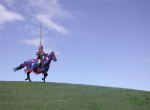
sixteen districts of nobility; their distinctive mark is SAINT-GEORGES
with horse, boring its lance a dragon
Article II – All the gentlemen applicants with being allowed with the
number of the knights, will be held to submit request to the general
assembly, to have police chiefs, and to join to their request, the
inventory of all their titles, with their family trees, painted and
blasonnées; so that the inventory having been read, and the family
tree examined by all the knights composing the assembly,the governor
takes the voices of each one to know in particular if the titles
carried in the inventory appear sufficient to prove required, and to
obtain police chiefs; in which case it will be given by it two to the
plurality of the voices.
I am certain Bill Cornwell and his father are Ditto Heads who embrace the False Tea Bag Patriots. These Ditto Orcs went after my innocent grandson, Tyler Hunt, because they want to own the God Gene. They do not know what they do. They will not be foregiven.
Shembe worshipped Elijah and claimed he was a Nazarite like John the Baptist who Jesus said was the embodiment of Elijah. To dicredit his teaching the church made up lies – like Rush – in order to discredit the Nazarite prophet of God. To take the vow of the Nazarite, is to activate the God Gene.
“When they realised that they were failing to persuade Galile Shembe to abandon the church, they devised another plan aimed at a complete annihilation of the prophet and his work form the face of the earth. The story was systematically concocted that the self styled prophet, an impostor, Isiah Shembe told his followers that like the prophet Elijah, would be taken to heaven by a heavenly chariot. He then took his followers to Mount Ntlangakazi to see him fly to heaven. When he was on the mountain, he attached feathers to his body and when he jumped from the mountain, trying to fly, he fell on the rocks an died. He was caricatured in local newspapers read by black society as another …[inaudible] who had led many blacks astray. At schools which were controlled by the missionaries, the story of Shembe trying to fly was told as a historic fact. We know that children daily suffer the scorn, humiliation and mental trauma by this everyday insult hurled against us, not only by the children, but by our class teachers, our principals, and local priests who came to conduct morning prayers at school. What caused a lot of conflict in us was that we did not know whether the story or not, for it was being told by our teachers, whilst at home it was refuted by our parents.”
In the spirit of the risen Grand Master of the Equestrian Order of Saint George of Rougemont, I on this day raise Shembe from the pit of their lies, and place his spirit in the chariot of Elijah!
Let the Carmelite Knights of Rougemont and Saint George join forces with the Shembe-Zulu Nazarites, and go forth in the Spirit of Elijah and John the Baptist. May the White Dove of the Holy Spirit be their banner.
Jon of the Holy Spirit
Copyright 2012
Article XI – The whole filiation of the received knights,
and Christian names of all ascending the and ascending ones to the
great-great-grandfathers and great-great-grandmothers inclusively,
and the tenth ascending one in stem, or name of presented, will be
recordedwith each reception; and will be held the new receipt to
leave withthe secretariat its family tree, and the inventory of its
producedtitles, to rest with the files of the order, and y to have
recoursewhere necessary.
Thibaut and Humbert de Rougement were Bishops of Besancon and the
ancestors of Guillaume de Vienne who co-founded the Order of Saint-
George ‘Brotherhood of Rougemont’ that was taken over by the wrong
people during the Reformation. The Rougemonts fled to England and
Canada, where as members of the Canadian Parliament, they admitted
members into the Loyal Orange Order. Bennett Rosamond was a master of
the LOL. Was there a ‘Sisterhood of Rougemont’? Jacquotte de
Rougemont is listed as a member of the Brotherhood and she is the
sister of Thibaut who was the Archbishop of Besancon, and the Chief,
or, President of the Brotherhood of Rougemont. of Rougemont Thiébaud
archbishop of Besancon 1449 of Rougemont Jacquotte sister of the
precedent 1449 of Rougemont Jean-Guillaume knight 1449 Amedee de
Dramelay/Tramelay was an archbishop of Besancon, and the son of
Templar Grand Master, Bernard de Tramelay. Fromond de Dramelay
married a Rougemont. Many family members of the House of Orange were
Knights of the Brotherhood of Rougemont. After the Reformation, and
the Huguenots lost the battle of White Mountain, we lost the estates
of our Rosy ancestors. The Pope put loyal Catholics in our offices,
and gave them our land. The present religious order of Saint George,
are usurpers.
Nazarite Prophet of Elijah and John
ORIGINS AND BASES Of the ORDER The noble Brotherhood of Saint-Georges
was created in 1390 by two gentlemen frank-comtois, to honour the
relics of Mégalomartyr, brought back Holy Land. Philibertde Mollans,
rider of the duke of Burgundy, was ankle worker; itssecond, Jehan d’
Andelot, were the son of Jean, lord d’ Andelot-lès-Sallins, and of
Marie d’ Usier, injury of Vaudrey and Rougemont, where the precursors
resided and where was held the annual chapter.When, January 10, 1430,
Philippe the Good instituted the Order ofthe Golden Fleece, twenty-
four holders formed the first promotion:after the large Master, came
immediately by precedence Guillaume III from Vienna. It is with its
request that in 1485, the magpie Unionwas set up in equestrian Order,
all approved at once by the popeInnocent VIII. The 1st vault of the
knights in the church of Rougemont the house of Philibert de Mollans
with Rougemont the doorof the 2nd vault in the convent of Cordeliers
in Besancon by prerogatives by Philippe Asseuré, then
by all the kingsof France of Louis XIV in Charles X, the Order
profited from special spiritual favours conceded as well by the Roman
pontiffs as by the hiérarques Eastern ones.
The Knights of the Brotherhood of Rougemont and Knights of Saint
George, along with the Carmlite monks, elected the Bishops of
Besancon. Several of these Bishops bore the name Rougemont. As a
descendant of these Knights I extend my protection to these nuns who
have seen rockets fall about them and fall into the sea from atop a
hill in Haifa
“On Friday, the pope went to visit a convent of the
Carmelites not far from the small villa where he spending his
holidays and where he prayed for the Holy Land. Today, after exalting
the beauty of the mountains, saying they are a tribute to their
Creator, the pope said that “by happy coincidence, this Sunday falls
on 16 July, the day when the liturgy recalls the Blessed Virgin Mary
of Mount Carmel. “
“The noble association of the knights of Saint-
Georges was founded in Rougemont about the year 1300 by the
sovereigns of the county of Burgundy to gather Burgundian gentlemen
of former knighthood. Their badge at that time was a medal
representing holy George with horse embanking a dragon, suspended
with a gold chain. This brotherhood was destroyed at the end of XIVe
century by the wars. She was restored by Philibert of MOLLANS(3),
knight comtois who would have brought back Holy Land of the relics of
Saint-Georges.He consequently thought of offering them to the
nobility of the county of Burgundy. He thus joins together about 1435
or 1440, a certain number of knights comtois to honour these relics
in a vault which he had with the castle of Rougemont. And it solved
to celebrate each year the festival of a saint, that the nobility
regarded as its owner, because it was knight and that one represented
it with horse armed with a lance. Philibert of MOLLANS was
undoubtedly the first governor of the order elected by the body of
the knights. Consequently, the largest lords of the country hastened
to be made receive in the brotherhood, and were assembled each year
in the vault of Rougemont on April 22, takes care of the George
Saint. Philippe the Good authorized the order to carry the suspended
medal to a red ribbon following the example that of the Golden
Fleece. In1648, the brotherhood settled in Besancon and not in Dole,
then capital county of Burgundy, indeed the brotherhood had already a
political role while being opposed to the Parliament of Pares. A room
in the tower of Montmartin was granted to him by a treaty with the
town of Besancon, as well as the exemption of the housing ofpeople of
war for the knights residing in Besancon. The knights ofSaint-Georges
were besides only noble city of Besancon has to profit from this
inappreciable privilege. However, it seems to have met several times
at Vesoul, city which has as Saint-Georges patronsaint. Then on April
25, 1661, the brotherhood is assembled in Salins and decides that
henceforth it will meet in Besancon, withthe convent of the Large
Carmelite friars, rested by a fellow-member: Jean of VIENNA.
Thibaut and Humbert de Rougement were Bishops of Besancon and the
ancestors of Guillaume de Vienne who co-founded the Order of Saint-
George ‘Brotherhood of Rougemont’ that was taken over by the wrong
people during the Reformation. The Rougemonts fled to England and
Canada, where as members of the Canadian Parliament, they admitted
members into the Loyal Orange Order. Bennett Rosamond was a master of
the LOL. Was there a ‘Sisterhood of Rougemont’? Jacquotte de
Rougemont is listed as a member of the Brotherhood and she is the
sister of Thibaut who was the Archbishop of Besancon, and the Chief,
or, President of the Brotherhood of Rougemont. of Rougemont Thiébaud
archbishop of Besancon 1449 of Rougemont Jacquotte sister of the
precedent 1449 of Rougemont Jean-Guillaume knight 1449 Amedee de
Dramelay/Tramelay was an archbishop of Besancon, and the son of
Templar Grand Master, Bernard de Tramelay. Fromond de Dramelay
married a Rougemont. Many family members of the House of Orange were
Knights of the Brotherhood of Rougemont. After the Reformation, and
the Huguenots lost the battle of White Mountain, we lost the estates
of our Rosy ancestors. The Pope put loyal Catholics in our offices,
and gave them our land. The present religious order of Saint George,
are usurpers.
BROTHERHOOD OF SAINT-GEORGE . She was instituted in the county
of Burgundy, l’an 1390 by Philibert de Molan, lord partly of
Rougemont.He was the first head, under the title of barristers
president; the fellow-members take their row according to l’ordre of
their reception in THE BROTHERHOOD without regard to dignities of
which some d’entre them could be covered; they mutually make vSu
s’aiders’ils are made prisoners, and to take care of the interests of
the widows and the orphans, to which effect one names each year of
the police chiefs, during l’assemblée general.
In 1569, one added to
the old statutes that the fellow-members wouldmake oath of living and
dying in the catholic religion, and inl’obéissance and tender due to
their legitimate sovereign; and l’ongave to the barristers president
the title of governor.
This company had during a time the name of
BROTHERHOOD of Rougemont, because Philibert de Molan fixed it in this
country, in 1431. Itsassemblies were held above in l’église Large
Carmelite friars ofBesancon. The members of this association must show
sixteen districts of nobility; their distinctive mark is SAINT-GEORGES
with horse, boring its lance a dragon , the whole d’or and attached to
the buttonholeof their dress by a moire celestial blue ribbon.
PRESENTATION of the NOBLE BROTHERHOOD of the knights of Saint-
Georgein the county of Burgundy
The brotherhood of Saint-Georges was one of rare
voluntaryassociations gentlemen of a French province under Ancien
Régime. Thestudy of this brotherhood is made in three times. First of
all thestudy criticizes testimonys on the brotherhood, then the study
ofthe political role of the brotherhood through a lawsuit with
theParliament of Besancon, and the attitude of the knights of
GeorgeSaint at the time of the Revolution. Finally the statutes of
thebrotherhood and the list of the knights are analyzed under all
theiraspects. In conclusion, the instruction of the intendant,
thelawsuit and the analysis are compared to try to characterize
thedichotomy and the conflict between two types of nobility in
Franche-Comté and France at the XVIIIe century. The last part of this
workconsists of a dictionary prosopographic of all the knights of
Saint-Georges who lived between 1679 and 1789.
With – Small history of the brotherhoodThe noble association of the
knights of Saint-Georges was founded inRougemont about the year 1300
by the sovereigns of the county ofBurgundy to gather Burgundian
gentlemen of former knighthood. Theirbadge at that time was a medal
representing holy George with horseembanking a dragon, suspended with
a gold chain. This brotherhoodwas destroyed at the end of XIVe
century by the wars. She wasrestored by Philibert of MOLLANS(3),
knight comtois who would havebrought back Holy Land of the relics of
Saint-Georges. Heconsequently thought of offering them to the
nobility of the countyof Burgundy. He thus joins together about 1435
or 1440, a certainnumber of knights comtois to honour these relics in
a vault which hehad with the castle of Rougemont. And it solved to
celebrate eachyear the festival of a saint, that the nobility
regarded as itsowner, because it was knight and that one represented
it with horsearmed with a lance. Philibert of MOLLANS was undoubtedly
the firstgovernor of the order elected by the body of the knights.
Consequently, the largest lords of the country hastened to be
madereceive in the brotherhood, and were assembled each year in
thevault of Rougemont on April 22, takes care of the George
Saint.Philippe the Good authorized the order to carry the suspended
medalto a red ribbon following the example that of the Golden Fleece.
In1648, the brotherhood settled in Besancon and not in Dole,
thencapital county of Burgundy, indeed the brotherhood had already
apolitical role while being opposed to the Parliament of Pares. Aroom
in the tower of Montmartin was granted to him by a treaty withthe
town of Besancon, as well as the exemption of the housing ofpeople of
war for the knights residing in Besancon. The knights ofSaint-Georges
were besides only noble city of Besancon has to profitfrom this
inappreciable privilege. However, it seems to have metseveral times
at Vesoul, city which has as Saint-Georges patronsaint.
Then on April 25, 1661, the brotherhood is assembled inSalins and
decides that henceforth it will meet in Besancon, withthe convent of
the Large Carmelite friars, rested by a fellow-member: Jean of
VIENNA. After the conquest, Louis XIV decided totolerate the
brotherhood, in spite of his resistance to the invader.He made it
possible even to the knights to carry their medal ofSaint-Georges
suspended to a blue moire ribbon like that of theorder of the Holy
Spirit, this in order to adapt has lower cost partof the nobility
comtoise, which would provide him executives devotedfor its army.
Besides Louis XV & Louis XVI, continued the policy ofthe Sun king
with regard to the brotherhood, they addressed to thecompany
portraits the them same ones, in foot, where one couldread: “Given by
the king the knights of George Saint of his countyof Burgundy.”.
These portraits like that of the prince of COP,special guard of the
brotherhood decorated the superb room with theLarge Carmelite friars
of Besancon, unfortunately destroyed at thetime of the Revolution.
The plank of the woodworks of the room wasdecorated series of the
blasonnés ecus of the alive knights, withtheir confined inscriptions
of their four districts, which onedescended at the time of their
death to be carried in ceremony withthe church, then suspended with
their row in the nave where one sawa great number of it which had
decorated a long time the vault withRougemont. The church which was
papered blazons of the knights ofGeorge Saint was also paved of their
tombs, “as if they had wantedto join together in this place emblèmes
of human vanity to thetestimony of his nothing”. At the time of the
general assembly ofApril 25, 1768, new statutes were written, they
will be studied here.
B – Organization of the brotherhoodThe brotherhood was organized by
statutes written at the generalassembly of April 25, 1768, you will
find these statutes below.
1 – Statutes of reception
Article Ier – in the knighthood only gentlemen of name and
weapons will be allowed, which, after having shown their nobility, in
the form and manner prescribed hereafter, will lend the
oath….,between the hands of the governor of the province, in case
that it is present at the assembly, or between the hands of the
governor ofthe knighthood; they will oblige of more than non-
seulement observethese statutes, but still those which will be done
in the future,nevertheless these statutes and ordinances would have
been deliberated in their absence or against their opinion.
Article II – All the gentlemen applicants with being allowed with the
number of the knights, will be held to submit request to the general
assembly, to have police chiefs, and to join to their request, the
inventory of all their titles, with their family trees, painted and
blasonnées; so that the inventory having been read, and the family
tree examined by all the knights composing the assembly,the governor
takes the voices of each one to know in particular ifthe titles
carried in the inventory appear sufficient to proverequired, and to
obtain police chiefs; in which case it will begiven by it two to the
plurality of the voices.
Article III – The gentlemen applicants will give between the handsof
the police chiefs named their titles, inventory and family tree,six
weeks before the following assembly, where they will have tosubmit a
report of it, with less however that the sixteen districtsof the
applicants were not already sworn in this knighthood; inwhich case
the police chiefs will be able to submit theirreport/ratio of the day
at the following day, in the same assembly.
Article IV – The applicants will justify their nobility of
sixteendistricts, knowledge: four paternal great-great-grandfathers
andgreat-great-grandmothers, and four maternal great-great-
grandfathersand great-great-grandmothers, noble, not anoblis of their
head, andwithout it being derogated there by their descendants; going
uptheir nobility at a hundred and thirty years for the
fifteendistricts of alliance; and as for the stem, or name of
presented,the proof will go until the tenth ascending one, presented
notincluded/understood; which proof will be done by production
ofsufficient titles, and such as they are given in the
followingarticle.
Article V – The titles which must be used for the aforementionedproof
just as with that of filiation, are the extracts baptistaires,the
wills, the divisions, the marriage contracts, the acts ofconvocation
to the banns and arriere-bans, the appearances at theassemblies of
noble, the acts of faith and homage, the oldinscriptions on public
monuments, the epitaphs, employment, servicesand qualifications of
rider or knight, and all other acts approvedin sovereign justices.
Article VI – The drawn copies on the originals will not be takenany,
which they were not collated in the presence of the policechiefs with
the examination of the proof, or appointed somebody oftheir share on
this subject.
Article VII – The copies which will come from the foreign
provinces,though collated and legalized, will not make any faith,
unless theyare not supported and are supported by certificates of
thesovereigns, republics, room of the nobility to the states, run
ofParliament, room of the accounts; all other certificates
beinginsufficient.
Article VIII – The districts of nobility which will not have
beensworn in this knighthood, will be it by four knights; and
thosewhich will have been it, will be sworn by two knights
only.Article IX – All the evidence made in stem will not be
startedagain, but one will go up them only to the already proven
commonstem.
Article X – No applicant will be received that it is not known
forcatholic, subject of the king, born or domiciled in the province
ofFranche-Comté, man of probity without reproach, pleasant with
thecompany, of the sixteen years age, that it does not lend the oath
inaccordance with the present statutes, after which the governor
ofthe order will give him the accodance according to the
chevaleresqueform, will give in hand the cross-belt and the
decoration of theknighthood of Saint-Georges, and will exhortera it
to continue tolive as a gentleman and faithful vassal of its
sovereign.
Article XI – The whole filiation of the received knights,
andChristian names of all ascending the and ascending ones to the
great-great-grandfathers and great-great-grandmothers inclusively,
and thetenth ascending one in stem, or name of presented, will be
recordedwith each reception; and will be held the new receipt to
leave withthe secretariat its family tree, and the inventory of its
producedtitles, to rest with the files of the order, and y to have
recoursewhere necessary.
Article XII – the new receipt will pay 300 pounds with the
treasurerof the order, unless his/her father or some of his/her
brothers werenot already received, in which case it will be exempted
to pay them;if not it will deliver them before lending the oath.
Article XIII – If a knight knew some defects in the evidence of
thegentleman claiming, which can prevent it from being allowed with
thenumber of the knights, it will be obliged in honor to
deliveropinion of them to the assembly, in time that the police
chiefs willsubmit their report/ratio; and the secrecy will
inviolablement bekept of all that will occur in the assemblies.
Article XIV -Statutes of this kind obliging the knights only with the
service ofGod and that of the sovereign, those which will have
qualitiesrequired there will be received, though covered with another
thatand order of knighthood, relative with the former practices
andhabits of the order.
Article XV – One will admit in theaforementioned knighthood two
ecclesiastics, of each noble collegeof the province, to represent
there, where necessary, the interestsof their chapters, which always
were supported and protected by theknights from Saint-Georges; these
ecclesiastics applicants withbeing received in the order, will make
the accustomed evidencethere, though they already inserted them in
the chapters of whichthey are members. 2 – Attributes and badges of
the brotherhood a)The large seal – the files of Doubs has a large
round seal of 34Misters Voici the description of this seal: In the
field, asénestréSaint-Georges, vêtu with the antique and horse, plant
his sword inthe throat of a dragon that its horse presses with the
feet. Around:SIGIL. NOBIL. SEQUAN. D. GEORGIO. DICATAE. b) The badge –
theknights or fellow-members of Saint-Georges carried originally to
thecollar, then with the buttonhole, fixed by means of a
suspensionbrace and of a ring at a cord or a blue moire ribbon like
that ofthe order of the Saint Spirit, of a quarter of ell of length,
asmall equestrian figure of George saint, out of gold or money
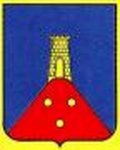
gildedc) the armorial bearings – mouths with a George saint of gold.
d)
The stick – Every year, the brotherhood named a kind of
prosecutorcalled barristers president who carried a richly engraved
moneystick, surmounted by a statuette of George Saint to horse. 3 –
Theoath – Here the oath that all the knights at the time of
their admission were to lend to the brotherhood, and this between
the hands of the governor of the county of Burgundy, or in the event
of absence of this one between those of the governor of the order: ASK:
Don’t you promise on the saints Gospels of God and your honor,to
profess in all and everywhere the catholic, apostolic and Roman faith?
ANSWER: Thus, I swear it and promise ASK: Don’t you aspromise to be
faithful subject of the King, to seek on any occasion its glory, to
prevent as no wrong is made to him, from employing forthis purpose
your life until the last moment, and to observe thestatutes of the
order? ANSWER: Thus, I swear it and promise ASK: Don’t you promise in
accordance with the statutes about lending support and help to your
brothers in arms, and to comprise you inall in the aforementioned
order as valiant knight, honest andvaliant knight? ANSWER: Thus, I
swear it and promise This oathgathers in its centre all the values of
the chivalrous ideal, thedefense of the catholic faith, fidelity
towards the sovereign, his service, the mutual mutual aid of the
knights, and the assistance oftheir widows and their orphans. This
lent oath, the governor gavethe accodance to the new knight according
to the chivalrous form while giving to him in hand the cross-belt and
the medal of theknighthood of Saint George, it exhorted it with being
a vassalfaithful gentleman of its sovereign. It is to be announced
that the new member was to pour a kind of contribution of 300 pounds
to the treasurer of the order, has less than his father or his/her
brotherwas not already received. 4 – Statutes of internal order
Article I -In all times the nobility assembled under the invocation
of Saint-Georges, will be chaired and controlled by one of its
members,elected official with the plurality of the voices, which will
carrythe title of governor.
History
Origin (1390)
The Noble Brotherhood of Saint George of Burgundy was created in 1390 by Phillibert de Mollans in Franche-Comte (Burgundy) to honor the relics of Saint-George that he had brought back from the Holy Land. Phillibert de Mollans was squire to Philip II “the Bold”, the Duke of Burgundy. It is helpful to examine the development of the Order in the context of geopolitical and historical developments of the day including that of other great Orders of the time. Burgundy at the time was a fiercely independent kingdom and as such had an ambiguous relationship with France.
The History and Legend of St George
In 1348, George was adopted by Edward III as principal Patron of his new order of chivalry, the Knights of the Garter. St George is the patron saint of England and among the most famous of Christian figures although little is known of the man himself. Early writings, in 322 AD, tell of a soldier of noble birth who was put to death under Diocletian at Nicomedia on 23 April, 303. However, no mention was made of his name, country or indeed his place of burial. It is thought George was in the Roman army and held the rank of tribune and was eventually beheaded by Diocletian for protesting against the Emperor’s persecution of Christians. George rapidly became venerated throughout Christendom as an example of bravery in defense of the poor and the defenseless and of the Christian faith.
The Acts of St George, which recounted his visits to Glastonbury, while on service in England were translated into Anglo-Saxon. George was subsequently adopted as the patron saint of soldiers after he was said to have appeared to the Crusader army in 1098 at the Siege of Antioch, and won a great victory. It was told how George had appeared to Richard the Lionheart during his Crusade against the Saracens and was to serve as a great encouragement to his troops. He became the great “knight in shining armour” to which every young soldier aspired. His legendary tales of heroism were gradually transferred from Palestine by the returning armies through Europe, across to England.
Many similar stories were transmitted to the West by Crusaders who had in turn had heard them from troops in the Byzantine army. Subsequently, these stories were further circulated by the troubadours. In 1191- 92 when King Richard 1 was campaigning in Palestine he put his army under the protection of the banner of St George. This banner, which depicts the red cross of a martyr on a white background, was to become the flag of England and also the White Ensign of the Royal Navy. During Edward 111’s campaigns in France in 1345- 49, pennants bearing the red cross on a white background were ordered for the king’s ship and uniforms in the same style for the men at arms.
The virtues associated with St George and indeed the chivalry of the knights of St. George of Burgundy, such as courage, honour and fortitude in defense of the Christian faith, remain as important as ever. St George is also venerated in the Church of England, by the Orthodox churches, the Churches of the Near East and by Ethiopia. The supposed tomb of St George can be found at Lod near Tel-Aviv and in a convent in Cairo there are personal objects that are believed to have belonged to George.
There are several stories that are associated with Saint George; perhaps most famously, the ‘Golden Legend’ in which a dragon lived in a lake near Silena, Libya. Although whole armies had gone up against this fierce dragon, all were defeated. The villagers pacified the creature by feeding it two sheep each day, however when mutton was scarce lots were drawn in local villages, and maidens were now to be substituted for the sheep. When St George heard about the plight of the villagers and that a princess was to be eaten, he crossed himself, rode to battle against the beast and killed it with a single blow of his lance. George then held a magnificent sermon and converted all the villagers. He was then given a large reward by the grateful King which George swiftly distributed to the poor, before riding away.
St George is venerated as the patron saint in a large number of places today, including Aragon, Catalonia, Georgia, Lithuania, Palestine, Portugal, Germany and Greece, Moscow, Istanbul, Genoa and Venice where St George is second to St Mark.
Early Burgundy:
The sixth century kingdom of Burgundy was one of the earliest Christian Gallic states but, based at Arles, had little connection with the Capetian duchy established in the fourteenth century, other than its name. In the early ninth century an artificial Burgundian kingdom was created, following the death of the Emperor Charlemagne, to provide a suitable inheritance for his youngest son. This was short lived and, by the middle of the century, it had been divided into what are now generally known as Provence, the Franche-Comté (or County of Burgundy, attached initially to the Crown of Lotharingia but later an immediate fief of the Empire), and the Duchy of Burgundy, which became a fief of the French Crown. This last, with its capital at Dijon, was given by King Robert I of France to his third son Robert before 1043. With the death of the latter’s last male descendant in the male line, Philip I, Duke of Burgundy, in 1361, it returned as a fief to the Crown.
The Duchy, with all that it possessed in the County of Burgundy, was then granted as a Duché-Pairie (Duchy-Peerage – the premier Peerage of France) by John I, King of France, to his fourth son Philip of France and his heirs and successors 6 September 1363. These required that, like all peerages, it revert to the Crown in the event of the failure of heirs. This donation was confirmed the following year by Duke Philip II’s elder brother, now King as Charles V, 2 June 1364; denying the pretensions to the title of Philip, Duke of Orléans.
In 1369 the new Duke concentrated his power by marrying Marguerite, Countess of Flanders and Artois, the widow of the preceding Duke of Burgundy. She not only brought him these two wealthy Counties, but gave him the opportunity to successfully claim the Imperial County of Burgundy (Franche-Comté).
Duke Philip II (the Bold) died in 1404, and was succeeded by his eldest son, John.
Duke John further consolidated the Burgundian estates, obtaining control of most of the Netherlands, then the wealthiest lands in northern Europe. Assassinated in 1419, he was succeeded by his only son, Duke Philip III the Good. By 1430 Philip was not only Duke of Burgundy and Premier Peer of France, but also Sovereign Duke of Brabant, Lotharingia, and Limburg (acquiring Luxembourg in 1443), Count of Flanders and Peer of France, Count of Artois, Burgundy (Franche-Comté), Hainaut, Holland, Zeeland, Namur and Charolais, Marquess of the Holy Roman Empire, Lord of Frieseland, etc, and wealthier than any contemporary European Monarch.
The Confraternity (1430-1484)
Philip “the Good”, in imitation of the neo-Arthurian Order of his sometime ally the King of England (Order of the Garter, founded by Edward III in 1348 – an order to which Philip II was elected in 1422), and to revive the chivalric traditions that he admired, founded the Order of the Golden Fleece in 1430. Like the Garter, it too was restricted to 24 Knights predominantly sovereigns and princes. Philippe the Good authorized the Brotherhood of St George to wear its decoration, an image in gold of the Saint riding on horseback, killing the dragon with a spear, suspended to a red ruban identical to the one of the Golden Fleece.
In response to the dissatisfaction of the feudal lords who were not admitted, William of Vienna (the first recipient of the Golden Fleece) created another order of St George with the agreement of the Duke. During the subsequent years of wars and unification of the duchy to the crown of France, this second order of St Georges was destroyed with the demise of Charles I around 1477 and the surviving members incorporated into the earlier Brotherhood of St Georges of Burgundy. At least two members of St George were also known members of the Golden Fleece; Guillaume de Vienne and Pierre de Bauffremont
The Governor of the Confraternity around 1435 chose to begin the annual tradition of gathering Knights to honour the relics of St George in a chapel that he owned close to the city of Rougemont on April 23, St George’s day (as does the Order of the Garter gather on April 23rd, at St George’s chapel in Windsor Castle).
It is known that members of the Confraternity were required sixteen quarters of nobility – ten on the father’s side; to be from “Franche-Comte?”, and at least sixteen years old. A donation of 300 livre was also required. The Governor General was elected for life by the Knights. The other officers were a Prelat, a Chancelor, a Treasurer and two secretaries.
Although the Dukes of Burgundy had supported the English in their war with France and Philip “the Good” himself had coveted the French Crown, the Duke was reconciled with his cousin in 1435 and paid homage for his Duchy-Peerage of Burgundy at the coronation of Louis XI in 1461. In 1477 Philip’s granddaughter Mary married the Holy Roman Emperor Maxmilian I (Hapsburg) who gained Franche Comte as a result.
The Equestrian Order (1485-1788)
At the request of Philip “the Good” the Confraternity in 1485 was made Canonically into an Equestrian Order, approved by Pope Innocent VIII.
Throughout its history, the Order had benefited from Royal prerogatives and members of notable profile included Cardinal Antoine Perrenot de Granvelle, the right hand man of Holy Roman Emperor Charles V and one of the most influential diplomats and churchman of the 16th century. As a man of humble non-noble birth, his membership in the Order – despite strict prerequisites – demonstrates that the Order had the good sense to value the merit of outstanding personal achievement and character.
In 1648, the Order established itself in Besancon, the capital of Franche-Comte, rather than at Dole, then the capital of Burgundy as the Knights aligned themselves in political opposition to the parliament in Dole. The basis for this is thought to be a natural opposition between the knights, composed of “nobles de l’epee” (nobles of the sword), the very old nobility descended from feudal lords or even earlier, and the parliament, composed of the “noblesse de robe” (nobility of dress), the enriched commoners that achieved nobility through political office or bought patent-letters. However, it is also thought that political or economic interests played as much a part of this as pure class strife.
A room was dedicated to the Order in the Tower of Montmartin. Knights of St George were the only nobles of the city to benefit of this privilege. The Confraternity also gathered often at Vesoul and on April 23rd 1661 at Salin. Subsequently, meetings were held again in Besancon at the covent of the Grand Carmes, founded by a noble knight Jean de Vienne.
After the French conquest in 1668 and the annexion of Franche-Comte to France, with the treaty of Nijmegan in 1678, Louis XIV chose to tolerate the knights of the Order, despite their resistance to the invaders. The King authorized the knights to wear their medal of St George suspended to a blue moir? (watered) ruban, identical to the Order of the Holy Spirit created by the French crown to rival the Burgundian order of the Golden Fleece; this in order to gain the support of the nobility of those territories.
Louis XV and Louis XVI maintained the same privileges even gave their own Portrait to the Order with the mention “Given by the King to the Knights of St George”. The portraits decorated the room of the covent of the Grands Carmes along with the portrait of Louis Joseph de Bourbon, Prince de Conde, who occupied an important place in the French court, where he was Chief of the House of the King. He was also Governor of Burgundy and a general in the French army. Unfortunately the room was destroyed during the Revolution.
The Order’s Coat of Arms was registered in 1696. New Statutes were written during the general assembly of the 25th of April 1768.
From the French Revolution to the Abolition (1789-1824)
The Revolution and Napoleonic wars virtually wiped out the Order; only 25 members remained in 1814. In 1816, at the end of the war, the survivors gathered under the control of a Colonel of the Dragoons, Charles-Emmanuel, Marquis of Saint-Maurice (1735-1839), Baron de Chatenois et de la Villeneuve, comte de Saulx et Genevrey, then Marshal of the armies of the King and Inspector General of the National Guard.
The statutes written on the 25th of April 1768 are changed and new knights are made for a total of 78 in 1817, the last investiture ceremony.
Thereafter, all orders of chivalry from the Ancien Regime were abolished by a decree from King Louis XVIII on the 16th of April 1824, and the Order was forbidden to wear the insignia of the Order. The last knight was the Marquis Jouffroy d’Abbans who died in 1869.
The Confraternity of the Knights of Saint George of Burgundy (1825~Present)
Throughout the 19th and 20th century, the Order had lapses in periods of warfare and geopolitical instability, but through the effort of dedicated individuals such as the new Governor General, H.E. Louis-Francois Saumon, elected in June 2004, the Confraternity has renewed its sense of mission and place in history.
The Governor General has established an international network of delegates, the efforts of which are supported by many prelates of the Catholic Church including two Bishops. The Confraternity has further been registered as a Faithful Association in Italy accordingly to Canonic Law.
The rich history of the Order of St George continues to motivate men and women to who share these values of chivalry throughout the world with regular events held in Italy, Germany, France, Japan and other locations. It has survived, as it originated, as a private association of gentlemen of good will – a Confraternity; a Brotherhood.
On Sunday afternoon when the TRC national Chairperson, Archbishop Desmond Tutu was conducting a church service, in his sermon he said that we are all partners to God. We are here to assist God to mould this country and to make it fit living here. In my view, the religious community and cannot fail to do this. If only we would clearly understand what our mission is. This is irrespective of whether we are Christians, Nazarites, Jews, Moslems, Hindus or traditional religions. Our main mission is to work for God and working for God means doing what God appreciates. Whilst we are liberated politically, we acknowledge that there is a fast deterioration of humanity in our society, which is reaching an intolerable level. We have to focus our attention as churches and faith communities on this reality. As religious people, we must not allow ourselves to be too influenced by political rhetorics which are only meant to win votes, but we must face the truth. It is our duty as religious people in South Africa to put aside our religious differences and to work for a common goal of making South Africa become a decent country. In doing this, we have to look at the causes of our problems. It seems to me that among us blacks there is a culture of indolence, lack of work ethics and general irresponsibility, which we have to address without fail. We cannot expect other people to do so, less they be labelled as racist. The greatest enemy of a black man is liquor. As long as we are producing the generation of drunkards, we can forget about a decent society. Drunkenness always goes hand in hand with laziness, irresponsibility and uncouthness. We can think of many projects, create many jobs, but unless we address this problem seriously, we are just wasting our time.
 Rosamond Press
Leave a comment