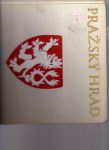
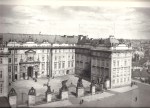
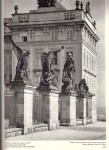

This afternoon I bought a book at Saint Vincent’s De Paul that I almost did not buy. But, because books were half off, I now own a big clue as to the source of my surname, Presco. Only when I got home and glanced at the book again, did I see what caught my eye. In German the B and P are interchangeable. Braskewitz, or, Prescowitz are the orignal spelling of my great grandfather, Wenzel Anton Prescowitz, who immigrated from Bohemia Germany in 1859. The A and E are also interchangeable. Prazky and Pražského, is Prague in Czechoslovakia. Hrad is “castle” Prazky Hrad is the largest castle in the world the home of the Kings and Queens of Bohemia.
At Ellis Island customs officials got creative with difficult names, and may have used the city of origin as a surname. The “witz” could mean ‘Son of Prague’.
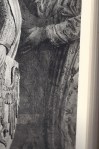
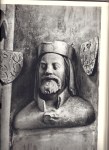
Note the stonemason with calipers. That is Charles the fourth with his son, Wenceslas, the same as Wensel and Wenzel.
Jon Presco
Foundation deed on a news organization “management of Prague Castle” on 19. April 1993
To manage the assets and performance of services in favour of the Office of the President of the Republic, to encourage cultural, social and business activities in the area of the Prague Castle, to satisfy the interests of the citizens of the Czech Republic in the multilateral and the visitors of the Prague Castle, in order to ensure the maintenance, reconstruction and the overall development of the Prague Castle and Chateau in Lány, President of the Republic by this Charter Office a semi-autonomous organisation of the management of Prague Castle. This contribution organization active in the range specified by the Office of the President of the Republic by this Charter, and with it is involved in securing funding for this activity.
Zřizovací listina příspěvkové organizace “Správa Pražského hradu” ze dne 19. dubna 1993
Ke správě majetku a výkonu služeb ve prospěch Kanceláře prezidenta republiky, k podnícení kulturní, společenské a podnikatelské činnosti v areálu Pražského hradu, k uspokojení mnohostranných zájmů občanů České republiky a návštěvníků Pražského hradu, k zajištění údržby, rekonstrukcí a celkového rozvoje Pražského hradu a zámku Lány, zakládá Kancelář prezidenta republiky touto listinou příspěvkovou organizaci Správa Pražského hradu. Tato příspěvková organizace vykonává činnost v rozsahu stanoveném Kanceláří prezidenta republiky touto listinou a spolu s ní se podílí na zajištění finančních prostředků na tuto činnost.
Prague Castle (Czech: Pražský hrad) is a castle in Prague where the Kings of Bohemia, Holy Roman Emperors and presidents of Czechoslovakia and the Czech Republic have had their offices. The Czech Crown Jewels are kept here. Prague Castle is the biggest castle in the world (according to Guinness Book of Records the biggest ancient castle)[1] at about 570 metres in length and an average of about 130 metres wide.
The history of the castle stretches back to the 9th century (870). The first walled building was the church of Our Lady.[2] The Basilica of Saint George and the Basilica of St. Vitus were founded in the first half of the 10th century.
The first convent in Bohemia was founded in the castle, next to the church of St. George. A Romanesque palace was erected here during the 12th century. In the 14th century, under the reign of Charles IV the royal palace was rebuilt in Gothic style and the castle fortifications were strengthened. In place of rotunda and basilica of St. Vitus began building of a vast Gothic church, that have been completed almost six centuries later.
During the Hussite Wars and the following decades the Castle was not inhabited. In 1485, King Ladislaus II Jagello began to rebuild the castle. The massive Vladislav Hall (built by Benedikt Rejt) was added to the Royal Palace. There were also built new defence towers on the northern side of the castle.
A large fire in 1541 destroyed large parts of the castle. Under the Habsburgs some new buildings in renaissance style appeared here. Ferdinand I built Belvedere, summer palace for his wife Anne. Rudolph II used Prague Castle as his main residence. He founded the northern wing of the palace, with the Spanish Hall, where his precious artistic collections were exhibited.
The Second Prague defenestration in 1618 began the Bohemian Revolt. During the subsequent wars the Castle was damaged and dilapidated. Many works from the collection of Rudolph II were looted by Swedes in 1648, in the Battle of Prague (1648) which was the final act of the Thirty Years’ War.
The last major rebuilding of the castle was carried out by Queen Maria Theresa in the second half of the 18th century. Ferdinand V, after abdication in 1848, chose Prague Castle as his home.
In 1918 the castle became the seat of the president of the new Czechoslovak Republic. The New Royal Palace and the gardens were renovated by Slovenian architect Jože Plečnik. Renovations continued in 1936 under Plečnik’s successor Pavel Janák.
During the Nazi occupation of Czechoslovakia during World War II, Prague Castle became the headquarters of Reinhard Heydrich, the “Reich Protector of Bohemia and Moravia”. It is said that he placed the Bohemian crown on his head; old legends say that a usurper who places the crown on his head is doomed to die within a year.[3] Less than a year after assuming power, Heydrich was assassinated.
Charles IV, Holy Roman EmperorFrom Wikipedia, the free encyclopediaJump to: navigation, search Charles IV
Patronage of culture and the artsCharles made Prague the imperial capital and was a great builder in the city, which bears his name in many spots (Charles University, Charles Bridge, Charles Square). Prague Castle and much of the cathedral of Saint Vitus by Peter Parler were completed under his patronage. Finally, it is from the reign of Charles that dates the first flowering of manuscript painting in Prague. In the present Czech Republic, he is still regarded as Pater Patriae (father of the country or otec vlasti), a title first coined by Adalbertus Ranconis de Ericinio at his funeral.
King of Bohemia, Count of Luxemburg
Reign 26 August 1346 – 29 November 1378
Coronation 2 September 1347, Prague
Predecessor John of Bohemia
Successor Wenceslaus IV
King of the Romans (King in Germany)
Reign 11 July 1346 – 29 November 1378
Coronation 26 November 1346, Bonn
Predecessor Louis IV, Holy Roman Emperor
Successor Wenceslaus I
Holy Roman Emperor, King of Italy
Reign 6 January/5 April 1355 – 29 November 1378
Coronation 6 January 1355, Milan (Italian royal)
5 April 1355, Rome (imperial)
Predecessor Louis IV
Successor Sigismund I
King of Burgundy
Reign 4 June 1365–29 November 1378
Coronation 4 June 1365, Besançon
Successor Sigismund I
Spouse Blanche of Valois
Anna of Bavaria
Anna von Schweidnitz
Elizabeth of Pomerania
Issue
Sigismund, Holy Roman Emperor
Wenceslaus, King of the Romans
Margaret, Queen of Hungary
Catherine of Bohemia
Elisabeth, Duchess of Austria
Anne, Queen of England
Margaret of Bohemia, Burgravine of Nuremberg
House House of Luxemburg
Father John of Bohemia
Mother Elisabeth of Bohemia
Born 14 May 1316
Prague
Died 29 November 1378 (aged 62)
Prague
Religion Roman Catholicism
Coat of arms of Charles I, Count of LuxembourgCharles IV (Czech: Karel IV., German: Karl IV, Latin: Carolus IV; 14 May 1316, Prague – 29 November 1378[1]), born Wenceslaus (Václav), was the second king of Bohemia from the House of Luxembourg, and the first king of Bohemia also to become Holy Roman Emperor.
He was the eldest son and heir of King John of Bohemia, who died at the Battle of Crécy on 26 August 1346. Charles inherited the County of Luxembourg and the Kingdom of Bohemia from his father. On 2 September 1347, Charles was crowned King of Bohemia.
On 11 July 1346, prince-electors elected him King of the Romans (rex Romanorum) in opposition to Emperor Louis IV. Charles was crowned on 26 November 1346 in Bonn. After his opponent died, he was re-elected in 1349 (17 June) and crowned (25 July) King of the Romans. In 1355 he was crowned King of Italy on 6 January and Holy Roman Emperor on 5 April. With his coronation as King of Burgundy, delayed until 4 June 1365, he became the personal ruler of all the kingdoms of the Holy Roman Empire.
Contents [hide]
1 Life
1.1 King of the Romans
1.2 Holy Roman Emperor
2 Evaluation and legacy
3 Patronage of culture and the arts
4 Genealogy
5 Family and children
6 Named after Charles IV
7 Ancestry
8 See also
9 References
[edit] LifeCharles was born to King John of Bohemia and Elisabeth of Bohemia in Prague as Wenceslaus (Václav), the name of his maternal grandfather Wenceslaus II, King of Bohemia. He chose the name Charles at his confirmation in honor of his uncle, King Charles IV of France, at whose court he was resident for seven years.
He received French education and was literate and fluent in five languages: Latin, Czech,[2] German, French, and Italian. In 1331 he gained some experience of warfare in Italy with his father. From 1333 he administered the lands of the Bohemian Crown due to his father’s frequent absence and deteriorating eyesight. In 1334, he was named Margrave of Moravia, the traditional title for heirs to the throne. Two years later, he assumed the government of Tirol on behalf of his brother, John Henry, and was soon actively involved in a struggle for the possession of this county.
[edit] King of the RomansOn 11 July 1346, in consequence of an alliance between his father and Pope Clement VI, relentless enemy of the emperor Louis IV, Charles was chosen as Roman king in opposition to Louis by some of the prince-electors at Rhens. As he had previously promised to be subservient to Clement, he made extensive concessions to the pope in 1347. Confirming the papacy in the possession of wide territories, he promised to annul the acts of Louis against Clement, to take no part in Italian affairs, and to defend and protect the church.
Charles IV was initially in a very weak position in Germany. Owing to the terms of his election, he was derisively referred to by some as a “priest’s king” (Pfaffenkönig). Many bishops and nearly all of the Imperial cities remained loyal to Louis the Bavarian. Worse yet, Charles backed the wrong side in the Hundred Years’ War, losing his father and many of his best knights at the Battle of Crécy in August 1346, with Charles himself escaping wounded from the field.
Civil war in Germany was prevented, however, when Louis IV died on 11 October 1347, after suffering a stroke during a bear hunt. In January 1349, Wittelsbach partisans attempted to secure the election of Günther von Schwarzburg as king, but he attracted few supporters and died unnoticed and unmourned after a few months. Thereafter, Charles faced no direct threat to his claim to the Imperial throne.
Charles initially worked to secure his power base. Bohemia had remained untouched by the plague. Prague became his capital, and he rebuilt the city on the model of Paris, establishing the New Town of Prague (Nové Město). In 1348, he founded the University of Prague, named after him, the first university in Central Europe. This served as a training ground for bureaucrats and lawyers. Soon Prague emerged as the intellectual and cultural center of Central Europe.
Charles, having made good use of the difficulties of his opponents, was again elected in Frankfurt on 17 June 1349 and re-crowned at Aachen on 25 July 1349. He was soon the undisputed ruler of the Empire. Gifts or promises had won the support of the Rhenish and Swabian towns; a marriage alliance secured the friendship of the Habsburgs; and an alliance with Rudolf II of Bavaria, Count Palatine of the Rhine, was obtained when Charles, who had become a widower in 1348, married his daughter Anna.
In 1350 the king was visited at Prague by the Roman tribune Cola di Rienzo, who urged him to go to Italy, where the poet Petrarch and the citizens of Florence also implored his presence.[3] Turning a deaf ear to these entreaties, Charles kept Cola in prison for a year, and then handed him as a prisoner to Clement at Avignon.
Outside of Prague, Charles attempted to expand the Bohemian crown lands, using his imperial authority to acquire fiefs in Silesia, the Upper Palatinate, and Franconia. The latter regions comprised “New Bohemia,” a string of possessions intended to link Bohemia with the Luxemburg territories in the Rhineland. The Bohemian estates were not, however, willing to support Charles in these ventures. When Charles sought to codify Bohemian law in the Majestas Carolina of 1355, he met with sharp resistance. After that point, Charles found it expedient to scale back his efforts at centralization.
[edit] Holy Roman Emperor
The Golden Bull of 1356In 1354 he crossed the Alps without an army, received the Lombard crown in St. Ambrose Basilica, Milan, on 5 January 1355, and was crowned emperor at Rome by a cardinal in the April of the same year.[4] His sole object appears to have been to obtain the Imperial crown in peace, in accordance with a promise previously made to Pope Clement. He only remained in the city for a few hours, in spite of the expressed wishes of the Roman people. Having virtually abandoned all the Imperial rights in Italy, the emperor re-crossed the Alps, pursued by the scornful words of Petrarch, but laden with considerable wealth.[5] On his return, Charles was occupied with the administration of the Empire, then just recovering from the Black Death, and in 1356 he promulgated the famous Golden Bull to regulate the election of the king.
Having given Moravia to one brother, John Henry, and erected the county of Luxembourg into a duchy for another, Wenceslaus, he was unremitting in his efforts to secure other territories as compensation and to strengthen the Bohemian monarchy. To this end he purchased part of the upper Palatinate of the Rhine in 1353, and in 1367 annexed Lower Lusatia to Bohemia and bought numerous estates in various parts of Germany. On the death of Meinhard, Duke of Upper Bavaria and Count of Tyrol, in 1363, Upper Bavaria was claimed by the sons of the emperor Louis IV, and Tyrol by Rudolf IV, Duke of Austria.
Both claims were admitted by Charles on the understanding that if these families died out both territories should pass to the House of Luxembourg. At about the same time he was promised the succession to the Margravate of Brandenburg, which he actually obtained for his son Wenceslaus in 1373. He also gained a considerable portion of Silesian territory, partly by inheritance through his third wife, Anna von Schweidnitz, daughter of Henry II, Duke of Świdnica and Catherine of Hungary. In 1365 Charles visited Pope Urban V at Avignon and undertook to escort him to Rome; and on the same occasion was crowned King of Burgundy at Arles.
Meeting with Charles V of France in Paris in 1378, from a fifteenth-century manuscript in the Bibliothèque de l’ArsenalHis second journey to Italy took place in 1368, when he had a meeting with Pope Urban VI at Viterbo, was besieged in his palace at Siena, and left the country before the end of the year 1369. During his later years, the emperor took little part in German affairs beyond securing the election of his son Wenceslaus as king of the Romans in 1376, and negotiating a peace between the Swabian League and some nobles in 1378. After dividing his lands between his three sons and his nephews,[1] he died in November 1378 at Prague, where he was buried, and where a statue was erected to his memory in 1848.
Charles IV suffered from gout (metabolic arthritis), a painful disease quite common in that time.
[edit] Evaluation and legacy
Statue of Charles IV near Charles Bridge (1848), PragueHis reign was characterised by a transformation in the nature of the Empire and is remembered as the Golden Age of Bohemia. He promulgated the Golden Bull of 1356 whereby the succession to the imperial title was laid down, which held for the next four centuries.
He also organized the states of the empire into peace-keeping confederations. In these, the Imperial cities figured prominently. The Swabian Landfriede confederation of 1370 was made up almost entirely of Imperial Cities. At the same time, the leagues were organized and led by the crown and its agents. As with the electors, the cities which served in these leagues were given privileges to aid them in their efforts to keep the peace.
He assured his dominance over the eastern borders of the Empire through succession treaties with the Habsburgs and the purchase of Brandenburg. He also claimed imperial lordship over the crusader states of Prussia and Livonia.
[edit] Patronage of culture and the artsCharles made Prague the imperial capital and was a great builder in the city, which bears his name in many spots (Charles University, Charles Bridge, Charles Square). Prague Castle and much of the cathedral of Saint Vitus by Peter Parler were completed under his patronage. Finally, it is from the reign of Charles that dates the first flowering of manuscript painting in Prague. In the present Czech Republic, he is still regarded as Pater Patriae (father of the country or otec vlasti), a title first coined by Adalbertus Ranconis de Ericinio at his funeral.
Charles also had strong ties to Nuremberg, staying within its city walls 52 times and thereby strengthening its reputation amongst German cities. Charles was the patron of the Nuremberg Frauenkirche, built between 1352 and 1362 (the architect was likely Peter Parler), where the imperial court worshiped during its stays in Nuremberg.
Charles’s imperial policy was focused on the dynastic sphere and abandoned the lofty ideal of the Empire as a universal monarchy of Christendom. In 1353 he granted Luxembourg to his nephew, Jobst. He concentrated his energies chiefly on the economic and intellectual development of Bohemia, where he founded the university in 1348 and encouraged the early humanists. He corresponded with Petrarch and invited this to visit his residence in Prague, whilst the Italian hoped — to no avail — to see Charles move his residence to Rome and reawaken tradition of the Roman Empire.
Charles’s sister Bona married the eldest son of Philip VI of France, the future John II of France, in 1335. Thus, Charles was the maternal uncle of Charles V of France, who solicited his relative’s advice at Metz in 1356 during the Parisian Revolt. This family connection was celebrated publicly when Charles made a solemn visit to his nephew in 1378, just months before his death. A detailed account of the occasion, enriched by many splendid miniatures, can be found in Charles V’s copy of the Grandes Chroniques de France.
[edit] GenealogyHenry VII
12 July 1275(6) – 24 August 1313 Margaret of Brabant
4 October 1276 – 14 December 1311 Wenceslaus II
27 September 1271 – 21 June 1305 Judith of Habsburg
13 March 1271 – 18 June 1297
John of Bohemia
10 August 1296 – 26 August 1346 Elisabeth of Bohemia
20 January 1292 – 28 September 1330
1
Blanche of Valois
1316 – 1 August 1348
OO 15 May 1323 2
Anna of Bavaria
26 September 1329 – 2 February 1353
OO March 1349 Charles IV
14 May 1316 – 29 November 1378 3
Anna von Schweidnitz
1339 – 11 July 1362
OO 27 May 1353 4
Elizabeth of Pomerania
1346(7) – 14 February 1393
OO 21 May 1363
1 1 1 2 3 3 3 4
son
b.1334 Margaret of Bohemia
1335–49 Catherine of Bohemia
1342–95 Wenceslas
1350–51 Elisabeth of Bohemia
1358–73 Wenceslaus,
King of the Romans
1361–1419 son
1362 Anne
of Bohemia
1366–94
4 4 4 4 4
Sigismund, Holy Roman Emperor
1368–1437 John of Görlitz
1370–96 Charles
1372–73 Margaret of Bohemia
1373–1410 Henry
1377–78
 Rosamond Press
Leave a comment