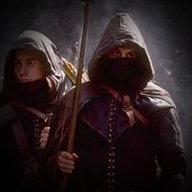
 Several years ago I sent several of Michael Dundon’s children info on Tolkien’s Dúnedain Rangers, the Dunadan, who descend from the Númenóreans who lived on an island that was destroyed like Atlantis. In the Oarea Linda Books, Rosamond the Folk-Mother, and Jon the sea-king, are descendants of Atland the Frisian Atlantis.
When I talked to Michael two months ago, he told me he wanted me and all his children and grandchildren to move to the Hawaii. I suggested he move back to Eugene so we could be the old wise men that would take the young ones fishing, camping, and to the coast. Michael said it might be hard to get them away from their computers and the cybor games they play.
The Dundan family camping trip was magical. Around the campfire, Dianne Dundon told me her Frye Ancestors were from Sweden. Tolkien was influenced by Norse Sagas. His Rangers are modeled on the Viking Rangar, the root of the name Ranger, that is also Rover and Raider.
Several times Michael Dundon suggested the island he lives on may blow up due to a recent volcanic eruption.
Jon Presco
In J. R. R. Tolkien’s legendarium, the Dúnedain (singular: Dúnadan, “man of the west”) were a race of Men descended from the Númenóreans who survived the sinking of their island kingdom and came to Eriador in Middle-earth, led by Elendil and his sons, Isildur and Anárion. They are also called the Men of the West and the Men of Westernesse (direct translations of the Sindarin term). They settled mainly in Arnor and Gondor.
Ranger
Under their Captain Faramir, the Gondorian Rangers patrol the narrow wilds between the lands of Gondor and Mordor. Faramir’s men are skilled in woodcraft and know all the secret places of their realm. None can pass through without their knowledge, and many servants of the enemy meet their doom at the point of Gondorian arrows without ever knowing they were being watched.
Rangers are an elite unit equally skilled in bow and sword and possessing a natural stealth ability that lets them hide in the trees and strike unwary foes as they draw near. Beware though as all infantry units can detect Rangers if they get close enough.
Rollo (c. 846 – c. 931), baptised Robert[1] and so sometimes numbered Robert I to distinguish him from his descendants, was a Norse nobleman of Norwegian or Danish descent and founder and first ruler of the Viking principality in what soon became known as Normandy. His descendants were the Dukes of Normandy.
The name “Rollo” is a Latin translation from the Old Norse name Hrólfr, modern Scandinavian name Rolf (cf. the latinization of Hrólfr into the similar Roluo in the Gesta Danorum), but Norman people called him by his popular name Rou(f) (see Wace’s Roman de Rou).[2] Sometimes his name is turned into the Frankish name Rodolf(us) or Radulf(us) or the French Raoul, that are derived from it.[Note 1]
Rolf is a male given name. It originates in the Germanic name Hrolf, itself a contraction of Hrodwulf (Rudolf), a conjunction of the stem words hrod (“renown”) + wulf (“wolf”). The Old Norse cognate is Hrólfr.
Not to be confused with Dunedin (disambiguation) or Dùn Éideann.
Dúnedain Men of the West, Men of Westernesse
Founded Second Age
Founder Elros
Current leader Aragorn
Home world Middle-earth
Base of operations Númenor, then Gondor
Official language Adûnaic, Westron, Sindarin
In J. R. R. Tolkien’s legendarium, the Dúnedain (singular: Dúnadan, “man of the west”) were a race of Men descended from the Númenóreans who survived the sinking of their island kingdom and came to Eriador in Middle-earth, led by Elendil and his sons, Isildur and Anárion. They are also called the Men of the West and the Men of Westernesse (direct translations of the Sindarin term). They settled mainly in Arnor and Gondor.
The Westron name for Dúnadan was simply Adûn, “westerner”, but this name was seldom used. This name was reserved to those Númenóreans who were friendly to the Elves: the other, hostile survivors of the Downfall were known as the Black Númenóreans.
Contents [hide]
1 History
2 Characteristics
3 See also
4 External links
[edit] HistoryThe Dúnedain were descended from the Elf-friends, the few Men of the First Age who sided with the Noldorin Elves in Beleriand. Their original leader was Bëor the Old, a “Vassal” of the Elf lord Finrod. His people settled in Eldar lands, and he was an ancestor of the Lord Elros, a half-Elf. In the Second age, the Valar gave them Númenor, an island-continent to live on. They later created fortress-cities along the western coasts of Middle-earth, which dominated the lesser men of these areas. In time, Númenor was drowned and a small number of the Faithful (led by Elendil) escaped the destruction.
Sauron’s spirit fled from Númenor to Middle-earth, and he again raised mighty armies to challenge the new Dúnedain kingdoms, Gondor and Arnor. With the aid of Gil-galad and the Elves, Sauron was defeated, and he vanished into the wild East for many centuries. Gondor and Arnor prospered during this time.
As Sauron began to re-form and gather strength, a series of deadly plagues came from the East. These tended to strike harder in the North than the South, and caused a population decline in Arnor. Also the chief of the Nine Ringwraiths, known commonly as the Witch-king of Angmar, began assaulting the divided Northern Dúnedain kingdoms from a mountain stronghold (Carn Dûm). Eventually, he succeeded in destroying Arthedain, the last of the Northern kingdoms.
After the fall of Arthedain, a remnant of the northern Dúnedain became the Rangers of the North, doing what they could to keep the peace in the near-empty lands of their Fathers. The surviving Dúnedain population of Arnor retreated to the Angle south of Rivendell, while smaller populations made isolated settlements in far western Eriador.
Over the centuries, the southern Dúnedain of Gondor intermarried more and more with so-called Middle Men. Only in regions such as Dol Amroth did their bloodline remain pure. Their lifespan became shorter with each generation. Eventually, even the Kings of Gondor married non-Dúnedain women occasionally.
In the Fourth Age, the Dúnedain of Gondor and Arnor were reunited under King Aragorn II Elessar (who was also called the Dúnadan). He married Arwen, daughter of Elrond (a cousin removed by sixty-four generations, as it were) and reintroduced Elf-blood into his family line.
In addition to the Faithful, there were Dúnedain in the South who manned Númenórean garrisons at places like Umbar. Many of these folk had been turned toward evil by Sauron’s teachings, and remained loyal to him after the fall of their homeland. These are referred to as the Black Númenóreans.
[edit] CharacteristicsThe Dúnedain were superior to other Men in nobility of spirit and body, although they were still capable of evil if corrupted, and tended to do more evil in such circumstances. They were tall, with dark hair, pale skin and grey eyes.
In addition, Dúnedain, especially those of high rank, possessed great wisdom and discernment, and occasional prophecy. They benefited from longer life-spans (three times the life of a regular man) than ordinary men and could retain their youth until the very end of their days. Though the reason is not fully explained in the ‘Tale of the Years’, one factor that almost certainly contributed to their numerical decline was an extremely low birth rate, with many couples having only one child.
[edit] See also Middle-earth portal
Rangers
Rangers of the North
Rangers of Ithilien
Ranger (Middle-earth)
From Wikipedia, the free encyclopedia
Jump to: navigation, search
For other uses, see ranger.
In J. R. R. Tolkien’s legendarium, the Rangers were two secretive, independent groups organized by the Dúnedain of the North (Arnor) and South (Gondor) in the Third Age. Like their Númenórean ancestors, they appeared to possess qualities closely attributed to the Eldar, with their keen senses and ability to understand the language of birds and beasts.[1] They were great trackers and hardy warriors—defending their respective areas from evil forces.
The two groups of Rangers were the Rangers of the North and the Rangers of Ithilien. The two groups were unconnected to each other, though distantly related by blood.
Tolkien’s Rangers (and Aragorn in particular) are the primary inspiration for the Dungeons & Dragons character class called “ranger”.
In J. R. R. Tolkien’s legendarium, the Rangers of the North, also known as the Dúnedain of the North, were the descendants of the Dúnedain from the lost kingdom of Arnor. Their menfolk ceaselessly patrolled the boundaries of Eriador and were by necessity skilled with the sword, bow and spear.
The Rangers were grim in life, appearance, and dress, choosing to wear rusty green and brown. The Rangers of the Grey Company (see below) were dressed in dark grey cloaks and openly wore a silver brooch shaped like a pointed star during the War of the Ring. These Rangers rode rough-haired, sturdy horses, were helmeted and carried shields. Their armament included spears and bows.
Like their distant cousins, the Rangers of Ithilien, the Rangers of the North spoke Sindarin (or some variation of it) in preference to the Common Speech. They were led by a Chieftain, whose ancestry could be traced back to Elendil and beyond, to the ancient Kings of Númenor.
During the War of the Ring, the Rangers of the North were led by Aragorn, but the northern Dúnedain were a dwindling and presumably widely scattered folk: when Halbarad received a message to gather as many of the Rangers as he could and lead them south to Aragorn’s aid, only thirty men (the Grey Company) were available at short notice for the journey. The Grey Company met up with Aragorn, Legolas, and Gimli at the Fords of Isen in Rohan, and at Pelargir, along with the Dead Men of Dunharrow, they captured the ships of Umbar. The Dead Men then departed and the others continued on to fight in the Battle of the Pelennor Fields. There, Halbarad was killed. They are also mentioned as part of the army Aragorn commanded at the Battle of Morannon.
Ragnar Lodbrok (Ragnar “Hairy-Breeks”, Old Norse: Ragnarr Loðbrók) was a Norse legendary hero from the Viking Age who was thoroughly reshaped in Old Norse poetry and legendary sagas.[1][2]
The namesake and subject of “Ragnar’s Saga”, and one of the most popular Viking heroes among the Norse themselves, Ragnar was a great Viking commander and the scourge of France and England. A perennial seeker after the Danish throne, he was briefly ‘king’ of both Denmark and a large part of Sweden. A colorful figure, he claimed to be descended from Odin, was linked to two famous shieldmaidens, Lathgertha in the Gesta Danorum, and Queen Aslaug according to the Völsungasaga.
He told people he always sought greater adventures for fear that his (possibly adoptive) sons who included such notable Vikings as Björn Ironside and Ivar the Boneless would eclipse him in fame and honor. Ragnar raided France many times, using the rivers as highways for his fleets of longships. By remaining on the move, he cleverly avoided battles with large concentrations of heavy Frankish cavalry, while maximizing his advantages of mobility and the general climate of fear of Viking unpredictability. To court his second wife, the Swedish princess Thora, Ragnar traveled to Sweden and quelled an infestation of venomous snakes, famously wearing the hairy breeches whereby he gained his nickname. Supposedly, the breeches were made from bearskin dipped in pitch and sand, making them fireproof. He continued the series of successful raids against France throughout the mid 9th century, and fought numerous civil wars in Denmark, until his luck ran out at last in Britain. After being shipwrecked on the English coast during a freak storm, he was captured by Anglian king Ælla of Northumbria and put to death in an infamous manner by being thrown into a pit of vipers.
Although he is something of a hero in his native Scandinavia, reliable accounts of his life are very sketchy and heavily based on ancient Viking sagas.
[edit] Contemporary sources
Paris at the time of Ragnar’s attack.
The Ragnar of sagas is apparently largely based on a historic pirate and raider, who invaded one country after another. One of his favorite tactics was to attack Christian cities on church feast days, knowing that many soldiers would be in church.[3] He would generally accept a huge payment to leave his victims alone, only to come back later and demand more riches in exchange for leaving.
But as the extent of his supposed realm shows, he was also a gifted military leader. By 845, he was a powerful man.
Generation No. 14
14. ROLLO ( ROLF) RAGNVALDSSON was born 870 in Norway, and died 931 in France. He married POPA De VALOIS. Duchess of Normany She was born 872.
Notes for ROLLO ( ROLF) RAGNVALDSSON:
Rollo (later Robert) “Duke of Normandy”
Viking leader in France, d. 932.
Although he is often referred to as the first Duke of Normandy, that title is an anachronism. Probably about 911, King Charles the Simple of France ceded a district around the city of Rouen to Rollo, which eventually evolved into the duchy of Normandy. He is said to have been baptized in 912, assuming the Christian name Robert. He was still living in 928, when he was holding Eudes, son of Heribert of Vermandois, as a captive and was probably dead by 932, when his son William was mentioned as leading the Normans.
Also known as Hrolf the Ganger or Rollon, 1st Duke of Normandy from 911 to 927, called also Rolf the Walker, because, being so tall, he preferred to go afoot rather than ride the little Norwegian horses. Also shown as Rollon, Row, or Robert Originally a Norse Viking, he was noted for strength and martial prowess. In the reign of Charles II the Bald, he sailed up the Seine River and took Rouen, which he kept as a base of operations. He gained a number of victories over the Franks, and extorted the cession of the province since called Normandy. By the famous treaty which Charles the Bald and Rollo signed the latter agreed to adopt Christianity. He was born in 846 and died in 932, and was buried in the Cathedral at Rouen.
Viking Chieftain, Rollo, was so enormous no horse could carry him. Charles the Simple gave Normandy to Rollo by the treaty of St. Clair-sur-Epte in 911.
France
In 845 he sailed southward, looking for new worlds to conquer. With an alleged force of 120 ships and 5,000 Viking warriors, he landed in what is now France, probably at the Seine estuary, and ravaged West Francia, as the westernmost part of the Frankish Empire was then known. Rouen was ravaged and then Carolivenna, a mere 20 km from St. Denis. The raiders then attacked and captured Paris with a fleet of 120 ships.[4] The warriors belonging to the army of Charles the Bald, were placed to guard the Abbey of St. Denis, but fled when the Danish Vikings executed their prisoners ferociously in front of their eyes.[citation needed] The traditional date for this is 28 March, which is today referred to as Ragnar Lodbrok Day by certain followers of the Asatru religion. The King of West Francia, Charlemagne’s grandson Charles the Bald, paid Ragnar a huge amount of money not to destroy the city. Ragnar Lodbrok, according to Viking sources, was satisfied with no less than 7,000 pounds of silver in exchange for sparing the city.[2] By mysterious circumstances, many men in Ragnar’s army died during the journey and Ragnar died soon after his return.[1] However, that did not stop Ragnar from attacking other parts of France, and it took a long time for the Franks to drive him out.
Later, Ragnar’s sons were to return for more booty. Among their feats was destroying the city of Rouen several more times. Ultimately, many of them settled there permanently, in a land that became known as Normandy (deriving from the expression “Nordmenn” , or ‘Northmen’ (‘Norsemen’), which was – and indeed still is – both the name the Norwegians called themselves and also the name the Franks used for the Scandinavians).
[edit] England and questions surrounding his death
All sources agree that Ragnar ended his life in England. The widely accepted version is that Ragnar was shipwrecked on the Northumbrian shore; where he was captured and taken to the Northumbrian king Ælla.[citation needed]
Legend claims that Aelle ordered Ragnar thrown into a pit filled with poisonous snakes. As he was slowly being bitten to death, he is alleged to have exclaimed “How the little pigs would grunt if they knew how the old boar suffers!”, referring to the vengeance he hoped his sons would wreak when they heard of his death.[citation needed]
Alternative versions of the story say that he landed by accident in East Anglia and there befriended King Edmund before being killed by a jealous courtier. The murderer escaped to Denmark and blamed Edmund for Lodbrok’s demise.[citation needed]
The dating of Ragnar’s death has been alternatively stated as 840 or 865. The earlier dating corresponds to events attached to Ragnar’s legend in the saga. However, a later date better explains the attack on England by his sons in 865; supposedly to avenge their father’s death. It is unlikely that the Great Heathen Army, led by the Sons of Ragnar, would have waited 25 years to take their vengeance.[citation needed]
http://descendantsofragnar.webs.com/
Subject: ROLLO: IS HIS NORDIC PEDIGREE A BOGUS ONE?
Date: Mon, 26 Jun 1995 20:12:58 +0300
I ran across a rather alarming book the other day–B. G. de Montgomery’s
“Origin and History of the Montgomerys. . .” (Wm. Blackwood & Sons,
Edinburgh and London, 1948).
It appeared quite scholarly and well researched, and I was cruising along
blissfully through the role of Woden in central European history, the
similarities of Nordic and Saxon legends, etc., when I was brought up short
by the author’s trashing of the accepted Nordic pedigree of Rollo. He shows
as Rollo’s ancestry:
–Sigurd Ring
–Halfdan
–Ragnar Lothbroc
–Ingvar (d. 872)
–Rollo (d. 931)
He describes a Norwegian jarl, “Riulf or Hrolf, probably the very man whom
Snorre mistook for Rollo,” follows though his relationship with Bernard the
Dane, his eventual death, etc. (Montgomery refers continually to “Snorre”
and his misguided conception of Rollo’s ancestry; he obviously is referring
to Snorri Sturlasson.)
This author also has some theories of early Montgomery history which are
contrary to what has been presented by other authors of Montgomery descent,
so I am inclined to generally dismiss a large part of his material between
Woden and the later-day Montgomeries of Scotland and England.
Does anyone have comment on this particular author and the reliability of
his material?
 Rosamond Press
Leave a comment