


My theological book on the Nazarites is titled ‘Where art thou?’ This is the first Quest Ion that God put to Humankind in the Garden. Why had they become invisible to God – is the question”
“What art thou?
One of the elect!
Of what house?
The house of Israel!
Of what tribe?
The tribe of Levi!”
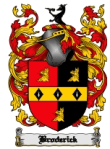
In the probate of my late sister, Christine Rosamond Benton, I filed papers folks thought were strange. There was an attempt to depict me as being mad. I mention the name Rhydderch Hael because the name Broderick comes from this name. William Broderick married Alice Stuttmeister. My brother was named Mark Broderick Presco. He had the same top secret clearance the President owns when he worked at Hughes making computers for jet fighters, and the space shuttles. He is a weapons maker. Rhydderch Hael owned a famous sword that when taken from its scabbard “it burst into flame from its hilt to its tip.”
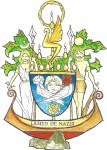
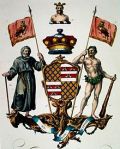
Is this a sword from Everquest? Everything has a source. In rendering the Ambrosius cote of arms in 1999, I drew inspiration from the Middleton-Broderick cote of arms that depicts a man with a club and two spearheads that I tunred into quills. That the House of Windsor would marry a Middleton, is profound, for Kate Middleton can be associated with Teia Tephi of the Scarlet Thread who is at the core of cosmology of the Orange Order that members of the Rosamond family belonged.
The Scarlet Thread spins a tale through both books of the Bible. consider the Sleeping Beauty Princess, Rosamond, who is pricked by a spindle a wicked witch hands her, and her father’s kingdom falls asleep for a long time.
I own a gift. I can read NAMES. I believe the men who came to name John the Baptist were Nazarites of the Holy Spirit who did not look at human bloodlines, but, at the spirit they inherited from their forefathers. Since the most Jews are kindred to one another, shared the same blood as Children of God, then the transmission of the Holy Spirit denoted those who have been separated and consecrated to God – by God! The Nazarites are God’s Chosen. This is to say, that a Windsor was destined to marry a Middleton. whether Kate is kin to the Lord Middletons, does not matter. Following the Holy Spirit of the Scarlet Thread Redemption is to see in part the paradise from which we all came. Then came the fall, because we were no longer in His image, in His NAME.
In John 17 Jesus tells his disciples he will join them to God and THE NAME. This name has been corrupted. I have come to restore it.
I was not there when my daughter was born and named, and thus, God and the Holy Spirit was not there. In a letter to Oprah Winfrey, Patrice Hanson says she knew Heather was my child the moment she was born, yet, she put my daughter in the arms of a Proffesional Imposter, a man who made money impersonating Bob Weir of the Grateful Dead. In this rent in God’s Scarlet Tapestry, evil aunt Linda entered with her poison apple, for, it is written by the Brothers Grimm. God’s Kingdom is awakening from a deep sleep. Do you believe in the Second Coming? Where art thou?
Jon Presco
Copyright 2012
He came of a Surrey family who in the 17th century, in the persons of Sir St John Brodrick and Sir Thomas Brodrick, obtained grants of land in the south of Ireland. Sir St John Brodrick settled at Midleton, between Cork and Youghal in 1641; and his son Alan Brodrick (1660–1728), Speaker of the Irish House of Commons and Lord Chancellor of Ireland, was created Baron Brodrick in 1715 and Viscount Midleton in 1717 in the Irish peerage.
“Whither shall I go from Thy Spirit? Or whither shall I flee from Thy presence? If I ascend up into heaven, Thou art there: if I make my bed in Sheol, behold, Thou art there. If I take the wings of the morning, and dwell in the uttermost parts of the sea; even there shall Thy hand lead me, and Thy right hand shall hold me.” (Psalm 139:7-10)
Naming John the Baptist
by Shmuel Safrai, Member of the Jerusalem School.
Published: 01-Jan-2004
Shmuel Safrai
This is the fourth of a series of articles examining the Lukan account of John the Baptist and Jesus in the light of Jewish literature.
…and she [Elizabeth] gave birth to a son…. On the eighth day when they came to circumcise the child they were going to name him after his father, but his mother interrupted, “No, his name will be John.” They said to her, “None of your relatives has that name.” Then they made signs to his father to find out what he wished to name him. He asked for a writing tablet, and to everyone’s astonishment he wrote, “His name is John.” (Luke 1:57-63)
The naming of a child at his circumcision ceremony, as presented in Luke 1, is also mentioned in Luke 2:21 regarding the naming of Jesus. In fact, naming a child during the circumcision ceremony is still accepted Jewish practice. The naming rite includes a prayer for the child’s well-being:
May this little one, [the child’s name], be great. Just as he has entered into the covenant of circumcision, may he also enter into the Torah, the marriage canopy, and into good deeds.
Apparently this prayer is quite ancient since part of it is found in the Samaritan ritual as well.
Earliest Reference
Nevertheless, the first reference in Jewish literature to the custom of naming a child at his circumcision is found in Pirke de-Rabbi Eliezer, a late rabbinic work from the beginning of the seventh century C.E.:
Interestingly, the legendary sword “Excalibur” or “Caledfwlch” seems to have been invented in the Middle Ages but based on a much earlier magic sword. This sword is described in the “Thirteen Treasures of the Island of Britain” or “Tri Thlws ar Ddeg Ynys Prydain”, a mnemonic bardic verse of the type used by ancient Druids and Bards as an aid mémoire, initially recited and learned orally before finally being committed to paper of which some medieval copies survive.
In this document, “Tri Thlws ar Ddeg Ynys Prydain”, there is a magic sword; “Dyrnwyn, gleddyf Rhydderch Hael” meaning “White-Hilt, Sword of Rhydderch the Generous”. This sword, it was said, was remarkable because if a well-born man drew it himself, it burst into flame from its hilt to its tip. If a low born man tried to use it it was useless. The owner, Rhydderch the Generous used to offer it to anyone, but they would reject it because of this peculiarity. This gave Rhydderch his reputation for generosity.
Rhydderch Hael was a real king of the Welsh/British speaking kingdom of Strathclyde during the 6th Century AD. He lived in the period just after King Arthur. It is possible this sword, called “Dyrnwyn”, is the same sword as that in the Arthurian legend, perhaps Arthur gave it to him?
It is worthy of note that King Maelgwyn Hir, also known as “Maglocunos”, the tyrannical “dragon of the island” and ruler of Britain in the late 6th Century is often considered a possible real version of Mordred, the legendary bastard son of King Arthur who ends up killing his father.
It should be noted that Maegwyn Hir did, probably, kill his own uncle to gain the throne. His uncle was Owain Ddantgwyn meaning “Owen White-Tooth”. Possibly this “White Tooth” is the name of the same sword which was later inherited by Rhydderch Hael? This is supposed because Maelgwyn Hir (Maglocunos/Mordred) had a war with the Britons of Strathclyde who came down to Gwynedd where Maelwyn lived and ravaged the place, possibly taking this sword away with them (presuming Maelgwyn who had stolen it from Owain Ddantgwyn). Later on this sword came into the hands of Rhydderch Hael, King of Strathclyde and was called “White Hilt”.
Read more: Where is King Arthur’s sword Excalibur? | Answerbag http://www.answerbag.com/q_view/40049#ixzz202wRKB2pTeia Tephi landed at Howth on the 18th. of June 583 B.C., and was greeted there and carried ashore by Eochaidh Mac Duach, the Ard ri (high king) of Ireland. She spent that night at Howth staying at the palace of Crimthann which was built on the Hill of Howth.
Broderick is a surname which is derived from both the Irish and Welsh languages. In some cases it is an Anglicised form of the Irish Ó Bruadair, meaning “descendant of Bruadar”. The name has been thought to have been derived from a Norse personal name (Brodir).[1] However according to Benjamin Hudson, the Norse Brodir (meaning “brother”) is not a proper Norse name at all. The Irish Bruattar/Bruadar/Brodur is first recorded in 853, in the name of Bruattar mac Aeda, an Irish princeling from the south-east of Ireland. As a Norse personal name, Brodir is only found in the name of a participant in the Battle of Clontarf and of a King of Dublin, named Brodur son of Porkel, who was killed in 1160.[2] In other cases the surname Broderick is an Anglicised form of the Welsh ap Rhydderch, meaning “son of Rhydderch”.[1] The Welsh personal name Rhydderch was originally a byname meaning “reddish brown”.[3]
erch I (fl. 580; died c. 614), commonly known as Riderch or Rhydderch Hael (“the Generous”), was a ruler of Alt Clut (the region around modern Dumbarton Rock) and the greater region later known as Strathclyde, a Brittonic kingdom that existed on the valley of the River Clyde in Scotland during the British Sub-Roman period. He was one of the most famous kings in the Hen Ogledd (“Old North”), the Brythonic-speaking area of what is now southern Scotland and northern England, and appears frequently in later medieval works in Welsh and Latin.
The next day Teia Tephi was taken to Cathair Crofinn (now known as The Hill of Tara), where she married Eochaidh, the high king of Ireland, and they gave their pledges of marriage over the Lia Fail Stone (Jacob’s Pillar – The Stone of Destiny) that Teia Tephi had brought with her from Jerusalem. She then stood upon the Lia Fail Stone and was acknowledged queen of all Ireland and Eochaidh as Ard ri. Tephi and Eochaidh had four children, her firstborn son, Aedh, died as a teen-ager and was buried in the at Tara. A special subterranean tomb was constructed beneath the Mound of The Hostages and Teia Tephi was buried in it, when she died, along with a number of extremely significant artifacts including David’s Harp, which features as the Irish people’s national emblem.
The battle of the second Moytura (meaning “plain of towers” – the Boyne Valley); was held at Slane. In Irish mythology, Tephi’s warriors who were slain in the battle were placed in the Well of Slane and were brought back to life to terrify their enemies on the battle-field the next day.
There was a total of 6668 people killed in the Battle of Unna, most of whom were buried in the Boyne Valley. The warriors of high rank who fell at the Battle of Unna were buried in the Knowth burial-mound and those of lower rank were buried in the many satellite graves around Knowth and throughout the Boyne Valley.
Bressail, the leader of those who rebelled against Teia Tephi in the battle of Unna, survived the battle. The people never forgot his arrogance, greed and meanness and when he died he was buried in a grave that was made to face the setting sun rather than the sun-rise and his grave was named Dowth which is derived from the ancient Gaelic word “Dubad” meaning darkness.
Teia Tephi’s third child and second son, Aengus succeeded his older brother Aedh to the Throne and became high king of Ireland after his parents’ death. He grew up to be very arrogant and had the grandest tomb in Ireland built for himself to be, in his belief, immortalized in, and was buried there at Bru na Boann (Boyne) which means “The dwelling of Aengus, son of Bo.” (Bo or Bovinda meaning “the heifer” – the source of the milk of human kindness – Teia Tephi).
Teia Tephi and Eochaidh had a palace built at Teltown, near Kells, where they lived and where Teia Tephi wrote her amazing autobiography, “The Book of Tephi, Queen of Tara and Gibraltar.” Before she died on the 1st of August 534 B.C., she asked the people to remember her by holding games at Teltown in her honour. The Teltown Games were held to remind people of her and The Torah which is the name given to God’s Laws; Statutes and Judgments contained in The First Five Books of The Bible and in The Ark of The Covenant, which she had brought with her from Jerusalem. The games were to help teach the children to behave themselves and rewards were given to those who upheld The Laws of The Torah and were the most humble
Jeremiah the Bible Prophet, also known in Irish history as the Ollamh Fodhla (wise teacher), who brought Teia Tephi to Ireland from Jerusalem was buried in Cairn T. The second stone on the left as you enter the tomb depicts the boat journey they made from Taphanes (Tanis) in Egypt to Ireland, changing boats at Gibraltar and stopping at Breogan in Spain and Marazion in Cornwall on the way. The stone also gives astronomical calculations, done in great detail, which give the date when Jeremiah died and also when the Battle of Unna was fought. Jeremiah’s Judicial (Judgment) Seat, which he sat upon when he taught the people God’s Laws contained in The Torah, is situated on the Northern side of the tomb , just to the right of the entrance, but has in recent times become known as the Hag’s Chair.
Ith Cian, the Israelite ruler whom Teia Tephi visited at Breogan in Spain on her way from Jerusalem to Ireland, later came to Ireland to visit his son Lughaidh, but was killed near Kells by three Tyrian men whom he had previously driven from Spain. Ith Cian was buried on the highest point in Kells, which was the mound that Columba’s (Columcille’s) house is built into the side of, until recently when the Kells Garda Station was built on mechanically raised ground next to it. Kells’ original name is Cian Aneas Mor which means Great Cian from the South, referring to Ith Cian, ruler of Spain (Spain is referred to in “The Book of Tephi” as the Sun-lands of the South).
There are many other sites in Royal Meath and surrounding areas in Ireland that are associated with Teia Tephi, but the above are the most relevant ones. Other sites include Tlachtga, Rath Lugh, Navan, Mullagh Hill in Co. Cavan and Navan Fort and Carrickfergus in Northern Ireland. The people at Navan Fort are keen to co-operate with us in linking all of the associated sites to promote tourism in a joint North – South venture to help the peace process
Why is there such fascination with the British monarchy? While some claim it is due to the British Empire’s widespread influence, the reason lies in the roots of the monarchy itself.
Unbroken Line
Amid the excitement of the wedding, there was growing interest in the royal family’s lineage, particularly that of Catherine Middleton.
Of the new duchess, a Guardian columnist wrote: “She brings fresh blood into the royal family, offering the prospect of a new generation and a secure succession. For William, this may have been a wedding. For the institution of monarchy, it was a blood transfusion.”
PBS reported: “…although coverage of this royal wedding, especially in the British media, focuses on Kate Middleton’s family lineage of three generations of coal miners, the great-great-great-great-grandmother that really counts is Queen Victoria, who reigned from 1837 to 1901. She and her German consort, Prince Albert of Saxe-Coburg and Gotha, produced nine children, and the consequences rippled through the tumultuous history of Europe well into modern times. Indeed, dynastic marriages and arrangements, so symbolic of an old Europe, were at the heart of a conflict that brought about its end—World War I from 1914 to 1918. Three of the major warring nations—Britain, Germany and Russia—were ruled by two grandsons and a grandson-in-law of Queen Victoria. By war’s end, only the British monarchy would remain.”
For centuries, British kings and queens have played a crucial part in world events. Yet to truly comprehend the incredible legacy of England’s monarchy, one must trace it back to well before Victorian times, even prior to the period of English and Scottish monarchs, who reigned from AD 400 to 1603.
The New York Genealogical and Biographical Society brings a different perspective regarding the fascinating history behind Britain’s royal family, and details the royal lineage, using the Bible to support its findings. In 1921, the organization wrote in its quarterly publication, “…admitting that the covenants of the Old Testament are to be accepted as utterances upon divine authority, we have the covenant as uttered in Genesis [49:10]—‘The sceptre shall not depart from Judah, nor a law giver from between his feet until Shiloh come; and unto him shall the gathering of the people be.’”
“With this covenant as a basis of argument, supported by the accepted genealogies of the Old Testament, we have it proven that the sceptre did remain in the house of Judah in unbroken line until the reign of Zedekiah.”
The promise of Genesis 49 is often called the scepter promise. It refers to an unbroken royal line that began with King David, who came from Judah.
King Zedekiah’s daughter Tea Tephi was taken to Ireland, where she married Eochaidh, thus continuing the line of King David.
The New York Genealogical and Biographical Society continued: “By this union of two strains of the blood of Judah in the marriage of Tea Tephi and Eochaidh, the covenant that the sceptre should not depart from the house of Judah was perpetuated; and by the evidence of the Annals of the Irish Kings and those of the Kings of Scotland we are furnished a substantial argument…that the sceptre continued in the house of Judah by the way of the Irish Kings and thence by intermarriage, by way of the Scottish Kings, and again by direct descent, by the way of the English Kings, to the present representative of British Sovereignty, King George V of England, in whose person is perpetuated the covenant to the house of Judah.”
The link between the British monarchy and Davidic line does not end there. At each coronation of a British monarch, the Stone of Destiny, a rectangular sandstone block reported to have traveled from Israel, was present.
Encyclopaedia Britannica states: “According to one Celtic legend the stone was once the pillow upon which the patriarch Jacob [a direct ancestor of David] rested at Bethel when he beheld the visions of angels. From the Holy Land it purportedly traveled to Egypt, Sicily, and Spain and reached Ireland about 700 bc to be set upon the hills of Tara, where the ancient kings of Ireland were crowned.”
The stone then moved to Scotland, where it was used in the coronation of Scottish kings. Since 1307, the stone has been used at the crowning of British monarchs.
Unbroken Promise
During King David’s reign over ancient Israel, God expanded the scepter promise: “And when your [David’s] days be fulfilled, and you shall sleep with your fathers, I will set up your seed after you…and I will establish the throne of his kingdom forever…And your house and your kingdom shall be established forever before you: your throne shall be established forever (II Sam. 7:12-13, 16).
God promised that He would never allow the Davidic line to end. And God never breaks His word. He declares: “I have spoken it, I will also bring it to pass; I have purposed it, I will also do it” (Isa. 46:11). When God says a throne will be established forever, He means it!
Therefore, David’s throne must exist somewhere on Earth today. And it must be a long-held line. What other unbroken monarchy has historical ties to ancient Israel? What other lineage of kings and queens are coronated on Jacob’s pillow stone?
After David died, his son Solomon reigned in his place: “Then Solomon sat on the throne of the Lord as king instead of David his father, and prospered” (I Chron. 29:23).
Notice that it is “the throne of the Lord”—not of David!
In the New Testament, the same promise is confirmed. In Luke 1, an angel told the mother of Jesus, “…you shall conceive in your womb, and bring forth a son, and shall call His name Jesus. He shall be great, and shall be called the Son of the Highest: and the Lord God shall give unto Him the throne of His father David: and He shall reign over the house of Jacob forever; and of His kingdom there shall be no end” (vs. 31-33).
While men and women—now in the form of the British monarchy—have been occupying David’s throne for thousands of years, it is ultimately Christ’s throne—which He will claim at His Second Coming.
Watching a marriage celebration within the British monarchy—which can lead to an heir to the throne—should remind you that God has kept His scepter promise. And just as God also promised, Christ will come back to claim the throne.
God also prophesied a blessing that the descendants of Jacob, including Britain and the United States, would receive. He stated, “…be fruitful and multiply; a nation and a company of nations shall be of you” (Gen. 35:11). (Read David C. Pack’s book America and Britain in Prophecy to learn how God has delivered what He promised.)
http://freepages.genealogy.rootsweb.ancestry.com/~cnoelldunc/Ancient/Tea/A1.htm
http://www.jesusevidence.org/gen.html
Baron Middleton, of Middleton in the County of Warwick, is a title in the Peerage of Great Britain. It was created in 1711 for Sir Thomas Willoughby, 2nd Baronet, who had previously represented Nottinghamshire and Newark in Parliament. The Middleton Baronetcy, of Wollaton in the County of Nottingham, had been created in the Baronetage of England in 1677 for his elder brother Francis Willoughby, with special remainder to the latter’s only brother Thomas, who succeeded him in 1688. Lord Middleton was succeeded by his eldest son, the second Baron. He sat as Member of Parliament for Nottinghamshire and Tamworth. On the death of his younger son, the fourth Baron (who had succeeded his elder brother), the line of the eldest son of the first Baron failed. He was succeeded by his cousin Henry Middleton, the fifth Baron. He was the son of the Hon. Thomas Willoughby (c. 1694–1742), second son of the first Baron. On the death of his son, the sixth Baron, this line of the family also failed.
He came of a Surrey family who in the 17th century, in the persons of Sir St John Brodrick and Sir Thomas Brodrick, obtained grants of land in the south of Ireland. Sir St John Brodrick settled at Midleton, between Cork and Youghal in 1641; and his son Alan Brodrick (1660–1728), Speaker of the Irish House of Commons and Lord Chancellor of Ireland, was created Baron Brodrick in 1715 and Viscount Midleton in 1717 in the Irish peerage.
He was the second son of Sir St John Brodrick of Ballyannan, near Midleton in County Cork, by his wife Alice (d.1696), daughter of Laurence Clayton of Mallow, County Cork and sister of Colonel Randall Clayton M.P., of Mallow. Brodick’s father had received large land grants during the Protectorate, and thus the family had much to lose if the land issue in Ireland was settled to the satisfaction of dispossessed Catholics.
He was educated at Magdalen College and the Middle Temple, being called to the English bar in 1678. Brodrick and his relatives fled Ireland during the Glorious Revolution. They were attainted under the rule of King James II in Ireland. In exile in England, Brodrick argued for a speedy reconquest.
[edit] Career
In 1690 he returned to Dublin and was given the legal office of Second Serjeant. He also became Recorder of Cork. As a prominent Whig supporter of the outcome of the Glorious Revolution he was not always in agreement with court policies in Ireland, which he considered too lenient on the Jacobites. Despite this he often held Irish government offices and aspired to manage the Irish Parliament for English ministers. He represented Cork City in the Irish Parliament, which met in 1692 and held this seat until 1710. He was a vocal opponent of court policies, until a new Whig Lord Deputy of Ireland decided to appoint him Solicitor-General for Ireland. He promoted penal laws against Catholics, whilst also supporting greater powers for the Irish Parliament.
He was Speaker of the Irish House of Commons from 21 September 1703. After promoting resolutions critical of the Lord Lieutenant of Ireland he lost his post as Solicitor-General in 1704. He was Attorney-General for Ireland 1707–1709. He became Chief Justice of Ireland 1710–1711 [1] and was replaced as Speaker on 19 May 1710, but again held the office in the next Parliament 25 November 1713 – 1 August 1714, where he also represented Cork County. He was appointed Lord Chancellor of Ireland in 1714 and was ennobled in the Peerage of Ireland in 1715, as the 1st Baron Brodrick. He was advanced to the rank of 1st Viscount Midleton in 1717.
Midleton was the son of Reverend William John Brodrick, 7th Viscount Midleton, Dean of Exeter and Chaplain to Queen Victoria, son of the Right Reverend the Hon. Charles Brodrick, Archbishop of Cashel. His mother was Harriett, daughter of George Brodrick, 4th Viscount Midleton. His brother, the Honourable George Charles Brodrick, was for many years warden of Merton College, Oxford
This interesting surname of Irish origin is derived from the Gaelic O’ Bruadair, “descendant of Bruadar”, from an old Norse forename. Several distinct septs of O’ Bruadair existed in early medieval times of which two may be mentioned here since their descendants are still found in or near their original territory. One was located in County Cork, in the barony of Barrymore, to which the poet David O’ Bruadair belonged. It was presumably a branch of this sept which settled as a Munster family in Iiverk (Ossory) in Ireland, where they were well established in the 17th Century. In county Limerick, where the name is now quite numerous, they are registered as Brouder and Broderick in about equal numbers. The other sept belonged to County Galway, the most famous of whom was Fr. Anthony O’ Bruadair, the martyr. The best known of all the Broderick families in Ireland is that of which Lord Midleton is the head. The first of these to come to Ireland was an Englishman, Sir Alan Broderick, who was appointed Surveyor General of Ireland 1660.
First Recorded Spelling
The first recorded spelling of the family name is shown to be that of Cristopher Broderick, married Anne Joones, which was dated 1561, Christchurch, Greyfriars, London, during the reign of Queen Elizabeth 1, known as “Good Queen Bess”, 1558 – 1603. Surnames became necessary when governments introduced personal taxation. In England this was known as Poll Tax. Throughout the centuries, surnames in every country have continued to “develop” often leading to astonishing variants of the original spelling.
“By faith the harlot Rahab perished not with them that believed not, when she had received the spies with peace”
(Hebrews 11:31).
Dr. Criswell comments on the scarlet-colored blood-red thread that Rahab hung out of her window, “The scarlet line of Rahab is a symbol of her faith that God will provide deliverance in the time of judgment. Throughout the Bible ‘scarlet’ speaks of sacrifice made on the behalf of the believer, and it is seen in the vestments of the tabernacle and in the priestly garments in Exodus” (ibid., note on Joshua 2:18-21). This message is not based on Dr. Criswell’s famous sermon, “The Scarlet Thread of Redemption,” but the basic idea came from it.
Rahab was saved from destruction because she had enough faith in God to hang a red rope out of her window. This blood-red rope is a type (or picture) of the blood-red scarlet thread that runs through the Bible, from Genesis to Revelation. The Scofield note on Joshua 2:21 says, “The scarlet line of Rahab speaks, by its color, of safety through sacrifice (Hebrews 9:19, 22).” That red rope pictures the scarlet thread that runs from one end of the Bible to the other.
I. The Blood pictured in the Old Testament.
The scarlet thread running through the Bible is a picture of the Blood of Jesus Christ, shed on the Cross to wash away sin. The Old Testament Book of Genesis, the first book of the Bible, gives us the earliest picture of the Blood. God Himself killed an animal and clothed Adam and Eve with skin. Blood had to be spilled for our first parents to have the nakedness of their sins covered, “Unto Adam also and to his wife did the Lord God make coats of skins, and clothed them” (Genesis 3:21). Their sins were covered up and forgotten, but “not without blood” (Hebrews 9:7).
Broderick is a surname which is derived from both the Irish and Welsh languages. In some cases it is an Anglicised form of the Irish Ó Bruadair, meaning “descendant of Bruadar”. The name has been thought to have been derived from a Norse personal name (Brodir).[1] However according to Benjamin Hudson, the Norse Brodir (meaning “brother”) is not a proper Norse name at all. The Irish Bruattar/Bruadar/Brodur is first recorded in 853, in the name of Bruattar mac Aeda, an Irish princeling from the south-east of Ireland. As a Norse personal name, Brodir is only found in the name of a participant in the Battle of Clontarf and of a King of Dublin, named Brodur son of Porkel, who was killed in 1160.[2] In other cases the surname Broderick is an Anglicised form of the Welsh ap Rhydderch, meaning “son of Rhydderch”.[1] The Welsh personal name Rhydderch was originally a byname meaning “reddish brown”.[3]
erch I (fl. 580; died c. 614), commonly known as Riderch or Rhydderch Hael (“the Generous”), was a ruler of Alt Clut (the region around modern Dumbarton Rock) and the greater region later known as Strathclyde, a Brittonic kingdom that existed on the valley of the River Clyde in Scotland during the British Sub-Roman period. He was one of the most famous kings in the Hen Ogledd (“Old North”), the Brythonic-speaking area of what is now southern Scotland and northern England, and appears frequently in later medieval works in Welsh and Latin.
William of Orange and his Glorious Revolution, was backed by Sephardic Bankers.
It is suggested Nassau Thomas Senior took the name Nassau from John Maurice of
Nassau who was close kin of William of Orange. He was the head of the Order of
St. John. John Maurice took back Sephardic Brazil from the Catholics. I suspect
John Maurice was the head of the West Indies Trading Company whose flag looks
very similar to the first flag of the United States, called the flag of the
Grand Union. This flag was flown by the American ship the Andrea Doria when it
sailed into the harbor of St. Eustatius that was owned by the East Indies
Trading Company. The commander of Fort Orange returned the salute made by the
captain of the Andrea Doria that consisted of thirteen vollies from the ships
cannons. I suspect these thirteen shots were sounded for the thirteen red and
white stripes on the new flag of the American Revolution that I suspect was a
continuation of the Glorious Revolution of the House of Orange/Nassau. However,
this Revolition was enjoined by the Sephardic Jews who followed the Judaic
Messiah, Sabbatai, and thus these thirteen stribes may have also stood for for
the red and white rose of Zohar.
The commander of Fort Orange was Abraham Raven. He is a relative of Nassau
Thomas Senior and the Exilarch Prince, Don Abraham Senior. The blazon of Diego
Teixeira Sampayo Senior depicts five eagles. I suspect this eagle is the source
of America’s Eagle, our National Ebblem and Ensign. I suspect the the red cross
in the Grand Flag is not the red cross of Saint George, but the red cross of the
Knights Templar. I suspect John Maurice Nassau was a Master Mason who introduced
the Templar rank. I suspect the first Freemasons were Sephardic stone masons who
came to build a new Zion in Brazil.
This New Glorious Revolution was UNITED with the Puritan Exodus in the North.
The Puritans showed great respect for the Indians. Did they also believe they
were of the Lost Tribes of Israel? Did they believe the OLD world was going to
end in 1666, and thus God had brought them to a NEW world?
It is time for the NEW EXODUS from the Old World of the Jews to begin, so that
the prophecy of
Mennesseh ben Israel, Cromwell, and the New Messiah can continue its course.
Only when the “Jews Land” in America is returned to the Chosen Children of God,
will there be Universal Peace.
Jon Presco
The Nazarite
Copyright 2008
“Flying the flag of Grand Union on its stern flagstaff the Andrea Doria entered
the harbor of St. Eustatius on 16 November 1776. As the Andrea Doria backed its
topsails to slow its headway in preparation for dropping anchor, Captain Isaac
Robinson the vessel’s commander decided to make a conspicuous entry into port.
Robinson ordered the striped Grand Union of the Republic flag, the recently
adopted American banner, dipped and a cannon salute fired from the vessel’s
deck. According to maritime custom, a returned salute was the appropriate
response of their host state.
Abraham Raven, the commander of the Orange fort, assumed that the unfamiliar
flag might be that of a rebel American warship and realized that returning a
salute would offend the British. Raven sent a message for instructions to
Johannes de Graaff, the island’s governor and was ordered to answer the salute.
After some minutes passed, nine puffs of gun gray-white smoke arose from the
walls of the fort followed by a salute of muffled thumps in cadence.[iv] An
historic moment transpired; the American colors had been publicly recognized by
a European power.[v] These brief cannon reports also turned out to be an
expression of diplomatic indiscretion. This seemingly minor form of
acknowledgment was contrary to the foreign policy of the Dutch government.
When news of the incident reached the neighboring island of St. Christopher (St.
Kitts), its British governor, Craister Greathead, sent a vehement protest to
Governor de Graaff saying that “this Port always made and still makes
distinction between Merchant or Private Vessells and the Ships of War belonging
to Sovereign States”
“The name ‘Nassau’, which was borne first by Nassau Thomas Senior (d 1786),
elder son of (Moses) Aaron Senior (d 1736), may have originally been adopted in
honour of John Maurice of Nassau (1604-1679), Prince of Nassau-Siegen and
Governor of the Dutch territories in Brazil, prior to the reconquest of these
territories by the Portuguese in 1654, when over 5,000 Jews fled that country.
One ship carrying 23 Jewish refugees from Brazil went to New Amsterdam (New
York), where they formed the nucleus of the Sephardic Jewish community in the
USA. Joseph Senior Saraiva’s uncle, David Senior (who was born in about 1575 in
Amarante, Portugal, and who died in Recife, Brazil, in 1650) was one of the
leading members of the Jewish community in Recife. A more probable alternative
is that the name ‘Nassau’ was adopted in honour of William of Orange-Nassau
(1650-1702), that is William III, whose seizure of the throne of England in 1688
was financed by Jews, possibly including the Senior family. Jews also financed
William III’s later wars against Louis XIV and did much to help London replace
Amsterdam as the centre of European finance, a position it holds to this day. It
is a curious fact that, on this basis, the famous Bill of Rights of 1689, one of
the cornerstones of British democracy, was largely made possible by Jewish
finance.”
The key to unlocking the wolf riddle is found in the marriage of
Radbod’s daughter, Theodelindus to Grimoald, son of Pepin “le Gros”.
This resembles the alleged marriage alliance with the Frankish kings
to Rollo. The usurpers of the Merovingains waged warfare with Radbot
and Rangar of Holland. Dudo has Rollo going into Holland to make war
with Radbot and Rangar, and after defeating Radbot, makes a treaty
with Rangar. Radbot flees to Denmark. His descendants would return to
Holland and claim the Frisian throne. Radbot defeated Charles Martel
in battle, but was defeated by Pepin. However, Pepin’s son asked
Radbot to help him dispose of the usurpers that backed Martel.
There may be two Grimoalds, one being the son of Theodelindus and
Radbot. Theodelinus appears to be a Frankish name rather then a
Frisian, and, it makes more sense that Grimoald offers his daughter
in marriage to Radbod, which parallels the offering of Poppa to Rollo
as part of a treaty to allegedly keep other Vikings from invading the
land of the Franks like Ragnar did when he ravaged Paris. Ragnar held
a wolf-name.
If Theodelindus was Grimoald’s daughter, and she begat a wolf-line
kin to the Franks in Danland, then this wolf-line was a great threat
to reclaim the throne of the Franks. This would be a very good motive
for the Franks to hire a historian that would create a Viking super-
hero to mythically usurp the lineage of Radbot from whom the
Rover/Roover, and Rosemont family descend.
https://rosamondpress.wordpress.com/2012/04/20/jews-land-and-house-of-orange/
“What art thou?
One of the elect!
Of what house?
The house of Israel!
Of what tribe?
The tribe of Levi!”
 Rosamond Press
Leave a comment