

“The Beauharnais family has some representation in almost every European court. My father may
have descended from a brother of Alexander Eugene’s father. Ibis General Beauharnais pronounces
the name “Eugene” in such a way as to lead one to believe that he had never learned to speak French in his
youth. He pronounces it “Oozhun,” with some accent on the first syllable.
General Beauharnais says his mother was a Benton. My father had been on friendly terms at Washington with Senator Benton of Missouri. My father was well known here by the late Judge Leander Quint and also Cap
tain M. R. Roberts of this City.”
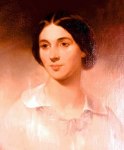
Jessie Benton lived in France for nearly a year and was fluent in the French language. She was very close with Count de la Garde, a cousin of Eugene and Hortense Beauharnais, who left her letters from all members of the Bonaparte family, and filled her in on the latest intrigues of this family that many authors connect with the Priory de Sion. I once subscribed to the theories there was such a thing, and filed a claim in the Probate of my later sister, Christine Rosamond Benton, where I mention the Merovingians.
Jessie Benton’s daughter burned many papers and documents she inherited from her mother and father.
Jon Presco
Copyright 2012
“…Abbe Seiyes urged Napoleon to marry Josephine Beauhamais because she was a Merovingian descendant, and to adopt her two children by a previous marriage who were of this anciently royal stock.” In 1798 “on the way to Egypt, Bonaparte detoured to capture Malta and the treasure held by the Knights of Malta.”
“She has both the versatility and adaptiveness that are characteristic of the genuine American woman, and which have enabled her to make almost as many friends in foreign lands as she has throughout her own country. The Count de la Garde, a cousin of Eugene and Hortense Beauharnais, whom she knew in Paris, and who left her at his death a valuable collection of souvenirs of the Bonaparte family, said of her that she was the only American woman he had ever known. He had known others of her countrywomen, but they were but imitations of English or French women, while in her he felt the originality and individuality of another people.”
“NAKRATIVE OF PLAIN EUGENE.
Widow and Son of a Count Beau
harnais Are Still Alive In
This City.
In humble lodgings at 819 Broadway in
this City live the widow and son of Count
Eugene de Beauharnais, according to their
statements, and they are” inclined to take
exceptions to the pretensions, as they al
lege, of General Beauharnais.
General Beauharnais, it will be remem
bered, was the lion at the Palace Hotel
hers not more than five weeks ago and
called himself the Marquis Eugene de
Beauharnais of Paris and New Orleans.
His grandfather, he said, and the father of
the Eugene de Beauharnais who was the
first husband of the Empress Josephine —
Napoleon being the second — were brothers”
Hortense de Beauharnais
Last updated 1 month ago
From Wikipedia, the free encyclopedia
Jump to: navigation, search
Hortense de Beauharnais
Queen Consort of Holland
Comtesse de Saint-Leu
Duchesse de Saint-Leu
Hortense de Beauharnais, Queen of Holland
Queen Consort of Holland
Tenure
5 June 1806 – 1 July 1810
Spouse
Louis Bonaparte, King of Holland
Issue
Napoléon Louis Charles Bonaparte
Napoleon Louis Bonaparte
Napoleon III of France
Charles Auguste Louis Joseph, duc de Morny (illegitimate)
House
House of Bonaparte (by marriage)
House of Beauharnais (by birth)
Father
Alexandre, Vicomte de Beauharnais
Mother
Joséphine Tascher de la Pagerie
Born
10 April 1783
Paris, Kingdom of France
Died
5 October 1837 (aged 54)
Chateau of Arenenberg, Thurgau, Switzerland
Burial
St Pierre-St Paul Church, Rueil-Malmaison, France
Religion
Roman Catholic
Hortense Eugénie Cécile Bonaparte (French pronunciation: [ɔʁtɑ̃s øʒeni sesil bɔnapaʁt]) (née de Beauharnais, pronounced: [də boaʁnɛ]) (10 April 1783 – 5 October 1837), Queen Consort of Holland, was the stepdaughter of Emperor Napoleon I, being the daughter of his first wife, Joséphine de Beauharnais. She later became the wife of the former’s brother, Louis Bonaparte, King of Holland, and the mother of Napoleon III, Emperor of the French. She had also an illegitimate son, Charles Auguste Louis Joseph, duc de Morny by her lover Charles Joseph, comte de Flahaut.
Hortense was born in Paris, France on 10 April 1783, the daughter of Alexandre, Vicomte de Beauharnais and Joséphine Tascher de la Pagerie. Her parents separated shortly after her birth. Her father was executed on 23 July 1794, at the time of the French Revolution, a few days before the end of the Reign of Terror. Her mother was imprisoned in the Carmes prison, from which she was released on 6 August 1794, thanks to the intervention of her best friend Thérèse Tallien. Two years later, her mother married Napoleon Bonaparte.
Hortense was described as having been an amusing and pretty child with long, pale golden-blonde hair and blue eyes.[1] She received her education at the school of Madame Jeanne Campan in St-Germain-en-Laye together with Napoleon’s youngest sister Caroline Bonaparte, who later married Joachim Murat.[1] She had an elder brother, Eugène de Beauharnais. Hortense was an accomplished amateur musical composer and supplied the army of her stepfather with rousing marches, including Partant pour la Syrie. She also enjoyed playing games and particularly excelled at billiards.[2]
[edit] Marriage
In 1802, at Napoleon’s request, Hortense married his brother Louis Bonaparte. The couple had three sons:
Napoléon Louis Charles Bonaparte (10 October 1802 – 5 May 1807)
Napoleon Louis Bonaparte (11 October 1804 – 17 March 1831)
Charles Louis Napoléon Bonaparte, later Napoleon III, Emperor of the French (20 April 1808- 9 January 1873)
[edit] Queen
Royal Monogram of Hortense de Beauharnais
Royal coat of arms of Hortense de Beauharnais
In 1806, Napoleon appointed his brother Louis to be the King of Holland, and Hortense accompanied her husband to The Hague. Hortense’s negativity towards being appointed Queen of Holland was twofold: First, it was necessary for her to move there with Louis, with whom she did not get along, and second, she had to leave her life as a celebrated member of Parisian society. She had hoped to be “a Queen of Holland in Paris”, but Napoleon did not agree. She was therefore forced to depart with Louis to the Netherlands, where she arrived on 18 June 1806.
Queen Hortense was pleasantly surprised [3] by the warm welcome from the public. She quickly became accustomed to life in the Netherlands and came to like the country. She was present at official celebrations and ceremonies, visited the market places where she made large purchases, and was much liked by the public, which annoyed her husband. She learned water colour painting and made trips around the countryside. Nevertheless, she hated her stay there because of her bad relationship with Louis: The couple lived in different parts of the palace and avoided each other at every opportunity, with Hortense describing herself as a prisoner.[3] In 1807, her son died; she was subsequently allowed to visit France as the climate there was considered better for her other son Louis-Napoléon. She remained in France, again pleased by her status as queen at the French court, until 1810, when Napoleon forced her to return to the Netherlands at his new wedding—he did not consider it suitable to have the daughter of his former spouse at court. Hortense returned temporarily to the Netherlands, but on 1 June 1810, she was allowed to leave again on the pretext of her health.
In 1810, after his Dutch kingdom was taken away from him, Louis remained in Holland for nearly three years, turning to writing and poetry. Louis wrote to Napoleon after the latter’s defeat in Russia to request that the Dutch throne be restored to him. However, Napoleon refused. Louis finally returned to France in 1813, where he remained for the rest of his life.
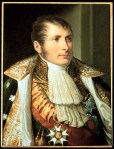
Eugène Rose de Beauharnais, Prince Français, Prince of Venice, Viceroy of the Kingdom of Italy, Hereditary Grand Duke of Frankfurt, 1st Duke of Leuchtenberg and 1st Prince of Eichstätt ad personam (3 September 1781 – 21 February 1824) was the first child and only son of Alexandre, Vicomte de Beauharnais and Joséphine Tascher de la Pagerie, future wife of French Emperor Napoléon I.
He was born in Paris, France and became the stepson and adopted child (but not the heir to the imperial throne) of Napoleon. His natural father was executed during the revolutionary Reign of Terror. He commanded the Army of Italy and was viceroy of Italy under his stepfather.
Historians have looked upon him as one of the ablest of Napoleon’s relatives.[citation needed
In 1806, Eugène married Princess Augusta Amalia Ludovika Georgia of Bavaria (1788–1851), eldest daughter of Maximilian I Joseph of Bavaria, and his royal father-in-law made him Duke of Leuchtenberg and gave him the administration of the Principality of Eichstätt on 14 November 1817.
Eugène’s and Augusta’s children were:
1. Princess Joséphine Maximiliane Eugénie Napoléonne de Beauharnais (1807–1876) became the Queen Consort to King Oscar I of Sweden, himself the son of Napoleon’s old love, Désirée Clary.
2. Princess Eugénie Hortense Auguste de Beauharnais (1808–1847). Married Friedrich, Prince of Hohenzollern-Hechingen.
3. Prince Auguste Charles Eugène Napoléon de Beauharnais, 2nd Duke of Leuchtenberg, (1810–1835) married Queen Mary II of Portugal. There was no issue from this marriage
4. Princess Amélie Auguste Eugénie Napoléone de Beauharnais, (31 July 1812 – 26 January 1873) was the second wife of Peter I of Brazil (father of Mary II of Portugal) and became Empress of Brazil
5. Princess Theodelinde Louise Eugénie Auguste Napoléone de Beauharnais (1814–1857). Married Wilhelm, 1st Duke of Urach.
6. Princess Carolina Clotilde de Beauharnais (1816)
7. Prince Maximilian Josèphe Eugène Auguste Napoléon de Beauharnais (1817–1852), married Grand Duchess Maria Nikolaievna of Russia, eldest daughter of Tsar Nicholas I of Russia, and received the title of “Prince Romanovsky”, addressed as “His Imperial Highness”, in 1852.
Eugène de Beauharnais died on 21 February 1824 in Munich.
Their headquarters were originally in southern France, but during the crusades they moved to Malta, especially after breaking up with the Templars in 1188. Here they continued their plans, attempting to manipulate European politics to bring the Holy Blood to the thrones. At one point they made a fatal mistake: one of their initiates, Napoleon Bonaparte, joined forces with the Technocracy and in 1798 he attempted to take over the Prieure. The leaders managed to flee in secret with the most important genealogies, but Napoleon successfully seized its resources and many members were hunted down and either killed or forced into the Technocracy. The Prieure hid in southern France again, slowly building a new and even more secret network across Europe and America.
Recently, the leaders of the Prieure have decided it was time to hide their plans in the open: by leaking enough, they have made conspiracy theorists aware of their existence and some of their manipulations. The result is of course an impenetrable mist of speculation, best-seller books, misinformation and imitation that hides the real plans. While everybody are scrambling to search for secret tunnels in Rennes-le-Château, track down forged documents or to find out if Sir Isaac Newton really was a member, the Prieure is quietly working on its own goals in obscurity.
Their current main plan is to bring up a number of candidates, and during the next chaotic decades attempt to put as many of them into positions of power. Many will fail, but the Prieure believes haste is necessary: a time of reckoning is approaching, and destiny itself will ensure that the right one will reach his throne.
“…Abbe Seiyes urged Napoleon to marry Josephine Beauhamais because she was a Merovingian descendant, and to adopt her two children by a previous marriage who were of this anciently royal stock.” In 1798 “on the way to Egypt, Bonaparte detoured to capture Malta and the treasure held by the Knights of Malta.”
The Beau
harnais family has some representation in
almost every European court. My father may
have descended from a brother of Alexander
Eugene’s father.
Ibis General Beauharnais pronounces
the name “Eugene” in such a way
as to lead one to believe that he
had never learned to speak French in his
youth. He pronounces it “Oozhun,” with
some accent on the tirst syllable.
General Beauharnais says his mother was a
Benton. My father had been on friendly
terms at Washington with Senator Benton of
Missouri. My father was well known here by
the late Judge Leander Quint and also Cap
tain M. R. Roberts of this City.
THE BEAUHARNAIS HONORS
Claims of the Marquis, Gen
eral and Inventor Are
Questioned.
NAKRATIVE OF PLAIN EUGENE.
Widow and Son of a Count Beau
harnais Are Still Alive In
This City.
In humble lodgings at 819 Broadway in
this City live the widow and son of Count
Eugene de Beauharnais, according to their
statements, and they are” inclined to take
exceptions to the pretensions, as they al
lege, of General Beauharnais.
General Beauharnais, it will be remem
bered, was the lion at the Palace Hotel
hers not more than five weeks ago and
called himself the Marquis Eugene de
Beauharnais of Paris and New Orleans.
His grandfather, he said, and the father of
the Eugene de Beauharnais who was the
first husband of the Empress Josephine —
Napoleon being the second — were brothers.
According to his own story the general
was born in Virginia and was stolen by
Cherokee Indians while a boy of tender
years from his father’s place near Pow-
hattan to be made to pose as a twin
brother of a son of Chief Elkpost at their
camp in the Shenandoah Valley, but the
son dying he was returned to his father in
deference to the superstitions of his cap
tors. After he grew up he became a brig
adier-general of the bout-hern army, a
Charleston harbor blockade-runner, the
financial agent of the Confederacy, the
right-hand man of General Lee and a
marked man, upon whose head was a
pric â– , ?50,000 reward for his capture being
offered by the United States Government.
As the* general had a crude petroleum
generator patent, and as he had occasion
ally called himself by some other name it
was thought at the time that he and
Colonel A. P. Chamberlain, who also had
such a patent and had been born in Vir
ginia, were one and the same person.
Young Eugene Beauharnais of 819
Broadway, sailor, miner, engineer, fond of
travel arid adventure, and to whom the
v.-jst coast of Africa and parts of the Orient
have become almost as familiar as his own
domicile, says, in so many words, that he
thinks the general represented himself to
be one of the noble Beauharnais family
without good, legitimate reason for so do
ing. ”Z’xrX.V
It is an interesting story which young
Eugene tells, to wit:
I believe this man is using my father’s title.
In my childhood I went to school here at the
College de Charlemagne, which was conducted
by A. Hamel, a son of the Viscount Hamel.
Mons. Hamel made a statement in writing to
my mother saying that ne recognized in my
father’s picture the features of his old com
rade. Count de Beauharnais, with whom he
went to school in Paris in 1833 and 1834 in the
Institution Gourmand, at Fontecoy aux Roses.
From the time they went to school together we
have had no trace of my father until he ap
peared in Providence, R. L, lecturing in 1854
–1855. My father was a well-educated man and
lectured on the sciences and spiritualism, and
when he felt like it he could practice medi
cine. •’:’.•’*-‘:.:•/-,, â– â– ‘-,
My mother’s maiden name was Sarah Kis
sack, and she comes of an old Manx family as
old as the Beauharnais. My father married
her in this City on June la, 1859. He was
then plain Valentine Eugene Beauharnais,
M.D.
I was born in March, 1860, at Stockton, and
in the following January my father died of
brain fever at Culiacan, in the* State ot Sinaloa,
Mexico. Father had gone there to practice
medicine, and mother and I were at Mazatlan,
where I was taken sick with smallpox.
We have never had any chance to look up
any records because since we returned to this
City from Mexico it has been one of constant
struggle for existence.
General Beauharnais called upon my mother
and myself one evening, but he did not seem
to be very much interested in our statements,
though he was full of stories about himself
and his invention. It was the 28th of July
he came. He asked if I could produce any
good proofs of my identity, and when I an
swered I could not he seemed very much re
lieved and turned the conversation entirely.
Neither of us can lay any claim to any rela
tionship with the Empress Josephine. The
children of her husband, Eugene Beauharnais,
are all accounted for. One son married a Rus
sian Princess and the other a Queen of Portu
gal. One daughter married a son ol the King
of Sweden, another a Hohenzollern of Ger
many and another was in Austria. The Beau
harnais family has some representation in
almost every European court. My father may
have descended from a brother of Alexander
Eugene’s father.
Born in Versailles at the beginning of the French revolution, Stéphanie was a great-granddaughter to Claude de Beauharnais (1680–1738) and Renée Hardouineau (1696–1744) who were married in La Rochelle during 1713. Their oldest son was François de Beauharnais, Marquess de la Ferte-Beauharnais (1714–1800) who served as a governor of Martinique. Their younger son was Claude de Beauharnais, 1st Count des Roches-Baritaud (1717–1784), Stephanie’s paternal grandfather.
Claude was married in 1753 to Marie Anne Françoise Mouchard (1738–1813), known in poetry as Fanny de Beauharnais. Their oldest son was Claude de Beauharnais, 2nd Count des Roches-Baritaud (1756–1819). In 1783 the 2nd Count married Claude Françoise de Lezay (1767–1791). The marriage resulted in the birth of first her older brother Alberic de Beauharnais (1786–1791) and then Stephanie herself. Her father was remarried in 1799 to Suzanne Fortin-Duplessis (1775–1850). The second marriage resulted in the birth of her half-sister Joséphine de Beauharnais, Marchioness de Quiqueran-Beaujeu (1803–1870).
Will the Antichrist claim to be a descendent of Jesus? The popular Mary Magdalene religious conspiracy implies that he will. This conspiracy theorizes that Jesus was married to Mary Magdalene and had children who’s descendents are still alive today. Their descendents today are supposedly the Merovingians. The theory states that the Merovingians have preserved their royal bloodline through the centuries with the help of secret societies. The theory postulates that his bloodline will supposedly birth a king which will claim to be the Messiah.
http://chroniclingamerica.loc.gov/lccn/sn85066387/1895-09-02/ed-1/seq-5/ocr.txt
 Rosamond Press
Leave a comment