 If Mitt Romney becomes the President of the United States, then the most powerful Christian Nation in the world will be spiritually ruled over by a fraudulent Jesus and religion, which is to say – a anti-Christ!
Evangelicals are swearing they will vote for Romney – anyone but Barack Obama – who is not a Muslim as the lying Baptist and Evangelical leaders – preach! These racist men of the cloth would rather see the anti-Christ rule over us, then a black man.
Then these ignorant men will whine about the decline of the white race, and berate women for not having any respect for them.
The white race is solely responsible for their decline. We must put these blubbering whiners out of the church!
Here is my brother’s racist misogynist rants, I often comparing him to Rush Limbaugh. Mark Presco disowned his family and disapeared. He believes he is superior to his kin, but, never bothered to discover why. He is a neo-Nazi with no religion.
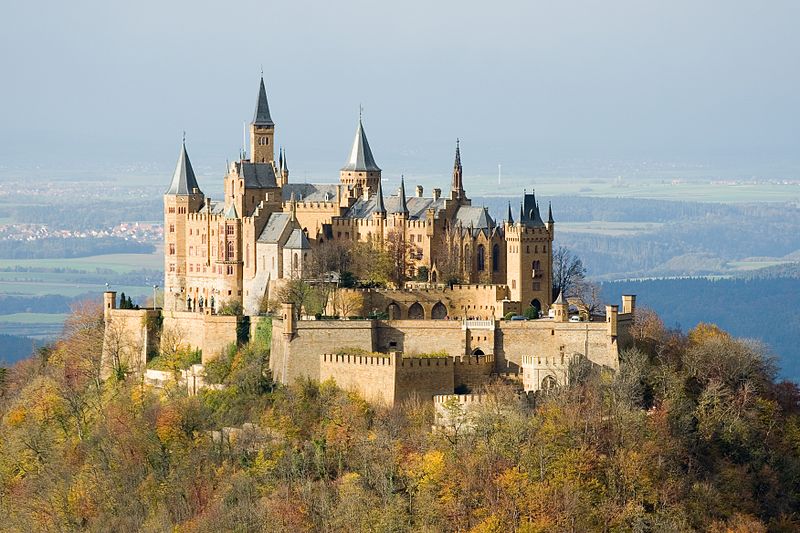
Let me introduce you to the Prince of Orange who is kin to Windsor, the Dutch Royalty, and most of the world’s royalty. He is of the House of Hohenzollern who owned the castle above. His ancestors are of the House of Cleves that has its own Swan Knight legend where a hidden lineage is revealed to save a line of royal people connected to the Holy grail. Georg Frederich ancestors were Calvinists who allowed the Huguenots to come live in Berlin.
Georg is kin to the Winter King of Bohemia and the Kings of Prussia. This family married Protestants and Calvinists to created a royal lineage equal to anything the Pope and put together. They rivaled the Habsburgs, and made war against them.
I suspect England went to war with the House of Orange in World War One because their lineage was the same as theirs, but superior. The Church of England was threatened by the Calvinist alliance with William of Orange and the Scottish Reformers, such as John Knox, who the singer John Witherspoon descends.
I’m talking about a lineage of Royal Protestants that I might descend from in the union of both parents. This is why I was spared, sent back after I saw heaven. My brushes with death hence are incredible! Folks have tried to kill me, but failed.
When I read the Bible for the first time in 1987, my life was never the same. I am the missing link in the Dutch line of the House of Orange that became extinct in the male line. There is much controversy, but, what I have made is a Spiritual Bridge – a Rainbow Bridge – that carried on the Reformation on a world wide scale. This is to say, I am founding a New Protestant Church that will unite Europe with the United States. This church will be based upon the Jubilee Jesus and the original Nazarite Church of the Holy Grail.
Georg Freidrich knows he is to serve a great purpous, but, only now does a Great Prophet step forth to bring him into the light. Georg has talked about reviving German Heraldry. Have the Mormons of the false Jesus already put his lineage in their pile?
And, I let go a hardy jovial laugh, and stroke my white beard!
Long live the King!
Jon the Nazarite
House of HohenzollernGeorg Friedrich succeeded his grandfather, Prince Louis Ferdinand I of Prussia as Head of the House of Hohenzollern on 26 September 1994. He learned to appreciate the history and responsibility of his heritage during time spent with his paternal grandfather, who often recounted to him anecdotes from the life in exile of his grandfather, the last Kaiser.[4] When asked about the burden of the Prussian dynasty’s house laws, which made Georg Friedrich the ex-Kaiser’s heir despite the seniority of two of his late father’s living brothers, he commented “Our family has very strict rules about marriage. Only God knows who I shall marry, but I want to be with someone who at least understands my responsibilities…So it is likely that this might be a person from the same background as mine.”[4]
His position as sole heir to the estate of his grandfather was challenged by his uncles, Friedrich Wilhelm and Michael who filed a lawsuit claiming that, despite their renunciations as dynasts at the time of their marriages, the loss of their inheritance rights based on their selection of spouse was discriminatory and unconstitutional.[5] His uncles were initially successful, the Regional Court of Hechingen and the higher Regional Court of Stuttgart ruling in their favour in 1997 on the grounds that the requirement to marry equally was “immoral”.[6] However, the Federal Court of Justice of Germany overturned the original rulings in favour of Georg Friedrich’s uncles, the case being remanded to the courts at Hechingen and Stuttgart. This time both courts ruled in favour of Georg Friedrich. His uncles then took their case to the Federal Constitutional Court of Germany which overruled the previous court rulings in Georg Friedrich’s favour.[5] On 19 October 2005, a German regional court ruled that Georg Friedrich was indeed the principal heir of his grandfather, Louis Ferdinand (who was the primary beneficiary of the trust set up for the estate of Wilhelm II), but also concluded that each of the children of Louis Ferdinand was entitled to a portion of the Prussian inheritance.[7]
[edit] MarriageOn 21 January 2011, Georg Friedrich announced his engagement to HSH Princess Sophie Johanna Maria of Isenburg (born 7 March 1978), who studied business administration in Freiburg and Berlin and works at a firm that offers consulting services for nonprofit business.[8]
When the last duke of Jülich-Cleves-Berge died issueless in 1609, the War of the Jülich succession broke out. The lands were finally divided between the Wittelsbach dukes of Palatinate-Neuburg (Jülich and Berge) and the Margraviate of Brandenburg, who gained Cleves with Mark and Ravensberg according to the 1614 Treaty of Xanten. The Hohenzollern margraves thereby got a first foothold in the Rhineland, however, large parts of the Duchy of Cleves were occupied by the United Provinces until the Franco-Dutch War in 1672. Finally incorporated into Brandenburg-Prussia by the Great Elector Frederick William I of Brandenburg in 1666 and part of the Kingdom of Prussia after 1701, Cleves was occupied by French forces in the Seven Years’ War (1757–62).
The rising importance of the Reformed churches and of Calvin belongs to the second phase of the Protestant Reformation. Evangelical churches began to form after Martin Luther was excommunicated from the Catholic Church. Calvin was a French exile in Geneva. He had signed the Lutheran Augsburg Confession as it was revised by Melancthon in 1540. However, his influence was first felt in the Swiss Reformation whose leader was Huldrych Zwingli. It soon became evident that doctrine in the Reformed churches was developing in a direction independent of Martin Luther’s, under the influence of numerous writers and reformers among whom Calvin eventually became preeminent. Much later, when his fame was attached to the Reformed churches, their whole body of doctrine came to be called “Calvinism”.
A neo-Calvinist movement called “Christian Reconstructionism” is much smaller, more radical, and theocratic, but by some believed to be widely influential in American family and political life. Reconstructionism is a distinct revision of Kuyper’s approach, which sharply departs from that root influence through the complete rejection of pluralism, and by formulating suggested applications of the sanctions of Biblical Law for modern civil governments. These distinctives are the least influential aspects of the movement. Its intellectual founder, the late Rousas J. Rushdoony, based much of his understanding on the apologetical insights of Cornelius Van Til, father of presuppositionalism and professor at Westminster Theological Seminary (although Van Til himself did not hold to such a view). It has some influence in the conservative Reformed churches in which it was born, and in Calvinistic Baptist and Charismatic churches mostly in the United States, Canada, and to a lesser extent in the UK.
Reconstructionism aims toward the complete rebuilding of the structures of society on Christian and Biblical presuppositions, not, according to its promoters, in terms of “top down” structural changes, but through the steady advance of the Gospel of Christ as men and women are converted, who then live out their obedience to God in the areas for which they are responsible. In keeping with the Theonomic Principle, it seeks to establish laws and structures that will best instantiate the ethical principles of the Bible, including the Old Testament as expounded in the case laws and summarized in the Decalogue. Not a political movement, strictly speaking, Reconstructionism has nonetheless been influential in the development of aspects of the Christian Right that some critics have called “Dominionism”. Reconstructionism assumes that God institutes in the Scriptures everything he requires for the ordering of self and society, extending the regulative principle of worship to all areas of life.
Advocates of both Arminianism and Calvinism find a home in many Protestant denominations, and sometimes both exist within the same denomination as with the Puritans. Faiths leaning at least in part in the Arminian direction include Methodists, Free Will Baptists, General Baptists, Church of the Nazarene, The Salvation Army, and Charismatics. Denominations leaning in the Calvinist direction are grouped as the Reformed churches and include Particular Baptists, Reformed Baptists, Presbyterians, and Congregationalists. The majority of Southern Baptists, including Billy Graham, accept Arminianism with an exception allowing for a doctrine of perseverance of the saints (“eternal security”).[6][7][8] Many see Calvinism as growing in acceptance,[9] and some prominent Reformed Baptists, such as Albert Mohler and Mark Dever, have been pushing for the Southern Baptist Convention to adopt a more Calvinistic orientation. Lutherans espouse a view of salvation and election distinct from both the Calvinist and Arminian schools of soteriology.
Frederick Henry was born on 29 January 1584 in Delft, Holland, Dutch Republic. He was the youngest child of William the Silent and Louise de Coligny. His father William was stadtholder of Holland, Zeeland, Utrecht, and Friesland. His mother Louise was daughter of the Huguenot leader Gaspard de Coligny, and was the fourth wife of his father. He was thus the half brother of his predecessor Maurice of Orange, deceased in 1625.
Frederick Henry was born six months before his father’s assassination on 10 July 1584. The boy was trained to arms by his elder brother Maurice, one of the finest generals of his age. After Maurice threatened to legimitize his illegitimate children if he did not marry, Frederick Henry married Amalia of Solms-Braunfels in 1625. His illegitimate son by Margaretha Catharina Bruyns (1595–1625), Frederick Nassau de Zuylenstein was born in 1624 before his marriage. This son later became the governor of the young William III of England for seven years.
Elizabeth Charlotte was the daughter of Frederick IV, Elector Palatine, and Louise Juliana of Orange-Nassau. Her brother Frederick became famous as the Elector-Palatine and “Winter King” of Bohemia.
In 1616 Elizabeth Charlotte married George William, with whom she had the following children:
Louise Charlotte (1617–1676), married Jacob Kettler, Duke of Courland
Frederick William (1620–1688), the “Great Elector”
Hedwig Sophia (1623–1683), married William VI, Landgrave of Hesse-Kassel (or Hesse-Cassel)
The marriage was arranged to unite two Protestant dynasties. In 1618, her brother’s deposition from the throne of Bohemia caused the Thirty Years’ War. Her spouse was described as ambivalent and passive, but Charlotte ensured protection for her sibling when Brandenburg sided against Austria in the affairs of Bohemia and the Holy Roman Empire. At court, she favoured the Protestant party against the pro-Austrian party. She influenced her son to sympathize with the Protestant cause, and he came to have a great affection for his mother, closer than what was usually common during that age. She spent her last years at Crossen, where she died.
Frederick V (German: Friedrich V.) (16 August 1596 – 29 November 1632)[1] was Elector Palatine (1610–23), and, as Frederick I (Czech: Fridrich Falcký), King of Bohemia (1619–20, for his short reign he is often nicknamed the Winter King, Czech: Zimní král; German: Winterkönig).
Frederick was born at the jagdschloss Deinschwang (a hunting lodge) near Amberg in the Upper Palatinate. He was the son and heir of Frederick IV and of Louise Juliana of Nassau, the daughter of William the Silent and Charlotte de Bourbon-Monpensier. He – an intellectual, a mystic, and a Calvinist – succeeded his father as Prince-Elector of the Rhenish Palatinate in 1610. He was responsible for the construction of the famous Hortus Palatinus gardens in Heidelberg.
In 1618 the Protestant estates of Bohemia rebelled against the Roman Catholic King Ferdinand and offered the crown of Bohemia to Frederick, choosing him since he was the leader of the Protestant Union, a military alliance founded by his father. Frederick duly accepted the crown (coronation on 4 November 1619), which triggered the outbreak of the Thirty Years’ War.
Frederick’s father-in-law, James VI of Scotland and I of England, opposed the takeover of Bohemia from the Habsburgs. Additionally, Frederick’s allies in the Protestant Union failed to support him militarily by signing the Treaty of Ulm (1620). His brief reign as King of Bohemia ended with his defeat at the Battle of White Mountain on 8 November 1620 – a year and four days after his coronation. This earned him the derisive nickname of ‘the Winter King’. After this battle, the Imperial forces invaded Frederick’s Palatinate lands and he had to flee to Holland in 1622. An Imperial edict formally deprived him of the Palatinate in 1623. He lived the rest of his life in exile with his wife and family, mostly at the Hague, and died in Mainz in 1632.
His eldest surviving son Charles I Louis, Elector Palatine returned to power in 1648 with the end of the war. His daughter Princess Sophia was eventually named heiress presumptive to the British throne, and was the founder of the Hanoverian line of kings.
The Swan Knight associated with the House of Cleves was not apparently the same one found in the legend of Godfrey de Bouillon as Pighius says that the knight arrives at Nimegen in 732. According to the legend, the Swan Knight is called forth on his mission by a bell located in the earthly paradise or in some mountain on his unknown home. Therefore, he is sent periodically over the ages to perform his calling, which seems linked with protecting the rights of women. In three cases, he defends the duchesses of Brabant and Cleves; and the countess of Bouillon — all in the Low Countries that are today known as Benelux — from marauding dukes intent on forcibly taking their inheritance.
Pighius, Hermann Stangefol (1656) and other later writers tended to dismiss the wondrous tales of an earthly paradise and gave other explanations, for example, that the Swan Knight came from a monastery called Paradise in Thurgau.
However, in the earlier accounts the concept of the terrestrial paradise places it squarely at the furthest East in the Indies. Even Parzival’s Wasteland, the realm of the Grail, while appearing to refer to Jerusalem in part, also by analogy, points to the eastern paradise and it was there that Lohengrin, his Swan Knight, was born.
http://sambali.blogspot.com/2009/04/apocalypse-swan-knight-and-crusades.html
http://en.wikipedia.org/wiki/House_of_Orange-Nassau
Although Charles V resisted the Protestant Reformation, he ruled the Dutch territories wisely with moderation and regard for local customs, and he did not persecute his Protestant subjects on a large scale. His son Philip II inherited his antipathy for the Protestants but not his moderation. Under the reign of Philip, a true persecution of Protestants was initiated and taxes were raised to an outrageous level. Discontent arose and William of Orange (with his vague Lutheran childhood) stood up for the Protestant (mainly Calvinist) inhabitants of the Netherlands. Things went badly after the Eighty Years’ War started in 1568, but luck turned to his advantage when Protestant rebels attacking from the North Sea captured Brielle, a coastal town in present-day South Holland in 1572.
Since females were not allowed to hold power in Luxembourg, due to Salic law, Luxembourg passed to the House of Nassau-Weilburg, a collateral line to the House of Orange. The Dutch Royal Family faced the threat of a complete extinction until 1909, when Wilhemina gave birth to her daughter, Juliana. The Dutch royal house remained quite small until the latter 1930s and the early 1940s, during which Juliana gave birth to four children. Although the House of Orange died out in its male line with the death of Queen Wilhelmina, the name “Orange” continues to be used by the Dutch royalty.[3]
[edit] A modern monarchy
Wilhelmina was queen of the Netherlands for 58 years, from 1890 to 1948. Because she was only 10 years old in 1890, her mother, Queen Emma, was the regent until Wilhelmina’s 18th birthday in 1898. The Netherlands remained neutral in World War I, during her reign, and this country was not invaded by Germany, as neighboring Belgium was. [11][dead link]
Nevertheless, Queen Wilhelmina became a symbol of the Dutch resistance during World War II. The moral authority of the Monarchy was restored because of her rule. After fifty years on the throne as the Queen, Wilhelmina decided to abdicate in favour of her daughter, Juliana. Juliana had the reputation of making the monarchy less “aloof”, and under her reign the Monarchy became known as the “cycling monarchy”. Members of the royal family were often seen bicycling through the cities and the countryside under Juliana. [11]
A royal marriage policy quarrel occurred starting in 1966, when the future Queen Beatrix decided to marry Claus von Amsberg, a German diplomat. The marriage of a member of the royal family to a German was quite controversial in the Netherlands, which had suffered under Nazi German occupation in 1940 – 45. This reluctance to accept a German consort probably was exacerbated by von Amsberg’s former membership in the Hitler Youth under the Nazi regime in his native country, and also his following service in the German Wehrmacht.[11]
Prince of Orange is a title of nobility, originally associated with the Principality of Orange, in what is now southern France. In French it is la Principauté d’Orange.
The title is carried by members of the House of Orange-Nassau, as heirs to the crown of the Netherlands. Rival claims to the title are made by members of the House of Hohenzollern and the family of Mailly. The current holders of the title are Prince Willem-Alexander of the Netherlands (Orange-Nassau), Georg Friedrich, Prince of Prussia (Hohenzollern), and Guy, Marquis de Mailly-Neslé (Mailly).
http://en.wikipedia.org/wiki/Georg_Friedrich,_Prince_of_Prussia

 Rosamond Press
Leave a comment