


Baptists are overrun with neo-Confederates who are still bitter about losing the Civil War, and have plucked aborted babies from abortion clinics, put them on a string, and hung them around their necks. They are Satan’s army who hate the Civil Rights Movement that made them look bad when they resisted it. It has become clear these Orcs do not want a solution for abortion, but are grateful for it, for it brings more recruits into their carrion army that they send to the polling places – like flocks of buzzards!
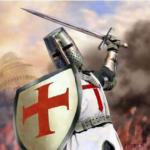
My Rougemont and Stuttmeister kindred went on real Crusades – and married into the Fremont-Benton family who founded the Republican Abolitionist Party! I own all the tradition – they claim the right till kill for. Get out of my party!
My good friend and his sons descend from Wallace and the Cavanaugh who were leaders of the Plymouth Brethren, who were Evangelicals in Britain.
There is a strong racist element in the Baptist-Evangelical Union, because anglos are having a white identity problem because many supported slavery. Give it up! Surrender!
Those good Christians who have been led astray, need only study the image of the Devil above, who has captured ‘The Lovers’ and chained them to him so that he can use them and human sexuality to enslave all humankind! That Devil was made manifest in the vile that spew out of the mouth of their king pharisee of the false evangelical church!
Repent! Let God’s Lovers go!
Jon the Nazarite
A certain Müller, a burgher of Berlin, endowed a chapel in gratitude for his lucky rescue from a Saracen assault during his pilgrimage to Jerusalem. On 18 October 1484 Arnold von Burgsdorff, Prince-Bishop of Brandenburg, issued an indulgence, promising all those helping to restore the chapel 40 days less in the purgatory.[1] The indulgence is the oldest surviving document mentioning the chapel, then consecrated to Mary(am) of Nazareth, the Holy Cross, the blessed Pope Fabian, and Sebastianus of Narbonne.[2] The Chapel was then located in the fields about 1 km outside of St. Gertrud’s Gate (close to today’s Gertraudenbrücke) of the city of Cölln (a part of today’s borough Mitte of Berlin) on the highway to Magdeburg and Leipzig (today’s Axel-Springer-Straße and Lindenstraße).
The chapel was known for its copy of the Holy Sepulchre, as imagined at that time. This structure within the chapel earned it its name, which in 1540 appeared first in a document (Capella zu Hierusalem).[3] Also the present north-south directed street then ending at the chapel thus got its name Jerusalemer Straße in 1706.[4] In 1484 a warden (Kleuser, literally Hermit) took care of the chapel and collected alms from the passing travellers for the pertaining hospital.[5]
As a Calvinist and Lutheran Simultaneum (1682–1830)
In 1682 Jerusalem’s Chapel became a Calvinist and Lutheran simultaneum. In 1688 Prince-Elector Frederick III founded another new city under electoral domination, Friedrichstadt, which included Jerusalem’s Chapel in its municipal boundary. In 1689 and 1693–1695 Giovanni Simonetti restored and extended the chapel to become Jerusalem’s Church, which was continuously staffed with a Calvinist and a Lutheran preacher from 1694 on.[7] In 1701 the Judge Krause at the Kammergericht (then Supreme Court of Brandenburg) added a sepulchre chapel for his family to the church building.[8]
International Genealogical Index – Germany
7. AGNES EMMA HEDWIG STUTTMEISTER – International Genealogical Index / GE
Gender: Female Christening: 06 SEP 1856 Sankt Petri, Berlin Stadt, Brandenburg, Preussen
8. ALBERTUS FRIEDERICH STUTTMEISTER – International Genealogical Index / GE
Gender: Male Christening: 11 JUL 1745 Jerusalem, Berlin Stadt, Brandenburg, Preussen
9. DOROTHEA SOPHIA STUTTMEISTER – International Genealogical Index / GE
Gender: Female Christening: 03 AUG 1807 Jerusalem, Berlin Stadt, Brandenburg, Preussen
10. EMILIE FRIEDRICKE STUDTMEISTER – International Genealogical Index / GE
Gender: Female Christening: 26 JAN 1806 Sankt Nikolai, Berlin Stadt, Brandenburg, Preussen
11. AMALIE CHARLOTTE JOHANNE ELISABETH STUTTMEISTER – International Genealogical Index / GE
Gender: Female Christening: 06 MAR 1860 Sankt Petri, Berlin Stadt, Brandenburg, Preussen
12. FRIEDRICH HEINRICH STUTTMEISTER – International Genealogical Index / GE
Gender: Male Christening: 30 JAN 1862 Sankt Elisabeth, Berlin Stadt, Brandenburg, Preussen
13. JOH. CARL STUTTMEISTER – International Genealogical Index / GE
Gender: Male Christening: 20 AUG 1747 Jerusalem, Berlin Stadt, Brandenburg, Preussen
14. JOHANNES HERMANN STUTTMEISTER – International Genealogical Index / GE
Gender: Male Christening: 04 MAY 1826 Friedrichswerder Berlin, Brandenburg, Preussen
15. CARL HEINRICH STUTTMEISTER – International Genealogical Index / GE
Gender: Male Christening: 15 APR 1805 Sankt Nikolai, Berlin Stadt, Brandenburg, Preussen
16. CATHARINA DOROTHEA STUTTMEISTER – International Genealogical Index / GE
Gender: Female Christening: 02 AUG 1743 Jerusalem, Berlin Stadt, Brandenburg, Preussen
17. VICTOR EMANUEL FELIX STUTTMEISTER – International Genealogical Index / GE
Gender: Male Christening: 07 MAR 1861 Sankt Petri, Berlin Stadt, Brandenburg, Preussen
18. WILHELM ERDMANN ARTHUR STUTTMEISTER – International Genealogical Index / GE
Gender: Male Christening: 28 DEC 1858 Sankt Petri, Berlin Stadt, Brandenburg, Preussen
Census – 1880 US Census
1. Atia L. STUTTMEISTER – 1880 United States Census / California
SisterL Gender: Female Birth: CA
2. Wm. O. STUTTMEISTER – 1880 United States Census / California
BroL Gender: Male Birth: CA
3. Victor STUTTMEISTER – 1880 United States Census / California
Other Gender: Male Birth: NY
4. Victor R. STUTTMEISTER – 1880 United States Census / California
Self Gender: Male Birth: GER
5. Sarah STUTTMEISTER – 1880 United States Census / California
Wife Gender: Female Birth: MO
6. Leah STUTTMEISTER – 1880 United States Census / California
Dau Gender: Female Birth: CA
Matches: Census/1880 US Census – 6
——————————————————————————–
Philipp Gerlach’s new structure of Jerusalem’s Church.
In 1708 the parish of Jerusalem’s Church, meanwhile too small for the Calvinist and the Lutheran parishioners, was divided, when the New Church, another simultaneum, was opened and took over the northern part of the parish district. Both Calvinist and both Lutheran congregations of the New Church and of Jerusalem’s Church kept a kind of parish federation, e.g. maintaining common cemeteries, three of which are comprised – with cemeteries of other congregations – in a compound of an overall of six cemeteries.
They are among the most important historical cemeteries of Berlin. They are located in Berlin-Kreuzberg south of Hallesches Tor (Berlin U-Bahn) (Friedhöfe vor dem Halleschen Tor). With effect from 1 January 1710 Friedrichstadt (and thus the parish of Jerusalem’s Church) and four other cities were united to form the Royal Residence and Capital City of Berlin (German: Königliche Haupt- und Residenzstadt Berlin).
Jerusalem’s Church with its tower stump in 1757.
Frederick William I of Prussia commanded on 1 November 1725 to build the church building, the foundation stone was laid on 27 November 1727 and since 1728 has been built on the church building.[9] In 1728–1731 Philipp Gerlach replaced the old structure including the sepulchre chapel by a new church building, whose southerly tower had a wooden top, which – poorly built as it was – had to be torn down again in 1747. The tower then remained a stump.[10] Due to the position of the site in the middle of a crossroads with streets entering from five directions the quire of the church was not oriented, but directed to the north.[11]
In 1817, under the auspices of King Frederick William III of Prussia, the Calvinist and the Lutheran
he German Evangelical Movement
No one liked the Westphalian settlement, but the lines were drawn, the Reformation over. Germany lay devastated, plundered by lawless armies, much of its population decimated. Commerce and industry had disappeared; moral, intellectual, and spiritual life had stagnated. Religion was dispirited and leaderless. A time for mystics and poets, much of German hymnody comes from this early 17th century.
Out of such sensitivities, a new Protestant movement, Pietism, arose. Pietism became the heart of a number of Lutheran-Reformed unions. In 1817, the Evangelical Church of the Prussian Union, by order of Frederick William III (1797-1840) of Prussia, united the Lutheran and Reformed Churches of his kingdom, giving birth to the ancestral church of the Evangelical Synod of North America, a grandparent of the United Church of Christ. The Evangelical Church of the Prussian Union became a model in other German kingdoms for Lutheran and Reformed unions. In 1981, the United Church of Christ recovered these roots when a Kirchengemeinschaft (church communion) with representative leaders of that church from the German Democratic Republic and the Federal Republic of Germany acknowledged with joyous celebration full communion with the United Church of Christ at the 13th General Synod.
The pathetic human condition in war-torn 17th century Germany awakened Pietism, a theology of the heart, balanced by moral stringencies for self-discipline. The Pietist movement was initiated by Philip Jacob Spener (1635-1705), a Lutheran pastor sensitive to the needs of his congregation demoralized by war. Drunkenness and immorality were rife, church services sterile. Spener inspired a moral and spiritual reformation, emphasizing personal warmth, Christian experience of everyday living, and the building up of Christian virtues. His “little churches” within the church successfully taught self-discipline, including abstinence from card playing, dancing, the theatre. Similar proscriptions found their ways into Puritan churches of the British Isles.
Despite charges of heresy, Pietism held fast, and the University of Halle became its chief center. The warm heart and social concern of Pietism at Halle inspired the commission of missionaries to India, and at least one, a Lutheran, Henry Melchior Muhlenberg, to Germans in the American colonies.
Although the churches had been protected by the Treaties of Westphalia, they were isolated from one another in a divided Germany. Neither peace treaties nor the warming of hearts to social concern could erase the ravages of war. The population of Germany had been reduced from 16 million to six million. For lack of manpower, a third of German land still lay fallow between 1648 and 1680. Peasants existed on linseed and oilcakes or bread of bran and moss.
The 17th century was marked by greedy rulers bent on a lifestyle of opulent ease and aggressive attacks on neighboring states. German princes coined money and levied taxes on impoverished people to support it all. In small bands, thousands of German Reformed people, free in their faith in God, quietly slipped away in 1709, to find a haven in London. From there, most sought a permanent home among the American colonists in the New World. Having endured such pain and hardship, many found great promise in the ideal of brotherly love and joined William Penn’s Pennsylvania Colony. Others, many of them indentured servants, went to New York, Virginia, and the colonies of North and South Carolina.

 Rosamond Press
Leave a comment