For the reason the Christian-right is attacking women and the President of the United States, I am compelled to reveal the truth that indeed our President is following a phony theology, as Santorum said.
Barack Obama is a Christian, and no doubt believes the lies invented by Paul/Saul of Tarsus, as does Santorum. Therefore, it’s time to arrest St. Paul and put him on trial – a real trial – as the one he authored before Agrippa and Berenice – is phony. It didn’t happen!
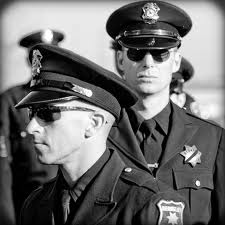
In theory, I have sent Oakland’s finest to round up this serial killer who said this;
“I myself thought I must do many things contrary to the name of Jesus of Nazareth. This I also did in Jerusalem, and many of the saints I shut up in prison, having received authority from the chief priests; and when they were put to death, I cast my vote against them. And I punished them often in every synagogue and compelled them to blaspheme; and being exceedingly enraged against them, I persecuted them even to foreign cities.”
Now that we have computers, we don’t have to fear Paul’s killers will hunt us down and murder us to keep us quiet – so the truth won’t be known!
Let us begin with Paul encountering disciples of John the Baptist in Ephesus who allegedly did not receive the Baptisim of Holy Spirit from John. This is a lie, because an angel of God said this to John’s father inside the temple – where the Holy Spirit dwelt!
” He will also be filled with the Holy Spirit, even from his mother’s womb. And he will turn many of the children of Israel to the Lord their God.”
Is this angel of God lying – in the temple?
When John’s mother is six months pregnant, Mary came to visit her kindred, and a TRANSFERENCE occurs with a quill and scroll. Elizabeth is now filled with the Holy Spirit due to Mary and her newly conceived son.
“And it happened, when Elizabeth heard the greeting of Mary, that the babe leaped in her womb; and Elizabeth was filled with the Holy Spirit.”
Why didn’t John pass on the Holy Spirit to those he baptized? Well, apparently he did when he baptized Jesus, because a dove – the symbol of the Holy Spirit – came down upon Jesus’ head from heaven.
Paul baptizes John’s disciples in the name of Jesus, and
“they were baptized in the name of the Lord Jesus. 6 And when Paul had laid hands on them, the Holy Spirit came upon them, and they spoke with tongues and prophesied.”
The question I put to the Jury, is…….WHO BAPTIZED PAUL WITH THE HOLY SPIRIT?
The answer appears to be Appolos who was a follower of John, but I doubt the ever met. I doubt Paul went anywhere outside his room in Rome where he poured over the documents of the Nazarite church, and altered them, so as to bring the the Revolutionary Reversal of the Holy Spirit to an end: for if those who were baptized, would baptize two others, and they in turn baptize two more, then one would OVERCOME THE WORLD!
Have you seen paintings of Christians walking around with halos? I believe John could light up folks with the Holy Spirit. When was last time you saw a Man of God with a halo?
Jon the Nazarite
Copyright 2012
The Gospel of John reports that Jesus’s disciples were baptizing and that a debate broke out between some of the disciples of John and another Jew about purification. In this debate John argued that Jesus “must become greater,” while he (John) “must become less”.[37] The Gospel of John then points out that Jesus’s disciples were baptizing more people than John (John 4:2[38]). Later, the Gospel relates that Jesus regarded John as “a burning and shining lamp, and you were willing to rejoice for a while in his light” (John 5:35[39]). The Book of Acts portrays the disciples of John as eventually merging into the followers of Jesus (Acts 18:24-19:6[40]), a development not reported by the Gospels except for the early case of Andrew, Simon Peter’s brother (John 1:35-42[41]).
However, some scholars such as Harold W. Attridge contend that John’s status as a “self-conscious and deliberate forerunner of Jesus” is likely to be an invention by early Christians, arguing that “for the early church it would have been something of an embarrassment to say that Jesus, who was in their minds superior to John the Baptist, had been baptized by him.”[42]
Now Mary arose in those days and went into the hill country with haste, to a city of Judah, and entered the house of Zacharias and greeted Elizabeth. And it happened, when Elizabeth heard the greeting of Mary, that the babe leaped in her womb; and Elizabeth was filled with the Holy Spirit. Then she spoke out with a loud voice and said, “Blessed are you among women, and blessed is the fruit of your womb! But why is this granted to me, that the mother of my Lord should come to me? For indeed, as soon as the voice of your greeting sounded in my ears, the babe leaped in my womb for joy. Blessed is she who believed, for there will be a fulfillment of those things which were told her from the Lord.”
Then an angel of the Lord appeared to him, standing on the right side of the altar of incense. And when Zacharias saw him, he was troubled, and fear fell upon him. But the angel said to him, “Do not be afraid, Zacharias, for your prayer is heard; and your wife Elizabeth will bear you a son, and you shall call his name John. “And you will have joy and gladness, and many will rejoice at his birth. For he will be great in the sight of the Lord, and shall drink neither wine nor strong drink. He will also be filled with the Holy Spirit, even from his mother’s womb. And he will turn many of the children of Israel to the Lord their God. He will also go before Him in the spirit and power of Elijah, ‘to turn the hearts of the fathers to the children,’ and the disobedient to the wisdom of the just, to make ready a people prepared for the Lord.”
The dozen disciples of John indicate that even 20 years after John’s death there was a movement amount the Jews that held John to be a prophet and in some way kept his teachings alive. Perhaps the gospel of John gives us a similar hint, especially if it can be show that John wrote from Ephesus near the end of the first century.
These disciples cannot be considered Christians at this point since they had not yet received the Holy Spirit. While Luke only uses “disciple” for believers in every other case in Acts, his use of μαθητής here is without a definite article, the such example in Acts. At the very least these are unusual Christians, perhaps “fringe” Christians, similar to the “unusual, fringes of Judaism described in the first half of the book. Paul’s question – did you receive the Holy Spirit – is equivalent to asked, “are you believers?” Not only have these disciples not received the Holy Spirit, they do not even know that there is a Holy Spirit!
Paul asked them “into whom” or “into what” they were baptized. The NIV obscures this a bit, interpreting the question as “who baptized you,” rather than “what was the medium in which you were baptized.” Witherington comments that the image of being immersed into the Holy Spirit was common in the early church, see Rom 6:3, 1 Cor 1:13, 15, 10:2, 12:13, Gal 3:27). His point is that the “whom” of this verse cannot refer to water; he sees the baptism of the Holy Spirit as entry into saving faith, while baptism in water is entry into the Christian community (Acts, 571).
Since they had been baptized “in John’s baptism,” Paul explains that John’s baptism was not enough, it was a “baptism of repentance,” which looked forward to the ministry of Jesus. One could not be saved at this point in history only by accepting the message of John, it is only through faith in Jesus that one can be saved (as Acts has made abundantly clear prior to this point in the book!)
As has happened at several points in the book of Acts already, there is a manifestation of the Holy Spirit (tongues and prophesy) after Paul lays hands on these disciples. There is no consistent “order of events” in Acts, sometimes the Spirit comes prior to baptism (10:44-48, Cornelius) and other times baptism is prior (19:1-7), and in the case of Apollos, there is no mention of a re-baptism or of the coming of the Spirit. Perhaps this is because he properly understood the message of John as pointing forward to Jesus, but that is not clear.
In fact, this is the only case of re-baptism in the New Testament, even the twelve were not re-baptized into the name of Jesus, they only had experienced the baptism of John (although one wonders about Matthew, since he was called to be an Apostle after John’s ministry.) The point of this brief narrative is to show that it is possible to have a limited knowledge of Jesus which is not enough to be saved – theologically there was nothing wrong with these disciples except that they did not quite believe enough. They did not believe something that was wrong, but they did not take their belief to the full extent needed for salvation.
Here is another problem for Applying Acts – what do we make of these disciples? Are these disciples “partial believers” who have participated in a ritual (John’s Baptism) but did not believe enough to be actually Christians? What is it that “saved” these disciples? In any case, it is the reception of the Holy Spirit which demonstrates they are in fact now Christians.
And it happened, while aApollos was at Corinth, that Paul, having passed through bthe upper regions, came to Ephesus. And finding some disciples 2 he said to them, “Did you receive the Holy Spirit when you believed?”
So they said to him, c“We have not so much as heard whether there is a Holy Spirit.”
3 And he said to them, “Into what then were you baptized?”
So they said, d“Into John’s baptism.”
4 Then Paul said, e“John indeed baptized with a baptism of repentance, saying to the people that they should believe on Him who would come after him, that is, on Christ Jesus.”
5 When they heard this, they were baptized fin the name of the Lord Jesus. 6 And when Paul had glaid hands on them, the Holy Spirit came upon them, and hthey spoke with tongues and prophesied. 7 Now the men were about twelve in all.
8 iAnd he went into the synagogue and spoke boldly for three months, reasoning and persuading jconcerning the things of the kingdom of God. 9 But kwhen some were hardened and did not believe, but spoke evil lof the Way before the multitude, he departed from them and withdrew the disciples, reasoning daily in the school of Tyrannus. 10 And mthis continued for two years, so that all who dwelt in Asia heard the word of the Lord Jesus, both Jews and Greeks.
 Rosamond Press
Leave a comment