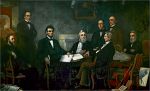
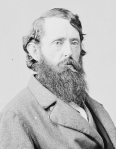
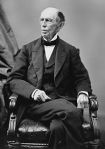
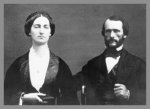
The Fremont twins being born in 1848 is profound, for the Blair-Fremont families were surrounded by Forty-Eighters who fought a revolution in Europe against royal houses that had been blessed by the Pope for generations. Jessie’s close friend, Kossuth, battled the Habsburg Emperor, the King of Romans, who was crowned by the Pope.
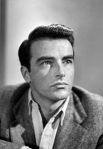
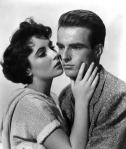
The actor, Montgomery Clift, is the great-great-grandson of Francis Blair. Hollywood tried to pair Monty with his kin, Elizabeth Rosemond Taylor, but, Clift was a notorious homosexual.
Here is your Culture War – in a nutshell! The Blair family caused the Civil War, and then became Democrats when they opposed the Reconstruction. I believe this illustrious family of Patriots became alarmed when German secular socialists put blacks in high office down in Dixie. They were angry at the loss of their Fatherland, and wanted to hang Confederate officers unless they took the Iron Clad Oath. I believe they wanted to do away with the evangelical church, that like the Catholics, had enslaved humanity. However, these were Scott Ulstermen, Calvinists who fought in the War of Independence, and had royal ties to England. The Prestons descend from the House of Stuart. The Blairs pushed back Fremont’ssecret ambition in the West, and put the more more moderate Lincoln in the White House. Then, Lincoln was assasinated.
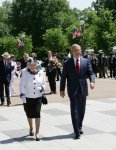
When Queen Elizabeth came to America to see the Kentucky Derby, Bush put her up at Blair House across from the White House. When the Obama family asked Bush if they could stay at Blair House, he refused, told a lie that the conservative, John Howard, the former Prime Minister of Australia, was going to stay there.
Blair built this house for his daughter and son-in-law, Elizabeth Blair Lee, and Captain Samuel Phillips Lee – who are kin to Robert E. Lee. This may have had something to do with this snub, because all those neo-Confederate Red State Congressman and Senators would have marched from the Capitol and stood in front of Blair House shaking their fist as they shout;
“You come out of there you uppity darky! That’s General Lee’s house………..Blessed be his name!
To hear this revolting talk coming from American Bishops, and the Pope’s Lackeys in our Democracy, tells me we Americans will never recover from the Civil War, and will always be a divided nation.
I mean, what Bishop in his right mind would accuse a white President of waging a war against religion?
Jon Presco
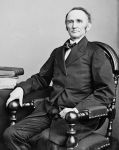
Francis married Eliza Violet Gist on July 21, 1812. He had three sons, Montgomery Blair (1813–1883), James Blair (1819-1852) and Francis Preston Blair, Jr. (1821–1875), two of whom were also prominent in American politics. His daughter Elizabeth Blair (1818-1906) married Rear Admiral Samuel Phillips Lee. A nephew, Benjamin Gratz Brown (1826–1885) was also politically inclined.
Francis Preston Blair is a great-great-grandfather of actor Montgomery Clift (1920–1966).
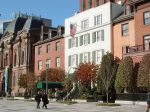
The main house was built in 1824 of buff-colored limestone and is a late example of the Federal Style. The house was built as a private home for Joseph Lovell, eighth Surgeon General of the United States Army. In 1836 it was acquired by Francis Preston Blair, a newspaper publisher and influential advisor to President Andrew Jackson. It would remain in his family for the following century.[1][3]
In 1859, Blair built a house for his daughter and son-in-law, Elizabeth Blair Lee and Captain Samuel Phillips Lee, at 1653 Pennsylvania Avenue, next door to Blair House at 1651 Pennsylvania Avenue. Captain Lee (later an admiral) was a grandson of Richard Henry Lee and third cousin of Robert E. Lee. The houses have since been combined, and the complex is sometimes referred to as the Blair-Lee House, though Blair House is the official name today.[1][3]
In 1942 the house was purchased by the U.S. government and has since been the official residence for guests of the U.S. president. Blair House is primarily used to house foreign heads of state visiting the president (when foreign leaders stay there, the house flies their flag and, in effect, becomes foreign soil), but it has also been used for domestic guests. Several presidents-elect of the United States and their families have spent the last few nights before their initial inauguration as guests in the house.[4]
In December, President-elect Obama asked the White House if he and his family could move into Blair House — the White House’s guest house — a week early, so that his daughters Malia and Sasha could start school. The White House rebuffed them, saying the house was already booked for another guest. A White House source added that “Blair House was appalled” by the request.
After weeks of speculation, the mystery guest that trumps the President-elect and his family has finally been revealed. The White House offered the house to John Howard, the former Prime Minister of Australia who is set to receive a Medal of Freedom. Instead of arranging other accommodations for Howard’s one-night stay, the Bush administration told the Obama family to stay in a hotel for two weeks. (Former British Prime Minister Tony Blair and Colombian President Álvaro Uribe, who are also receiving the Medal of Freedom, opted to find other accommodations.)
Last night on MSNBC’s “Countdown,” Bloomberg journalist Margaret Carlson revealed that when the White House turned down Obama’s request in early December, it had not yet even invited Howard to stay at the Blair House:
I reported…on December 11 and 12 that there were no foreign dignitaries booked into Blair House during that period of time. … I have the feeling they asked him [Howard] to come and stay so that there might be some plausible reason for not letting the Obamas stay there.
She also pointed out that Blair House has “119 rooms with 35 bathrooms. Howard wouldn’t even have to share a sink with the Obamas.” Watch it:
That the White House choose to prioritize the former prime minister of Australia over the incoming President of the United States emphasizes Bush’s sense of loyalty. Howard, a darling of the right wing, was one of Bush’s biggest cheerleaders whom Bush has called his “mate of steel” for standing with him on Iraq and being the only leader of an industrialized nation — besides Bush, of course — to refuse to sign the Kyoto Protocol.
Still, supplanting the incoming President with Howard seems like a final, petty kick in the teeth from Bush.
Francis Preston Blair, Jr. (February 19, 1821 – July 8, 1875) was an American politician and Union Army general during the American Civil War. He represented Missouri in both the House of Representatives and the Senate, and he was the Democratic Party’s nominee for Vice President in 1868.
ir was born in Lexington, Kentucky. He was the son of Francis Preston Blair and the brother of Montgomery Blair. He was also the cousin of B. Gratz Brown. He attended schools in Washington, D.C., graduated from Princeton University in 1841, and studied law at Transylvania University. After his admission to the bar in Lexington, he went on to practice in St. Louis in 1842.
Blair participated in the Mexican-American War and was appointed attorney general for the New Mexico Territory after it was secured by General Stephen W. Kearny. A personal and political friend of Thomas Hart Benton, he became known for his views opposing slavery. Blair served in the Missouri House of Representatives from 1852 to 1856. He was an outspoken Free-Soiler and was elected as a Republican to the United States House of Representatives in 1856. He was defeated in 1858, but successfully contested the election and was finally seated on June 8, 1860, resigning on June 25, 1860. He was unsuccessful as a candidate in the special election to fill the vacancy caused by his own resignation, but was elected in 1860 to the 37th Congress, serving until his resignation in July 1862 to become a Colonel in the Union Army. He was subsequently elected in 1862 to the 38th Congress, but had to relinquish his seat on June 10, 1864, after Samuel Knox successfully contested his election. In Congress, he served as chairman of the important Military Affairs Committee.
In the days following Lincoln’s election, when it became evident that several southern states were advocating secession, Blair was among the leaders of a new political movement in Missouri, the Unconditional Union Party, which advocated the use of force, if necessary, to prevent Missouri from following suit.
Brown was born in Frankfort, Kentucky, in 1826. He was the grandson of Senators John Brown and Jesse Bledsoe of Kentucky. He graduated from Transylvania University in Lexington in 1845 where he was a member of Beta Theta Pi Fraternity, and from Yale College in New Haven, Connecticut, in 1847. He studied law, and later settled in St. Louis, Missouri. There he joined his cousin, Francis P. Blair, Jr., and Senator Thomas Hart Benton in a struggle against the pro-slavery faction for control of Missouri’s Democratic Party.
On August 26, 1856 he fought a duel on Bloody Island (Mississippi River) with Thomas C. Reynolds (then the St. Louis District Attorney) over the slavery issue. Reynolds was not hurt but Brown was shot in the leg and limped for the rest of his life.[1]
Brown became a founding member of the Republican Party in Missouri. Throughout the 1860s, he and Blair contested control of the state’s Republican party. He tried to prevent Missouri from seceding from the Union in 1861. After that, he served as an officer in the Union Army during the first half of the Civil War, raising a regiment (the 4th U.S. Reserves) and serving as its colonel. He recruited over 1,100 soldiers for his regiment, many of which were St. Louis-area German-Americans, a key constituency that Brown courted for his political advantage.
German-Americans in the American Civil War were the largest ethnic contingent to fight for the Union. More than 200,000 native Germans served in the Union Army, with New York and Ohio each providing ten divisions dominated by German-born men.
Approximately 516,000 (23.4% of all Union soldiers) were German Americans; about 216,000 of these were born in Germany. New York supplied the largest number of these native-born Germans with 36,000. Behind the Empire State came Missouri with 30,000 and Ohio with 20,000.[1]
Scores of individual regiments, such as the 9th Ohio, 74th Pennsylvania, 32nd Indiana (1st German), and the 9th Wisconsin Infantry, consisted entirely of German Americans. Major recruiting efforts aimed at German Americans were conducted in Cincinnati, St. Louis, and Milwaukee, among many other cities.
Commonly referred to as “Dutchmen” by other Union soldiers, and “lopeared Dutch” by Confederates, German-American units in general earned a reputation for discipline and ruthlessness.[2] Many of the estimated 177,000 Germans who fought for the Union during the Civil War were Forty-Eighters who had left various German states after the defeat of the attempted revolutions of 1848.[3]
e Forty-Eighters were Europeans who participated in or supported the revolutions of 1848 that swept Europe. In Germany, the Forty-Eighters favored unification of the German people, a more democratic government, and guarantees of human rights.[1] Disappointed at the failure of the revolution to bring about the reform of the system of government in Germany or the Austrian Empire and sometimes on the government’s wanted list because of their involvement in the revolution, they gave up their old lives to try again abroad. Many emigrated to the United States, England, and Australia after the revolutions failed. They included Germans, Czechs, Hungarians, and others. Many were respected, wealthy, and well-educated; as such, they were not typical migrants. A large number went on to be very successful in their new countries.
In the United States, many Forty-Eighters opposed nativism and slavery, in keeping with the liberal ideals that had led them to flee Germany. Several thousand enlisted in the Union Army, where they became prominent in the Civil War. In the Camp Jackson Affair, a large force of German volunteers helped prevent Confederate forces from seizing the government arsenal in St. Louis just prior to the beginning of the war.[2]
Many German Forty-Eighters settled in Milwaukee, Wisconsin, helping solidify that city’s progressive political bent and cultural Deutschtum. The Acht-und-vierzigers and their descendants contributed to the development of that city’s long Socialist political tradition.[6]
After the Civil War, Forty-Eighters supported improved labor laws and working conditions. They also advanced the country’s cultural and intellectual development in such fields as education, the arts, medicine, journalism, and business.
Giuseppe Mazzini used London as a place of refuge before and after the revolutions of 1848. In the early years after the failure of the revolutions of 1848, a group of German Forty-Eighters and others met in a salon organized by Baroness Méry von Bruiningk in St. John’s Wood, England.[21] The baroness was a Russian of German descent who was sympathetic with the goals of the revolutionaries. Among the people who attended her salon, hosted by herself and her husband Ludolf August von Bruiningk, were Carl Schurz, Gottfried and Johanna Kinkel, Ferdinand Freiligrath, Alexander Herzen, Louis Blanc, Malwida von Meysenbug, Adolf Strodtmann, Johannes and Bertha Ronge, Alexander Schimmelfennig, Wilhelm Loewe-Kalbe and Heinrich Bernhard Oppenheim.[22]
Carl Schurz reports “A large number of refugees from almost all parts of the European continent had gathered in London since the year 1848, but the intercourse between the different national groups — Germans, Frenchmen, Italians, Hungarians, Poles, Russians — was confined more or less to the prominent personages. All, however, in common nourished the confident hope of a revolutionary upturning on the continent soon to come.
Even though he held slaves, Blair became convinced after the Mexican War that slavery should not be extended beyond where it was currently allowed.[1] In 1848, he actively supported Martin Van Buren, the Free Soil candidate, for the presidency, and in 1852 he supported Franklin Pierce, but soon afterwards helped to organize the new Republican Party, and presided at its preliminary convention at Pittsburgh, Pennsylvania in February 1856. He was influential in securing the nomination of John C. Frémont at the June 1856 convention. At the 1860 convention he initially supported the nomination of Edward Bates as president.[2] When it was clear that Bates would not be nominated, Blair supported the nomination of Abraham Lincoln.
By 1862, Blair had told his slaves that they could “go when they wished.” He said that “all but one declined the privilege,” choosing to stay on as servants.[3]
After Lincoln’s re-election in 1864 Blair thought that his former close personal relations with the Confederate leaders might aid in bringing about a cessation of hostilities, and with Lincoln’s consent went unofficially to Richmond and induced President Jefferson Davis to appoint commissioners to confer with representatives of the United States (although this may have been a result of internal pressure). This resulted in the futile “Hampton Roads Conference” of February 3, 1865. After the Civil War Blair became a detractor of President Andrew Johnson’s reconstruction policy, and eventually rejoined the Democratic Party. He died at Silver Spring, Maryland.
On June 16, 1846 Cardinal Giovanni Mastai Ferretti, was elected to the papacy as Pope Pius IX. He was considered a liberal and aroused the hopes of political liberals and of the poor both in the Papal States and throughout Italy.
Blessed Pope Pius IX (13 May 1792 – 7 February 1878), born Giovanni Maria Mastai-Ferretti, was the longest-reigning elected Pope in the history of the Catholic Church, serving from 16 June 1846 until his death, a period of nearly 32 years. During his pontificate, he convened the First Vatican Council in 1869, which decreed papal infallibility. The Pope defined the dogma of the Immaculate Conception of the Blessed Virgin Mary, meaning that Mary was conceived without original sin. Pius IX also granted the Marian title of Our Mother of Perpetual Help, a famous Byzantine icon from Crete entrusted to the Redemptorist priests. In addition to this, Pius IX was also the last Pope to rule as the Sovereign of the Papal States, which fell completely to Italian nationalist armies by 1870 and were incorporated into the Kingdom of Italy. He was beatified in 2000.
In Rome, the authority that did take over passed popular legislation to eliminate burdensome taxes and give work to the unemployed. Giuseppe Garibaldi and Giuseppe Mazzini came to build a “Rome of the People,” and the short-lived Roman Republic was proclaimed.[2] The Republic succeeded in inspiring the people to build an independent Italian nation. It also attempted to improve economically the lives of the underserved by giving some of the Church’s large landholdings and giving it to poor peasants. It also made prison and insane asylum reforms, gave freedom to the press, provided secular education, but shied away from the “Right to Work”, having seen this fail in France.[4]
On 15 March 1848 mass demonstrations in Pest and Buda enabled Hungarian reformists to push through a list of 12 demands. The Hungarian Diet took the opportunity presented by the revolution to enact a comprehensive legislative program of dozens of civil and human rights reforms, referred to as the April laws. Faced with revolution both at home and in Vienna, Austrian Emperor Ferdinand I first had to accept Hungarian demands. After the Austrian revolution was suppressed, emperor Franz Joseph replaced his epileptic uncle Ferdinand I as Emperor. Franz Joseph refused all reforms and started to arm against Hungary. A year later, in april 1849 the independent government of Hungary was established.[42] The new independent government seceded from the Austrian Empire.[43] The new government formed itself as a republic with under governor and president Lajos Kossuth and the first Prime minister, Lajos Batthyány. The House of Habsburg of the Austrian Empire was dethroned in Hungarian part of the Austrian Empire and the first Republic of Hungary was founded. The Habsburg Ruler and his advisers skilfully manipulated the Croatian, Serbian and Romanian peasantry, led by priests and officers firmly loyal to the Habsburgs, and induced them to rebel against the Hungarian government. The Hungarians were supported by the vast majority of the Slovak, German and Rusyn nationalities and by all the Jews of the kingdom, as well as by a large number of Polish, Austrian and Italian volunteers.[44] Many members of the nationalities gained coveted the highest positions within the Hungarian Army, like General János Damjanich, an ethnic Serb who became a Hungarian national hero through his command of the 3rd Hungarian Army Corps. Initially, the Hungarian forces (Honvédség) defeated Austrian armies. In July 1849 Hungarian Parliament proclaimed and enacted foremost the ethnic and minority rights in the world, but it was too late: To counter the successes of the Hungarian revolutionary army, Franz Joseph asked for help from the “Gendarme of Europe,” Czar Nicholas I, whose Russian armies invaded Hungary. The huge army of the Russian Empire and the Austrian forces proved too powerful for the Hungarian army, and General Artúr Görgey surrendered in August 1849. Julius Freiherr von Haynau, the leader of the Austrian army, then became governor of Hungary for a few months and, on 6 October, ordered the execution of 13 leaders of the Hungarian army as well as Prime Minister Batthyány. Lajos Kossuth escaped into exile.
Following the war of 1848–1849, the whole country was in “passive resistance”. Archduke Albrecht von Habsburg was appointed governor of the Kingdom of Hungary, and this time was remembered for Germanization pursued with the help of Czech officers.
King of the Romans (Latin: Romanorum Rex) was the title used by the ruler of the Holy Roman Empire following his election to the office by the princes of the Kingdom of Germany. The title was a claim by the German kings to become emperor, a title, which in contemporary views of the Middle Ages, had also a religious aspect and was dependent on the coronation by the pope.
The title originally referred to any ruler of the Empire who had not yet been granted the crown and title of “Emperor” by the Pope; later it came to be used solely of the heir apparent to the Imperial throne between his election (during the lifetime of a sitting Emperor) and his succession on the Emperor’s death.
The college of electors was mentioned in 1152 and again in 1198. A letter of Pope Urban IV suggests that by “immemorial custom”, seven princes had the right to elect the King and future Emperor. These were:
Three ecclesiastic
the Archbishop of Mainz
the Archbishop of Trier
the Archbishop of Cologne
Four secular
the King of Bohemia (král český, König von Böhmen)
the Margrave of Brandenburg (Markgraf von Brandenburg)
the Count Palatine of the Rhine (Pfalzgraf bei Rhein)
the Duke of Saxony (Herzog von Sachsen)
The three Archbishops oversaw the most venerable and powerful sees in German lands, while the four Dukes controlled ancient Frankish territory and held important hereditary offices. The seven (Palatinate, Brandenburg, Saxe-Wittenberg, Bohemia, Mainz, Trier, Cologne) have been mentioned as the vote-caster setting in the election of 1257 that resulted in two kings becoming elected.
The Palatinate and Bavaria were originally held by the same individual, but in 1253, they were divided between two members of the Wittelsbach dynasty. The other electors refused to allow two princes from the same dynasty to have electoral rights, so a heated rivalry between the Count Palatine and the Duke of Bavaria arose. Meanwhile, the King of Bohemia, who held the ancient imperial office of Arch-Cupbearer, asserted his right to participate in elections, but was challenged on the grounds that his kingdom was not German, though usually he was recognized, instead of Bavaria which after all was just a younger line of Wittelsbachs.
 Rosamond Press
Leave a comment