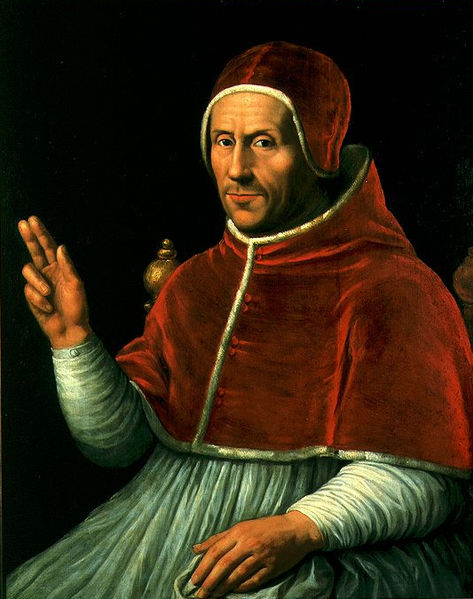
Protestants and Catholics have formed an alliance to bring down Big Government and the President of the United States who they claim is out of touch with the religious values of our Founding Fathers. They on the other hand, were very much in touch! Well, that can not be the case, because the only opinion Catholics honor and obey, is that of one man – the Pope! Catholics have proven this is the case in the furor over condoms, they crying that big bad government is forcing them to go against the ruling of ONE MAN IN ROME – who got no vision from Jesus or God in regards to allowing all Catholics to vote for their choice in a Democratic Process! To hide the truth the Pope gives them no choice on church matters, they claim our President has taken away their religious freedom they never had, or wanted!
The truth is, it was anti-Catholic furor in the colonies that fueled the American Revolution, leading to men – and not women – being allowed to vote on matters that concern them. Women would not get to vote until 1920. Did Jesus-God back peddle on this woman’s issue, He alas realizing this was not fair?
What these religious zealots have done, is replace their Sex abstinence Mojo, with the Liberal Big Government Agenda that is trying to get them to do sexy things against their will! Where was that Will when Papal troop massacred the Huguenot settlement in Florida because they refused to CONVERT to Catholicism? Why didn’t the Pope hear Jesus’ voice, suggesting he try something new?
“You know. This might be a glorious opportunity to found a Democracy in the New World, and allow all Christians to worship as they please. What do you say?”
Jon Presco
In 1912, the English Cardinal Gasquet flatly declared that “the American Revolution was not a movement for civil and religious liberty; its principal cause was the bigoted rage of the American Puritan and Presbyterian ministers at the concession of full religious liberty and equality to Catholics of French Canada. “ Yes, he noted, people were upset by taxation but that could have been resolved if not for the “Puritan firebrands and the bigotry of the people.”
How Anti-Catholicism Helped Fuel the American Revolution
posted by swaldman | 8:55am Wednesday April 16, 2008
Pope Benedict XI, it is said, admires America’s religious freedom and history. I do too, especially where we have ended up. But as we focus this week on the role of Catholics in America, it’s worth remembering just how loathed Catholics were at the founding of this nation.
Indeed, to an extent rarely acknowledged anti-Catholicism helped fuel the American revolution.
If that sounds harsh, consider the evidence (plucked from my new book, Founding Faith):
Only three of the 13 colonies allowed Catholics to vote. All new England colonies except Rhode island and the Carolinas prohibited Catholics form holding office; Virginia would have priests arrested for entering the colony; Catholic schools were banned in all states except Pennsylvania.
During the lead up to revolution, rebels seeking to stoke hatred of Great Britain routinely equated the practices of the Church of England with that of the Catholic Church. In the late 1760s and early 1770s, colonists celebrated anti-Pope Days, an anti-Catholic festival derived from the English Guy Fawkes day (named for a Catholic who attempted to assassinated King James I). “Orations, cartoons, and public hangings of effigies depicted royal ministers as in league alternately with the pope and the devil,” writes historian Ruth Bloch.
Roger Sherman and other members of Continental Congress wanted to prohibit Catholics from serving in the Continental Army.
In 1774, Parliament passed the Quebec Act, taking the enlightened position that the Catholic Church could remain the official church of Quebec. This appalled and terrified many colonists, who assumed this to be a British attempt to subjugate them religiously by allowing the loathsome Catholics to expand into the colonies. Colonial newspapers railed against the Popish threat. The Pennsylvania Gazette said the legislation would now allow “these dogs of Hell” to “erect their Heads and triumph within our Borders.” The Boston Evening Post reported that the step was “for the execution of this hellish plan” to organize 4,000 Canadian Catholics for an attack on America. In Rhode Island, every single issue of the Newport Mercury from October 2, 1774 to March 20, 1775 contained “at least one invidious reference to the Catholic religion of the Canadians,” according to historian Charles Metzger.
Protestant clergy fanned the flames. Rev. John Lathrop of the Second Church in Boston said Catholics “had disgraced humanity” and “crimsoned a great part of the world with innocent blood.” Rev. Samuel West of Dartmouth declared the pope to be “the second beast” of Revelation while Joseph Perry warned his Connecticut neighbors that they would soon need to swap “the best religion in the world” for “all the barbarity, trumpery and superstition of popery; or burn at the stake, or submit to the tortures of the inquisition.” And, he reasoned, English lawmakers were being controlled by the devil; the Quebec Act “first sprang from that original wicked politician.” Commenting on anti-Catholic fervor, historian Alan Heimert wrote that there was “a special and even frenetic urgency to their efforts to revive ancient prejudices by announcing that the Quebec Act—and it alone—confronted America with the possibility of the ‘scarlet whore’ soon riding ‘triumphant over the heads of true Protestants, making multitudes drunk with the wine of her fornications.’” The 1774 Pope Day was one of the grandest in years; in Newport, two large effigies of the pope were paraded. In New York, a group marched to the financial Exchange carrying a huge flag inscribed, “George III Rex, and the Liberties of America. No Popery.” Later that day, a pamphlet that had been distributed urging tolerance toward the Catholics of Canada was smeared with tar and feathers and nailed to the pillory.
These views were echoed even by some of our most respected founding fathers. Alexander Hamilton decried the Quebec Act as a diabolical threat. “Does not your blood run cold to think that an English Parliament should pass an Act for the establishment of arbitrary power and Popery in such an extensive country?…Your loves, your property, your religion are all at stake.” He warned that the Canadian tolerance in Quebec would draw, like a magnet, Catholics from throughout Europe who would eventually destroy America.
Sam Adams told a group of Mohawk Indians that the law “to establish the religion of the Pope in Canada” would mean that “some of your children may be induced instead of worshipping the only true God, to pay his dues to images made with their own hands.” The silversmith and engraver Paul Revere created a cartoon for the Royal American Magazine called “The Mitred Minuet.” It depicted four contented-looking mitred Anglican Bishops, dancing a minuet around a copy of the Quebec Act to show their “approbation and countenance of the Roman religion.” Standing nearby are the authors of the Quebec Act, while a Devil with bat ears and spiky wings hovers behind them, whispering instructions.
The Continental Congress took a stand against the Catholic menace. On October 21, 1774 it issued an address “to the People of Great Britain”, written by John Jay, Richard Henry Lee and William Livingston, which expressed shock that Parliament would promote a religion that “disbursed impiety, bigotry, persecution, murder and rebellions through every part of the world.” It predicted that the measure would encourage Canadians to “act with hostility against the free Protestant colonies, whenever a wicked Ministry shall choose to direct them.” Once Americans were converted to Catholicism, they would be enlisted in a vast Popish army to enslave English Protestants.
If it seems today a bit strange that a war against a Protestant King George III could be cast as a fight against Catholicism, this was a paradox apparent to some British at the time. Describing the Quebec Act as the turning point, General Thomas Gage puzzled over how colonists had become convinced that Britain would eliminate their religious freedom. When they could not “be made to believe the contrary…the Flame [of rebellion] blased out in all Parts.” Ambrose Serle, who served as secretary to Admiral Lord Richard Howe from 1776 to 1778, reported to his superiors that “at Boston the war is very much a religious war.” Not surprisingly, some Britons over the years have chafed over the idea that the revolution was about lofty concepts of freedom.
In 1912, the English Cardinal Gasquet flatly declared that “the American Revolution was not a movement for civil and religious liberty; its principal cause was the bigoted rage of the American Puritan and Presbyterian ministers at the concession of full religious liberty and equality to Catholics of French Canada. “ Yes, he noted, people were upset by taxation but that could have been resolved if not for the “Puritan firebrands and the bigotry of the people.”
Read more: http://blog.beliefnet.com/stevenwaldman/2008/04/how-anticatholicism-helped-fue.html#ixzz1m0aUUw99
 Rosamond Press
Leave a comment