




We read how Richard Kinder considers his oil pipes as “Toll Roads”. Consider the Pope’s churches as Toll Roads where God’s Prescribed Sex must pass, must flow over. All sex outside the Prescribed Toll Tubes – is forbidden! In the good ol days, virginal priests were allowed to murder you if you did not use and pay for the Toll Tubes of God!
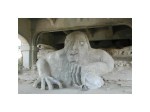
I have a theory that Romans charged a toll for non-Romans to use their roads they built on other folk’s land after they conquored them with the sword. The Celtic people called the priests who collected the toll – TROLLS – because they lived under the bridge, the ROMAN ARCH!
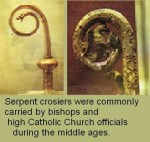
The original name for the Pope in Rome, was Pontifex Maximus. Pont means “bridge” The Roman high priest was in charge of blessing new bridges. His crozier is an augur’s wand that was used to find a certain star in the sky, after entering a circle bisected by a CROSS. Augur’s laid down lines for a NEW ROMAN TEMPLE!
Constantine was a Pontifex Maximus who blessed Saint Paul’s religion because if TAXED PROHIBITIVE SEX ACTS. Paul was the perfect TROLL who made a killing off INVENTED SIN – after Jesus died for our sins!
When we read some of the duties of the Pagan Pontifex, alas we read the Sex Rules of the God of the Jews – NOT!
4. The administration of the law relating to burials and burying-places, and the worship of the Manes or dead ancestors.
5. The superintendence of all marriages by conferratio, i.e. originally of all legal patrician marriages.
7. The regulation of the public morals, and fining and punishing offending parties.
Hmmmmmmmmmm! “The regulation of the public morals”. Boy, what a tax racket that must have been in Rome, the home of the orgy! And, if you could not, or, refused to pay the SEX TAX?
Jon the Nazarite
Pontifex Maximus
From Wikipedia, the free encyclopedia
Jump to: navigation, search
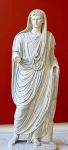
Augustus as Pontifex Maximus
(Via Labicana Augustus)
The Pontifex Maximus (Latin, literally: “greatest pontiff”) was the high priest of the College of Pontiffs (Collegium Pontificum) in ancient Rome. This was the most important position in the ancient Roman religion, open only to patricians until 254 BC, when a plebeian first occupied this post. A distinctly religious office under the early Roman Republic, it gradually became politicized until, beginning with Augustus, it was subsumed into the Imperial office. Its last use with reference to the emperors is in inscriptions of Gratian[1] (reigned 375–383) who, however, then decided to omit the words “pontifex maximus” from his title.[2][3]
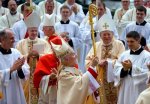
The word “pontifex” later became a term used for Christian bishops,[4] including the Bishop of Rome,[5] and the title of “Pontifex Maximus” was applied within the Roman Catholic Church to the Pope as its chief bishop. It is not included in the Pope’s official titles,[6] but appears on buildings, monuments and coins of popes of Renaissance and modern times.
According to the usual interpretation, the term pontifex literally means “bridge-builder” (pons + facere); “maximus” literally means “greatest”. This was perhaps originally meant in a literal sense: the position of bridge-builder was indeed an important one in Rome, where the major bridges were over the Tiber, the sacred river (and a deity): only prestigious authorities with sacral functions could be allowed to “disturb” it with mechanical additions. However, it was always understood in its symbolic sense as well: the pontifices were the ones who smoothed the “bridge” between gods and men (Van Haeperen).
An alternative view is that pontifex means “preparer of the road”, derived from the Etruscan word pont, meaning “road”.[3] A minority opinion is that the word is a corruption of a similar-sounding but etymologically unrelated Etruscan word for priest.
[edit] Origins in the Regal period
The Collegium Pontificum (College of Pontiffs) was the most important priesthood of ancient Rome. The foundation of this sacred college and the office of Pontifex Maximus is attributed to the second king of Rome, Numa Pompilius.[7] Much of what is known about the Regal period in Roman history is semi-legendary or mythical. The Collegium presumably acted as advisers to the rex (king) in religious matters. The collegium was headed by the pontifex maximus, and all the pontifices held their office for life. But the pontifical records of early Rome were most likely destroyed when the city was sacked by the Gauls in 387 BC, and the earliest accounts of Archaic Rome come from the literature of the Republic, most of it from the 1st century BC and later.
According to the Augustan-era historian Livy, Numa Pompilius, a Sabine, devised Rome’s system of religious rites, including the manner and timing of sacrifices, the supervision of religious funds, authority over all public and private religious institutions, instruction of the populace in the celestial and funerary rites including appeasing the dead, and expiation of prodigies. Numa is said to have founded Roman religion after dedicating an altar on the Aventine Hill to Jupiter Elicius and consulting the gods by means of augury.[7] Numa wrote down and sealed these religious instructions, and gave them to the first Pontifex Maximus, Numa Marcius.
The main duty of the Pontifices was to maintain the pax deorum or “peace of the gods.”[12][13][14]
The immense authority of the sacred college of pontiffs was centered on the Pontifex Maximus, the other pontifices forming his consilium or advising body. His functions were partly sacrificial or ritualistic, but these were the least important. His real power lay in the administration of jus divinum or divine law;[15] the information collected by the pontifices related to the Roman religious tradition was bound in a corpus which summarized dogma and other concepts. The chief departments of jus divinum may be described as follows:
1. The regulation of all expiatory ceremonials needed as a result of pestilence, lightning, etc.
2. The consecration of all temples and other sacred places and objects dedicated to the gods.
3. The regulation of the calendar; both astronomically and in detailed application to the public life of the state.
4. The administration of the law relating to burials and burying-places, and the worship of the Manes or dead ancestors.
5. The superintendence of all marriages by conferratio, i.e. originally of all legal patrician marriages.
6. The administration of the law of adoption and of testamentary succession.
7. The regulation of the public morals, and fining and punishing offending parties.
II. The Arian Controversy.
About 318 or 319 Alexander, the Bishop of Alexandria, preached a sermon to his presbyters entitled, “The Great Mystery of the Trinity in Unity.” Arius, an ascetic and popular presbyter, objected because the sermon “failed to uphold a distinction among the persons of the Godhead.” Arius, a Libyan native, received his education in Lucian’s Antiochene school. Lucian of Antioch took a thoroughly literal approach to biblical interpretation and this approach led Arius to a subordinationist view of Christ’s relationship to God. In a letter to Eusebius, Bishop of Nicomedia, Arius describes his teaching:
The Son is not unbegotten, nor part of the unbegotten in any way, nor is he derived from any substance; but that by his own will and counsel he existed before times and ages fully God, only-begotten, unchangeable.
And before he was begotten or created or appointed or established, he did not exist; for he was not unbegotten. We are persecuted because we say that the Son has a beginning, but God is without beginning. For that reason we are persecuted, and because we say that he is from what is not. And this we say because he is neither part of God nor derived from any substance.
Upset with Arius’s obvious heretical views, Alexander called for a council. One hundred Libyan and Egyptian bishops met in 318 to discuss the issue. The council excommunicated Arius, five other presbyters, six deacons and two bishops. Other church leaders educated by Lucian rushed to Arius’s rescue and schism resulted.
Constantine wrote Alexander and Arius hoping to effect reconciliation. When that failed, he called a council to convene in Nicaea in 325. Most historians consider this “the first ecumenical council” with over 300 bishops present. A majority of the 300 came from the Empire’s eastern regions.
The Emperor involved himself directly in the council approaching it much like a military staff meeting. As a result, the “junior officers” (bishops) carefully voted with their “general” (Constantine). Originally Constantine favored the Arian position. It soon became obvious to him that the other party, the Athanasians — after Athanasius, the new Alexandrian bishop — were well represented. A compromise creed came to the floor but the Athanasian party demanded inclusion of the term “homoousios,” meaning “identical in substance.” The council accepted the compromise creed as amended and called on all bishops to sign it. The council banished Arius and two bishops who refused to sign. This amended creed was rewritten in 381 and stood as the Nicene Creed.
As written in 325, the creed failed to represent most bishops’ thinking and dissent arose over an “enforced creed, a creed not representative of the church.” Due to influence from Eusebius of Nicomedia, Constantine recalled Arius from exile in 328. The Emperor ordered Athanasius to restore Arius as presbyter in Alexandria. When Athanasius refused, the Emperor deposed him. Arian Christians called a synod which condemned Athanasius and the “orthodox party.” The controversy continued raging during Arius’s and Athanasius’s lifetime although the tide changed several times. Athanasius, for example, faced exile five times! Arius, the controversy’s chief antagonist, found himself in and out of favor as well. Finally, in 336, Arius became ill with diarrhea and, at the age of 86, died in a public latrine. The controversy continued and still remains with us today.
What we’ve seen in these two cases is the failure of Constantine’s effort to pacify and unite Christianity. In spite of the division, the fourth century proved to be a time of vitality. Both Arian and Orthodox Christianity grew rapidly; so much so that at times we’re unsure who had the upper hand. Constantine’s own family divided over Arianism. Ultimately Arianism became so powerful that Orthodoxy doesn’t overtake it until 496 when Clovis, King of the Franks, converted to Christianity.
About 318 or 319 Alexander, the Bishop of Alexandria, preached a sermon to his presbyters entitled, “The Great Mystery of the Trinity in Unity.” Arius, an ascetic and popular presbyter, objected because the sermon “failed to uphold a distinction among the persons of the Godhead.” Arius, a Libyan native, received his education in Lucian’s Antiochene school. Lucian of Antioch took a thoroughly literal approach to biblical interpretation and this approach led Arius to a subordinationist view of Christ’s relationship to God. In a letter to Eusebius, Bishop of Nicomedia, Arius describes his teaching:
The Son is not unbegotten, nor part of the unbegotten in any way, nor is he derived from any substance; but that by his own will and counsel he existed before times and ages fully God, only-begotten, unchangeable.
And before he was begotten or created or appointed or established, he did not exist; for he was not unbegotten. We are persecuted because we say that the Son has a beginning, but God is without beginning. For that reason we are persecuted, and because we say that he is from what is not. And this we say because he is neither part of God nor derived from any substance.
Upset with Arius’s obvious heretical views, Alexander called for a council. One hundred Libyan and Egyptian bishops met in 318 to discuss the issue. The council excommunicated Arius, five other presbyters, six deacons and two bishops. Other church leaders educated by Lucian rushed to Arius’s rescue and schism resulted.
Constantine wrote Alexander and Arius hoping to effect reconciliation. When that failed, he called a council to convene in Nicaea in 325. Most historians consider this “the first ecumenical council” with over 300 bishops present. A majority of the 300 came from the Empire’s eastern regions.
The Emperor involved himself directly in the council approaching it much like a military staff meeting. As a result, the “junior officers” (bishops) carefully voted with their “general” (Constantine). Originally Constantine favored the Arian position. It soon became obvious to him that the other party, the Athanasians — after Athanasius, the new Alexandrian bishop — were well represented. A compromise creed came to the floor but the Athanasian party demanded inclusion of the term “homoousios,” meaning “identical in substance.” The council accepted the compromise creed as amended and called on all bishops to sign it. The council banished Arius and two bishops who refused to sign. This amended creed was rewritten in 381 and stood as the Nicene Creed.
As written in 325, the creed failed to represent most bishops’ thinking and dissent arose over an “enforced creed, a creed not representative of the church.” Due to influence from Eusebius of Nicomedia, Constantine recalled Arius from exile in 328. The Emperor ordered Athanasius to restore Arius as presbyter in Alexandria. When Athanasius refused, the Emperor deposed him. Arian Christians called a synod which condemned Athanasius and the “orthodox party.” The controversy continued raging during Arius’s and Athanasius’s lifetime although the tide changed several times. Athanasius, for example, faced exile five times! Arius, the controversy’s chief antagonist, found himself in and out of favor as well. Finally, in 336, Arius became ill with diarrhea and, at the age of 86, died in a public latrine. The controversy continued and still remains with us today.
What we’ve seen in these two cases is the failure of Constantine’s effort to pacify and unite Christianity. In spite of the division, the fourth century proved to be a time of vitality. Both Arian and Orthodox Christianity grew rapidly.
Constantine ruled the entire Roman Empire! His success assured Christianity a place in society. Constantine recognized the church and bestowed special favors on both individual believers and the church. As we noted, he even restricted offensive heathen practices.
Constantine took the traditional title, “Pontifex Maximus.” The title originally applied to Roman “high priests” who were the “great bridge builders” between man and the gods. The Emperors used it to designate themselves head of all the state religions. I want you to note that Christianity is not the state religion at this time, although it enjoys imperial favor. Believing he was “God’s man,” Constantine referred to himself as a “bishop, ordained by God to oversee what is external to the church.”
The new Emperor dreamed of a united Empire. He expected Christianity’s cross-cultural appeal to fuse the people together in a single religious body. Instead he found a faith internally divided. During Constantine’s reign two great controversies afflicted the church. In this lecture I look at these two controversies and discuss Constantine’s efforts to end them.
 Rosamond Press
Leave a comment