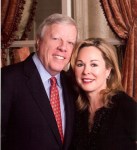



Richard Kinder called his company a “Toll Road”. Richard stands to win big with Obama’s decision to halt Keystone Pipeline because he’s got pipes in Canada that will take this shale oil to the Pacific Ocean – as well as across America. Kinder uses the word “cars” to discribe the volume of oil that is transported through his pipes, as in railroad cars.
This is a monopoly that does not pay Federal Taxes, and will make foreigners in Canada, wealthy! We Americans back this adventure by paying our cable bills so we can watch T.V. use our computers and phones – via the “Toll Road”. Remember when we got T.V. station – for free!
Jon Presco
1.
Video reminds Bush family of embarrassing Enron links The Guardian
David Teather in New York Dec 18, 2002
The White House last night suffered an embarrassing reminder of the Bush family’s close relationship with the disgraced energy firm Enron. A video recorded for the leaving party of a former employee shows senior executives joking about how they could manipulate the accounts to make “a kazillion dollars”. It also features the current and former President Bushes paying warm tributes to the departing executive.
George Bush senior tells Enron’s then president Rich Kinder: “You have been fantastic to the Bush family. I don’t think anybody did more than you did to support George.” The 1997 video, shown on MSNBC last night, turned out to be prescient. In one skit, Enron’s then chief executive Jeffrey Skilling is shown handing a budget report to a colleague , and explaining how Enron could achieve 600% revenue growth in the coming year. “We’re going to move to something I call HFV, or hypothetical future value accounting,” he says. “If we do that, we can add a kazillion dollars to the bottom line.”
On the tape, then chief accounting officer Richard Causey jokes: “I’ve been on the job for a week managing earnings, and it’s easier than I thought it would be.” George Bush junior, then governor of Texas, says to Mr Kinder, who has not been implicated in the financial scandal: “Don’t leave Texas. You’re too good a man.” The relationship between the White House and Enron came under heavy scrutiny following the Enron collapse, during which it emerged that the company had been hiding massive debts. President Bush was close to the Enron chief executive Kenneth Lay, referring to him affectionately as “Kenny boy.”
Congressional hearings into the role that the now defunct Enron auditor Arthur Andersen played were concluded yesterday with the recommendation that a criminal investigation be opened on Nancy Temple, the firm’s former in-house lawyer. She sent an email which reminded staff of Andersen’s document retention policy, which was alleged to have sparked the shredding of important papers.
http://www.daytondailynews.com/p/content/oh/media/news/special-reports/rex-pipeline/
Nancy Kinder
Occupation: Chair & CEO
Employer: Kinder Morgan Energy Partners
Home: Houston, TX
Richard Kinder is an ex-president of Enron Corp. (See Ken Lay), which was George W. Bush’s top career patron in 2000, according to the Center for Public Integrity. The 2002 Enron book Pipe Dreams depicts Richard Kinder as a no-nonsense, hard-assets guy whose 1996 resignation marked the beginning of Enron’s fraudulent end. Kinder and ex-Enron pipeline executive Bill Morgan bought out Enron Liquids Pipeline in 1997 and formed Kinder Morgan Energy Partners and its parent company: Kinder Morgan, Inc. Kinder Morgan is one of the country’s largest gas pipeline interests, worth approximately $10 billion. A 2003 Kinder Morgan pipeline failure caused gasoline shortages in Phoenix after spilling an estimated 16,000 gallons near Tucson. Arizona environmental officials accused the company of contaminating the area’s groundwater in November 2003. “We narrowly averted a disaster,” said Department of Environmental Quality Director Steve Owens, citing a spray of thousands of gallons of flammable gas in a residential neighborhood. “We need to make sure we never again have to rely on luck regarding this pipeline.” Then-Governor George Bush appointed Kinder to his 1996 Citizen’s Committee on Property Tax Relief along with fellow Pioneers John Avila and Wales Madden. Bush directed the panel–dominated by corporate executives–to explore replacing school property taxes with a gross-receipts or a value-added tax (Bush ruled out consideration of a state income tax). The initiative failed after special interests organized against both options. President-Elect Bush appointed Kinder to his Energy Department Transition Team in late 2000. Kinder’s estimated worth of $1.4 billion ranked him No. 162 in the Forbes 400 list of the wealthiest Americans in 2003. Nancy Kinder, who also once worked at Enron, is a frequent volunteer fundraiser for charitable causes.
http://www.motherjones.com/web_exclusives/special_reports/mojo_400/energy.html
Energy With two former oil executives on the GOP ticket, the industry threw its financial weight behind the Republicans by a margin of 9-to-1.
by Lila Byock March 5, 2001
No corporate executive has enjoyed more access to George W. Bush than Kenneth Lay (No. 76, $387,050), the chairman of Enron. As head of the nation’s largest supplier of electricity and natural gas to utilities, Lay is one of the top contributors to Bush — and is often solicited for advice on major policy matters. The two men became friends when Bush was in the oil business during the 1980s, and letters obtained by Mother Jones reveal that Lay and other Enron executives often wrote to the Texas governor to recommend appointments to state boards and to ask Bush to drum up out-of-state business for Enron. In recent months, Lay played what the Bush campaign called a “key role” in shaping the twin tenets of the president’s energy policy: emphasizing deregulation and drilling over protection of the environment.
Enron has good reason to invest in a president who favors deregulation. Bush has vowed to loosen federal oversight of the industry, a move that would allow the Houston-based energy giant to sell its product directly to residential customers. But letting markets control the flow of power could be bad news for consumers, if the energy crisis in California is any indication. According to state officials, Enron responded to the emergency by threatening that it might withhold power unless the state approved hefty rate increases. “Enron is sticking a gun to our heads,” state Senator Debra Bowen told the Sacramento Bee.
Like the rest of the energy industry, Enron doesn’t need to resort to such tactics with President Bush. The industry threw its financial weight behind Bush and Cheney more than any other sector, supporting the former oil executives by a margin of 9-to-1. “There is no question that because of their backgrounds, Bush and Cheney understand the industry better than the other folks,” says Jerry Jordan, chairman of the Independent Petroleum Association of America. “That’s why the money has primarily gone to them.”
Bush hasn’t disappointed his friends. His commitment to ease environmental protections could aid major contributors like David Koch (No. 51, $487,500) of Koch Industries, a Kansas-based energy company with a history of pollution violations. The Clinton administration forced Koch to pay a record fine of $30 million for more than 300 oil spills from leaking pipelines. And last fall, the company and four employees were indicted on 97 counts of violating federal clean air and hazardous waste laws. If convicted, the company could be fined $352 million.
What donor in this industry wants to blow up mountaintops to get coal?
Industry officials say Bush’s calls for more drilling in the Arctic National Wildlife Refuge and other public lands also encouraged the flow of oil and gas money into his campaign. “We would like to do our job,” says Jordan. “It is very difficult for us to do our job when we can’t drill.”
More drilling could benefit donors like Forrest Hoglund, a former chairman of an Enron subsidiary who now heads a pipeline firm called Arctic Resources. Hoglund, who gave $137,320 to the GOP, has felt free to call on Bush for favors in the past. In a 1998 letter obtained by Mother Jones, Hoglund wrote the governor to complain about an assessment by the Texas comptroller that increased Enron’s taxes by $415,233. “We need to have this handled before there is a big industry backlash,” Hoglund warned in a handwritten cover note. “Sorry to bother you with it. Forrest.”
Other Bush donors who could profit from more oil and gas drilling include Richard Kinder (No. 152, $284,500), former president of Enron and now CEO of Kinder Morgan, which operates tens of thousands of miles of pipelines, and Christine Toretti (No. 228, $239,850), the chief executive of SW Jack Drilling. “I am putting all my eggs in one basket,” Toretti explained to the Los Angeles Times during the campaign. Clinton and Gore, she noted, did not support opening up the Arctic refuge or the North Carolina coast to drilling. “If you haven’t done it by now,” she added, “the heck with you.”
Not everyone holds Kinder and his company in such high regard. An incident this summer provided ammo for the company’s critics. Last July 30, a little after one o’clock in the afternoon, an eight-inch high-pressure underground gasoline pipeline burst in Tucson. It spewed 10,000 gallons of fuel 50 feet into the air and doused five partially built homes. Kinder Morgan, which owned and operated the pipeline, shut the line down for several weeks to repair it. For two weeks, Phoenix suffered through a gas shortage that had residents lining up at the pump and sent prices soaring to as high as $4.96 a gallon.
Analyst Wulff points to the pipeline rupture as proof that MLPs like Kinder Morgan Energy Partners are skimping on crucial maintenance spending. “If I were the FERC (Federal Energy Regulatory Commission),” he says, “I wouldn’t let these partnerships run the pipeline companies and then take all the cash out of them.” Federal regulators said that Kinder Morgan Energy Partners didn’t commit any safety violations. Arizona state regulators, on the other hand, are seeking the maximum penalty of $25,000.
It’s nonsense that his company would cut critical maintenance to keep the dividend high, says Kinder: “It is significantly more costly to repair assets or have them out of service than it is to perform preventative maintenance.” Others back him up. “The gasoline pipeline problem in Tucson was unfortunate, but I don’t think Kinder Morgan has maintenance problems,” says John Thieroff, director of energy, utilities, and project finance at Standard & Poor’s rating agency. “Still, it’s an issue we’re concerned about in general with the MLPs. Will maintenance capital get sacrificed in order to meet distributions or more aggressively grow distributions?”
The Anti-Enron In 1996, Rich Kinder lost out on the CEO job at Enron. So he left to start his own energy firm. Now he’s a billionaire. Take that, Ken Lay!
By Julie Creswell REPORTER ASSOCIATE Doris Burke
November 24, 2003
(FORTUNE Magazine) – Seven years ago, Enron was one of the fastest-growing companies in the nation. And Richard Kinder, a tough-minded, straight-talking, 52-year-old lawyer, was supposed to be named its CEO. Kinder, who was Enron’s president at the time, and his college buddy Ken Lay had a succession plan all worked out. At the end of 1996, Lay would remain at Enron as chairman, but would hand over his CEO title and the job of running the company’s day-to-day operations to Kinder.
Of course, that’s not what happened. And in a gossipy town like Houston, there are numerous versions of what did. Some say Lay changed his mind about giving up the CEO seat and badmouthed Kinder to the board of directors in order to win a new five-year contract. Others say that the board judged Kinder to be too plodding: He favored the old-fashioned pipeline side of the business instead of the shiny new world of energy trading that Lay was getting interested in. Still others whisper that board members were uncomfortable with Kinder’s romantic relationship with Lay’s personal assistant, Nancy McNeil, whom Kinder married in 1997–never mind that Enron’s board had overlooked Lay’s own affair with his previous assistant, whom Lay later married.
More from Fortune
Meet the woman behind Sheldon Adelson
It’s time for Disney to cut ABC loose
Obama will keep hurting private equity
FORTUNE 500
Current Issue
Subscribe to Fortune
So, on the day before Thanksgiving in 1996, feeling betrayed by his friend and frustrated that he would never be the CEO of a FORTUNE 500 company, Kinder resigned. Soon after, he was approached by another college pal, Bill Morgan, about starting a business. Morgan was vying to buy some old-school assets Enron wanted to unload: a couple of natural-gas and carbon-dioxide pipelines and a rail-to-barge coal transfer terminal in Illinois. He asked Kinder to join him. They got control of the assets for $40 million. And then Rich Kinder walked away from Enron.
What he did next is nothing short of extraordinary. From Enron’s castoffs, Kinder built an energy empire with a market cap that now totals $14 billion–an empire that some have called the anti-Enron. Each day, through its 35,000 miles of pipelines that crisscross the nation, Kinder Morgan moves two million barrels of gasoline and jet and diesel fuel, and 13.5 billion cubic feet of natural gas. This is a real company with real assets, run by a guy who, by all accounts, has little patience for obfuscation. Indeed, there are plenty of people who believe that if Kinder had stayed at Enron, the company’s implosion never would have happened.
And while Ken Lay is now a pariah who seems to spend a lot of time barricaded inside his Houston home, Kinder and his wife have effectively stepped into his shoes. They have become one of the most sought-after couples on the city’s charity circuit and, as big-money donors who are friendly with President Bush, political forces to be reckoned with. No wonder: Thanks to a 20% stake in Kinder Morgan worth $1.4 billion, Kinder is now Houston’s third-wealthiest resident. (For those keeping score, No. 1 is oilman George Mitchell and No. 2 is money manager Fayez “The Sphinx” Sarofim, who sits on Kinder Morgan’s board.)
With Kinder Morgan, Kinder has succeeded in turning a sleepy, out-of-favor corporate structure called a master limited partnership (MLP) into a stunning growth vehicle. Like real estate investment trusts (REITs), MLPs do not pay corporate income taxes. Instead, they distribute almost all their free cash flow to their investors (effectively a 6% yield), who then pay income taxes at their individual tax rate, generally below the 35% corporate rate. Better yet for investors, some of the distribution is tax deferred. Since early 1997, Kinder’s MLP has returned 40% a year, on average, compared with 6% for the S&P 500. “I took a position in the partnership as soon as he left Enron,” says Sarofim in a rare interview. “I’m impressed with the man, his values, and his commitment to running the company with very high standards.”
On a warm October morning amid the glass-and-steel skyscrapers of Houston’s Energy Alley, a casually dressed Kinder strides into a small conference room that is sparsely decorated–if you call two maps showing miles of pipelines crossing the U.S. decor. His presence is startling, because he wasn’t supposed to be there. The company’s driving force since Morgan retired earlier this year, Kinder had refused to be interviewed by a reporter just the week before. Fixing his pale blue eyes on his visitor, he admits he’d rather be at the dentist’s office getting a root canal than sitting in this conference room. For Kinder is a deeply private man. And he absolutely hates talking about Enron. Ever since the company’s misdeeds became public in 2001, he has steadfastly refused to discuss it. One reason for that, perhaps, is simple frustration. After all, despite Kinder’s great success since leaving that doomed company, some of the taint of Enron still lingers.
Kinder’s ties to Lay and Enron go back several years. Richard Kinder was born and raised in Cape Girardeau, Mo., a small town on the banks of the Mississippi. He attended the University of Missouri, where he met both Ken Lay and Bill Morgan. (The men dated three sorority sisters whom they later married.) Kinder went on to law school, eventually returning home to practice law in a firm run by native son Rush Limbaugh’s family.
In the late 1970s, he also started investing in real estate, including some apartment buildings, a bar called the Second Chance, and a Howard Johnson’s Motor Lodge. “Most of my real estate ventures were pretty successful,” says Kinder. “But I had guaranteed a note on the hotel, and when the bank called the note, I was personally liable.” In 1980, Kinder and his first wife Anne filed for Chapter 7 bankruptcy protection. He listed $2.14 million in debts and $130,750 in assets. The couple said they had only $100 in cash. (Kinder says that in 1999 and 2000, he repaid every penny he owed.)
Down on his luck and with a school-age daughter to support, Kinder heard from his old pal Morgan about a job opening for a lawyer at Florida Gas. In 1984, when Lay was CEO of Houston Natural Gas, he acquired Florida Gas–and the college buddies were reunited. The company that would become Enron was created in 1985 with the merger of Houston Natural Gas and InterNorth. Kinder rose quickly through its ranks. In 1988 he was named vice chairman of Enron’s board of directors. By 1990, Kinder was its president and COO.
At Enron, Kinder–who had an encyclopedic knowledge of gas-industry regulation–developed a reputation as a tough, disciplined, and detail-oriented manager. There, as at Kinder Morgan later, he displayed “a memory like a steel trap,” says P. Anthony Lannie, a former Kinder Morgan executive who is now the general counsel of oil- and gas-exploration company Apache Corp. Though Kinder rarely clashed publicly with Lay, Kinder was less enthusiastic about the energy-trading side of the business than his boss was. “I am in the camp that believes Enron would still be in existence if Rich had been running the company,” says Lannie. “It would have looked very much like it did in the early 1990s: an asset-based company.”
When Kinder left Enron in 1996 (Lay selected Jeff Skilling to replace him), Bill Morgan would once again change the course of his career. Through his small holding company, KC Liquids Holding Corp., Morgan had been bidding for Enron’s Liquids Pipeline Company, the general partner of a small MLP. Morgan knew that if he were successful in buying it, he would need someone to help run the underlying assets. Someone like Kinder.
When the deal closed in February 1997, the company’s name was changed to Kinder Morgan. And Kinder went to work. A mere seven months later, he doubled the business’s market cap to $475 million by slashing costs and moving significantly more volume through its underutilized pipelines. While Houston’s energy elite were indulging in lavish lifestyles–flying in private jets, naming ball fields after their companies, building ostentatious mansions–Kinder was pinching pennies. He was flying coach. He and his Morgan execs were staying at Red Roof Inns. He was laying people off. “People thought we were curmudgeons or stick-in-the-muds,” acknowledges Kinder. “But we wanted to drive home one culture here: Cheap. Cheap. Cheap. We were tightwads.”
As energy companies like Enron, Williams, Dynegy, and El Paso ignored or dumped their dirty, slow-growing gas pipeline and storage businesses in favor of leveraged trading strategies that rocket-fueled short-term earnings, Kinder quietly went after the orphaned assets. Because Kinder Morgan’s MLP must pay out its distributions quarterly (missing a payment would bring down intense wrath from investors), it sought out deals that would add to the company’s bottom line immediately. Kinder’s first big acquisition was an MLP called Santa Fe Pipeline Partners, for $1.4 billion, in 1998. That gave the company 3,300 miles of pipeline through some of the fastest-growing regions of the country. “That deal was a company maker for him,” says Ronald Londe, an analyst at A.G. Edwards. “It gave him the size he needed to go out and make serious acquisitions.”
The next big deal came in 1999. Debt-laden rural utility KN Energy was one of the largest natural gas pipeline transportation and storage operators in the country, and it was three times the size of Kinder Morgan. Kinder Morgan struck a reverse-merger deal in which KN would buy Kinder Morgan with equity, put Kinder and Morgan in charge–and change the name of its publicly trading stock to (you guessed it) Kinder Morgan.
Kinder and his team marched into KN and started cleaning house. They sold off KN’s three corporate jets, laid off most of its 20-person PR staff, and canceled its $1.8 million ten-year deal for an executive suite at Denver’s Pepsi Center sports arena. They also quickly shut down KN’s energy-trading operations–despite the fact that those operations would have given Kinder a platform to attack Enron on its own turf. “We would have had to spend hundreds of millions of dollars to get KN’s trading operations up to the level of the big players,” says Kinder. “We didn’t have the capital, we didn’t have the expertise, and frankly, we just didn’t want to be involved in trading.”
Today, Kinder Morgan consists of three separately traded stocks (see chart), only one of which is an MLP. The original MLP is called Kinder Morgan Energy Partners. The second stock, Kinder Morgan Inc., is the general partner. It owns just 2% of the MLP, but it gets 45% of its operating income from the partnership. The third stock, Kinder Morgan Management, is similar to the MLP but is designed for institutional investors.
Sound complicated? It is. And that makes some would-be investors nervous. Kinder Morgan is in the energy business, is run by a former Enron exec, and has a complex financial structure–three strikes against it, some fret. Indeed, investor anxiety over Kinder’s Enron connection has been so strong that in the spring of 2002, while Enron’s spectacular collapse was being splashed all over the front page, the stock of Kinder Morgan’s MLP took a 22% hit. But those who liken Kinder Morgan to Enron are missing the point. Enron was a trading company masquerading as an energy company. Kinder Morgan is an energy company, period. Its assets are pipelines, and its revenues come from the fees it collects from moving fuel through them.
Still, many–including some of its own investors–are bothered by the so-called “incentive distribution” inherent in Kinder Morgan’s MLP structure. Kurt Wulff, an independent energy analyst who gained prominence in the 1980s by correctly predicting oil megamergers, calls MLPs “partnerships of greed.” He charges that MLPs allow the general partner–in this case, Kinder Morgan Inc.–to milk the partnership for huge amounts of cash even though it owns only a small stake in the MLP.
That is perfectly legal, mind you. But we’re talking big money. Right now, for every dollar that Kinder Morgan Energy Partners distributes to its shareholders in cash, Kinder Morgan Inc. gets about 40 cents. The more the distribution grows, the bigger the piece that the general partner can get–up to nearly 50%. “I think the 50% split is pretty rich,” says legendary corporate raider T. Boone Pickens, who nonetheless holds positions in both the Kinder Morgan MLP and the general partner. “I like the MLP structure, I just don’t like the split.”
Kinder contends that the incentive fees encourage the general partner to continue to grow the distribution, which is good for everyone. He adds that he and his company are poster children for good corporate governance. “I get $1 a year [in salary],” he says, jamming his finger down on the conference table for emphasis. “No bonus. No additional options. I own a significant stake in the company. If the distribution is raised, that’s good for me. My interests are as aligned as much as possible with the shareholders’.” Executive-pay consultant (and frequent critic) Graef Crystal calls Kinder one of the good guys. “It would appear that CEOs who don’t pay themselves very much, like Warren Buffett, Steve Ballmer, Bill Gates, and Kinder, have a conscience,” says Crystal.
Not everyone holds Kinder and his company in such high regard. An incident this summer provided ammo for the company’s critics. Last July 30, a little after one o’clock in the afternoon, an eight-inch high-pressure underground gasoline pipeline burst in Tucson. It spewed 10,000 gallons of fuel 50 feet into the air and doused five partially built homes. Kinder Morgan, which owned and operated the pipeline, shut the line down for several weeks to repair it. For two weeks, Phoenix suffered through a gas shortage that had residents lining up at the pump and sent prices soaring to as high as $4.96 a gallon.
Analyst Wulff points to the pipeline rupture as proof that MLPs like Kinder Morgan Energy Partners are skimping on crucial maintenance spending. “If I were the FERC (Federal Energy Regulatory Commission),” he says, “I wouldn’t let these partnerships run the pipeline companies and then take all the cash out of them.” Federal regulators said that Kinder Morgan Energy Partners didn’t commit any safety violations. Arizona state regulators, on the other hand, are seeking the maximum penalty of $25,000.
It’s nonsense that his company would cut critical maintenance to keep the dividend high, says Kinder: “It is significantly more costly to repair assets or have them out of service than it is to perform preventative maintenance.” Others back him up. “The gasoline pipeline problem in Tucson was unfortunate, but I don’t think Kinder Morgan has maintenance problems,” says John Thieroff, director of energy, utilities, and project finance at Standard & Poor’s rating agency. “Still, it’s an issue we’re concerned about in general with the MLPs. Will maintenance capital get sacrificed in order to meet distributions or more aggressively grow distributions?”
Kinder has more than MLP haters on his mind. He also has to figure out how to keep growing his company. For the last seven years, much of its outsized returns have come from acquisitions. Those are getting tougher for Kinder Morgan to do. For one, there are more people vying for the assets. (Since Kinder Morgan created its “growth” MLP, more than a dozen other energy companies, from Crosstex Energy to TC Pipelines, have followed suit.) Also, expected sales of assets from many troubled energy companies just didn’t happen. And now that Kinder Morgan has become so big, small acquisitions just don’t pack much of a punch. “Kinder Morgan’s MLP is not going to replicate the growth it’s had over the last five years,” cautions Mark Easterbrook, an analyst at RBC Capital Markets. “They’ve grown the distribution 23% each year. Now–without acquisitions–the growth rate is going to be more like 8% or 9%.”
That’s something Kinder says he can live with. “We’re offering something that pays a 6% yield that’s tax deferred, and we think we can grow the distribution 8%,” says Kinder, leaning back in his chair. “If that happens, well, I’ve got myself a 14% total return vehicle without a lot of risk.”
At 59, Kinder says he has no intention of retiring anytime soon. (His heir apparent is Mike Morgan, Bill Morgan’s son and the president of the company.) Still, many observers are handicapping when he will step down as CEO to focus on his many other interests, including art, politics, and philanthropy. Kinder is on the board of the Houston Museum of Fine Arts, and two years ago he and his wife, Nancy, chaired its annual black tie Grand Gala Ball. He’s also active in the Republican Party. While Lay may have been “Kenny Boy,” Nancy is President Bush’s Southern Texas finance chairwoman and a “Ranger”–a supporter who has agreed to raise $200,000 or more for his reelection in 2004. Then there’s Kinder’s foundation, which he and Nancy started in 1997 and which Nancy runs. So far the couple has given $11 million to various groups, including a $3 million donation to Houston’s DePelchin Children’s Center.
If this all sounds awfully close to Ken Lay in his prime, those who know Kinder say that’s not really true. Kinder is less high-profile on the social scene than Lay was, for one thing. And comparisons to his old college buddy would surely annoy him. With every journalist who asks him to comment about his old employer, with every potential investor who worries about his Enron connection, Rich Kinder continues to be haunted by Enron and Skilling and Lay. He wants to be known for the success he has achieved since he left Enron–not for the shell of a company he almost called his own.
The Rockies Express Pipeline is a 1,679-mile (2,702 km) long high-speed natural gas pipeline system from the Rocky Mountains, Colorado to eastern Ohio. The pipeline system consists of three sections running through eight states.[1][2] It is the largest natural gas pipeline built in the United States in more than 20 years, and one of the largest natural gas pipelines ever built in North America.[3][4][5]
The pipeline will be built and operated by Rockies Express Pipeline, LLC, a partnership between Kinder Morgan Energy Partners, ConocoPhillips and Sempra Energy.[20] In February 2006, Kinder Morgan Energy Partners and Sempra Energy acquired Entrega Gas Pipeline Inc., from EnCana Corporation.[7] In June 2006, ConocoPhillips acquired 24% of the project.[21]
[edit] Environmental concerns
The pipeline project has raised some environmental concerns. Ohio officials have asked to avoid crossing the Big Darby Creek in Pickaway County and the Little Miami River in Warren County within Caesar Creek State Park because of the risk of harming fish and other wildlife posed by drilling the pipeline beneath the rivers.[2]
A Lawsuit by American Energy Corporation was filed against REX over the disruption of coal mine owned by AEC beneath REX. In light of past pipeline accidents, where subsiding abandoned mines have caused pipelines to fail, the wisdom of the location of that part of the REX pipeline is of concern to pipeline industry critics.
Rockies Express Pipeline May Reverse Flow To Move Shale Gas
August 2011, Vol. 238 No. 8
A view of the Rocky Mountains.
Kinder Morgan Energy Partners LP is now considering reversing its Rockies Express Pipeline, acknowledging that with plenty of natural gas along the East Coast, the pipeline may better serve customers in the West.
Mark Kissel, president of Kinder’s western region, said the company “stands ready” to reverse the two-year-old multibillion-dollar pipeline to bring gas from the East Coast as far west as California.
Reversing the pipeline would cost Kinder Morgan about $1 million on each of 18 compressor stations. If the company moves ahead with its reversal plan, an east-to-west pipeline would help smooth out a mismatch in supply and demand that has created a disparity in pricing, with utilities on the coasts often paying far more for fuel, said a report in the Wall Street Journal. A reversed Rockies Express could go a long way toward creating one gas price throughout the U.S. by removing local gluts and shortages, said Cathy Landry, spokeswoman for the Interstate Natural Gas Association of America.
If the El Paso deal was approved, analysts say, other big pipeline companies, like Williams Partners and Oneok, would need to scramble to keep up with the supersize Kinder Morgan, which would have easier access to capital and a far larger cash stream to buy or build the new networks.
“As they get far bigger, how are they going to assure the public’s safety when they seem to have trouble handling the infrastructure they already have?” said Frank J. Gallagher, editor of NaturalGasWatch.org, who is a critic of the expansion of the natural gas industry.
Environmentalists and advocates of renewable energy also say the pipeline industry gets an unfair advantage because of the estimated $2 billion a year in federal tax breaks it receives through use of a corporate structure known as the master limited partnership.
Although Mr. Kinder didn’t invent the tax break, he has been a pioneer in using it. Mr. Kinder co-founded Kinder Morgan in 1997, after he had a falling out with Enron’s chairman, Kenneth L. Lay, and bought Enron’s small pipeline business for $40 million with another Enron colleague. From that perch, Mr. Kinder, a lawyer by background, used the partnership structure to assemble a pipeline network. He owns more than a third of the company.
Master limited partnerships trade on financial markets like stocks, but they are taxed as partnerships. That means the companies do not pay income taxes but instead pass through a share of profits and losses to the owners of the units, who then pay individual income taxes.
HOUSTON — The oil and gas business is full of gamblers who drill deep and often, praying for gushers but frequently ending up with dry holes.
Related
Times Topic: Kinder Morgan Inc.
A blog about energy and the environment.
Go to Blog »
Add to Portfolio
El Paso Corporation
Go to your Portfolio »
Enlarge This Image
Kinder Morgan
Kinder Morgan’s Rockies Express pipeline runs 1,679 miles from Colorado to Eastern Ohio. and can transport 1.8 billion cubic feet a day.
Then there is Richard D. Kinder, chief executive of Kinder Morgan, who has personally made billions of dollars operating the industry’s equivalent of a toll road: pipelines.
Now, with Kinder Morgan’s $21 billion deal to buy a leading rival, the El Paso Corporation, he is doubling down.
Hydraulic fracturing techniques — despite causing a growing controversy — are creating a once-in-a-generation boom in oil and gas drilling in the United States, and the opportunity to build many more pipelines to carry new supplies to market.
Public concerns about the environmental risks posed by hydraulic fracturing, or fracking, raise the possibility of tough new restrictions, higher costs and even outright bans on new wells in some areas. But companies like Kinder Morgan and its competitors think the need for new energy sources means pipelines are a relatively low-risk way to play the boom.
If they are right, Kinder Morgan will collect new tolls for decades, along with the ones it is already pocketing.
The nation’s 450,000 miles of transport pipelines provide a steady flow of profits, and big players like Kinder Morgan are geographically diversified, diluting the impact of a drilling slowdown in any one region. Transmission rates are set by the Federal Energy Regulatory Commission and do not vary with fluctuating oil and gas prices. A special federal tax break unavailable to most industries bolsters investors’ returns. And before a single mile of a new pipeline is built, the operator typically lines up contracts with oil and gas companies that commit them to use it, guaranteeing revenue in advance.
Fed by such advantages, Kinder Morgan’s pipeline partnership yielded investors a 17.7 percent compound annual return from 2007 to 2010, compared with 3.5 percent for an index of large integrated oil companies, says IHS Herold, a consulting firm.
“Kinder has made a low-return, humdrum business into a river of money,” said Robin West, chief executive of the consulting firm PFC Energy. “The North American energy scene is being transformed, and this company reflects the colossal scale of the emerging industry.”
Kinder Morgan’s proposed purchase of El Paso, announced in October, is so big that it faces months of antitrust scrutiny. The deal would create the largest pipeline owner in the country, with 80,000 miles of pipelines crossing 35 states and linking new oil and gas fields from Texas to Pennsylvania to most major markets. Although regulators would still set transport prices, the company would have more power to direct what flows through its pipes and where.
“By restricting supplies or not expanding pipelines in the future, they are potentially going to keep natural gas from going to consumer markets where gas is needed, and that could impact prices indirectly,” said Ed Hirs, an economist at the University of Houston.
Analysts say antitrust regulators may require Kinder to divest itself of some pipelines, particularly in and around Colorado, though most expect the deal to be approved eventually.
Mr. Kinder and other Kinder officials declined interview requests. But Larry S. Pierce, a company vice president, denied in an e-mail that his company would restrict gas flows. “Pipelines make money by providing transportation service, not by deciding where the gas goes,” he said.
The increased scale would certainly put Kinder Morgan in a prime position to benefit from a coming wave of pipeline construction. Thousands of miles of new pipelines will be needed to serve wells in fast-growing shale fields like the Bakken in North Dakota, the Eagle Ford in south Texas and the Niobrara in Colorado. In some states, pipeline capacity is so scarce that much of the natural gas coming from wells is simply burned as waste.
All told, spending on new pipelines in the United States could reach more than $200 billion by 2035 (in 2010 dollars), according to the Interstate Natural Gas Association of America Foundation.
“Rich Kinder likes to identify tsunamis,” said Yves Siegel, a senior energy analyst at Credit Suisse, “and this is a tsunami that he believes in.”
If the El Paso deal was approved, analysts say, other big pipeline companies, like Williams Partners and Oneok, would need to scramble to keep up with the supersize Kinder Morgan, which would have easier access to capital and a far larger cash stream to buy or build the new networks.
In acquiring El Paso, Kinder Morgan gets pipelines that are likely to deliver growing cash flows. El Paso’s 14,000-mile Tennessee Gas Pipeline, which stretches from the Gulf of Mexico to Canada, cuts directly through the Marcellus shale field in Pennsylvania, where hundreds of gas wells have been drilled but not yet hooked up to a pipeline. Kinder would also acquire pipelines from West Texas to California that promise future growth as Southwestern states retire aging nuclear power plants in favor of gas-fired electrical generation.
Still, Kinder Morgan knows all too well that unexpected developments can upset the best of plans. When it began building the Rockies Express pipeline several years ago to connect isolated Colorado gas fields with eastern markets, it looked like a sure bet. But with the upsurge of gas production in the Marcellus shale field, demand for western gas had slipped by the time the pipeline was ready in 2009. (The El Paso deal would improve the value of that investment by allowing Kinder to synchronize pipelines owned by the two companies to redirect some Rocky Mountain gas to the Midwest, energy experts say.)
After a string of pipeline accidents in recent years, Congress is expected to pass a bill to tighten safety regulations and double the maximum fine for negligent behavior by pipeline operators to $2 million. Kinder Morgan talks up its safety record, but it has had its share of violations and accidents over the last decade. The company this year has been assessed $573,400 in proposed penalties from the federal Pipeline and Hazardous Materials Safety Administration for violations, although the company noted that the penalties were for terminal, not pipeline, infractions.
“As they get far bigger, how are they going to assure the public’s safety when they seem to have trouble handling the infrastructure they already have?” said Frank J. Gallagher, editor of NaturalGasWatch.org, who is a critic of the expansion of the natural gas industry.
Environmentalists and advocates of renewable energy also say the pipeline industry gets an unfair advantage because of the estimated $2 billion a year in federal tax breaks it receives through use of a corporate structure known as the master limited partnership.
Although Mr. Kinder didn’t invent the tax break, he has been a pioneer in using it. Mr. Kinder co-founded Kinder Morgan in 1997, after he had a falling out with Enron’s chairman, Kenneth L. Lay, and bought Enron’s small pipeline business for $40 million with another Enron colleague. From that perch, Mr. Kinder, a lawyer by background, used the partnership structure to assemble a pipeline network. He owns more than a third of the company.
Master limited partnerships trade on financial markets like stocks, but they are taxed as partnerships. That means the companies do not pay income taxes but instead pass through a share of profits and losses to the owners of the units, who then pay individual income taxes.
The structure has allowed Kinder Morgan and other pipeline companies to secure capital at a lower cost than normal corporations because they can offer investors higher after-tax returns.
In the late 1980s, Congress tightened regulations on such partnerships out of concern that many corporations would turn to them to avoid corporate income taxes. But it carved out an exception for the energy industry, which lobbied hard on the issue. The number of these partnerships in the energy industry has increased to 72 in 2010 from six in 1994, according to the Congressional Research Service.
Annual rates of return on pipelines are generally around 7 percent, hardly spectacular in the oil business. But pipelines often pay for themselves in 10 years or so, and they can produce revenue for decades after that.
“You can go to the movies and be making money,” said Mark Routt, a senior consultant at KBC Advanced Technologies. “You just sell the pipeline capacity over and over again.”
But Nathanael Greene, director of renewable energy policy at the Natural Resources Defense Council, said the industry was so profitable that Congress should either repeal the tax break or allow renewable projects like solar and wind to use the partnership structure, too.
Right now, he said, Congress is “picking winners in the worst sort of way because not only does it make things uneven now but locks in that advantage in a pipeline that lasts for decades.”
Mr. Pierce, the Kinder Morgan executive, defended the partnership structure as a useful policy tool to help build pipelines.
“Congress has made a conscious decision that the benefits of incremental energy infrastructure outweigh the slight decrease in federal revenue,” he wrote in an e-mail. He said that extending master limited partnership treatment to renewable energy sources would be “sound policy, in our opinion.”
The pipeline, however, has faced strong opposition from the environmental community. In its March 2010 report, the Natural Resources Defense Council stated that “the Keystone XL Pipeline undermines the U.S. commitment to a clean energy economy,” instead delivering dirty fuel from oil sands at high costs.[14] On June 23, 2010, 50 Democrats in Congress spoke out against the Keystone XL pipeline. In their letter to Secretary of State Hillary Clinton, they warned that “building this pipeline has the potential to undermine America’s clean energy future and international leadership on climate change.”[15][16] On June 30, 2010, TransCanada replied by saying that development of oil sands will expand regardless of whether the crude oil is exported to the United States or alternatively to Asian markets through the Enbridge Northern Gateway Pipelines or the Kinder Morgan’s Trans-Mountain line.[17]
On July 6, 2010, House Energy and Commerce Committee chairman Henry Waxman urged the State Department to block Keystone XL, saying in a letter to the department that ‘this pipeline is a multi-billion dollar investment to expand our reliance on the dirtiest source of transportation fuel currently available’.[18][19] On July 21, 2010, the Environmental Protection Agency said the draft environmental impact study for Keystone XL was inadequate and should be revised, indicating that the State Department’s original report was “unduly narrow” because it didn’t fully look at oil spill response plans, safety issues and greenhouse gas concerns.[20][21][22] The final environmental impact report was released on August 26, 2011. It stated that the pipeline would pose “no significant impacts” to most resources if environmental protection measures are followed, but it would present “significant adverse effects to certain cultural resources.”[23] However, summer/fall, 2011, protests brought the challenge to the White House, leading ultimately to the President’s November, 2011 postponement of the decision until 2013.
Chance of Spills
An enlargement of the Trans Mountain line would increase the chance of a spill in Vancouver harbor and possibly lead to dredging the harbor to accommodate larger tankers, said Ben West, a campaigner for the Wilderness Committee, an environmental group.
“Kinder Morgan has done as little as possible to let people know what they’re planning,” West said. “There’s probably no one happier right now than Richard Kinder, as all the attention has gone to Keystone and Enbridge and he quietly gets all the contracts going to him.”
Kinder Morgan (KMP) Inc., which this year will become the largest U.S. pipeline company after its $20.7 billion purchase of El Paso Corp. (EP), aims to extend its lead over competitors in transporting oil across Canada for export to higher-paying markets in Asia.
Kinder is pressing forward with plans to expand its Trans Mountain pipeline, the only conduit connecting Canada’s oil- sands region to the Pacific Coast, to take advantage of regulatory setbacks that stalled competing projects at TransCanada Corp. (TRP) and Enbridge Inc. (ENB), both of Calgary.
Kinder, whose Houston-based pipeline partnership, Kinder Morgan Energy Partners LP, has jumped 13 percent since the end of October, is seeking commitments from Canadian oil drillers so it can double the line’s capacity to 600,000 barrels a day.
“We’re seeing a real sense of outrage” in Canada, Chief Executive Officer Richard Kinder said at a conference in Houston this month about TransCanada and Enbridge’s delays.
The Trans Mountain line is expected to produce $169.4 million in distributable cash flow, or the money it has available for payments to its unitholders, in 2012, up 15 percent from 2009, Kinder Morgan said in a presentation to analysts last month.
“We believe longer-term growth potential exists through the proposed expansion,” Elvira Scotto, an analyst with RBC Capital Markets LLC in New York, wrote in a Jan. 29 note to clients. Kinder is seeking 15- to 20-year commitments from shippers, which would provide a predictable source of cash flow.
Kinder Morgan Energy Partners fell 6 cents to $85.64 at the close in New York. The shares have climbed 19 percent in the last 12 months.
El Paso Acquisition
Kinder is awaiting regulatory approvals in the U.S. to buy El Paso and plans to close the transaction in the second quarter this year. The partnership’s units rose 20 percent in the past 12 months, compared to the Cushing 30 pipeline index, which rose 3.0 percent in the same period.
With the world’s third-largest oil reserves after Saudi Arabia and Venezuela, the Canadian government is eager to better connect foreign buyers to its oil-sands region, located in the landlocked province of Alberta, Prime Minister Stephen Harper has said. Oil production is projected to grow to 3.5 million barrels a day in 2015, from 2.9 million in 2011, according to the Canadian Association of Petroleum Producers.
Kinder plans to decide by midyear whether to seek the Canadian government approvals it will need to enlarge its Trans Mountain line.
Competing Plans
TransCanada, meanwhile, is readying a new plan to ship Canadian oil south across the U.S. after its Keystone XL line was rejected by President Barack Obama’s administration over environmental concerns. A third proposal by Enbridge called Northern Gateway that would extend west from the oil sands to Kitimat, British Columbia, is facing opposition from aboriginal groups and a regulatory decision has been delayed until 2013.
Canada’s oil exports rose 8.7 percent last year to 2.1 million barrels a day, according to the National Energy Board.
About 99 percent of those exports went to the U.S. via pipelines, trucks and rail cars. Only about 10,000 barrels of crude a day went to Asia on the Kinder line, according to Wenran Jiang, a researcher at the University of Alberta.
Shipping more oil to Asia is “a fundamental strategic objective of this government,” Canadian Natural Resources Minister Joe Oliver said Jan. 27 in Toronto. “It is encouraging, I think, to see that there are a lot of other plans in the works.”
The “green furor” over proposals from Enbridge and TransCanada may benefit Kinder Morgan because its proposal follows an existing route, Bradley Olsen, an analyst with Tudor Pickering & Holt Inc. in Houston, wrote in a note to clients.
Previous 2008 Expansion
The Trans Mountain line opened in 1953 and was expanded in 2008. It carries gasoline and other refined products, as well as conventional and so-called heavy crude from the oil-sands region, according to Kinder Morgan. About 26 percent of its volume in 2010 was heavy crude.
The company will wait until it gets commitments from shippers before applying for permission to build the line in 2013. It will spend more than a year working with native and environmental groups about the route, Kinder Morgan Canada President Ian Anderson said at the conference. The route may be altered in some places, such as urban areas where there’s no right of way to expand the existing line, he said.
Among Canadian environmental groups, Kinder’s possible Trans Mountain expansion isn’t viewed as an acceptable green option. Kinder has had a good safety record and has plans in place to handle any problems, said Lexa Hobenshield, a spokeswoman for Kinder in Canada.
Chance of Spills
An enlargement of the Trans Mountain line would increase the chance of a spill in Vancouver harbor and possibly lead to dredging the harbor to accommodate larger tankers, said Ben West, a campaigner for the Wilderness Committee, an environmental group.
“Kinder Morgan has done as little as possible to let people know what they’re planning,” West said. “There’s probably no one happier right now than Richard Kinder, as all the attention has gone to Keystone and Enbridge and he quietly gets all the contracts going to him.”
To contact the reporters on this story: Mike Lee in Dallas at mlee326@bloomberg.net; Jeremy van Loon in Calgary at jvanloon@bloomberg.net
To contact the editor responsible for this story: Susan Warren at susanwarren@bloomberg.net
http://video.cnbc.com/gallery/?video=3000068971
Telecommunications
The company helped to get the modern telecommunications industry off the ground by running fiber optic cable through its decommissioned pipelines. It built two nationwide networks, which have since become their own companies; the first was sold in 1995 to LDDS (which would become WorldCom & then MCI) and the second was spun off in 2001 as Williams Communications (which would become WilTel Communications and later consolidate into Level 3 Communications).
“Williams (company)” redirects here. For other companies with “Williams” in their name, see Williams#Organizations and companies.
The Williams Companies, Inc.
Type
Public company (NYSE: WMB)
S&P 500 Component
Industry
Oil and Gas
Founded
1908
Founder(s)
David Williams
Miller Williams
Headquarters
Tulsa, Oklahoma, US
Area served
North America
Key people
Steven J. Malcolm
(Chairman) & (CEO)
Products
Oil & Natural gas
Revenue
US$ 12.352 billion (2008)
Operating income
$ 2.624 billion (2008)
Net income
$ 1.418 billion (2008)
Total assets
$ 26.006 billion (2008)
Total equity
$ 8.440 billion (2008)
Employees
3,913
Website
Williams.com
The Williams Companies, Inc. (NYSE: WMB) is an energy company based in Tulsa, Oklahoma. Its core business is natural gas exploration, production, processing, and transportation, with additional petroleum and electricity generation assets. A Fortune 200 company, its common stock is a component of the S&P 500 and the Dow Jones Utility Average.
Contents
[hide]
1 History
2 Telecommunications
3 References
4 External links
[edit] History
It was founded as Williams Brothers in 1908 by Miller and David Williams in Fort Smith, Arkansas, and soon expanded to building nationwide pipelines for natural gas and petroleum. The company relocated to Tulsa in 1919.
The company went public in 1957 under the Williams Brothers name. As it diversified in the 1970s, it was renamed The Williams Companies, Inc. Since 1997, their brand identity has been simplified to “Williams”.
In 1966, Williams bought the then-largest petroleum products pipeline in America, known as the Great Lakes Pipe Line Company, for about $287 million. In 1982, it expanded into natural gas transportation with the purchase of Northwest Energy Company, and extended their reach to the East Coast with the 1995 purchase of Transco Energy Company.
In 2001, Williams acquired Barrett Resources, which provided them with additional national gas reserves.
In 2002, the company found itself in financial distress due to changed market conditions and the large debt of its subsidiary Williams Communications Group. The company obtained and paid off an emergency high interest loan from Warren Buffett to stay out of bankruptcy, and redirected its focus toward natural gas production, processing, and transportation as well as increasing its resource holdings. One of the moves it made around that time (2004) was the sale of 3 of Canada’s largest natural gas treatment plants (extracts natural gas liquids from it) to Inter Pipeline Fund for US$540 million.[1]
In 2010, the company underwent a major restructuring that included a reorganization of its extensive pipeline holdings in Williams Partners LP.[2] On October 2010, Williams and Williams Partners L.P. announced that Chairman and Chief Executive Officer Steve Malcolm will retire at the end of the year. The Board of Directors at Williams said it has elected Alan Armstrong to succeed Malcolm as CEO effective January 3, 2011. Armstrong has served as senior vice president of Williams since 2002.[3]
On Feb. 16, 2011 Williams’ board of directors has approved pursuing a plan to separate the company’s businesses into two stand-alone, publicly traded corporations. The plan calls for Williams to separate its exploration and production business via an initial public offering (IPO) in third-quarter 2011 of up to 20 percent of its interest and, in 2012, a tax-free spinoff to Williams shareholders of its remaining interest.[4]
Level 3 Communications (NYSE: LVLT) is a telecommunications and Internet service provider headquartered in Broomfield, Colorado.[1]
It operates a Tier 1 network.[1] The company provides core transport, IP, voice, video and content delivery for most of the medium to large Internet carriers in North America, Latin America, Europe and selected cities in Asia. Level 3 is also the largest CLEC in the United States.
Baker Hughes is one of the world’s largest oilfield services companies. Baker Hughes provides the world’s oil & gas industry with products and services for drilling, formation evaluation, completion, production and reservoir consulting. Baker Hughes operates in over 90 countries worldwide mainly based in countries with a mature petroleum industry as is the case with most oil & gas service companies. Baker Hughes has its headquarters in the America Tower in the American General Center in Neartown, Houston.[3][4]
Baker Hughes Incorporated was formed when Baker International and Hughes Tool Company merged in 1987. Baker Hughes operates worldwide with major offices in Liverpool, United Kingdom, Singapore, Dubai, Research & Maintenance Facility in Celle, Germany, Lafayette, Louisiana, Houston, Texas, Pescara, Italy, and Kuala Lumpur, Malaysia. The company is administered broadly in two Hemispheres; Eastern Hemisphere with five Regions (Europe, Africa, Middle East, Asia Pacific & Russia/Caspian) and Western Hemisphere with four Regions (Canada, US Land, US Gulf & Latin America); each of these Regions is subdivided into Geo Markets.
Richard Kinder was born in Cape Girardeau, Missouri in 1944.[5] He received a B.A. in 1966 and a J.D. in 1968, both from the University of Missouri.[1][6][2][5] In college, he was a member of the Sigma Nu fraternity.[5]
He started his career as a lawyer and real-estate investor in Houston, Texas.[3] After he filed for bankruptcy, he joined the Enron Corporation.[3] He has been friends with its founder, Kenneth Lay, in college.[3] From 1990 to December 1996, he served as its President and COO.[2] In 1996, he left Enron and started a new pipeline company with William V. Morgan, another friend from college.[3][4] They purchased Enron Liquids Pipeline for $40 million.[3] They also merged with KN Energy.[3] From 1994 to 2004, he was a Board member of Baker Hughes.[5]
He serves on the Boards of Directors of Transocean, Waste Management, Inc.[2] He is also Chairman of the Board of the Interstate Natural Gas Association of America and the Santa Fe Pacific Pipeline, and Vice Chairman and Director of the National Petroleum Council.[2]
He is a life trustee of the Museum of Fine Arts, Houston, and a national Board member of the Smithsonian Institution.[1][2][3] He has also donated $15 million to Rice University, and $30 million to enhance parks around Houston, both through his Kinder Foundation.[3] A Republican, he campaigned for Bush-Quayle in 1992, for Bush-Cheney in 2004, for John McCain in 2008, and for Kay Bailey Hutchinson and Tom DeLay.[5]
He is worth US$6.4 billion.[6] As such, he is the 46th richest American citizen.[3][7][8] He is twice married, with one child from his first marriage.[6] His divorce was in 1996, the same year he left Enron.[5] He lives in Houston, Texas.[6]
 Rosamond Press
Leave a comment