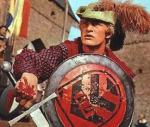
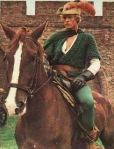
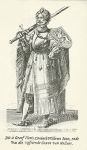



Being like a father to my grandson I wanted Tyler Hunt to have a Hero to emulate. He would be a cross between Robin Hood, Floris Rosemondt, and Floris V who championed the peasants.
“The nickname “God of the Peasants” was introduced after his death in the nobility, and was originally intended to be an insult. He earned the name because he behaved “as if he were the Good Lord himself with his peasants”. He apparently knighted 40 peasants as members of the Order of St. James without permission of the church, provoking the anger of the church and of the 12 existing noble members of that knightly order.”
When I was seven I emulated Robin Hood. Unfortunately, my daughter’s new boyfriend wants Tyler to emulate him, a hard driving and drinking dirt racecar driver – who hates folks on food stamps!
I think taking from the rich and giving to the poor is the old fashioned Celtic way of doing things – that should be reborn – and joined to the Biblical Nazarite Champions and Warriors, such a Gideon and Samson! How’s this for a new religion and movement? Trust me, you have the permission of Jesus!
Jon the Nazarite
Floris was a series made for television, it was first broadcasted by NTS (now NOS) on Dutch television in 1969. Back in 1969 this series was very much appreciated, this by people of all ages. The series were filmed in black & white this as to save on productioncost. Floris was a good start for Rutger Hauer and also for Paul Verhoeven, both of them in later years achieved fame and success internationally. And now finally 30 years after date this series are available on video. And myself? Well, I have some good memories about it too!
This series was shot in the Hungarian countryside and produced by German filmmakers, who tried to repeat the success of the original Dutch series.
Rutger Hauer is still Floris, however someone else is playing the role of Sindala, unfortunately.
Floris immediately wanted to resume war, but King Edward I of England, who had an interest in access to the great rivers for wool and other English goods, convinced Floris to stop hostilities with Flanders. When in 1292 Floris claimed the throne of Scotland in the Great Cause, (his great-grandmother Ada being the sister of King William I of Scotland) he did not receive the expected support from Edward, but England did support his claims in a new, this time more successful, war on Flanders.
[edit] Capture and death
After Edward I moved his trade in wool from Dordrecht in Holland to Mechelen in Brabant, to gain Flanders’s support against France, Floris switched sides to France in 1296. Edward I now prohibited all English trade on Holland and conspired with Guy of Flanders to have Floris kidnapped and taken to France. The humiliated lords Gijsbrecht IV of Amstel and Herman of Woerden enter the scene again as part of the conspiracy. Together with Gerard van Velsen they captured Floris during a hunting party and brought him to Muiderslot castle. The news of the capture spread quickly; afraid of the people, four days later the lords together with their captive left the castle to get to a safer place. They were stopped by an angry mob of local peasants. In panic Gerard of Velzen killed the count, and the lords fled. Gerard of Velzen was captured later and killed in Leiden. The other conspirators fled to Brabant, Flanders and perhaps to Prussia, to which many colonists and crusaders from Holland migrated.
[edit] Legacy
The life and death of Floris V inspired songs, plays, and books in the Netherlands. Best known is the play “Gijsbrecht van Aemstel” by 17th century playwright and poet Joost van den Vondel, which is about the sacking of Amsterdam in the days after the death of Floris V.
The nickname “God of the Peasants” was introduced after his death in the nobility, and was originally intended to be an insult. He earned the name because he behaved “as if he were the Good Lord himself with his peasants”. He apparently knighted 40 peasants as members of the Order of St. James without permission of the church, provoking the anger of the church and of the 12 existing noble members of that knightly order. This story has no historical basis, just like another story that claims that Gerard of Velzen participated in the conspiracy because Floris supposedly raped his wife. What is certain is that Floris was remembered as a saint by the peasants of Holland, and that the “God of the Peasants” became a symbolic hero in the struggle for independence from Spain in the Eighty Years’ War (1568–1648).
[edit] Family
Floris V was the son of Count William II of Holland and Elisabeth of Brunswick-Lüneburg. In ca 1271 Foris married Beatrice of Flanders, daughter of Guy de Dampierre, count of Flanders and Matilda, heiress of Bethune, Dendermonde, Richebourg and Warneton.[6] Floris and Beatrice had several children including:[7]
John I, Count of Holland, who married Elizabeth, daughter of King Edward I of England. No issue. After John’s death Elizabeth returned to England and married Humphrey de Bohun, 4th Earl of Hereford.
Margaret, engaged to Alphonso, Earl of Chester, son of King Edward I of England from 1281 to his death in 1284.
 Rosamond Press
Leave a comment