After my death and rebirth I studied the Indian religion looking for away to stay. What was my purpous, my work?
I read about a expected Master/Teacher who having reached the seventh plane would give up his enlightenment and return to being a normal man. In doing this, he is doing an extremely important work – for the betterment of humankind.
In my book ‘Did God or Jesus Found a Democracy’ I will show the world how the Democtratic Theocracy that Moses establshined in the wilderness was usurped by a Knig of Judah who invents ancestors to do his dirty work for him – including the enslavement of fellow Jews! My kinfolk, John Fremont, and Jessie Benton co-founded the Republican Abolitionist Party.
“Let my people go!”
Below is a photograph of myself with Dottie Witherspoon. We both have ancestors who took the name Francis Marion, for the Rosamond and Witherspoon family fought alongside Francis Marion. Our ancestors are buried in South Carolina where secret secessionsists in sheep’s clothing are throwing dice for Jesus’s red robe.
Moses has entered the Promised Land! Make straight paths for the Lord! Repent!
Jon the Nazarite
Copyright 2012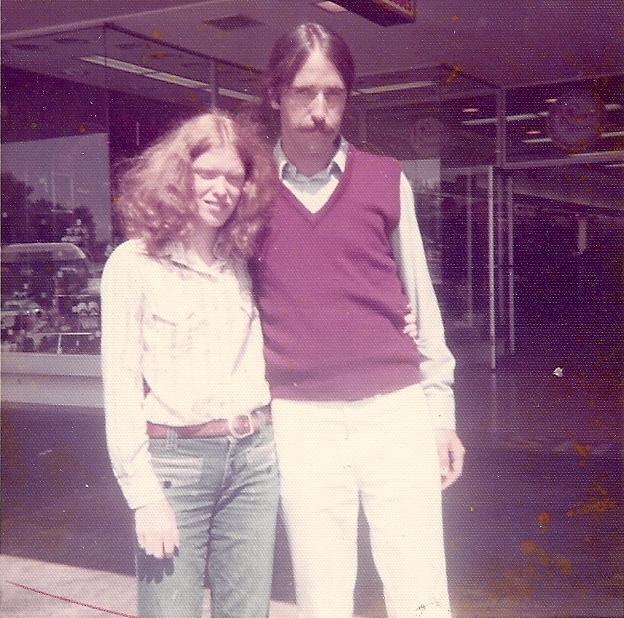
All this world confusion and chaos was inevitable and no one is to blame. What had to happen has happened; and what has to happen will happen. There was and is no way out except through my coming in your midst. I had to come, and I have come. I am the Ancient One.
Thorntree House is the oldest home in the Pee Dee area of South Carolina. The early plantation home was constructed from native materials of South Carolina. James Witherspoon built the home in 1749 when the house was located six miles outside of town near where the Battle of the Lower Bridge took place. Witherspoon was a part of Francis Marion’s brigade. After Witherspoon’s death, Witherspoon’s son inherited the plantation home.[10] The British occupied the home during the revolution when it was at its original location, on the Black River. Gavin Witherspoon was the owner at the time.[10] The house was later moved to its current location in 1969 when it was being restored by the Williamsburg Historical Society and is currently registered by the National Historic Register.[8] The Williamsburg Historical Society moved the house into Kingstree city limits to provide protection from police and fire department.[10]
Williamsburg County, located in the southern tip of the Pee Dee, holds treasures of historical interest dating back to the early 1700’s. In 1730, Governor Robert Johnson proposed a “Township Plan,” marking the beginning of Williamsburg County. This plan was proposed to stimulate the economy of the province to provide protection for coastal settlers. The township, which was laid out on the bank of the Black River, was named Williamsburg in honor of the Protestant King, William of Orange.
Williamsburg Township’s success was largely attributable to the raising and processing of indigo. From indigo, came wealth and prosperity to the area. Hemp, flax, and Holland were other fine quality products introduced in the 1730’s. A settlement, existing on Black Mingo (later referred to as Willtown), had a “Meeting House” for dissenters in what later became Williamsburg County. In 1736, the first Williamsburg Presbyterian Meeting House was built. This “Meeting House” was the mother church for a wide area embracing several states.
In 1780, after the fall of Charles Town, the nucleus of “Marion’s Brigade” was formed in this area. On August 27, 1780, the “Battle of King’s Tree” took place and it was at this time that Major John James turned his group over to Francis Marion, the Swamp Fox. The fighting consisted of rear-action skirmishing, but heavy losses were sustained. British Major James Wemyss, under orders from Lt. Col. Banastre Tarleton, burned the Indiantown Presbyterian Church down.
The battles of Black Mingo (September 28-29,1780), Mount Hope Swamp (March 1781) and Lower Bridge (March 1781) were all fought in Williamsburg County. In 1823, Robert Mills, a native of South Carolina and a nationally known architect, designed the Williamsburg County Courthouse. In 1883, a fire gutted the second story, but the massive brick barrel arches protected the public records in the first story.
Williamsburg, the first settlement, later was named King’s Tree because the King reserved for his own use all white pines. In 1886, King’s Tree became known as Kingstree. Kingstree became the county seat of Williamsburg County. Years following the Revolution, Williamsburg County quickly prospered. Since then, Williamsburg County has become famous for its wildlife and hunting preserves. It has truly become a “Sportsman’s Paradise.”
Explore Williamsburg County and discover one of the most beautiful areas of South Carolina, where history echoes in the fine architecture and new memories are waiting to happen.
Thorntree, the plantation home of James Witherspoon (1700-1768), was built in 1749. After the death of James Witherspoon, Thorntree became the home of Gavin Witherspoon, the son of James and Elizabeth Witherspoon. During the Revolution, Tarleton with one hundred British dragoons, and a large number of Tories under Col. Elias Ball, encamped at the plantation of Gavin Witherspoon, south of the lower bridge, on Black River, early in August 1780. As a restoration project, Williamsburg Historical Society relocated Thorntree to the city limits of Kingstree in order to provide police and fire prevention. For future generations, as well as for the present, the Historical Society desires to preserve and restore this early architectural structure.
During the present winter Lord Cornwallis formed a design of conquering
the upper counties of North Carolina, and marched by the way of Charlotte
towards Salisbury, for that purpose. This part of the country was thickly
covered with underwood, and settled by a hardy race of industrious yeomanry,
all friends of their country. He was fired upon from behind
bushes and fences, trees and rocks, by companies in ambush, and individuals
on foot and on horseback, and was so much annoyed that he was obliged
to retreat back to Winnsborough. The news of this expedition
was industriously spread abroad, and encouraged the people of South Carolina
to follow the example. In the mean time, Gen. Gates had been superceded
in the command of the southern army by Gen. Greene.
With the character of this leader it is intended to make the reader
better acquainted than he has been heretofore. His command begun
with a good omen, which in all times has had its effect. In a few hours
after his arrival in camp at Charlotte, he received the news
that Col. Washington had taken Rugely and one hundred men,
by the well known stratagem of mounting a pine log over against
his block house, which he mistook for a field piece.* Gen. Greene had
not only no more than one thousand continentals and about as many militia,
but was also bare of ammunition and clothing, and had no money to pay them.
With this force he marched down to Pedee, in South Carolina,
and took a position near Hick’s creek, on the east side of the river,
not many miles from Chatham. From this place his first despatch
to Gen. Marion is dated, the 19th Jan. 1781, in which he says,
“by the last accounts, Lieut. Col. Tarleton was in motion,
with about one thousand troops, towards Gen. Morgan.” On the 23d Jan.
Gen. Greene congratulates Marion on Morgan’s victory over Tarleton,
and writes him the particulars. On the 25th he says, “before this I hope
you have received the agreeable news of the defeat of Lieut. Col. Tarleton.
After this nothing will appear difficult.”
—
* This was the same Rugely who behaved so generously to Governor Rutledge.
It seems Lord Cornwallis intended to have promoted him, but after
this affair he wrote to Tarleton, “Rugely will not be made a brigadier.”
—
As the defeat of Tarleton at the Cowpens has been related
by many American writers, whose works are generally read,
the account of the renowned chief himself, who was unexpectedly foiled,
and which is now out of print, will be extracted for the amusement
of the historical reader. “Near the end of the last year, (1780)
information had been received by Lord Cornwallis, that Gen. Greene
had made a division of his troops, which did not exceed fourteen hundred men,
exclusive of militia, and that he had committed the light infantry
and Col. Washington’s cavalry to Gen. Morgan, with directions
to pass the Catawba and Broad rivers, to collect the militia,
and threaten Ninety-Six. It is not to be supposed Gen. Greene
would have adopted the hazardous plan of dividing his forces,
if he had received information of Gen. Leslie’s command
being withdrawn from Virginia, and united to the force in South Carolina;
because such an accession of strength would produce a movement
from Winnsborough (where Cornwallis then lay,) and might separate
the two divisions of the American army, and endanger their safety.
To attain this object, (the separation of the two divisions
of the American army,) Col. Tarleton was now detached from
the main army of Lord Cornwallis, and was to be supported by his lordship,
and Gen. Leslie as soon as he arrived; with orders to push Morgan
to the utmost. Tarleton’s force was his corps of cavalry and infantry
of five hundred and fifty men; the first battalion of the 71st,
of two hundred men; two hundred men of the 7th regiment, new recruits;
and fifty dragoons of the 17th regiment — total one thousand men.
Morgan retreated before Tarleton till the commanding officer
in front of the British reported the American troops were halted and forming.
(17th Jan.) Lieut. Col. Tarleton, having obtained a position
he certainly might deem advantageous, did not hesitate to undertake
the measures his commander and his own judgment recommended.
He ordered the legion dragoons to drive in the militia,
that Morgan’s disposition might be inspected. The American commander
had formed a front line of about one thousand militia;
his reserve of five hundred continental infantry, one hundred and twenty
of Washington’s cavalry, and three hundred back woodsmen.
Tarleton ordered his infantry to disencumber themselves of every thing
except arms and ammunition, to file to the right, till they became equal
to the flank of the American front line; the legion infantry were added
to their left, and under the fire of a three pounder they were to advance
within three hundred yards of the enemy. This situation being acquired,
the 7th regiment was commanded to form on the left of the legion infantry,
and the other three pounder was given to its right. A captain with
fifty dragoons, was placed on each flank. The first battalion of the 71st
extended to the left of the 7th, one hundred and fifty yards in the rear,
and composed, with two hundred cavalry, the reserve.
The animation of the officers and soldiers promised assurances of success.
The troops moved in as good line as troops could move, at open files.
The militia, after a short contest, were dislodged. The British approached
the continentals, and the fire on both sides produced much slaughter.
The cavalry on the right were ordered to charge the enemy’s left,
and executed the order with great gallantry, but were driven back
by the reserve and Col. Washington’s cavalry. As the contest
between the British infantry and continentals was equally balanced,
Tarleton brought the 71st into line, and ordered a movement in reserve
to threaten the enemy’s right flank. Upon the advance of the 71st
all the infantry again moved on; the continentals and back woodsmen
gave ground; the British rushed forwards; an order was despatched
to the cavalry to charge; an unexpected fire at this instant
from the Americans who came about, stopped the British and threw them
into confusion. Exertions to make them advance were useless.
The part of the cavalry which had not been engaged, fell likewise
into disorder, and an unaccountable panic extended along the whole line.
The Americans advanced and augmented their astonishment.
A general flight ensued. Neither promises nor threats could gain attention.
All attempts to restore order, recollection or courage proved fruitless.
Two hundred dragoons forsook their leader, fourteen officers
and forty horsemen were, however, not unmindful of their own reputation,
or their commanding officer. Col. Washington’s cavalry were charged
and driven back into the continental infantry by this handful of brave men.
Another party who had seized upon the baggage were dispersed,
and this detachment retired towards Broad river unmolested.
The number of the killed and wounded at the Cowpens, amounted to
near three hundred on both sides, officers and men inclusive; this loss
was almost equally shared. But the Americans took two pieces of cannon,
the colours of the 7th regiment, and near four hundred prisoners.”
Thus far Col. Tarleton. Gen. Moultrie received his account of this
action of the Cowpens “from an officer of great veracity and high rank,
who was conspicuous on that day;” supposed to be Col. Washington.
The substance of his account shall now be given; that the two may be compared.
Gen. Morgan drew up his men in an open pine barren, the militia
of about four hundred men, under Col. Pickens, formed the first line.
The continentals of about five hundred men, two hundred of whom
were raw troops, formed the second line, under Col. Howard, two hundred yards
in the rear. Col. Washington, with seventy-five continental cavalry,
and forty-five militia under Capt. M`Call, in the rear.
Pickens ordered his men to reserve their fire till the enemy came
within fifty yards, which they did, and fired with great success;
but they were soon obliged to give way and retreat behind the second line,
which received them warmly; at length the second line began to give way.
Col. Washington, perceiving this, rode up to their rear with his cavalry,
and told Howard, “if he would rally his men and charge the enemy’s line,
he would charge the cavalry who were cutting down the militia.”
His riding so close to the rear stopped the British, and Howard
rallied his men in the mean time, and charged with fixed bayonets.
Col. Washington charged the cavalry and routed them; the militia
at the same time recovered themselves and began to fire, and the whole
threw the enemy into the utmost confusion. Howard called out to them,
“to lay down their arms and they should have good quarters.”
Upwards of five hundred men threw down their arms and surrendered.
Two hundred were left dead on the field, and a great number wounded.
Besides the two field pieces mentioned by Tarleton, six hundred men,
eight hundred stand of arms, and thirty-five baggage waggons, fell into
the hands of the Americans. Col. Washington pursued the British cavalry
twenty-five miles.
By this last account the disparity in numbers was not great,
and as one half the Americans were either militia or new levies,
the superiority was on the side of Tarleton, whose men, except two hundred,
were veterans, and he had two field pieces. The ground too he acknowledges
was advantageous; so that every thing was in his favour, but ~an agency~
which he could not control. But in the last account we can find no place
where he and his handful of brave men could encounter Col. Washington.
In his bewildered fancy perhaps it was some other object he encountered,
since for the space of five and twenty miles, not their faces,
but only their backs were to be seen. The fact is, that never was victory
more complete, never was vanity more humbled, nor cruelty more justly requited
than in the defeat of this tyrannical man. Its first effect was
to raise the spirits of the people; its ultimate consequence was
the downfall of Cornwallis and peace to the country. But most severe trials
are yet to be surmounted, and patriotism the most exemplary
remains yet to be recorded.
It was while Marion remained at White Marsh, that one of his captains, Gavin Witherspoon, whom he had sent out with four men, achieved one of those clever performances, that so frequently distinguished the men of Marion. He had taken refuge in Pedee Swamp from the pursuit of the enemy, and, while hiding, discovered one of the camps of the Tories who had been in pursuit of him. Witherspoon proposed to his four comrades to watch the enemy’s camp, until the Tories were asleep. But his men timidly shrunk from the performance, expressing their dread of superior numbers. Witherspoon undertook the adventure himself. Creeping up to the encampment, he found that they slept at the butt of a pine tree, which had been torn up by the roots. Their guns were piled against one of its branches at a little distance from them. These he first determined to secure, and, still creeping, with the skill and caution of an experienced scout, he succeeded in his object. The guns once in his possession, he aroused the Tories by commanding their surrender. They were seven in number, unarmed, and knew nothing of the force of the assailant. His own more timid followers drew near in sufficient time to assist in securing the prisoners. There was another Witherspoon with Marion, John, a brother of Gavin, and like him distinguished for great coolness, strength, and courage. Both of the brothers delighted in such adventures, and were always ready to engage in them,–the rashness of the attempt giving a sort of relish to the danger, which always sweetened it to the taste of our partisans.
MYRTLE BEACH, S.C. — Texas Gov. Rick Perry spoke like a preacher from his pulpit to an evangelical crowd today, telling them that if they support his presidential campaign, together they can bring about the world’s “next great awakening.”
“It is time for people of faith to take this country back. The greatness of America stems from the humble act of mortal men recognizing a higher power, proclaiming our rights that emanate from that great creator and not from government,” Perry told the crowd at the Faith and Freedom Coalition Debate Kickoff.
“Don’t let the voices of secularism in government silence your voices. Together we can build more than just a winning campaign. We can bring about the next great awakening in this world, and we can make America more than just the freest and the most prosperous nation on the earth, but as Ronald Reagan said, we can again make it that shining city on the hill.”
Perry, who lost the backing of a group of religious leaders and social conservatives to Rick Santorum over the weekend, warned of the decline in spirituality due to an uptick in “political correctness” in this country.
 Rosamond Press
Leave a comment