



For two weeks I have been following the signs in heaven as I take you to Christmas morning. And now I have a companion. Am I preparing the way?
Jon the Nazarite
This past week, a rather mundane comet made big headlines when it survived a whisker’s (in cosmic terms) distance pass by the Sun, core completely intact. In the days leading up to the predicted close shave, most experts expected Comet Lovejoy to be vaporized into nothing. This weekend, many of these same people were eating their words, going to show that, in science, there is no such thing as certainty.
So, now that it has gripped the astronomical public’s imagination, many skywatchers are now asking ‘how can I see the comet?’ Well, it is, in theory, quite easy.
Right now, Comet Lovejoy, while not all that far from the Sun, is positioned so that it can be seen and/or photographed from the Southern Hemisphere, where is which it will remain for about a month or so. However, come mid January, the comet will make an appearance in the Northern Hemisphere.
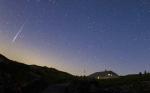
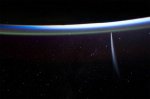
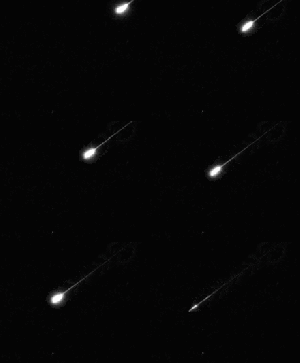
Reports from this year meteor shower indicate that the Draconids were unusually good this year with activity was concentrated around 8 pm UT on October 8. The most intense Draconid meteor showers in recent history occurred in 1933 and 1946 when thousands of meteors per hour were recorded as the Earth plowed through particularly dense streams of comet debris.
Today in pretty space pics: Using the Spitzer Space Telescope’s knack for infrared imagery, astronomers have snapped an image of the most crowded grouping of supermassive stars ever spotted in the Milky Way. Dubbed the “Dragonfish,” the cluster of stars, gas, and dust contains hundreds of the largest class of stars, most dozens of times larger than the sun.
The region takes its name from the huge hollow space blown out of the huge cloud of super-heated gas (glowing red in the image) that somewhat resembles the toothy maw of the dragonfish. The gap is something like 100 light-years across.
 Rosamond Press
Leave a comment