
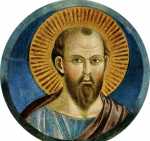

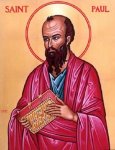

Like John Darby, Paul has invented HIS OWN religion. This is why the evangelicals are running for Congress, Senate, and the White House, because they know their cult is doomed, because too many people own computers and thus they own differing opinions – and very good questions! Their theology not tenable! How can they employ Old Testament Laws to rule America, if Paul said they are worthless? The Earthly Father of Christianity, is sprouting horns! How the mighty have fallen! Will the meek inherit the earth, afterall – in the Spring?
Jon the Nazarite
Paul Kept A Nazirite Vow – Acts 18:18
Acts 18:18-19 So Paul still remained a good while. Then he took leave of the brethren and sailed for Syria, and Priscilla and Aquila were with him. He had his hair cut off at Cenchrea, for he had taken a vow. NKJV
Let’s be clear. There’s no explicit reference in this scripture to a Nazirite vow, but let’s see what the commentaries have to say about this.
Commentators Agree That Paul Kept A Nazirite Vow
Firstly the Wycliffe Bible Commantary. Acts 18:18
Paul now stayed in Corinth ….Before leaving Corinth, he assumed a Nazarite vow (see Num 6:1-21) which was an OT act of thanksgiving or of dedication to God. During the period of the vow, the devotee allowed his hair to grow uncut, and at the end of the period he cut his hair. ………. As he came to Cenchrea, the eastern port of Corinth, on his way to Syria and Palestine, the time of his vow elapsed, and he therefore cut his hair.(from The Wycliffe Bible Commentary, Electronic Database. Copyright (c) 1962 by Moody Press)
Barnes Notes 1997 Acts 18:18
[For he had a vow] …. The most remarkable vow among the Jews was that of the Nazarite, by which a man made a solemn promise to God to abstain from wine, and from all intoxicating liquors, to let the hair grow, not to enter any house polluted by having a dead body in it, or to attend any funeral. This vow generally lasted eight days, sometimes a month, sometimes during a definite period fixed by themselves, and sometimes during their whole lives…. Those who made the vow out of Palestine, and who could not come to the temple when the vow was expired, contented themselves with observing the abstinence required by the Law, and cutting off the hair where they were. This I suppose to have been the case with Paul. His hair he cut off at the expiration of the vow at Cenchrea, though he delayed to perfect the vow by the proper ceremonies until he reached Jerusalem, Acts 21:23-24. (from Barnes’ Notes, Electronic Database. Copyright (c) 1997 by Biblesoft)
Expositors Bible Commentary says:
Nevertheless, that Paul cut his hair at Cenchrea shows that he had earlier taken a Nazirite vow for a particular period of time that had now ended. Such a vow had to be fulfilled at Jerusalem…
Keil & Delitzsch Commentary on Numbers 6:
“On other cases of this kind in the Talmud, and particularly on the later form of the Nazarite vow-for example, that of the Apostle Paul (Acts 18:18) – see Winer, bibl. R. W. ii. pp. 138-9, and Oehler in Herzog’s Cycl.)” (from Keil & Delitzsch Commentary on the Old Testament: New Updated Edition, Electronic Database. Copyright (c) 1996 by Hendrickson Publishers, Inc.)
Now let’s take a look at what Matthew Henry has to say. Acts 18:18-23
At Cenchrea, which was hard by Corinth, the port where those that went to sea from Corinth took ship, either Paul or Aquila (for the original does not determine which) had his head shaved, to discharge himself from the vow of a Nazarite:
Matthew Henry then goes on to argue that Paul kept a Nazirite vow to be “all things to all men”. Was Paul really a hypocrite?
Remarkably then, in the view of all of these commentators, Paul himself kept the “ritualistic old testament law” of the Nazirite vow, but at the same time was preaching that it was all “done away with”.
Doesn’t that argument beg some rather big questions?
Return to the start of Paul’s Post Crucifixion Temple Sacrifices a Judianity website ?
© http://www.pauls-post-crucifixion-temple-sacrifices.info March 2006.
So does Galatians really mean the Mosaic law (the written Torah) is ” done away” especially if, in the predominantly Jewish New Testament church, no fuss was recorded about it, yet in Acts only one small and predictable change about the circumcision of gentile proselytes caused massive turmoil?
Nazirite Vows Sponsored By Paul After His Conversion
Nazirite Vows Sponsored By Paul in Acts 21
Many believe that temple sacrifices are “done away” by the New Covenant. If that is the case then why do commentaries agree that James advised Paul to pay for the temple expenses of four brethren who’d taken Nazirite vows?
Despite the fact that the Jews accused him of …….., Paul returned to Jerusalem to face the music.
Acts 21 verse 22.
22 What then? The assembly (presumably the Sanhedrin?) must certainly meet, for they will hear that you have come.
Paul clearly had a substantial reputation at the highest levels amongst the seventy elders.
23 Therefore do what we tell you: We have four men who have taken a vow. 24 Take them and be purified with them, and pay their expenses so that they may shave their heads, and that all may know that those things of which they were informed concerning you are nothing, but that you yourself also walk orderly and keep the law.
So what’s this that they’re advising Paul to do?
What Was the Vow The Four Men Had Taken?
Let’s see what a few commentaries have to say about what this vow was.
“There were four Jews who had taken a Nazarite vow. This ordinarily lasted thirty days, but they had incurred some defilement that had placed them in a condition of ceremonial impurity for seven days (v. 27). …. The elders suggested to Paul that he identify himself with these four and practice the common Jewish custom of paying the expenses for the sacrifices”. (from The Wycliffe Bible Commentary, Electronic Database. Copyright (c) 1962 by Moody Press)
“So Paul did here; he contributed what he vowed to the offerings of these Nazarites, and some think bound himself to the law of Nazariteship, and to an attendance at the temple with fastings and prayers for seven days, not designing that the offering should be offered till them, which was what he signified to the priest”. (from Matthew Henry’s Commentary on the Whole Bible: New Modern Edition, Electronic Database. Copyright (c) 1991 by Hendrickson Publishers, Inc.)
And from The Expositors Bible Commentary:
“James and the elders responded to Paul’s responded to Paul’s report and the gift from the churches by praising God. Yet the also urged Paul to join with four Jewish Christians who were fulfilling their Nazirite vows and to pay for their required offerings… Thus they were protecting themselves against Jewish recriminations, while at the same time affirming their connection with Paul and his mission. And as they saw it they were providing Paul with a way of protecting himself against a slanderous accusation floating about that he was teaching Jews to apostatise from Judaism. In view of his having come earlier to Jerusalem in more placid circumstances to fulfil a Nazirite vow of his own (Acts 18:18-19:22)”…
This very clearly indicates that the view of the Expositor’s Bible commentary is that Paul kept a Nazirite vow himself in Acts 18:18. Continuing…
“…Paul would not have viewed such a suggestion as particularly onerous. It doubtless seemed to all concerned a particularly happy solution to the vexing problems both Paul and the Jerusalem church were facing. 26 Coming from abroad, Paul would have had to regain ceremonial purity by a seven day ritual of purification before he could be present at the absolution ceremony of the four Jewish Christians in the Jerusalem temple”. The Expositors Bible Commentary Volume 9 John and Acts (Acts 21:24) – 1981
“All that seems meant here is, that Paul should so ‘purify himself’ ceremonially, as to be able to present himself as a cleansed man in, the temple on the completion of these four men’s vow. And be at charges with them, OR – ‘pay expenses for them,’ or defray the cost of the sacrifices legally required of them, along with his own; which was deemed a mark of Jewish generosity”. (from Jamieson, Fausset, and Brown Commentary, Electronic Database. Copyright (c) 1997 by Biblesoft)
“…Generally such vows were from one to three months in length. The outward elements consisted in not touching anything dead, refraining from any product of the grapevine and not cutting one’s hair”. (see Numbers 6:) Jewish New Testament Commentary (Messianic Jews) – written by David Sterne
Numbers 6: “From this the custom afterwards grew up, that when poor persons took the Nazarite’s vow upon them, those who were better off defrayed the expenses of the sacrifices (Acts 21:24; Josephus, Ant. xix. 6, 1; Mishnah Nasir, ii. 5 ff.)”.(from Keil & Delitzsch Commentary on the Old Testament: New Updated Edition, Electronic Database. Copyright (c) 1996 by Hendrickson Publishers, Inc.)
Acts 21:15-26 (2.) They produce a fair opportunity which Paul might take to clear himself: “Do this that we say unto thee, take our advice in this case. We have four men, Jews who believe, of our own churches, and they have a vow on them, a vow of Nazariteship for a certain time; their time has now expired (v. 23), and they are to offer their offering according to the law, when they shave the head of their separation, a he-lamb for a burnt-offering, a ewe-lamb for a sin-offering, and a ram for a peace-offering, with other offerings pertinent to them, Num 6:13-20. Many used to do this together, when their vow expired about the same time, either for the greater expedition or for the greater solemnity. Now Paul having so far of late complied with the law as to take upon him the vow of a Nazarite, and to signify the expiration of it by shaving his head at Cenchrea (Acts 18:18), according to the custom of those who lived at a distance from the temple, they desire him but to go a little further, and to join with these four in offering the sacrifices of a Nazarite: `Purify thyself with them according to the law; and be willing not only to take that trouble, but to be at charges with them, in buying sacrifices for this solemn occasion, and to join with them in the sacrifice.” This, they think, will effectually stop the mouth of calumny, and every one will be convinced that the report was false, that Paul was not the man he was represented to be, did not teach the Jews to forsake Moses, but that he himself, being originally a Jew, walked orderly, and kept the law; and then all would be well. (from Matthew Henry’s Commentary on the Whole Bible: New Modern Edition, Electronic Database. Copyright (c) 1991 by Hendrickson Publishers, Inc.)
Paul’s Post Crucifixion Temple Sacrifices” – Background & Contents
Neither Christianity Nor Judaism Seems To Have All The Answers
Undeniably Christianity has “Jewish” foundations, but it’s almost as if it was embarrassed about it. Many Christian theologians believe that Paul’s epistle to the Galatians shows that the New Covenant and specifically Christ’s sacrifice has “done away” with the religion of the Old Testament & the written Torah-law, because the law is now only spiritual and no longer physical.
To Jews the idea that the written Torah-law has been replaced (“replacement theology”) is unthinkable. They argue that the Old Testament clearly shows:
Malechi 3:6 “For I am the LORD, I do not change… NKJV
Interestingly though, the New Testament says something very similar…
Hebrews 13:8 Jesus Christ is the same yesterday, today, and forever. NKJV
Even the last thing written in the Old (some would say redundant) Testament is:
Malechi 4:4 “Remember the Law of Moses, My servant, Which I commanded him in Horeb for all Israel, With the statutes and judgments. NKJV
Does it really makes sense to suggest that God changed His mind only four verses later?
We would suggest not, particularly given that only five chapters later Jesus said:
Matthew 5:17-19 “Do not think that I came to destroy the Law or the Prophets. I did not come to destroy but to fulfil. 18 For assuredly, I say to you, till heaven and earth pass away, one jot or one tittle will by no means pass from the law till all is fulfilled. 19 Whoever therefore breaks one of the least of these commandments, and teaches men so, shall be called least in the kingdom of heaven; but whoever does and teaches them, he shall be called great in the kingdom of heaven. NKJV
If the written Torah-law really was going to be “done away”, why did Christ so curse anyone who teaches others to break the commandments in the written Torah-law? Are we to believe that the apostle Paul, put himself under this curse? Interestingly even the apostle Paul said he believed everything written in the Torah-law and the prophets.
Why don’t Christians believe as the Jews do that the written Torah-law is a great blessing? Although the Bible sometimes refers to the first five books as “the law of Moses”, the written Torah-law is (and we would argue remains) The Law of God. The ten commandments and the statutes and judgments recorded in Exodus were just given to Israel through Moses by God.
The greatest controversy for the New Testament church was when the written Torah command to circumcise Gentile proselytes prior to their observance of Passover in Exodus 12:48 was countermanded by Cornelius’ baptism without circumcision in Acts 10. This (some would say) comparatively minor doctrinal shift undoubtedly created massive controversy for the first century Church and led to the writing of Galatians, large parts of Romans and the Jerusalem council of Acts 15:.
Yet if this one small change to the written Torah (which Acts 10 shows was clearly led by God Himself) created such enormous controversy, why is there nothing like the same degree of contention and debate about the so called “doing away” with other parts of the written Torah-law?
Is it reasonable to expect that for example, the levitical sacrifices, Nazirite vows, Holy Days, Saturday Sabbaths, etc. were “done away” and the same New Testament church that was nearly torn apart by the gentile non-circumcision controversy simply said: “No problemo” ?
Did the “eat the meat in the sheet” vision really mean that Peter could go downstairs and make himself a ham sandwich without it having created any significant recorded controversy in the largely Jewish New Testament / New Covenant Church ?
Were God’s commanded Holy Days in Leviticus 23 “done away” by the briefest of comments from Paul in Galatians 4:10 even though Paul stated categorically that he believed everything written in the law and the prophets?
 Rosamond Press
Leave a comment