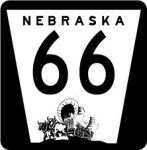


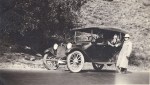
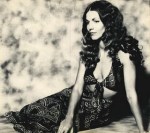

It was my kinfolk, John Fremont, that gave Nebraska its name. ‘The Pathfinder’ was the first to explore the Nowhere State from where Rena Christiansen hail. This is why you see a covered wagon on the route 66 sign above. Folks going West took Fremont’s Oregon Trail to the coast to behold the great Pacific Ocean. In 1970, Rena took a road trip from Grand Island Nebraska to Los Angeles California. She loved it, because when she got out of the car in all those stops along the way, Americans took note;
“My my! She’s a real American Beauty!”
It was like the Statue of Liberty had cone down from her lofty perch in New York, and had gone to see the sights, gone to look for America. It is the dream of Carla Sarkozy, the first lady of France, to take a road trip along Route 66. Carla is Folk Singer that dated some famous musicians. She loves
poetry and I assume American Bohemian History, that went West, and expressed itself around the campfires my grandparents made on Santa Cruz Island where they camped – in the good ol days! When Rena and I made camp on Mount Tamalpias, we were carrying on family traditions. We awoke the Sleeping Bohemian Maiden. We were – LIBERATED! We had no care in the world. We lived day to day. At night we watched sparks from our fire soar into the stars. We beheld the Milykway, just this side of Nowhere.
“But human models are scarce, and “there’s no processing lab in Nowhere, Nebraska, so we have to set up a processing lab, and that means a lot of extra cost. That’s why, historically, we ended up in Miami or Palm Springs or San Francisco.”
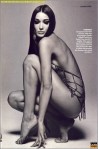
Above is a photograph of Marilyn Reed modeling. The famous fashion photographer, Steven Silverstein, captured my first girlfriend’s beauty on a rock by the sea. Marilyn’s kinsfolk are the Dukes of Kentucky. She could pass for one of Rena’s sisters.
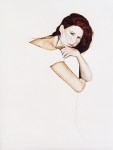
My late sister, became famous cutting photos of models out of fashion magazines, and broadcasting them on a empty canvas. She hadno model, and took up art in order to get off welfare, and no longer be a parasite. There are thirty million dollars worth of Rosamond prints that fell into the hands of the real parasites, but, they can’t move them because they can’t pay good money to a ghost writer to author anything that looks like Art History. These folks are uncultured – and highly stupid, because they continuously undermine my efforts to put Christine Rosamond Benton – amongst the stars!
A friend of mine keeps saying I should be declared a National Treasure. Two weeks ago my daughter threw me away, with the help of her boyfriend. Heather owns about $50, 000 dollars worth of Rosamond prints she can not sell, because folks have lost interest in this artist because two awful books failed to reveal anywhere nears the creative information I offer – for free! Only when folks pay good money to own this history, will they believe it is worth anything, cause that’s how it goes – West of Wowhere!
Jon Presco
Copyright 2011
The idea of national treasure, like national epics and national anthems, is part of the language of Romantic nationalism, which arose in the late 18th century and 19th centuries. Nationalism is an ideology which supports the nation as the fundamental unit of human social life, which includes shared language, values and culture. Thus national treasure, part of the ideology of nationalism, is shared culture.
National treasure can be a shared cultural asset, which may or may not have monetary value; for example, a skilled banjo player would be a Living National Treasure. Or it may refer to a rare cultural object, such as the medieval manuscript Plan of St. Gall in Switzerland. The government of Japan designates the most famous of the nation’s cultural properties as National Treasures of Japan, while the National Treasures of Korea are a set of artifacts, sites, and buildings which are recognized by South Korea as having exceptional cultural value.
One of the most noted names in the story of the West is that of John C. Fremont. He was sometimes called “The Pathfinder.” Many years of his life were spent in exploring the plains and the mountains. He first became famous as leader of an exploring expedition which crossed Nebraska in 1842. Starting June 10th from the mouth of the Kansas River, he followed the Oregon Trail to the forks of the Platte. Here his party divided, one party going by way of the North Platte, the other by way of the South Platte, both meeting at Fort Laramie. From there Fremont followed the Oregon Trail to the South Pass and on August 15th climbed to the top of what has since been called Fremont’s Peak at the summit of the Rocky Mountains.
Coming down the Platte river in boats, Fremont’s party was wrecked in the great canyon of the Platte near where Casper, Wyoming, is located. Saving what they could they followed the Platte valley and reached the trading post of Peter A. Sarpy at Bellevue on October 1st.
The next year on May 29th Fremont left the mouth of the Kansas River and took a more southerly route through northern Kansas, and on June 25th crossed into Nebraska in what is now Hitchcock County. After following the Republican valley for some days, he crossed to the South Platte and thence over the mountains to Salt Lake and California.
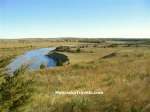
Fremont saw the great future of the West more clearly than other explorers. He saw in Nebraska the rich soil, the abundant grass and the beautiful wild flowers. To his eyes this region looked like a garden, instead of a desert, as it had been represented by many.
Nebraska probably owes its name to Fremont. In his report to the secretary of war, he calls our great central river by its Indian name Nebraska, or Flat Water, and the secretary of war afterwards suggested Nebraska as a good name for the new territory.
Fremont believed in the future Pacific Railroad and tried to find an easy, natural route on which it might be built. He became senator from the new state of California in 1850, and candidate for President in 1856. He died July 13, 1890, having lived to see the western wilderness which he had explored filled with millions of people, great cities built on the plains and in the mountains and several Pacific railroads where he had dreamed of one.
One of the most thriving cities of Nebraska proudly bears Fremont’s name. The great United States dam at the canyon of the Platte River where Fremont and his party were wrecked in 1842 is called ‘The Pathfinder,” and great canals from its mighty reservoir carry the waters from the Rocky Mountains far out on the plains of western Nebraska, making them blossom everywhere in memory of this great explorer who had confidence in the development of the West.
French President Nicolas Sarkozy is used to being the center of attention during state visits, but it is his wife Carla Bruni-Sarkozythat is attracting the majority of attention in their latest trip to America.
The former supermodel and singer/songwriter spent Monday in New York City launching a new program through her philanthropy, The Carla Bruni-SarkozyFoundation. Funded by an American donor, the program is providing scholarships for college studentsstudying the arts to do an exchange program between New York City and Paris.
I spoke with Bruni-Sarkozy about her passion for the arts and why she believes cross-cultural exchange is important.
Video: Carla Bruni-Sarkozy On Art
While Bruni-Sarkozy has often stood by her husband’s side, this time he was there to support her as he helped kick off the day by attending a small celebration at the French Institute-Alliance Francaise in New York. “I am very proud of Carla’s foundation and really happy to see the project becoming real,” President Sarkozy said in French to the small crowd over flutes of champagne and small breakfast pastries. His wife, with a gray pencil skirt and her hair neatly swept up, beamed by his side.
“New York City is a world city,” Sarkozy emphasized, “And French culture is very important.”
The couple went around the room to greet each of their guests and spent about 10 minutes chatting with those in attendance. Bruni-Sarkozy charmed a group of besotted women, telling them how much she loved America and how she and her husband dream of road-tripping on Route 66.
Bruni-Sarkozy spent the rest of the day touring The Julliard School and New York University, both colleges selected for the exchange program slated to beginning this summer. At Julliard, the school’s president took Bruni-Sarkozy on a tour of their remodeled facilities and showed her original manuscripts from Beethoven and Mozart. “Can we actually touch it?” she asked in English before delicately handling the score. “It’s a little scary to touch. You don’t want to drink coffee around it!”
“It breathes real work,” Bruni-Sarkozy said as she translated some of the Italian music directions into English. “It’s fantastic.”
Bruni-Sarkozy seemed to most enjoy watching the students rehearse their various arts– her face lit up watching student musicians practice and blew them a kiss when she left. During a portion of an acting performance, Bruni-Sarkozy was on the edge of her seat, reacting to students’ drama and calling out “Bravo!” at the end. She even stopped the tour at one point to back track down a hallway and sneak into a jazz rehearsal, smiling broadly before slipping inside the room for a few moments to listen.
The Sarkozy’s whirlwind trip to the United States will culminate in a private dinner tonight with President Obama and First Lady Michelle Obamaat the White House.
French president, first lady want to cruise Route 66 March 30, 2010
Posted by Ron Warnick in People, Road trips.
trackback
Tucked into a story from Forbes.comabout French President first lady Carla Bruni-Sarkozy’s visit to America this week is a snippet that caught my eye:
The couple went around the room to greet each of their guests and spent about 10 minutes chatting with those in attendance. Bruni-Sarkozy charmed a group of besotted women, telling them how much she loved America and how she and her husband dream of road-tripping on Route 66.
Bruni-Sarkozy and her husband, French President Nicolas Sarkozy, were in New York to launch a new program through her philanthropy, The Carla Bruni-Sarkozy Foundation.
If the couple decided to take a vacation soon on the Mother Road, it might result in quite a hubbub — but not at the level of Paul McCartney’s road trip in 2008.
Nebraska Highway 66 is a highway in central and eastern Nebraska. It is a discontinuous highway with four segments heading in a west-to-east direction. The first segment begins at Nebraska Highway 14 south of Central City and ends at U.S. Highway 81 south of Stromsburg. The second segment begins at Nebraska Highway 15 west of Dwight and ends at Nebraska Highway 79 in Valparaiso. The third segment begins at U.S. Highway 77 south of Wahoo and ends at Main Street in Louisville. The fourth and final segment begins at the intersection with Walnut Street and Koop Avenue in Louisville, and ends at U.S. Highway 34 and U.S. Highway 75 west of Plattsmouth.
But human models are scarce, and “there’s no processing lab in Nowhere, Nebraska, so we have to set up a processing lab, and that means a lot of extra cost. That’s why, historically, we ended up in Miami or Palm Springs or San Francisco.”
The photograph of my grandmother, Mary Magdalene Rosamond, was made into a postcard, as were the photo of she and my grandfather, Royal Rosamond, camping on Anacapa Island. The photo overlooking Ventura by the Sea was also a postcard, and appears to be my grandmother, and perhaps the photographer who took these photos. Was he a friend of my grandparents, or, was this strictly business?
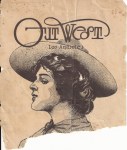
One possibility, is that Out West magazine was promoting the Rosamonds as THE ideal California family. Is it possible that George Wharton James took the photographs of Royal and Mary, and their four daughters, included my mother, Rosemary. What makes me wonder this is the Native American baskets in the photo of June and Bertha. Like Charles Lummis, James collected these baskets. Were postcards made of the Rosamond girls, later to become the Rosamond Women?
Above we see the beautiful women Philip Boileau rendered. His wife, Peggy, was his favorite model. Philip is the son of Susan Benton, the sister of Jessie Benton, and thus Philip is kin to my niece Drew Benton and her father Garth. Christine Rosamond Benton made her own clothes, and modeled for some of her paintings. She took photos of me so I would be her first male portrait. She used photos of the children descended from Mary, who made all her clothes, and supported her four daughters making hats. Philip descends from a noble French family, and Susan lived in France where she had a Salon. Jessie had a Salon in San Francisco, where literary and artistic greats gathered. This is a Artistic dynasty kin to the Royal Stewarts. Since 1964 I wrote many long letters to the Executor of Rosamond’s legacy, giving him many good reasons why no outsider should be put in charge of the Creative Legacy for it is a Family Legacy, and outsiders will destroy it.
https://rosamondpress.wordpress.com/2011/08/24/birth-of-the-california-dream/
Above are photographs of my grandfather and grandmother camping on Santa Cruz Island, one of the Channel Islands off the coast of Los Angeles. After John Fremont and his wife Jessie Benton secured the West Coast for the United States of America, they came, the Poets and their beautiful Muses.
The first three images are of Mary Magdalene Rosamond who rode on the back of her boyfriends motorcycle all the way from Iowa to Los Angeles. In Ventura she fell in love with the poet and writer, Roy (Royal) Reuben Rosamond whose poems and short stories appeared in Out West Magazine. The bathing beauty lying on Ventura Beach, is my mother Rosemary. Rosemary dated two Hollywood Stars that I know of, and is dressed the part. Here is the Genesis of the California Dream, that would launch the greatest real estate deal of all time, and attract Bohemian non-conformists from all over the world. The poet George Stirling dedicates a poem to Browning in this issue where Rosamond describes a blonde beach goddess coming out of the water, an image that launched a million commercials – and desires!
One of the most noted names in the story of the West is that of John C. Fremont. He was sometimes called “The Pathfinder.” Many years of his life were spent in exploring the plains and the mountains. He first became famous as leader of an exploring expedition which crossed Nebraska in 1842. Starting June 10th from the mouth of the Kansas River, he followed the Oregon Trail to the forks of the Platte. Here his party divided, one party going by way of the North Platte, the other by way of the South Platte, both meeting at Fort Laramie. From there Fremont followed the Oregon Trail to the South Pass and on August 15th climbed to the top of what has since been called Fremont’s Peak at the summit of the Rocky Mountains.
Coming down the Platte river in boats, Fremont’s party was wrecked in the great canyon of the Platte near where Casper, Wyoming, is located. Saving what they could they followed the Platte valley and reached the trading post of Peter A. Sarpy at Bellevue on October 1st.
The next year on May 29th Fremont left the mouth of the Kansas River and took a more southerly route through northern Kansas, and on June 25th crossed into Nebraska in what is now Hitchcock County. After following the Republican valley for some days, he crossed to the South Platte and thence over the mountains to Salt Lake and California.
Fremont saw the great future of the West more clearly than other explorers. He saw in Nebraska the rich soil, the abundant grass and the beautiful wild flowers. To his eyes this region looked like a garden, instead of a desert, as it had been represented by many.
Nebraska probably owes its name to Fremont. In his report to the secretary of war, he calls our great central river by its Indian name Nebraska, or Flat Water, and the secretary of war afterwards suggested Nebraska as a good name for the new territory.
Fremont believed in the future Pacific Railroad and tried to find an easy, natural route on which it might be built. He became senator from the new state of California in 1850, and candidate for President in 1856. He died July 13, 1890, having lived to see the western wilderness which he had explored filled with millions of people, great cities built on the plains and in the mountains and several Pacific railroads where he had dreamed of one.
One of the most thriving cities of Nebraska proudly bears Fremont’s name. The great United States dam at the canyon of the Platte River where Fremont and his party were wrecked in 1842 is called ‘The Pathfinder,” and great canals from its mighty reservoir carry the waters from the Rocky Mountains far out on the plains of western Nebraska, making them blossom everywhere in memory of this great explorer who had confidence in the development of the West.
French President Nicolas Sarkozy is used to being the center of attention during state visits, but it is his wife Carla Bruni-Sarkozythat is attracting the majority of attention in their latest trip to America.
The former supermodel and singer/songwriter spent Monday in New York City launching a new program through her philanthropy, The Carla Bruni-SarkozyFoundation. Funded by an American donor, the program is providing scholarships for college studentsstudying the arts to do an exchange program between New York City and Paris.
I spoke with Bruni-Sarkozy about her passion for the arts and why she believes cross-cultural exchange is important.
Video: Carla Bruni-Sarkozy On Art
While Bruni-Sarkozy has often stood by her husband’s side, this time he was there to support her as he helped kick off the day by attending a small celebration at the French Institute-Alliance Francaise in New York. “I am very proud of Carla’s foundation and really happy to see the project becoming real,” President Sarkozy said in French to the small crowd over flutes of champagne and small breakfast pastries. His wife, with a gray pencil skirt and her hair neatly swept up, beamed by his side.
“New York City is a world city,” Sarkozy emphasized, “And French culture is very important.”
The couple went around the room to greet each of their guests and spent about 10 minutes chatting with those in attendance. Bruni-Sarkozy charmed a group of besotted women, telling them how much she loved America and how she and her husband dream of road-tripping on Route 66.
Bruni-Sarkozy spent the rest of the day touring The Julliard School and New York University, both colleges selected for the exchange program slated to beginning this summer. At Julliard, the school’s president took Bruni-Sarkozy on a tour of their remodeled facilities and showed her original manuscripts from Beethoven and Mozart. “Can we actually touch it?” she asked in English before delicately handling the score. “It’s a little scary to touch. You don’t want to drink coffee around it!”
“It breathes real work,” Bruni-Sarkozy said as she translated some of the Italian music directions into English. “It’s fantastic.”
Bruni-Sarkozy seemed to most enjoy watching the students rehearse their various arts– her face lit up watching student musicians practice and blew them a kiss when she left. During a portion of an acting performance, Bruni-Sarkozy was on the edge of her seat, reacting to students’ drama and calling out “Bravo!” at the end. She even stopped the tour at one point to back track down a hallway and sneak into a jazz rehearsal, smiling broadly before slipping inside the room for a few moments to listen.
The Sarkozy’s whirlwind trip to the United States will culminate in a private dinner tonight with President Obama and First Lady Michelle Obamaat the White House.
French president, first lady want to cruise Route 66 March 30, 2010
Posted by Ron Warnick in People, Road trips.
trackback
Tucked into a story from Forbes.comabout French President first lady Carla Bruni-Sarkozy’s visit to America this week is a snippet that caught my eye:
The couple went around the room to greet each of their guests and spent about 10 minutes chatting with those in attendance. Bruni-Sarkozy charmed a group of besotted women, telling them how much she loved America and how she and her husband dream of road-tripping on Route 66.
Bruni-Sarkozy and her husband, French President Nicolas Sarkozy, were in New York to launch a new program through her philanthropy, The Carla Bruni-Sarkozy Foundation.
If the couple decided to take a vacation soon on the Mother Road, it might result in quite a hubbub — but not at the level of Paul McCartney’s road trip in 2008.
Nebraska Highway 66 is a highway in central and eastern Nebraska. It is a discontinuous highway with four segments heading in a west-to-east direction. The first segment begins at Nebraska Highway 14 south of Central City and ends at U.S. Highway 81 south of Stromsburg. The second segment begins at Nebraska Highway 15 west of Dwight and ends at Nebraska Highway 79 in Valparaiso. The third segment begins at U.S. Highway 77 south of Wahoo and ends at Main Street in Louisville. The fourth and final segment begins at the intersection with Walnut Street and Koop Avenue in Louisville, and ends at U.S. Highway 34 and U.S. Highway 75 west of Plattsmouth.
But human models are scarce, and “there’s no processing lab in Nowhere, Nebraska, so we have to set up a processing lab, and that means a lot of extra cost. That’s why, historically, we ended up in Miami or Palm Springs or San Francisco.”

 Rosamond Press
Leave a reply to Royal Rosamond Press Cancel reply