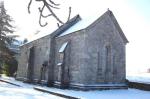


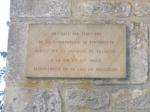
In researching a possible source for the name ROSAMOND, I came upon the proof the Knights Templar owned the Shroud of Turin, via the Rougemonts, who worshipped at Fontenotte, a Templar chapel in France. Pierre d’Aumont married into this family. It is alleged he brought a Templar brand of Freemasonry to Scotland, and a secret Templar Lineage. This puts the Rougemonts next door to the Sinclairs. Are they the Templar family we read so much about? Add to thise the Rougemont involvement with bankers of Switzerland, then at least this question begs to be asked; “What is in a name?”
Without searching the source of my mother’s maiden name, then I would not have made the discovery the name ROUGEMENT connects the claims about that Templars, that the Templars themselves had to make – if true! Add it up,folks, and know the score! The Rougemonts rule!
Rougemont
Shround of Turin
Swiss Bankers
Freemasons
Knights Templar
Sarah Daughter of Jesus?
If the shoe fits – wear it!
Sir Pierre d’ Aumont, Seigneur de Cramoisy, d’Aumont
Last night, with sorrow, I concluded people have been jealous of me my whole life. The foremost reason I invoke envy in others, is they perceive somehow I have a date with destiny. How they perceive this is a book in itself. One thing for sure, this envy elects you for a special role in life. Jesus was elected by those who were envious of him. If Jesus was born in the world again would his name be Jesus de Rougemont – and not Jesus Sinclair?
After my sister, Christine Rosamond Benton, died (the world famous artist, Rosamond) my psyche saw that she was surrounded by rich and powerful people. One of the them is Lawrence Chazen who tried to take over my family legacy. Chazen is partly responsible for a biography full of lies, written by outsiders who tried to intercept Christine’s – and my date – with history. But, God’s Will, will be done? And, this is proof? Our mother was Rosemary, and her mother owned this very rare name, Mary Magdalene Rosamond. My roses have paved my way!
The President of the United States met his date with destiny, and is now being ruthlessly attacked for promising to end tax loopholes for oil companies, such as Noble Energy. Chazen was a CEO of Noble. As far back as 1997 I began to warn people in high places Chazen and my father were preditors. I understood my family was a litmus test on a lever very few understand.
With all the fool’s gold about, what the world needs is a good Touchstone. In GOLD is the name GOD, and his GO’EL Redeemer!
Jon Presco
Copyright 2011
“I am a member in good standing of the State Bar of California and an attorney
on record for 50% interest in Shannon Rosamond. In my 16 years as a member of
the State Bar California, I have never experienced a more deliberate fraud on
any court or more reckless and calculated attempt to fraudulently take control
of a probate estate at the exclusion of the lawful heirs and total manipulation
of a tester’s intent that the present efforts of Attorney’s Robin Beare,
Lawrence J. Chazen and Garth Benton, the descendants former spouse.”
“Over the specific argument of Ms. Beare, Judge Silver refused to appoint Mr.
Chazen. Neither Ms. Beare nor Mr. Chazen disclosed to the court the very
critical fact that Mr. Chazen has the largest single creditor’s claim against
the estate and is a former business partner and business associate of Garth
Benton who the court had removed as Special Administer just moments before.”
In separate interviews, broker Charles H. Oliver Jr. and San Francisco investor
Lawrence Chazen angrily objected to the cross-fire of publicity and politics
surrounding a 4-year-old loan to Mattie Aikens and her son Wilbert. Oliver and
Chazen said they’ve been the target of abusive telephone calls. Oliver operates
Homeowners Resources Corp. of Hayward along with his wife and partner, Cindy
Oliver. The Olivers said they are outraged that U.S. Department of Housing and
Urban Development officials publicly said, before investigating, that they
believed Aikens’ case was an example of predatory lending practices. He compared
himself to Richard Jewell, widely suspected of planting a bomb during the
Olympics in Atlanta until the Justice Department conceded it lacked sufficient
evidence.
Though initially an Order of poor monks, the official papal sanction made the Knights Templar a charity across Europe. Further resources came in when members joined the Order, as they had to take oaths of poverty, and therefore often donated large amounts of their original cash or property to the Order. Additional revenue came from business dealings. Since the monks themselves were sworn to poverty, but had the strength of a large and trusted international infrastructure behind them, nobles would occasionally use them as a kind of bank or power of attorney. If a noble wished to join the Crusades, this might entail an absence of years from their home. So some nobles would place all of their wealth and businesses under the control of Templars, to safeguard it for them until their return. The Order’s financial power became substantial, and the majority of the Order’s infrastructure was devoted not to combat, but to economic pursuits.
By 1150, the Order’s original mission of guarding pilgrims had changed into a mission of guarding their valuables through an innovative way of issuing letters of credit, an early precursor of modern banking. Pilgrims would visit a Templar house in their home country, depositing their deeds and valuables. The Templars would then give them a letter which would describe their holdings. Modern scholars have stated that the letters were encrypted with a cipher alphabet based on a Maltese Cross; however there is some disagreement on this, and it is possible that the code system was introduced later, and not something used by the medieval Templars themselves.[5][6][7] While traveling, the pilgrims could present the letter to other Templars along the way, to “withdraw” funds from their account. This kept the pilgrims safe since they were not carrying valuables, and further increased the power of the Templars.
Knights Templar playing chess, 1283.
The Knights’ involvement in banking grew over time into a new basis for money, as Templars became increasingly involved in banking activities. One indication of their powerful political connections is that the Templars’ involvement in usury did not lead to more controversy within the Order and the church at large. Officially the idea of lending money in return for interest was forbidden by the church, but the Order sidestepped this with clever loopholes, such as a stipulation that the Templars retained the rights to the production of mortgaged property. Or as one Templar researcher put it, “Since they weren’t allowed to charge interest, they charged rent instead.”[8]
Their holdings were necessary to support their campaigns; in 1180, a Burgundian noble required 3 square kilometres of estate to support himself as a knight, and by 1260 this had risen to 15.6 km². The Order potentially supported up to 4,000 horses and pack animals at any given time, if provisions of the rule were followed; these horses had extremely high maintenance costs due to the heat in Outremer (Crusader states at the Eastern Mediterranean), and had high mortality rates due to both disease and the Turkish bowmen strategy of aiming at a knight’s horse rather than the knight himself. In addition, the high mortality rates of the knights in the East (regularly ninety percent in battle, not including wounded) resulted in extremely high campaign costs due to the need to recruit and train more knights. In 1244, at the battle of La Forbie, where only thirty-three of 300 knights survived, it is estimated the financial loss was equivalent to one-ninth of the entire Capetian yearly revenue.[citation needed]
The Templars’ political connections and awareness of the essentially urban and commercial nature of the Outremer communities led the Order to a position of significant power, both in Europe and the Holy Land.[citation needed] They owned large tracts of land both in Europe and the Middle East, built churches and castles, bought farms and vineyards, were involved in manufacturing and import/export, had their own fleet of ships, and for a time even “owned” the entire island of Cyprus
1. Switzerland: Where they established the Swiss Banking system and integrated into the order of the Knights Hospitallers. Thus we can trace the missing wealth of the Templars to the secret vaults of the banks of Switzerland. This makes Switzerland the world capital of Templar power. The same Templar power that is now organizing our New World order; created Communism; created Fascism and now seeks to merge the two systems into one. Its no wonder that the Swiss have enjoyed neutrality in the past World Wars! No servant, not even Adolf Hitler, would turn against his Masters! Thus, the small State of Switzerland has never been invaded by a foreign power in recent history. Another interesting tidbit is that the Pope is “protected” by the “Swiss Guard”. Calvinism had its start in Switzerland.
Jean d’ Aumont, Seigneur de Chappes1,2
M, b. circa 1381, d. 25 October 1415
Jean d’ Aumont, Seigneur de Chappes|b. c 1381\nd. 25 Oct 1415|p3923.htm#i117832|Sir Pierre d’ Aumont, Seigneur de Cramoisy, d’Aumont, Meru, Chars, Neaufle-le-Chateau, Counsellor and Prime Minister to the King|b. c 1345\nd. 13 Mar 1413|p2855.htm#i85800|Jeanne de Mello|b. c 1360\nd. 3 Aug 1408|p2856.htm#i85801|Pierre d’ Aumont, Seigneur d’Aumont, Monchy-le-Preux, Berthecourt, Courcelles, Counselor & Chamberlain to the King.|b. c 1310\nd. 10 Apr 1381|p3924.htm#i117856|Jeanne d. Déluge|b. c 1320\nd. 12 Sep 1392|p3924.htm#i117857|Guy I. d. Mello, Seigneur d’Epoisses|d. c 1370|p2847.htm#i85534|Agnes d. Clerey|b. c 1330\nd. a 1379|p2847.htm#i85535|
Father
Sir Pierre d’ Aumont, Seigneur de Cramoisy, d’Aumont, Meru, Chars, Neaufle-le-Chateau, Counsellor and Prime Minister to the King1 b. c 1345, d. 13 Mar 1413
Mother
Jeanne de Mello1 b. c 1360, d. 3 Aug 1408
Jean d’ Aumont, Seigneur de Chappes was born circa 1381.1 He married Yolande de Chateauvillain, daughter of Jean II de Chateauvillain, Seigneur de Chateauvillain, Thil, & Grancey and Jeanne de Grancey, on 23 May 1405.1,2 Jean d’ Aumont, Seigneur de Chappes died on 25 October 1415 at Battle of Agincourt, Azincourt, Pas-de-Calais, Nord-Pas-de-Calais, France.1,2
Family
Yolande de Chateauvillain b. c 1386
Child
Jacques d’ Aumont, Seigneur de Chappes+1 b. c 1410, d. 1478
Citations
1. [S56] Généalogie Famille de Carné.
2. [S11600] 40000 Ancestors of the Counts of Paris, 17-395.
Guillaume IV d’ Estrabonne, Seigneur d’Estrabonne1,2,3
M, b. circa 1400, d. December 1469
Guillaume IV d’ Estrabonne, Seigneur d’Estrabonne|b. c 1400\nd. Dec 1469|p3923.htm#i117833|Jean IV d’ Estrabonne, Sire d’Estrabonne|b. c 1370\nd. b 1417|p3923.htm#i117835|Jeanne de Ste. Croix|b. c 1350|p3923.htm#i117836|Jean III d’ Estrabonne, Sire d’Estrabonne|b. c 1335\nd. a 1411|p3923.htm#i117841|Guillemette d. Ray|b. c 1340|p3923.htm#i117842|Jean I. d. Ste. Croix, Seigneur de Savigny|b. c 1320|p3923.htm#i117837|Alix d. Verdun-sur-le-Doubs|b. c 1327\nd. 1396|p3923.htm#i117838|
Father
Jean IV d’ Estrabonne, Sire d’Estrabonne2 b. c 1370, d. b 1417
Mother
Jeanne de Ste. Croix2 b. c 1350
Guillaume IV d’ Estrabonne, Seigneur d’Estrabonne was born circa 1400.1 He married Marguerite de Rougemont, daughter of Guy II, Seigneur de Rougemont, Tilchatel, & Ruffey and Jeanne de Montagu, circa 1426.1,3 Guillaume IV d’ Estrabonne, Seigneur d’Estrabonne died in December 1469.1,2,3
Family
Marguerite de Rougemont b. c 1405
Child
Catherine d’ Estrabonne+1 b. c 1430, d. a 1467
Citations
1. [S56] Généalogie Famille de Carné.
2. [S11569] Europaische Stammtafeln, by Wilhelm Karl, Prinz zu Isenburg, Vol. XV, Tafel 154.
3. [S11600] 40000 Ancestors of the Counts of Paris, 17-285.
Marguerite de Rougemont1,2
F, b. circa 1405
Marguerite de Rougemont|b. c 1405|p3923.htm#i117834|Guy II, Seigneur de Rougemont, Tilchatel, & Ruffey||p3187.htm#i95756|Jeanne de Montagu|b. c 1366\nd. 22 Jun 1426|p3187.htm#i95757|Jean, Seigneur de Rougemont, Tilchatel, & Ruffey|d. 1375|p1940.htm#i58316|Jeanne d. Vienne|d. a 1403|p1941.htm#i58321|Jean d. Montagu, Seigneur de Sombernon|b. c 1341\nd. 1410|p3187.htm#i95758|Marguerite (Marie) de Beaujeu|d. 1406|p3187.htm#i95759|
Father
Guy II, Seigneur de Rougemont, Tilchatel, & Ruffey3
Mother
Jeanne de Montagu3 b. c 1366, d. 22 Jun 1426
Marguerite de Rougemont was born circa 1405.1 She married Guillaume IV d’ Estrabonne, Seigneur d’Estrabonne, son of Jean IV d’ Estrabonne, Sire d’Estrabonne and Jeanne de Ste. Croix, circa 1426.1,2
Family
Guillaume IV d’ Estrabonne, Seigneur d’Estrabonne b. c 1400, d. Dec 1469
Child
Catherine d’ Estrabonne+1 b. c 1430, d. a 1467
Jacques d’ Aumont, Seigneur de Chappes1,2
M, b. circa 1410, d. 1478
Jacques d’ Aumont, Seigneur de Chappes|b. c 1410\nd. 1478|p3923.htm#i117830|Jean d’ Aumont, Seigneur de Chappes|b. c 1381\nd. 25 Oct 1415|p3923.htm#i117832|Yolande de Chateauvillain|b. c 1386|p3924.htm#i117854|Sir Pierre d’ Aumont, Seigneur de Cramoisy, d’Aumont, Meru, Chars, Neaufle-le-Chateau, Counsellor and Prime Minister to the King|b. c 1345\nd. 13 Mar 1413|p2855.htm#i85800|Jeanne d. Mello|b. c 1360\nd. 3 Aug 1408|p2856.htm#i85801|Jean I. d. Chateauvillain, Seigneur de Chateauvillain, Thil, & Grancey|d. 1419|p1980.htm#i59505|Jeanne d. Grancey|d. c 1423|p2724.htm#i81863|
Father
Jean d’ Aumont, Seigneur de Chappes1 b. c 1381, d. 25 Oct 1415
Mother
Yolande de Chateauvillain1 b. c 1386
Jacques d’ Aumont, Seigneur de Chappes was born circa 1410.1 He married Catherine d’ Estrabonne, daughter of Guillaume IV d’ Estrabonne, Seigneur d’Estrabonne and Marguerite de Rougemont, circa 1450.1,2 Jacques d’ Aumont, Seigneur de Chappes died in 1478.2
Family
Catherine d’ Estrabonne b. c 1430, d. a 1467
Children
Ferry d’ Aumont, Seigneur de Meru, Thury, Crevecoeur, & d’Aumont+1 d. 23 Feb 1526
Charlotte (Blanche) d’ Aumont+3 b. c 1460, d. 6 Dec 1530
Citations
1. [S56] Généalogie Famille de Carné.
2. [S11600] 40000 Ancestors of the Counts of Paris, 16-334.
3. [S11569] Europaische Stammtafeln, by Wilhelm Karl, Prinz zu Isenburg, Vol. III, Tafel 779.
Catherine d’ Estrabonne1,2
F, b. circa 1430, d. after 1467
Catherine d’ Estrabonne|b. c 1430\nd. a 1467|p3923.htm#i117831|Guillaume IV d’ Estrabonne, Seigneur d’Estrabonne|b. c 1400\nd. Dec 1469|p3923.htm#i117833|Marguerite de Rougemont|b. c 1405|p3923.htm#i117834|Jean IV d’ Estrabonne, Sire d’Estrabonne|b. c 1370\nd. b 1417|p3923.htm#i117835|Jeanne d. Ste. Croix|b. c 1350|p3923.htm#i117836|Guy I. Seigneur de Rougemont, Tilchatel, & Ruffey||p3187.htm#i95756|Jeanne d. Montagu|b. c 1366\nd. 22 Jun 1426|p3187.htm#i95757|
Father
Guillaume IV d’ Estrabonne, Seigneur d’Estrabonne1 b. c 1400, d. Dec 1469
Mother
Marguerite de Rougemont1 b. c 1405
Catherine d’ Estrabonne was born circa 1430.1 She married Jacques d’ Aumont, Seigneur de Chappes, son of Jean d’ Aumont, Seigneur de Chappes and Yolande de Chateauvillain, circa 1450.1,2 Catherine d’ Estrabonne died after 1467.2
Family
Jacques d’ Aumont, Seigneur de Chappes b. c 1410, d. 1478
Children
Ferry d’ Aumont, Seigneur de Meru, Thury, Crevecoeur, & d’Aumont+1 d. 23 Feb 1526
Charlotte (Blanche) d’ Aumont+3 b. c 1460, d. 6 Dec 1530
http://our-royal-titled-noble-and-commoner-ancestors.com/p3923.htm
Guy I, Seigneur de Rougemont, Tilchatel, & Ruffey sur l’Ognon||p3188.htm#i95763|Thiebaut V, Seigneur de Durnes, Sire de Rougemont|d. a 1333|p3188.htm#i95772|Jeanne de Tilchatel||p3188.htm#i95773|Humbert I. Sire de Rougemont|d. 1331|p2850.htm#i85641|Agnes d. Durnay|d. 1306|p2850.htm#i85642|Guy I. Sire de Tilchatel|d. Oct 1299|p3188.htm#i95774|Isabelle d. Rochefort|d. a 1306|p3188.htm#i95775|
Father
Thiebaut V, Seigneur de Durnes, Sire de Rougemont3 d. a 1333
Mother
Jeanne de Tilchatel3
Guy I, Seigneur de Rougemont, Tilchatel, & Ruffey sur l’Ognon married Etiennette de Ruffey.1,2
Family
Etiennette de Ruffey
Child
Jean, Seigneur de Rougemont, Tilchatel, & Ruffey+1 d. 1375
Humbert III, Sire de Rougemont1,2
M, d. 1331
Humbert III, Sire de Rougemont|d. 1331|p2850.htm#i85641|Thiebaut IV, Seigneur d’Autoreille, Sire de Rougemont|d. a Mar 1290|p2850.htm#i85640|Marie de Brienne||p1651.htm#i49623|Humbert, Seigneur d’Autoreille|d. b 1265|p1957.htm#i58820|Aleydis (Helvidis)||p1957.htm#i58824|||||||
Father
Thiebaut IV, Seigneur d’Autoreille, Sire de Rougemont1,3 d. a Mar 1290
Mother
Marie de Brienne3
Humbert III, Sire de Rougemont married Agnes de Durnay, daughter of Gerard III, Seigneur de Durnay and Marguerite de Joux, before 1289.1,2Humbert III, Sire de Rougemont married Isabelle de Rochefort, daughter of Gaucher de Rochefort,Vicomte de Chartres, Sire de Rochefort, Chatelain du Puiset and Marguerite de Plancy, circa 1306.4Humbert III, Sire de Rougemont died in 1331; Buried at Bellevaux.1,2
Family 1
Isabelle de Rochefort d. a 1306
Child
Guillaume de Rougemont, Seigneur de Rougemont+1 d. 1352
Family 2
Agnes de Durnay d. 1306
Children
Marguerite de Rougemont+1 d. 13 Oct 1350
Thiebaut V, Seigneur de Durnes, Sire de Rougemont+1 d. a 1333
Jeanne de Rougemont+1,2 b. c 1290
Thiebaut IV, Seigneur d’Autoreille, Sire de Rougemont1,2
M, d. after March 1290
Thiebaut IV, Seigneur d’Autoreille, Sire de Rougemont|d. a Mar 1290|p2850.htm#i85640|Humbert, Seigneur d’Autoreille|d. b 1265|p1957.htm#i58820|Aleydis (Helvidis)||p1957.htm#i58824|Thiebaut I. d. Rougemont, Vicomte de Besancon|d. a 1265|p1023.htm#i30738|Comtesse d. Belmont||p1023.htm#i30739|||||||
Father
Humbert, Seigneur d’Autoreille1,3 d. b 1265
Mother
Aleydis (Helvidis)1,3
Thiebaut IV, Seigneur d’Autoreille, Sire de Rougemont married Marie de Brienne.2Thiebaut IV, Seigneur d’Autoreille, Sire de Rougemont left a will in March 1290.1 He died after March 1290; Buried at Bellevaux.1,2
Family
Marie de Brienne
Children
Humbert III, Sire de Rougemont+1,2 d. 1331
Mahaut de Rougemont+4,1
Helvis de Rougemont+1 d. a 1317
Thiebaut III de Rougemont, Vicomte de Besancon1,2
M, d. after 1265
Thiebaut III de Rougemont, Vicomte de Besancon|d. a 1265|p1023.htm#i30738|Humbert II de Rougemont|d. 1227|p1209.htm#i36311|Sibille de Besançon||p1209.htm#i36312|Thiebaut I. d. Rougemont|d. a 1173|p1209.htm#i36315|Alais||p1209.htm#i36316|Odon, Vicomte de Besançon||p1209.htm#i36313|Julienne||p1209.htm#i36314|
Father
Humbert II de Rougemont3 d. 1227
Mother
Sibille de Besançon3
Thiebaut III de Rougemont,Vicomte de Besancon married Cecile; His 2nd marriage.4 Thiebaut III de Rougemont, Vicomte de Besancon married Alais de Beaumont; His 3rd marriage.4 Thiebaut III de Rougemont, Vicomte de Besancon married Comtesse de Belmont before 22 October 1222.2 Thiebaut III de Rougemont, Vicomte de Besancon died after 1265.2
Family 1
Comtesse de Belmont
Children
Humbert, Seigneur d’Autoreille+2 d. b 1265
Sibille (Isabelle, Elizabeth) de Rougemont+2 d. a Aug 1300
Family 2
Alais de Beaumont
Family 3
Cecile
1. [S11569] Europaische Stammtafeln, by Wilhelm Karl, Prinz zu Isenburg, Vol. XV, Tafel 126.
Humbert II de Rougemont1,2
M, d. 1227
Humbert II de Rougemont|d. 1227|p1209.htm#i36311|Thiebaut II de Rougemont|d. a 1173|p1209.htm#i36315|Alais||p1209.htm#i36316|Thiebaut I. d. Rougemont|d. a 15 Apr 1107|p1209.htm#i36317|Poncette d. Traves|b. c 1090\nd. a 1156|p174.htm#i5228|||||||
Father
Thiebaut II de Rougemont3 d. a 1173
Mother
Alais3
Humbert II de Rougemont married Sibille de Besançon, daughter of Odon, Vicomte de Besançon and Julienne, before 1188.2Humbert II de Rougemont died in 1227.2
Family
Sibille de Besançon
Children
Thiebaut III de Rougemont,Vicomte de Besancon+2 d. a 1265
Hugues de Rougemont,Seigneur de Villersexel+ d. a 1227
Poncette de Traves1,2,3,4
F, b. circa 1090, d. after 1156
Poncette de Traves|b. c 1090\nd. a 1156|p174.htm#i5228|Thibaud, Seigneur de Traves|d. 1153|p174.htm#i5232|Alice||p174.htm#i5233|Stephen, Seigneur de Traves|d. a 1098|p267.htm#i8022||||||||||
Father
Thibaud, Seigneur de Traves1,5 d. 1153
Mother
Alice2,5
Poncette de Traves married Thiebaut I de Rougemont; Her 1st marriage.2,3 Poncette de Traves was born circa 1090. She married Guillaume IV, Count of Burgundy, Auxerre, Macon, & Vienne, son of Stephen, Count of Burgundy, Vienne, Macon and Beatrice de Fouvent, in 1140.1,4 Poncette de Traves died after 1156.
Family 1
Thiebaut I de Rougemont d. a 15 Apr 1107
Children
Thiebaut II de Rougemont+3 d. a 1173
Humbert de Rougemont
Family 2
Guillaume IV, Count of Burgundy, Auxerre, Macon, & Vienne b. bt 1090 – 1095, d. 27 Sep 1155
Children
Etienne II, 1st Comte d’Auxonne+ d. c 1173
(Miss) de Macon+4
Girard, Count Macon, Vienne+2 b. c 1142, d. 14 Sep 1184
Stephen, Count of Burgundy, Vienne, Macon1,2,3
M, d. 27 May 1102
Stephen, Count of Burgundy, Vienne, Macon|d. 27 May 1102|p174.htm#i5230|Guillaume II ‘the Great’, Comte de Franche Comte, Burgundy, Macon, & Vienne, Lord of Salms|b. c 1024\nd. 11 Nov 1087|p172.htm#i5162|Stephanie de Longwy|d. 30 Jun 1109|p172.htm#i5163|Reginald I. Count of Burgundy & Macon|b. c 990\nd. 3 Sep 1057|p176.htm#i5284|Alisia o. Normandy|b. c 1003\nd. a 7 Jul 1037|p176.htm#i5285|Adalbert I. Count of Longwy|b. c 1000\nd. 11 Nov 1048|p839.htm#i25191|Clemence d. Foix||p839.htm#i25192|
Father
Guillaume II ‘the Great’, Comte de Franche Comte, Burgundy, Macon, & Vienne, Lord of Salms1,4 b. c 1024, d. 11 Nov 1087
Mother
Stephanie de Longwy d. 30 Jun 1109
Charts
Descendants of Charlemagne (#1)
Descendants of Charlemagne (#2)
Humbert de Villersexel
Un article de Wikipédia, l’encyclopédie libre.
Aller à : Navigation, rechercher
Humbert de Villersexel (1385-1437) Comte de la Roche, seigneur de Villersexel, Maîche, Orbe et Saint Hippolyte.
In 1418, Humbert of Villersexel, Count de la Roche, Lord of Saint-Hippolyte-sur-Doubs, moved the shroud to his castle at Montfort, Doubs, to provide protection against criminal bands, after he married Charny’s granddaughter Margaret. It was later moved to Saint-Hippolyte-sur-Doubs. After Humbert’s death, canons of Lirey fought through the courts to force the widow to return the cloth, but the parliament of Dole and the Court of Besançon left it to the widow, who traveled with the shroud to various expositions, notably in Liège and Geneva.
The widow sold the shroud in exchange for a castle in Varambon, France in 1453. The new owner, Anne of Cyprus, Duchess of Savoy, stored it in the Savoyard capital of Chambéry in the newly built Saint-Chapelle, which Pope Paul II shortly thereafter raised to the dignity of a collegiate church. In 1464, Anne’s husband, Louis, Duke of Savoy agreed to pay an annual fee to the Lirey canons in exchange for their dropping claims of ownership of the cloth. Beginning in 1471, the shroud was moved between many cities of Europe, being housed briefly in Vercelli, Turin, Ivrea, Susa, Chambéry, Avigliana, Rivoli, and Pinerolo. A description of the cloth by two sacristans of the Sainte-Chapelle from around this time noted that it was stored in a reliquary: “enveloped in a red silk drape, and kept in a case covered with crimson velours, decorated with silver-gilt nails, and locked with a golden key.”
In 1543 John Calvin, in his Treatise on Relics, wrote of the Shroud, which was then at Nice, “How is it possible that those sacred historians, who carefully related all the miracles that took place at Christ’s death, should have omitted to mention one so remarkable as the likeness of the body of our Lord remaining on its wrapping sheet?” He also noted that, according to St. John, there was one sheet covering Jesus’s body, and a separate cloth covering his head. He then stated that “either St. John is a liar,” or else anyone who promotes such a shroud is “convicted of falsehood and deceit”.[38]
http://genforum.genealogy.com/roseman/messages/186.html
Humbert de Rougemont owned the Shroud of Turin
(Images: Montfort Castle home to Humbert and Margaret de Charny/Rougemont)
“June 1418: The widowed Margaret de Charny marries Humbert of Villersexel, Count de la Roche, Lord of St.Hippolyte sur Doubs.”
Humbert de Villersexel is Humbert de Rougemont.
“1208 – Pons de la Roche presents to Amadeus de Tramelay, Archbishop of Besançon, the Shroud that his son Othon de la Roche, Latin Duke of Athens, had sent him from Constantinople.”
Aymon 2 de Rougemont was the Seigneur of Villersexel. He married Guillemette de Ray, the daughter of Othon 2 de la Roche.
Othon 1 de la Roche (-before 1161) had a son named Pons de la Roche the Seigneur de Ray. He first married Marguerite Tilchatel who may be a Rougemont who came to own Til-Chatel. Guillaume, Gui, Humbert4, Gui 2, and Thibaut 6 were Seigneurs of Til-Chatel. Othon then married Pontia de Rougemont/de Dramelay the daughter of Thiebaud 2 de Rougemont. They has three children. Humbert, Thiebaud, and Sibylle de la Roche. This union makes the Shroud the Rougemont family icon, or relic.
Jon Presco
Copyright 2006
http://gilles.maillet.free.fr/histoire/famille_bourgogne/famille_vienne.htm
http://gilles.maillet.free.fr/histoire/famille_bourgogne/comte_dela_roche.htm
http://freepages.genealogy.rootsweb.com/~jamesdow/s058/f508746.htm
http://genealogy.euweb.cz/french/neufchtl1.html
http://gilles.maillet.free.fr/histoire/famille_bourgogne/famille_rougemont_faucogney.htm
http://freepages.genealogy.rootsweb.com/~jamesdow/s058/f508746.htm
1. OTHON (-after 1251). Seigneur de Ray 1239. Lord of Argos and Navplion, which he relinquished in 1251 to his brother Guy and returned to Burgundy. m (before 1239) MARGUERITE de Tilchatel, daughter of GUY II de Tilchatel & his wife Guillemette de Bourbonne.
http://gilles.maillet.free.fr/histoire/famille_bourgogne/famille_rougemont_faucogney.htm
Tilchatel, Marguerite de Birth : BEF 1223 Gender: FemaleFamily:
Spouse:
Ray, Otton de_la Roche SireBirth : BEF 1210 Gender: MaleParents:
Father: sur_l’Ognon, Otton de_la Roche SireMother: Ray, Isabelle de Dame
Children:
Ray, Guillaumette de_la Roche Birth : AFT 1238 Gender: Female Ray, Isabelle de_la Roche Dame
Concerned with the bishop of Langres, they drew their origin from Audon I of Til-Châtel, wire of Garnier count de Troyes attested into 918 by its signature in an act of the duke of Burgundy Richard. This family, which carried like armorial bearings a key out of stake, also paid homage to the dukes of Burgundy and held a row raised among the lords of the duchy and county of Burgundy. Its members followed one another of wire father until the year 1299 dates to which Isabelle of Rochefort, girl of Left-handed person of Rochefort lord of Puiset in Beauce, widow of Guy III of Til-Châtel Gonfalonier of the County of Burgundy, became lady of Til-Châtel. It remarr with Humbert de Rougemont about 1306 and Maria her Jeanne daughter whom it had had with Guy III of Til-Châtel with Thiébaud de Rougemont wire of a first marriage of her new husband. The seigniory passes then in this family until the end of the 15° century time to which the last of Rougemont, not having children yielded the seigniory to Antoine de Baissey resulting from a family of Montsaugeonnais which immediately paid homage to the bishop of Langres.
http://www.covati.fr/Communes/Til-Chatel/patrimoine.htm
http://gilles.maillet.free.fr/histoire/famille_bourgogne/famille_dela_roche_ognon.htm
http://freepages.genealogy.rootsweb.com/~jamesdow/s016/f017493.htm
1208 – Pons de la Roche presents to Amadeus de Tramelay, Archbishop of Besançon, the Shroud that his son Othon de la Roche, Latin Duke of Athens, had sent him from Constantinople.
1314 – The Templars, an Order of the Crusade Knights, are sent to the stake as heretics and accused to secretly worship the Face that seems to be reproduced from the Shroud. One of them was called Geoffroy de Charny.
1349 – On March 6 during the fire of the Besançon Cathedral the Shroud disappears.
Lirey – The Chapelle (ML)
1356 – Geoffroy de Charny, a crusade knight having the same name as the previous one, deliveries the Shroud to the canons of Lirey, near Troyes in France. The precious cloth has been in his possession for at least three years. His wife, Jeanne de Vergy, is a grand-niece of Othon de la Roche.
1389 – Pierre d’Arcis, bishop of Troyes, forbids the Exhibition of the
Jacobite Masonry or Stuart Masonry as it was sometimes known, was the system or orders of Freemasonry which were supposedly invented or adapted by the Scottish Jacobites living in exile in France and Italy during the 1700’s. Most of the early Masonic historians have came to the conclusion that the Jacobites may have been the originators or the instigators of what is commonly now known in some constitutions as the higher degrees of Freemasonry. The most common being the Knights Templars and the Ancient and Accepted Scottish Rite. Although there seems to be very little evidence to confirm the fact, historians are still of the opinion that there was a connection between the Stuarts and Freemasonry. Although the word Scottish was used, this was probably meant in the context of the Scottish brethren involved and not of the country itself.
The first mention of the Stuart involvement was by the German Masonic writer Lenning. He stated that whilst in exile, “James II residing at the Jesuit College of Clermont in France, allowed his closest associates to fabricate certain degrees in order to extend their political views” thereby regaining the crown of Britain for the House of Stuart. Although the words Freemasonry or Masonry were not used in his statement, it is almost certain that this is what Lenning is referring to.
One other such Order to rise from this idea was the Rite of the Strict Observance. Instituted in Germany around the 1750’s by Baron Karl Gotthelf Von Hund, (1722 -1776). This order laid claim to the original property and privileges of the medieval order of Knights Templars. It also claimed possession of their preceptories, and various buildings throughout Scotland, which were confiscated and handed over to the Crown during the persecution of the original Order in 1314. Baron Von Hund claimed he was made a freemason and brought into the Order of the Temple around the year 1742. It is said that during his stay in Paris he received the higher degrees of the Chapter of Clermont which gave him the idea of forming the Observance Rite. At his reception were supposedly Charles Edward Stuart, (Hund was in actual fact his tutor), and William, 4th Earl of Kilmarnock, Grand Master Mason of Scotland (1742-43), who was subsequently executed in 1746 for his support of Charles Edward Stuart. Therefore the initiation ceremony of Von Hund into this Order of the Temple must have taken place in and around 1744-45. We also have to take into account that the so called Knights Templars present at that meeting were made members prior to 1744.
The Rite, which Hund helped to instigate, was a complex system of degrees that held its allegiance to “Unknown Superiors”. His “Unknown Superiors” having supposedly contacted him and instructed him to organise several meetings of the Order. Although he claims that they never contacted him again Hund went on to establish the Rite complete with ritual. The basis of the ritual being that on the death of Jacques de Molay, (the last Grand Master of the Medieval order), control of the order was handed over to Pierre d’Aumont, Templar Prior of Auvergne, who took the Order to Scotland. Pierre d’Aumont was to be succeeded by an unbroken succession of Grand Masters whose identities were to be kept secret or unknown. Hence the so-called “Unknown Superiors”. Gould states in his ” Military Lodges 1732-1890″ that the degrees of the Rite of the Strict Observance completely took off in the British Regiments and the already established Masonic lodges worked side by side with those of the Strict Observance. Also a London Lodge in the year 1736 was conferring “Higher Degrees” in French, and if this was the case then it would obviously predated Von Hund’s Rite but unlikely to be of Masonic origin. Most of Hund’s ideas were to be picked up by the Rite of the Philalethes at Lyon and also by the Provincial Grand Priory of Auvergne, and were adapted into a Rite still practised today by the Grand Priory of Helvetia in Switzerland. The Grand Priory of England is in fraternal communications with the Grand Priory of the Rectified Scottish Rite (Switzerland), better known as the Knights Beneficent of the Holy City, who’s Swiss members are entitled to sit and attend the 33rd degree meetings of the Ancient and Accepted Scottish rite in Switzerland.

 Rosamond Press
Leave a reply to Royal Rosamond Press Cancel reply