


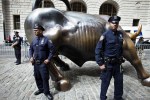

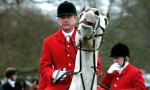

In other words……THEY DON’T GET JESUS! I have taken Jesus down from their evil cross. They no longer own him as their personal idol to hide behind. This leaves them the Bull and the Dragon. GET BEHIND ME SATAN!
Here is some real class warfare, from Kim Richardson de Rougemont who may be my kindred. When his father died, British Royalty came to mourn, along with the Rothschilds, and Sir Clive Rougemont, of the Huguenot family that founded Lloyd’s of London, that rules The City, where dwell the Dragon of Banking. Kim is an angry fox hunter, hell bent on hurting the little people.
http://www.realca.co.uk/video/kim_richardson.wmv
My father’s chum in high school sat atop the pyramid Building in San Francisco as a CEO. My Godfather, Skip Sutter, ex-sergeant on the Oakland Police Force, was a loan officer. Above is a photo of the pyramid, and the headquarters of Francis Copula, who made the movie ‘The Godfather’.
I found a class action complaint against Transamerica for defrauding Seniors in “Reverse Mortgages”. This is ten years ago! This is when I started writing letters to Attorney General Lungrin.
“The complaint alleges that Transamerica took advantage of the senior citizens’ need for cash income by selling “reverse mortgages.” Under the reverse mortgage scheme, the complaint alleges seniors borrowed
against the hard-earned equity in their homes, but were charged unconscionable and excessive fees and were assessed unfair charges unrelated to the loan.
Jon Presco
A huntsman with the Dulverton Farmers has been found guilty of assault against a 66 year old female League Hunt monitor. Anthony Allibone, who has 30 years experience riding horses, claimed he lost control of his horse but magistrates at Minehead found him guilty of assault by putting the victim in fear of immediate and unlawful violence.
A COUNTRYSIDE Alliance supporter and a whipper-in for the East Devon Hunt has been found guilty of attacking a campaigner who was filming a hunting event. Christopher Marles, 44, of Farringdon, near Exeter, repeatedly punched Kevin Hill, a hunt monitor with the International Fund for Animal Welfare.
Sir Michael Richardson
‘Privateer of privatisation’ whose career ended in disgrace
For over a quarter of a century, Michael Richardson was one of the City’s leading financial operators. Especially prominent in the 1980s, he was a “rainmaker”, as the Americans term a banker who can make deals happen.
Michael John de Rougemont Richardson, financier: born London 9 April 1925; partner, Panmure Gordon & Co 1952-71; partner, Cazenove & Co 1971-81; managing director, N.M. Rothschild & Sons 1981-90, vice-chairman 1990-94; Kt 1990; chairman, Smith New Court 1990-94, consultant 1995-96; vice-chairman, J.O. Hambro Magan & Co 1995-96; vice-chairman, Hawkpoint Partners 1996-99; married 1949 Paddy Mayhew (died 1999; one son, two daughters); died London 12 May 2003.
For over a quarter of a century, Michael Richardson was one of the City’s leading financial operators. Especially prominent in the 1980s, he was a “rainmaker”, as the Americans term a banker who can make deals happen.
His character was best summed up by Nigel Lawson (now Lord Lawson of Blaby), who had known him as a City editor as well as Chancellor of the Exchequer. “While at first sight too suave and smooth to be true,” Lawson wrote, “Richardson’s unfailing charm, courtesy and good manners disarmed all.” Lawson emphasised that “he owed his considerable success to manipulating people rather than money”, for Richardson never pretended to be a financial technician, leaving the detailed work to others.
He was a social rather than an intellectual animal, an inveterate name-dropper. His social skills were at their most potent at his regular lunches at a window table at the River Restaurant at the Savoy. Richardson was a director of the Savoy Group and a firm supporter of Sir Hugh Wontner in his lengthy battles against Lord Forte, although, typically, he helped to arrange the peace treaty between the two families in 1990.
Nevertheless his career ended in disgrace. His acute nose for a deal – or an individual likely to be a potential source of deals – was not matched by any appreciation of the qualities of the clients he courted so assiduously, for they included Asil Nadir of Polly Peck and, most notably, Robert Maxwell. His fellow professionals were fully aware of his frailties and he failed to be elected as senior partner of either of the two stockbroking firms where he was a partner.
Richardson was born, in 1925, into the world of the City. His father was a City insurance broker and his mother’s family was associated with Lloyd’s. He was educated at Harrow and evacuated to Kent School, in Connecticut. He joined the Irish Guards in 1943 at the age of 18 and within two years had become adjutant to his battalion.
He had already met John King, who rose to be chairman of British Airways and Lord King, and, although he lost a job as King’s personal assistant, they remained close friends and business associates. Through King, Richardson met another member of the “Yorkshire Mafia”, James (later Lord) Hanson. For the next 40 years he acted for both of them in many high-profile takeover bids.
A few months at Cambridge convinced Richardson that he was not suited for academic work and in 1949 he went off to work for Harley Drayton, a successful, if dubious, financier. He soon moved to Panmure Gordon, an unusually progressive firm – it was one of the few institutions which supported Sigmund Warburg in the battle over British Aluminium. In 1971, however, the partners at Panmure dissociated themselves from Richardson as a result of his work with Robert Maxwell and he left for Cazenove, a much grander institution. Like everyone else in the City, the partners were impressed by his hard-working habits and his professionalism.
But his hours of glory came through Margaret Thatcher, whom he had met when their sons played cricket together at Harrow in the 1960s and of whom he was a warm and early supporter. Their relationship proved to be a classic case of his ability to spot, and then exploit, potential stars through social contacts – which extended to his lifelong membership of the Freemasons, which he denied had any bearing on his career.
Throughout the 1980s Richardson was in an ideal position to benefit from the connection with the new prime minister. In 1980 he had been passed over as senior partner at Cazenove. When Jacob (now Lord) Rothschild left the family bank as a result of a family disagreement, it was widely assumed that under his cousin Evelyn the bank would inevitably descend into the second rank of city institutions. But in 1981 Evelyn de Rothschild recruited Richardson, a step acclaimed as a masterstroke – one competitor, Sir David Scholey of Warburg’s, said that for his bank “it was the worst news” he had received all year.
Under Thatcher, Richardson managed to combine his position as a director of Rothschilds with that of the only City adviser to the small group within the Treasury which planned the major privatisations of the 1980s. This was not only a clear case of conflict of interest but, in the eyes of many Treasury officials without access to the secretive team involved, resulted in gross underpricing of the shares involved, to the great benefit of the banks like Rothschilds handling the issues and their clients. Not surprisingly Richardson became one of the bankers called “the privateers of privatisation”.
His identification with his clients rather than with the public interest was clearly shown at the stickiest moment of the privatisation process with the issue of over £7bn worth of shares in BP, the biggest share offering the world had ever seen. Unfortunately the issue coincided with the great share slump of October 1987. Richardson advised the Chancellor, Nigel Lawson, to pull the issue, or at least provide the investors who had already underwritten the deal with some compensation for the seemingly inevitable losses as the price of BP shares plummeted.
But Lawson flatly disagreed: he felt it would have been morally wrong and that the underwriters made enough profit from the majority of their deals to afford the loss. So he went ahead, providing the underwriters with only a minimal help in buying back shares in what proved to be a triumphantly successful issue. Not unreasonably, Richardson complained of being the “nut in the nutcracker” because of his dual role. This setback did not prevent his being knighted by Margaret Thatcher in 1990.
Richardson’s fingerprints could also be seen in Rothschilds’ acquisition of a 29 per cent stake in Smith New Court, leading brokers, especially in gold mining shares – the bank was of course the single largest player in the London gold market. It came at a time when no one was really sure of the rules of the game. “Until the Stock Exchange approves the international dealing rules,” said Richardson, “we will not know whether we are playing cricket or baseball.” Later he arranged the sale of the stake for a handsome profit.
His deal-making skills helped to ensure that Rothschilds was virtually the only investment bank in the City that retained its independence in the 1990s. Nevertheless, the fall of Margaret Thatcher in 1990 marked the end of his glory days. Worse, he was intimately associated with the fall of his oldest client, Robert Maxwell.
Richardson’s first transaction for Robert Maxwell had been the flotation of Pergamon Press in 1964. Four years later, he even travelled to Australia to help Maxwell’s losing fight against Rupert Murdoch for control of the News of the World and did not desert him after Maxwell was condemned in an inquiry after the Pergamon scandal of the early 1970s. Like other leading bankers, Richardson remained loyal to Maxwell to the end.
His backing proved essential for the flotation in 1991 of Mirror Group Newspapers. Rothschilds, Maxwell’s long-time adversary, refused to act for him and the deal was done through Smith New Court. Even though he claimed not to be a friend of Maxwell’s, it was Richardson who proposed the publisher’s health at his 65th birthday party. He was one of the first people telephoned by Maxwell’s son Kevin after “Cap’n Bob” went missing from his yacht in the Canary Islands in November 1991 and, even when Maxwell’s misdeeds came to light after his death, all Richardson could say was “Bob was squeaky clean to me”, a tribute which few if any other business colleagues could have made.
Even worse was to come eight years later when Richardson was already 76. After his retirement in 1995 from Rothschilds and Smith New Court, he had become a partner in a “boutique” corporate finance house, Hawkpoint Partners, then a division of NatWest, and in 1998 and 1999, despite warnings from his colleagues, he wrote a series of letters on the firm’s stationery confirming that an American acquaintance, Alan Shephard, had several hundred million dollars of loans available. It transpired that Shephard was a former bankrupt who had paid a penalty for an “advance-fee fraud” – in which an intermediary claims a fee for arranging a fictitious loan. Richardson was duly convicted by the British authorities and deemed “no longer fit and proper” to be involved in the financial world.
It was a sad end to his career and an overly severe punishment for a man who claimed, quite rightly, that he was “a corporate financier, not a banker”.
The Right Honourable Sir Angus James Bruce Ogilvy, KCVO PC (14 September 1928 – 26 December 2004) was a British businessman best known as the husband of Princess Alexandra of Kent, a first cousin of Queen Elizabeth II.[1]
Ogilvy is also remembered for his role in a scandal involving the breaking of sanctions against the regime in Rhodesia in the 1970s in the Lonrho affair. In later years he was heavily involved in charity work.[1]
Frederick C. de Rougemont1
M, #419927
Frederick C. de Rougemont
Frederick C. de Rougemont married Amelia Frances Albinia Roberts, daughter of Sir Hugh Ashley Roberts and Hon. Priscilla Jane Stephanie Low, on 6 February 2010 at St. George’s Chapel, Windsor Castle, Windsor, Berkshire, England.1
He is the son of Clive de Rougemont.1
Citations
Sir Hugh Ashley Roberts1
M, #4322
Sir Hugh Ashley Roberts||p433.htm#i4322|Rt. Rev. Edward James Keymer Roberts||p433.htm#i4323|Dorothy Frances Bowser|d. 1982|p31835.htm#i318348|||||||Rev. Canon Edwin D. Bowser||p31835.htm#i318349||||
Last Edited=26 May 2008
Sir Hugh Ashley Roberts married Hon. Priscilla Jane Stephanie Low, daughter of Toby Austin Richard William Low, 1st Baron Aldington and Felicité Ann Araminta MacMichael, on 13 December 1975.1
He is the son of Rt. Rev. Edward James Keymer Roberts and Dorothy Frances Bowser.1,2 He was invested as a Lieutenant, Royal Victorian Order (L.V.O.) in 1995.3 He was a director of the Royal Collection and Surveyor of the Queen’s Works of Art between 1996 and 1999.1 He was invested as a Commander, Royal Victorian Order (C.V.O.) in 1998.3 He was invested as a Knight Commander, Royal Victorian Order (K.C.V.O.) in 2001.3
Children of Sir Hugh Ashley Roberts and Hon. Priscilla Jane Stephanie Low
Sophie Jane Cecilia Roberts1 b. 28 Mar 1978
Amelia Frances Albinia Roberts1 b. 1982
 Rosamond Press
Leave a comment