
Merry Chrismas my beloved Grandson! On this Christmas Day, I appoint your the Guardian of the Vincent Rice Trust. What an honor! Vicdnt and June Rice were stellar people in our family tree. They longed to have a child. They died childless.
Becsuse there was such a diabolical attack on the Rice Trust, and your Grandfather – who mught have ened up at the bottom of the Grand Canyon. – our Family Tree needs a Noble Knught to protect us all.
Hee is a vide of you being attaxked by one of Satan;s Sargeants – who said your were faking being sick,m just to get – some of your mother’s attention – that Big Baby Boo-Boo demanded all the time!
On this day. December 25, 2025 I recognizze you as a grwon man -and still growing! I suspect the boys in this pic – are related to us?
The name God intended for ypu alas has arrived…..
Vincent Talymont Rice.
Have a powerful day……My Gentle Giant will address you as
TALY MONT
The New Knight of the Round Table
John Presco
President: Royal Rosamond Press
n the land of Merioneth in the parish of Dolgelly in the commote of Talybont is a mountain or peak or high large mount that is called Cader Idris.
The name Rice has multiple origins, mainly coming from the Welsh name Rhys (meaning “enthusiasm,” “ardor,” or “fiery”) as an Anglicized form, or from English/German sources like “brushwood dweller,” “rice dealer,” or an Old English personal name. It can be a patronymic (son of Rhys), a nickname, or a topographic name, with variants like Rees and Reece also common.

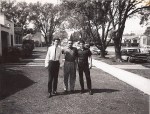
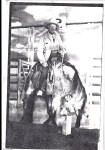
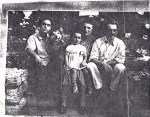
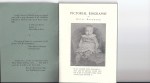
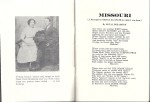
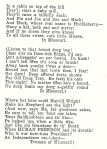
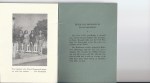


Vincent married Roy Reuben Rosamond’s oldest daughter, June. They had no children, and tried to make the Presco children their surrogate children, with little success. Vincent did his best to help us, he letting us live on the house on Glendon, for little, or, no rent. When he died, he left a good chunk of money to my siblings and I, and our cousin. I immediately made plans to acquire a scanner and new computer so I could publish historic letters and photographs on the internet.
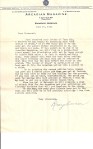
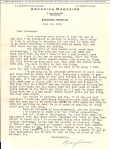
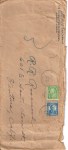
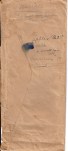
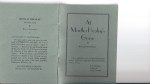
Above are two photos that were on file at the University of Arkansas that I sent for. They appeared in the Otto Rayburn collection. Otto also was a good friend of my grandfather. Otto was a good friend of the artist, Thomas Hart Benton, the cousin of Garth Benton, who married Christine, Rosamond Presco, and born, Drew Benton. The Hand of Fate is at work here. Above are two letters from Rayburn that I will donate to the UofA. In 1998 I donated Rosamond’s ‘At Martha Healey’s Grave’ a small book I republished under my registered newspaper, Royal Rosamond Press Co.
The `Back to the Earth Movement’ was not invented by Hippie. In the 1930s many Americans were seeking a return to the Arcadian lifestyle
that was disappearing fast. My grandfather, Royal Rosamond, was at the vanguard of that movement, he leaving his beautiful wife and
four daughters to go live in the Ozarks where he was born where he would write four novels about the Billy Boys. He was good friends of
Otto Rayburn who bid him to find Californian poets who would contribute to his Magazine `Arcadian Life’.
The log cabin on the cover of this issue was built by Royal on his forty acres in Arkansas where he established a fishing retreat for
poets. Royal played the fiddle and collected quilts. He taught poetry in his attic studio in Oklahoma City where he died estranged
from his daughters. His wife, Mary Magdalene Rosamond, thought her husband quite the irresponsible Fool, and bid Royal not to come
home, she more capable then he of raising their children. One can say my grandfather dropped out of society. Five years ago I located
his unmarked grave and put a marker there. He was son of two roses, Rosamond, and Ida Louisiana Rose.
Lillian told me of the time she and her father went the dunes in Ventura where lived a colony of people in humble shacks. I am
wondering if this is not a splinter group of “The Dunites” that made a colony of Seekers in Oceana near San Louis Obispo. Royal called these people “his people” and visited them frequently. There was a Scotsman who played the fiddle for Lillian.
Professor Ernest Wood was a Theosophist working at the Theosophical Society in Madras, to whom Baba gave an explanation as to what he
meant by spirituality. Lillian said women from the Theosophical society befriended her mother Mary, and she thinks they contributed
to her independent nature.
It is important to understand we did not invent the core aspects of Hippiedom, so that we can establish a legitimate history that will
carry forth our best attributes. It is my plan to restructure the Family Creative Unity so it may last many lifetimes, and be enjoyed by all members of our family.
Jon Presco
Copyright 2011
Otto Ernest Rayburn (1891–1960)
Otto Ernest Rayburn was a writer, magazine publisher, and collector of Arkansas and Ozark lore. Vance Randolph, in his introduction to Rayburn’s autobiography, Forty Years in the Ozarks (1957), defined Rayburn as a “dedicated regionalist” and added, “There is no denying that, in the period between 1925 and 1950, Rayburn did more to arouse popular interest in Ozark folklore than all of the professors put together.”
Otto Rayburn was born on May 6, 1891, in Hacklebarney settlement, Davis County, Iowa, to William Grant Rayburn, a farmer, and Sarah Jane Turpin Rayburn. The family soon moved to Woodson County, Kansas, where Rayburn grew up. In 1909–1910, he attended Marionville College in Marionville, Missouri. In the spring of 1917, Rayburn bought forty acres near Reeds Spring, Missouri. In June, he enlisted in the U.S. Army and served in France. He was discharged at Camp Funston, Kansas, in May 1919. For the next few years, he taught in Kansas and Arkansas schools.
In 1924, he became school superintendent for the Kingston Community Project of the Board of Missions of the Presbyterian Church. He regarded the six years he spent at Kingston (Madison County) as one of the most important epochs of his life. On September 26, 1925, Rayburn married Lutie Beatrice Day of Hopkins County, Texas, and brought her back to Kingston. They had two children. He was attracted to Kingston by its isolation, “a community that has a splendid highway in but no road out.”
In Kingston, he published his first magazine, Ozark Life: The Mirror of the Ozarks, beginning in June 1925, edited jointly with James T. (Ted) Richmond. The sixteen-page paper struck the tone that continued in virtually every periodical Rayburn ever undertook from then on, a tone that the late twentieth century calls boosterism or hype. Kingston is “Nature’s Beauty Shop,” and the King’s River valley is “one of the fairest dimples in the face of the smiling Ozarks.” He also wrote a column, “Ozark Folkways,” for the Sunday Arkansas Gazette for eight years beginning in 1927, as well as the column “Ozark News Nuggets” in the Sunday Tulsa Tribune.
“As throughout the South, nineteenth-century poetry in Arkansas was
largely in the Romantic Victorian vein. One early poet, Boston-born
Confederate general Albert Pike, wrote technically competent verses
from his vast knowledge of arcane mythology of Freemasonry. His
Prose Sketches and Poems, Written in the Western Country (1834)
preceded the obligatory “Letters from Arkansas,” published in the
American Monthly Magazine in 1836. The list of published poets until
well into the twentieth century runs heavily to Civil War veterans
and pious ladies, many of whom attended meetings of the Poets’
Roundtable, the Arkansas Writers’ Association, the Ozark Writers and
Artists Guild, and other groups. Their works were published
privately or in newspapers and popular magazines of the time, and
generally their reputations were local or regional. A few small
presses and newspaper publishers turned out books of verses, notably
the Bar D Press of Siloam Springs in the 1930s, which published
three members of the Davis family as well as other poets, and Otto
Rayburn’s various Ozarks publications.
http://www.encyclopediaofarkansas.net/sample_entry19.php
Jon Presco

The Giants of Wales and Their Dwellings Sion Dafydd Rhys, ca. 1600
Peniarth MS 118 f.829-837
In the land of Merioneth in the parish of Dolgelly in the commote of Talybont is a mountain or peak or high large mount that is called Cader Idris. And about the foot of this large hill are several lochs or lakes of water. Large and high (as I have said) is the mountin; and though so high, and though so difficult to cross over, yet (so they say) if a stick or other piece of wood be thrown into any you may choose of those waters, you will get that wood in the other lake on the opposite side of this mountain. And as it is not easy to believe that the wood can go over the top of a mountain as high as this one here, it is supposed that there is some cave or hollow from the one lake to the other under this mountain, so that a thing that is in one lake can be moved to the other. And on the highest crown of this mountain is a bed-shaped form as it were, great in length and width, built of slabs or stones fixed around it. And this is called The Bed of Idris, though it is more likely that it is the grave in which Idris was buried in ages past. And it is said that whoever lies and sleeps on that bed, one of two things will happen to him, either he will be a poet of the best kind, or go entirely demented. And from one of the lakes that is under the high mountain runs a large river. And in spite of that when a very dry summer happens there is lack of water to grind in the mills built on the bank of that river. And for that reason it was frequently necessary to release the water from that lake to save the shortage of water of the mills. And (so they say) no water was ever released from that lake, that there was not at once some storm and downpour of rain, and thunder, and lighting, happening in that spot. And in this high mountain formerly lived a big giant, not less in size of body than any of the above giants, and he was called Idris Gawr. And in the same parish (Dolgelly) is a mountain called Moel Yscydion. And in this mountain was the abode of a great giant called Yscydion Gawr and from his name that hill was called Moel Yscydion.
c

 Rosamond Press
Leave a comment